OPSS Issues New E-Bike Safety Guidance for UK Commuters
The UK product safety regulator has published strict guidance on e-bike conversion kits, shaping workplace commuting and home charging decisions.
- Written by
- Net Zero Home Scheme editorial team
- Last updated
- Topic
- policy, regulation, home energy

Many employers and householders assume that fitting an aftermarket conversion kit to a standard pushbike is a simple, unregulated way to cut commuting costs and avoid buying a factory-built electric bike. However, on 11 November 2026, GOV.UK published new guidance from the Office for Product Safety and Standards (OPSS) outlining strict safety rules for e-bike conversion kits. The updated guidance clarifies manufacturer responsibilities, battery component standards, and fire safety compliance for high-capacity lithium-ion batteries sold across England, Scotland, and Wales.
This regulatory update follows recent fiscal announcements detailed in our full Budget 2026 guide, which highlighted shifting tax landscapes and employee benefit rules across the UK. As employers expand active travel and home energy benefits, HR teams must ensure that green commuting perks align with strict safety standards while helping staff manage everyday transport and energy costs.
OPSS Publishes E-Bike Safety Rules as Green Commuting Expands
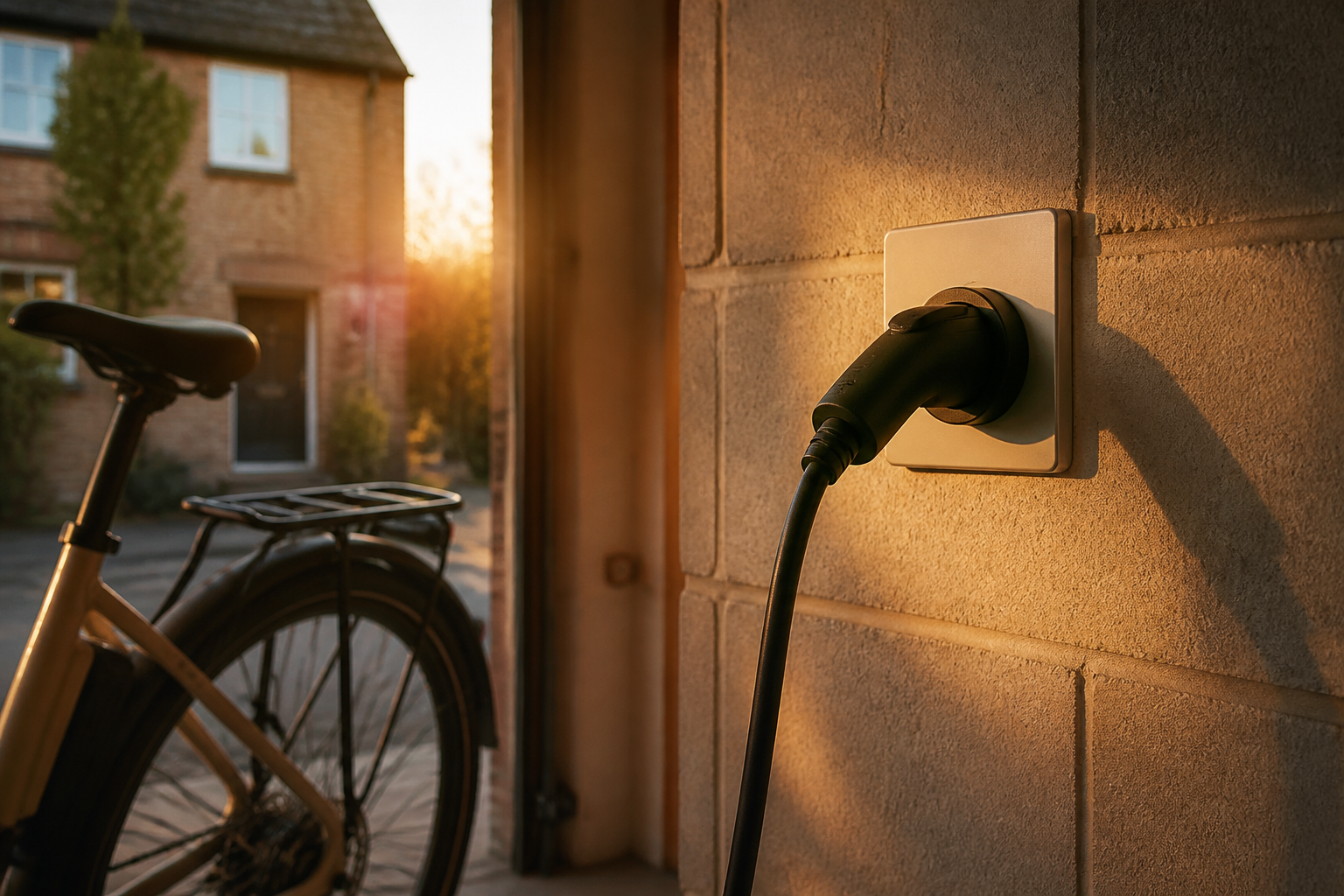
The OPSS guidance released on 11 November 2026 sets clear technical expectations for distributors, retailers, and users of e-bike conversion kits. The regulator emphasised that conversion kits must meet the Electromagnetic Compatibility Regulations 2016 and the Supply of Machinery (Safety) Regulations 2008. Furthermore, chargers, batteries, and motors sold together must be tested as a complete system to prevent thermal runaway risks during domestic charging.
To help householders and reward managers evaluate transport and home energy investments, the table below compares three common approaches to sustainable personal transport and power generation.
| Option | Primary Safety Standard | Typical Upfront Cost | Household Bill Impact |
|---|---|---|---|
| Factory-Built E-Bike | EN 15194 standard certified | £1,200 to £3,500 | Adds ~£0.15 per full battery charge |
| OPSS-Compliant Conversion Kit | System-tested to 2008 Machinery Rules | £400 to £900 (plus bike) | Adds ~£0.15 per full battery charge |
| Solar PV with Battery Storage | MCS and PAS 63100 installed | £6,000 to £11,000 | Saves £400 to £900 annually on energy bills |
Which Low-Carbon Transport or Power Setup Fits Your Needs?
Choosing the right setup depends on commute distance, budget, and home charging infrastructure:
- Factory-built e-bikes suit staff with longer daily commutes who require manufacturer warranties, integrated lighting, and full EN 15194 compliance out of the box.
- Conversion kits suit confident cyclists who already own a sturdy frame and purchase fully tested, OPSS-compliant kit bundles from reputable UK suppliers.
- Solar panels and home battery systems suit homeowners looking to charge electric bikes and household appliances using clean energy generated directly on their roof.
Practical Steps for UK Households Balancing Mobility and Home Energy Costs
Householders using e-bikes for daily travel should audit their home charging routines alongside their overall domestic electricity use. Charging a standard 500 Wh e-bike battery consumes roughly 0.5 kWh of electricity per charge, costing under 15p at average price cap rates. However, unsafe off-brand chargers or unmatched battery cells pose serious fire risks in residential hallways or garages.
For households looking to lower ongoing energy expenses, combining clean travel with rooftop power generation offers strong long-term returns. Installing solar panels and a battery on your roof lets you store solar electricity generated during daytime hours and use it to charge your e-bike or run household appliances during peak evening times. Homeowners planning upgrades should ensure installers hold Microgeneration Certification Scheme (MCS) accreditation and comply with PAS 63100 electrical safety standards.
Action Points for Workplace Reward Leaders and HR Departments
Workplace reward teams reviewing green perks must balance staff demand for low-cost transport with strict risk management. HR managers should update cycle-to-work schemes and workplace travel policies to state clearly that only EN 15194 compliant e-bikes or OPSS-certified conversion kits bought through verified suppliers are eligible for workplace schemes.
Employers can also support household sustainability without adding administrative complexity. If you want to help staff reduce energy bills, joining The Net Zero Home Scheme costs your organisation nothing to implement and requires no salary sacrifice or payroll changes. It gives your team member pricing on solar panels and a battery on your roof, installed by vetted, accredited professionals.
"Clear standards from product safety regulators give employers and staff the confidence they need when adopting clean mobility and energy upgrades. When householders combine safe home charging with solar panels and a battery on their roof, they lock in long-term bill savings. Employers can support this transition easily by providing access to vetted installation benefits without adding administrative burden."
Gaurav Ahluwalia, General Manager, The Net Zero Home Scheme