Installing a Monobloc Heat Pump: Costs, Rules and Steps
Learn what a monobloc heat pump costs, how anti-freeze valves protect outdoor pipework, what installer checks matter and how long installation takes.
- Written by
- Net Zero Home Scheme editorial team
- Last updated
- Topic
- heat pumps, energy bills, mcs
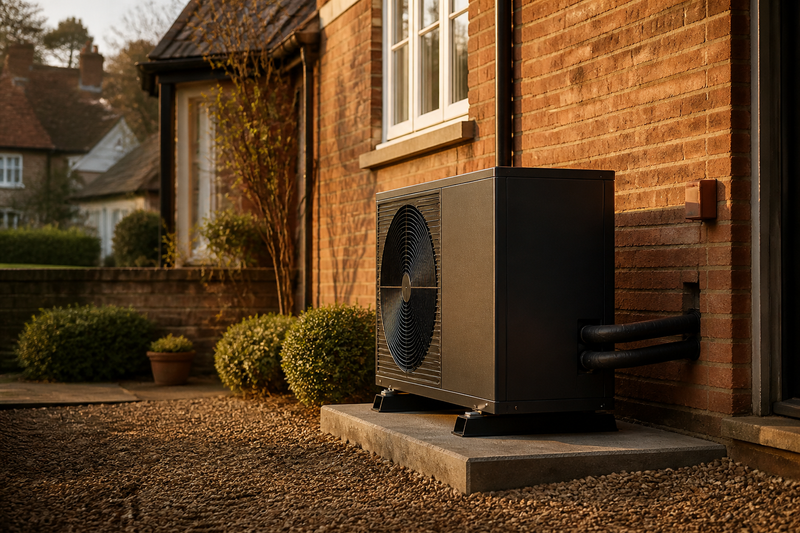
According to BBC News reporting on 23 November 2026, household energy bills are climbing again as volatile wholesale gas prices feed into retail tariffs. Department for Energy Security and Net Zero figures show that over 80% of heat pump installations under the Boiler Upgrade Scheme are monobloc systems. Unlike split systems that pump chemical refrigerant into an indoor unit, a monobloc packages the complete refrigeration circuit within a single outdoor casing. Hot water then flows directly from the outdoor unit into your central heating pipework and hot water cylinder. Understanding the physical requirements, real costs and installer credentials helps you make an informed decision for your home.
What is a monobloc heat pump and how does it work?
A monobloc heat pump is a self-contained outdoor heating appliance that extracts heat from outside air and transfers it directly into water. The word monobloc refers to the single outdoor unit that houses every mechanical component of the refrigeration cycle. The compressor, expansion valve, evaporator and plate heat exchanger are all sealed at the factory. Because the refrigeration circuit remains outside, no refrigerant gas enters your living areas. Only water pipes enter the property, passing through insulated holes in the external wall. This design simplifies maintenance because heating engineers do not need specialised F-Gas qualifications to service the hydraulic side of the system. Many modern monoblocs use R290 refrigerant, which is propane with exceptional thermodynamic efficiency at low winter temperatures. Keeping that sealed propane circuit outdoors provides natural ventilation and complies with UK safety guidance without complex indoor leak detection sensors.
How much does a monobloc heat pump cost to install in the UK?
A standard monobloc heat pump installation in the UK costs between £9,000 and £14,000 before deducting government financial support. In England and Wales, the Boiler Upgrade Scheme provides a £7,500 grant that MCS-certified installers deduct directly from your quote. In Scotland, Home Energy Scotland offers an equivalent £7,500 grant alongside an additional £1,500 uplift for qualifying rural properties. After applying the grant, most householders pay between £1,500 and £6,500 for the completed project. The final price depends on whether your existing hot water cylinder and radiators are compatible with lower heating flow temperatures.
| Upgrade Component | Typical Cost Range | What the Work Covers |
|---|---|---|
| Outdoor monobloc unit (5kW to 9kW) | £3,200 to £5,400 | Heat pump unit, outdoor anti-vibration feet, weather sensor |
| Pre-plumbed hot water cylinder (200L) | £1,400 to £2,300 | Cylinder with enlarged coil, three-way diverter valve |
| Plumbing and electrical connections | £1,100 to £2,400 | 28mm copper pipework, magnetic filter, dedicated breaker |
| Radiator upgrades (3 to 5 rooms) | £700 to £1,800 | Replacing small radiators with double-panel Type 22 convectors |
| Survey, labour and MCS registration | £2,100 to £3,600 | BS EN 12831 heat loss survey, DNO notification, building control sign-off |
| Boiler Upgrade Scheme voucher | -£7,500 | Government grant deducted directly from the installer invoice |
| Net cost to householder | £1,000 to £8,000 | Typical out-of-pocket investment across standard UK homes |
What anti-freeze protection does an outdoor monobloc require?
An outdoor monobloc heat pump requires anti-freeze protection because heating water circulates outside the home and can freeze during a winter power outage. If power fails during freezing weather, stationary water inside the outdoor plate heat exchanger can expand and split the internal components. Installers protect the system using either chemical glycol or mechanical anti-freeze valves. Glycol is a non-toxic fluid added to the heating water to lower its freezing point below minus ten degrees. While glycol provides complete freeze protection, it reduces heat transfer efficiency by roughly 3% and requires regular testing during annual servicing. Mechanical anti-freeze valves mount onto the external flow and return pipes beneath the heat pump. These valves contain a thermal element that opens when water temperature drops below 3°C, releasing water before ice can form. Systems using anti-freeze valves run on pure water, maintaining maximum heat transfer efficiency without regular chemical replacement.
What pipe sizing and indoor space do you need for a monobloc unit?
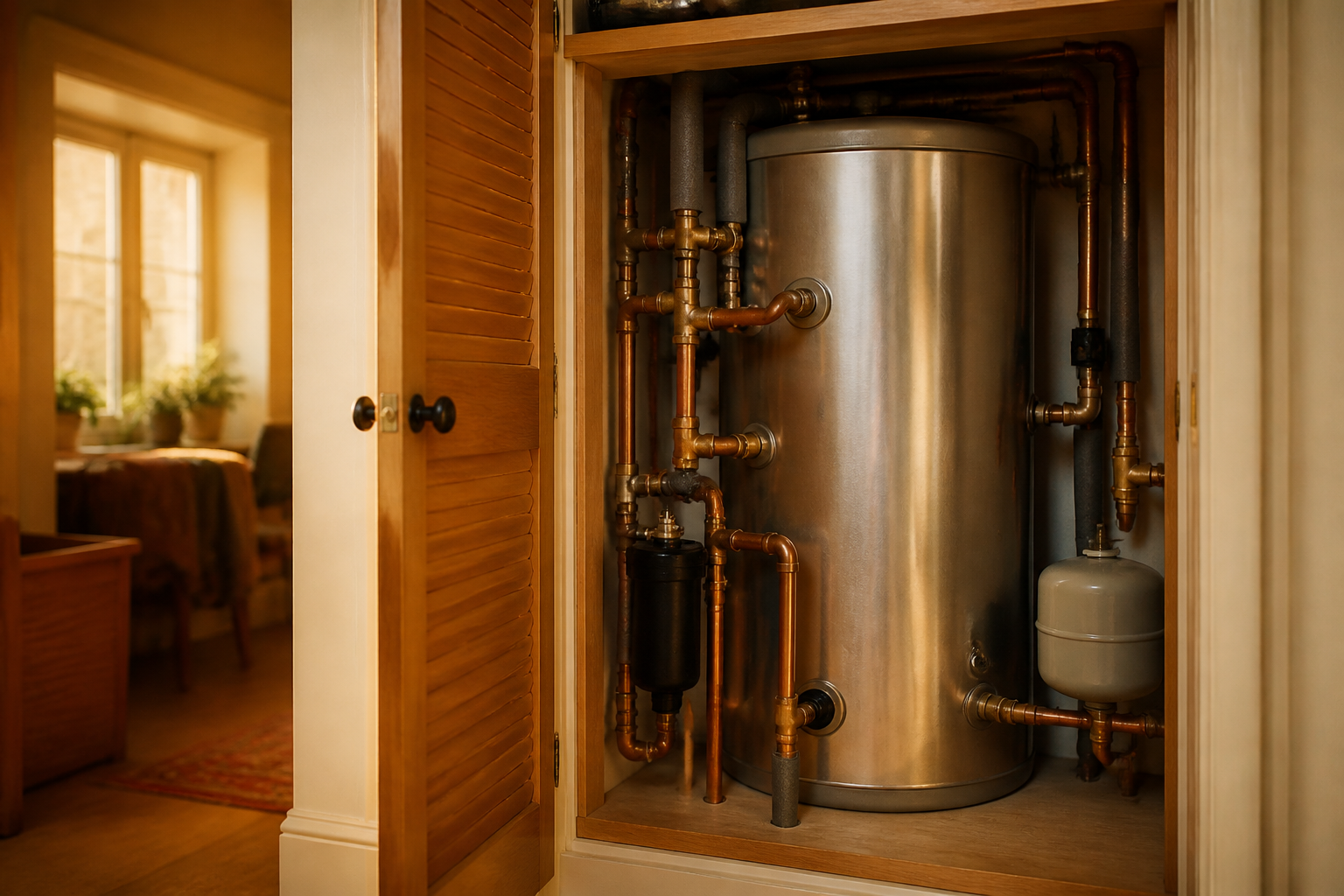
A monobloc heat pump requires 28mm external pipework to carry sufficient water volume into your home without excessive pump pressure. Traditional gas boilers operate with water temperatures around 70°C and a wide twenty-degree drop between supply and return pipes. Because heat pumps run at gentle flow temperatures between 35°C and 50°C, they require a higher flow rate to transfer the same thermal energy. Forcing that flow through narrow 15mm or 22mm pipes creates friction, forces the pump to work harder and drives up electricity consumption. External pipes must be insulated with weatherproof Class O elastomeric foam at least 19mm thick to prevent thermal losses. Inside the home, you do not need space for a wall-mounted boiler. You will need a cupboard roughly 700mm wide and 1,800mm tall to house the unvented cylinder, expansion vessel and magnetic filter.
What accreditations must your heat pump installer hold?
Your heat pump installer must hold active certification with the Microgeneration Certification Scheme to ensure your system qualifies for government grant funding. MCS accreditation confirms that the contractor designs heating systems according to MIS 3005 standards and carries appropriate insurance. Installers must also register with an approved consumer protection body such as the Renewable Energy Consumer Code or the Home Insulation and Energy Systems scheme. These organisations protect your deposit through third-party insurance and provide independent arbitration if an installation dispute arises. You should also verify that the electrician completing the power connections is registered with NICEIC or NAPIT for Part P electrical safety compliance.
What questions should you ask an installer before paying a deposit?
You should ask the installer to show you their room-by-room heat loss calculations before you agree to any hardware specification. Reliable contractors will gladly answer technical questions about design, components and pipework before requesting payment. Essential questions to put to your heating contractor include:
- Did you calculate heat loss room by room under BS EN 12831 or use an automated whole-house estimate?
- What maximum flow temperature did you use when calculating whether my radiators need replacing?
- Are you installing mechanical anti-freeze valves or dosing the circuit with inhibited glycol?
- Will you install a full-bore magnetic dirt separator to protect the internal heat exchanger from heating debris?
- Will you submit the distribution network notification to the local network operator before installation starts?
"Monobloc heat pumps have rapidly become the primary choice for British retrofits because they eliminate indoor refrigerant pipework while keeping installation timelines predictable. When employers support their workforce with clean home heating, removing the upfront friction allows households to lock in dependable efficiency before winter arrives."
Gaurav Ahluwalia, General Manager, The Net Zero Home Scheme
How long does a monobloc heat pump installation take from start to finish?
A typical monobloc heat pump installation takes between four and eight weeks from the first home survey to final handover. The physical work inside your house usually requires only three to five days of on-site labour. During the first two weeks, the surveyor assesses insulation levels, measures radiator sizes and submits connection paperwork to your local electricity distributor. Once the network operator approves the connection and your grant application is approved, hardware delivery takes one to two weeks. On-site work begins with removing the old boiler, running 28mm insulated pipes through the external wall and positioning the outdoor unit on a level concrete base. The engineer then installs the new hot water cylinder, replaces designated radiators and fills the system with treated water. The final day involves balancing radiator flow rates, configuring the outdoor weather compensation curve and walking you through the control panel.
Offering The Net Zero Home Scheme costs employers nothing to introduce, requiring no salary sacrifice and no payroll deductions. Employees gain member pricing with up to 15% off installations by vetted, accredited specialists when swapping your boiler for a heat pump. The initiative is delivered by the team behind The Electric Car Scheme and The Charge Scheme.