Installing Home Battery Backup: UK Householder Guide
A practical guide to adding emergency backup power to a UK home battery, covering BS 7671 earthing rules, gateway costs, installer checks and project timelines.
- Written by
- Net Zero Home Scheme editorial team
- Last updated
- Topic
- battery storage, solar, mcs
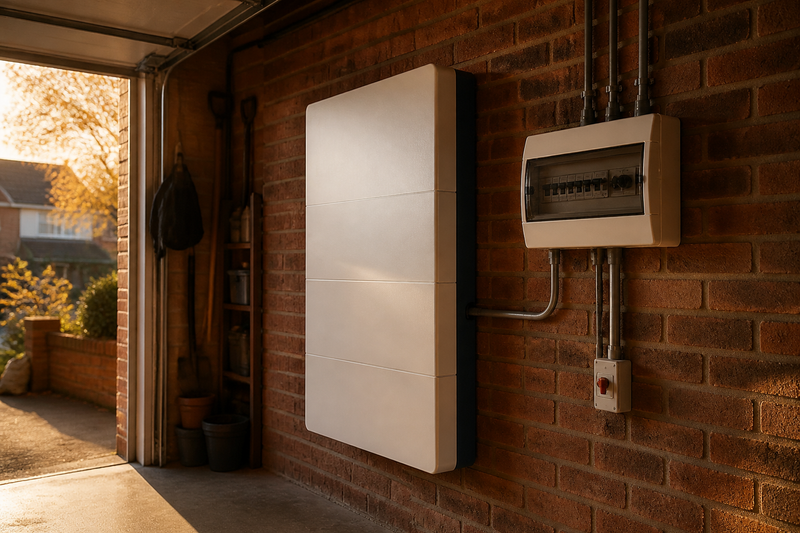
According to the Energy Networks Association, severe weather and equipment faults caused more than 1.5 million customer interruptions across Great Britain between 2024 and 2025. Most homeowners who install domestic storage assume their lights will stay on when the neighbourhood grid fails. In reality, almost all standard solar batteries instantly shut down during an outage to protect utility workers on external lines. If you want your storage unit to supply electricity during a blackout, you must commission dedicated emergency backup hardware.
Adding this resilience transforms an ordinary grid-tied battery into an islanded microgrid. The upgrade requires specific electrical safeguards, clear load planning and formal approval from your Distribution Network Operator (DNO). Understanding these engineering requirements helps you select the right system and avoid expensive mistakes.
How domestic battery systems evolved to handle power cuts
For more than a decade, domestic solar and battery installations in Great Britain have operated under Engineering Recommendation G98. This national standard enforces automatic loss-of-mains protection. Whenever the incoming voltage disappears, an internal contactor disconnects the inverter within 500 milliseconds. This rapid disconnection prevents your home from exporting power into a damaged street cable, which protects line technicians from fatal shocks.
Early domestic storage systems had no provision for standalone operation. Manufacturers focused entirely on daily solar self-consumption and overnight off-peak charging. However, an increase in severe autumn and winter storms has shifted homeowner priorities toward resilience. Modern hybrid inverters now frequently include an Emergency Power Supply (EPS) port. Higher-end systems also support full external transfer gateways that can isolate your home from the street and run critical circuits independently.
Operating safely during a blackout requires your installation to satisfy Section 551 of BS 7671, the UK national electrical wiring regulations. This standard dictates how domestic microgenerators must isolate incoming supply cables, establish a local earth reference and switch off non-essential loads. A compliant backup installation is therefore far more involved than simply plugging a battery into your existing consumer unit.
What to inspect before designing a domestic backup circuit
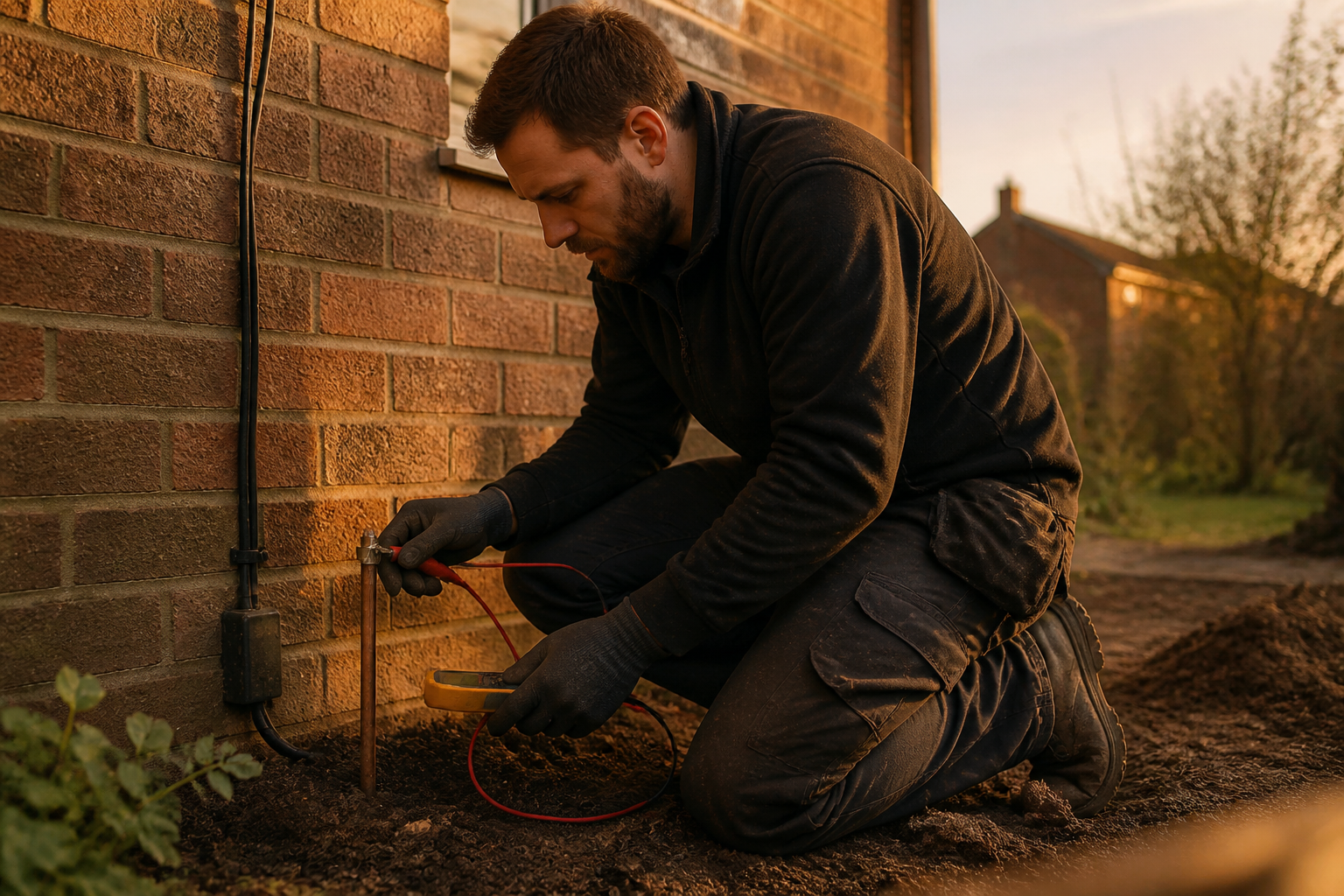
Before spending money on backup equipment, you need to check several technical details around your current electrical setup. Skipping these early checks can lead to failed safety inspections or sudden system trips when an outage occurs.
Earthing arrangements and the requirement for an independent ground rod
The vast majority of urban and suburban properties across Great Britain rely on a TN-C-S earthing supply, often called Protective Multiple Earthing (PME). Under this arrangement, your home earthing terminal bonds directly to the supplier neutral conductor in the street. Electricity safety regulations strictly forbid using a PME earth during an islanded power cut. If the external neutral wire breaks down the road, your household metalwork could carry dangerous voltages.
To run a battery in backup mode, your installer must convert the backup circuit into an independent TT earthing arrangement. This conversion requires driving a dedicated copper-bonded earth rod into the ground outside your home. The contractor must measure the earth electrode resistance to confirm it meets BS 7671 requirements. In addition, your inverter or gateway must feature an automated neutral-earth bonding relay that energises only when the incoming grid disconnects.
Inverter continuous discharge rates and consumer unit load splitting
A battery that supplies 3 kW of power during normal grid-tied operation may behave very differently during a power cut. You must check the continuous off-grid output rating of the specific inverter model rather than its short-term peak figure. Running an electric kettle, a microwave and a heat pump at the same time can easily demand 7 kW of power. If your electrical demand exceeds the continuous off-grid limit, the inverter will trip instantly and leave your home in darkness.
Most households choose a dedicated critical-loads consumer unit instead of whole-house backup. An electrician splits your existing circuits, routing essential appliances through the backed-up sub-board while leaving heavy loads on the standard grid-dependent board. Refrigerators, central heating controls, domestic internet routers and key lighting circuits represent the sensible foundation for emergency power.
| Backup Option | Typical Hardware Required | Average Additional Cost | Approximate Installation Time | Primary Operational Limitation |
|---|---|---|---|---|
| Dedicated EPS Socket | External socket wired directly to inverter EPS terminals | £300 to £600 | 1 day | Manual connection required via extension lead |
| Critical Loads Sub-Board | Manual changeover switch, TT earth rod, split consumer unit | £900 to £1,600 | 1 to 2 days | Only pre-selected essential circuits receive power |
| Whole-Home Automated Gateway | Microgrid gateway switch, TT earth rod, automatic contactor | £1,800 to £2,800 | 2 to 3 days | High electrical demand can rapidly drain storage capacity |
Essential installer credentials and survey questions
Installing emergency backup hardware involves complex mains electrical work and strict regulatory compliance. You should only hire an installer who holds active registration with a recognised competent person scheme such as NICEIC or NAPIT. Furthermore, your domestic energy storage installation must be certified under the Microgeneration Certification Scheme (MCS) using standard MIS 3012.
When evaluating quotes, ask the prospective contractor these specific technical questions:
- How will you manage neutral-earth bonding during an islanded grid failure?
- Will you install a dedicated TT earth electrode, and what earth loop impedance do you design for?
- Does your quote include a full G99 application to the Distribution Network Operator for off-grid islanding approval?
- Which specific household circuits will you wire into the emergency backup consumer unit?
- Does the system support automatic switchover, or will I need to throw a manual changeover switch?
- What is the continuous continuous power rating of the inverter when operating without grid support?
A professional installer will welcome these questions and provide clear answers. If a contractor suggests that a simple software update can enable backup without an earth rod or physical isolation switch, look elsewhere immediately.
Typical project milestones and delivery schedule
Adding backup capability to a home battery usually takes between two and six weeks from the initial survey to final handover. The physical wiring work requires only one or two days on site, but technical design and administrative clearances take time.
During week one, the installer conducts a physical site survey to assess your incoming consumer unit, check main cable routes and locate an outdoor spot for the earth rod. The engineer calculates your expected emergency loads to ensure the chosen inverter can start inductive motors such as fridge compressors without tripping.
Between weeks two and four, the contractor submits documentation to your regional DNO. While standard solar arrays often connect under fast-track G98 notification rules, systems incorporating advanced gateways and automatic islanding frequently require prior consent under Engineering Recommendation G99. Your network operator verifies that your system cannot export unsynchronised electricity onto the network when mains power returns.
Once the DNO grants connection approval, the installer completes the electrical fit-out. The electrician installs the backup sub-board, drives the earth rod, runs safety cables and updates your electrical certification. Finally, the contractor simulates a power cut by opening your main service isolator, demonstrating that your critical circuits stay live while the street supply is dead.
"Households are often surprised to discover that a standard domestic battery switches off during a power cut unless it has been specifically engineered for backup power. When employees look to protect their homes against local disruptions, having clear technical guidance on earthing rods, changeover switches and load separation ensures they get reliable resilience without paying for unnecessary capacity. Our role is to help working families navigate these exact engineering choices so that every pound invested in clean power delivers genuine peace of mind."
Gaurav Ahluwalia, General Manager, The Net Zero Home Scheme
What network changes and tax shifts to anticipate through 2027
As domestic storage adoption accelerates across the UK, distribution network operators are updating their assessment procedures. The Energy Networks Association is developing streamlined G99 fast-track routes for pre-tested domestic backup gateways, which should shorten connection approval waiting times over the coming months.
Tax policy also plays a significant role in your installation timeline. Under current Treasury rules, domestic battery systems installed in residential properties benefit from 0% VAT. This relief applies whether you install the battery alongside rooftop panels or add it to an existing system. However, this zero-rate relief is scheduled to expire on 31 March 2027, when VAT on domestic energy storage will revert to standard rates unless the government extends the policy.
Homeowners who want to secure reliable backup power before tax rules change can also explore workplace support routes. For employers seeking to support their team with household running costs, offering workplace energy perks costs nothing for an organisation to establish. Through The Net Zero Home Scheme, employees can access member pricing of up to 15% off solar panels and a battery on your roof, installed by thoroughly vetted and accredited contractors. This support helps working households plan their energy resilience with confidence, knowing their hardware complies fully with British electrical safety standards.