Upgrading Your Main Fuse and Consumer Unit for Home Upgrades
A practical guide to checking your main cut-out fuse, consumer unit and DNO supply capacity before installing low-carbon heating or home storage.
- Written by
- Net Zero Home Scheme editorial team
- Last updated
- Topic
- heat pumps, home energy, energy efficiency
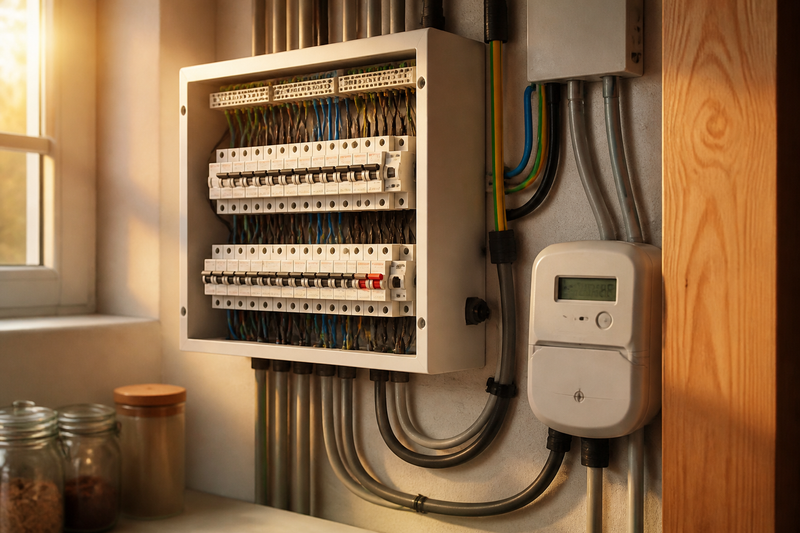
According to reports published by The Guardian on 9 November 2026, UK households face an accelerating rush to secure accredited energy installers ahead of impending tax changes, putting unprecedented pressure on local electrical connection capacity. Yet thousands of British homes built before 1990 still run on a single-phase 60 Amp main electrical fuse. When you swap a gas boiler for an electric heat pump or add a high-power charger for your car, that standard 60 Amp service can quickly reach its limit, triggering unexpected power trips or delays to your project.
Preparing your home’s main electrical board, known as the consumer unit, and confirming your supply capacity with your local Distribution Network Operator (DNO) are essential first steps. Doing this work before your installer arrives prevents costly delays and ensures your home safely handles increased electrical loads.
Why your main electrical fuse matters before booking an installation
Every domestic property in England, Scotland and Wales receives electricity through a service cable managed by a regional DNO, such as National Grid Electricity Distribution, UK Power Networks or SSEN. That cable ends at your main cut-out fuse, located just before your electric meter.
Older UK properties often have a 60 Amp or 80 Amp main fuse. A 60 Amp supply at 230 Volts provides a maximum continuous capacity of 13.8 kilowatts (kW). If your household runs a 3 kW heat pump compressor, an 8 kW electric shower, a tumble dryer and an electric vehicle charger simultaneously, total demand can easily exceed 14 kW. Exceeding your main fuse rating risks blowing the service fuse, which can only be replaced by your DNO.
Upgrading your cut-out fuse to 100 Amps increases your household capacity to 23 kW. Most DNOs perform this upgrade free of charge, but your home's existing cabling and consumer unit must meet strict British Standards (BS 7671) before they will approve the increase.
Checking your consumer unit and main cut-out fuse: what to look for
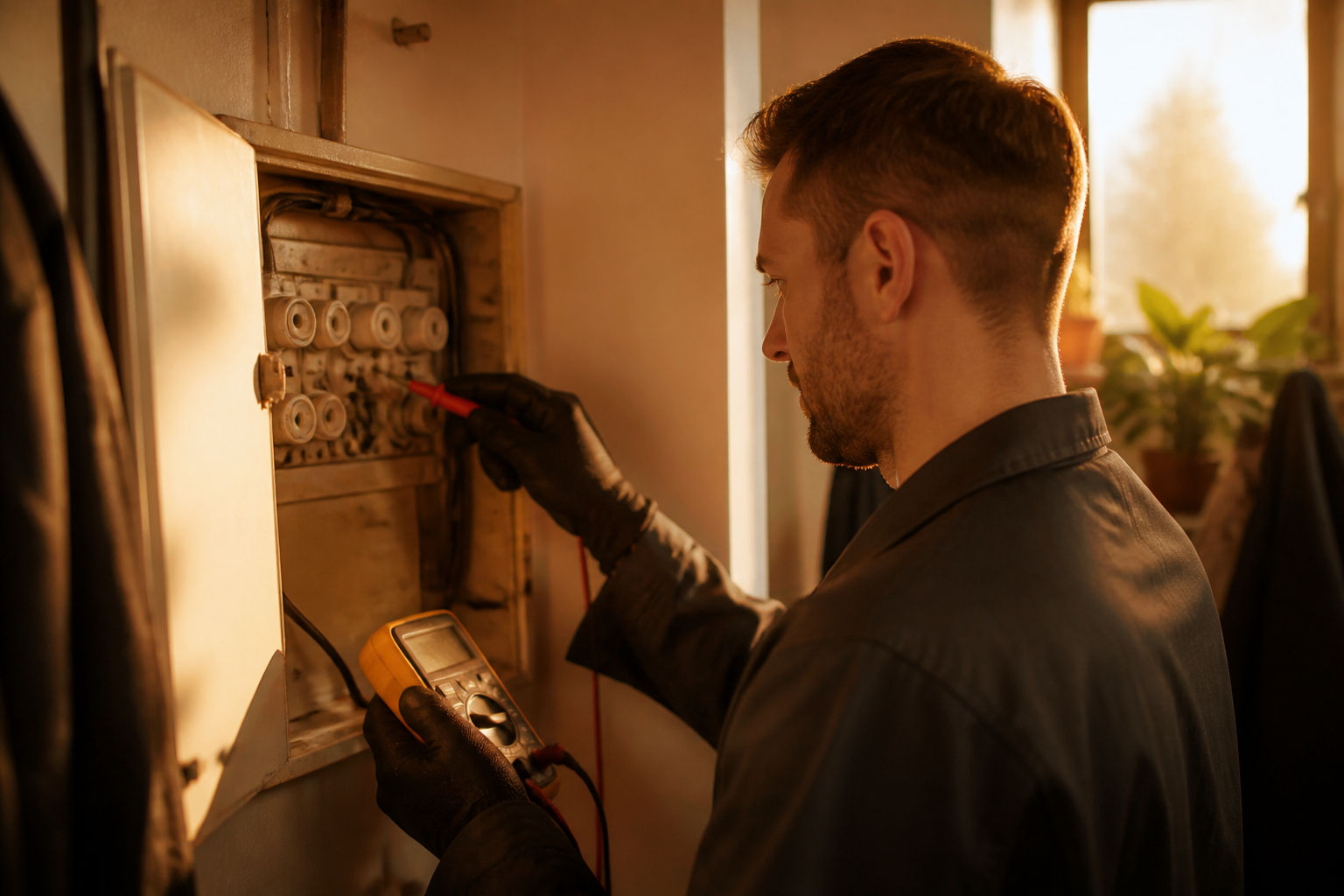
Before booking any major installation, take a clear photograph of your electricity meter and the fuse box next to it. You do not need to open any sealed boxes to gather critical details.
First, check the casing of your main cut-out fuse. Older installations may feature cast-iron boxes or black pitch-filled units. If you see metal casings, fabric-braided wiring or lead-sheathed cables, your DNO will require a cutout replacement before approving any additional high-power appliances.
Second, look at your main consumer unit. Modern energy upgrades require residual current protection and surge protection. If your board uses old wire-rewind fuses or lacks a modern Surge Protection Device (SPD), your electrician will need to upgrade the consumer unit or install a dedicated sub-board. Modern regulations under BS 7671 18th Edition Amendment 2 require Type A or Type B Residual Current Devices (RCDs) to safely handle direct-current leakage signals caused by modern inverter systems.
Electrical checklist for upgrading your home's main supply
The table below outlines the essential electrical components, required standards and typical upgrade requirements for UK domestic energy projects.
| Component | Older UK Standard | Modern Required Standard | Who Performs Upgrades? |
|---|---|---|---|
| Main Service Fuse | 60 Amp or 80 Amp cutout | 100 Amp BS 1361 / BS HD 60269-3 | Regional DNO |
| Main Meter Tails | 16 mm² copper cabling | 25 mm² double-insulated copper | Registered Electrician / DNO |
| Consumer Unit RCD | Type AC RCD or rewireable fuses | Type A RCD (or Type B where specified) | Registered Electrician |
| Surge Protection | None fitted | Type 2 Surge Protection Device (SPD) | Registered Electrician |
| Earthing System | Lead sheath (TNS) or spike (TT) | PME (TN-C-S) earth terminal | DNO / Registered Electrician |
| Isolation Switch | None (DNO fuse pull required) | Double-pole 100A isolation switch | Electricity Supplier / DNO |
DNO notifications, approval timelines and installer accreditations
Connecting high-power equipment to the grid requires formal notification under Energy Networks Association (ENA) rules. Under standard Connect and Serve processes, equipment meeting small-scale export limits can be registered after installation. However, if your peak household demand requires a main fuse upgrade or a complex grid connection, your installer must submit an ENA application prior to work commencing.
DNO approval for fuse upgrades typically takes between two and six weeks, depending on network constraints in your area. If the DNO determines that your street cable requires un-bundling or reinforcement, timelines can extend to twelve weeks.
Always ensure your chosen electrician or heating technician holds current accreditation with a recognised UK trade body. Look for membership with the National Inspection Council for Electrical Installation Contracting (NICEIC), NAPIT, or the Microgeneration Certification Scheme (MCS). For heating systems, verify that your contractor belongs to the Renewable Energy Consumer Code (RECC) or the Home Insulation and Energy Systems Quality Assured Contractors Scheme (HIES). These accreditations protect your deposit and guarantee that all work complies with Building Regulations Part P.
What should a main fuse or consumer unit upgrade cost?
In most instances, upgrading the main service fuse itself is free because the cut-out assembly remains the property of your regional DNO. However, preparing your side of the meter involves private electrical work.
Replacing 16 mm² meter tails with 25 mm² cabling and fitting a double-pole isolation switch typically costs between £150 and £300. Replacing an outdated consumer unit with a fully populated 18th Edition board, complete with Type A RCDs and surge protection, usually ranges from £500 to £900 including testing and Part P certification.
If your employer offers The Net Zero Home Scheme, setting up access costs your organization nothing while giving you member pricing on home energy installations delivered by accredited contractors. The scheme is run by the team behind The Electric Car Scheme and The Charge Scheme, ensuring all electrical site surveys and grid notifications are managed seamlessly.