Autumn Budget 2026: VAT on solar, batteries and heat pumps, EV tax to 2031 and energy bill help
What the Autumn Budget 2026 means for solar panels with a battery, heat pumps, electric car BIK rates, energy bills and pay. With commentary from Gaurav Ahluwalia and Thom Groot.
- Written by
- Net Zero Home Scheme editorial team
- Last updated
- Topic
- autumn budget 2026, vat solar panels, vat heat pumps
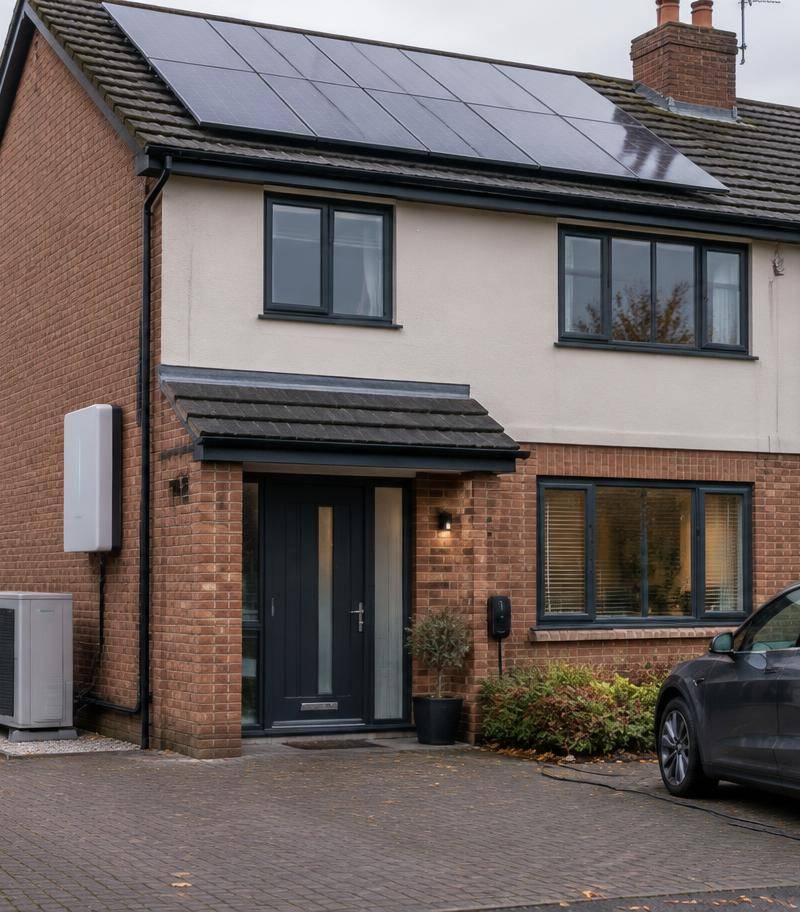
The Autumn Budget 2026 was delivered on 28 October. For households and employers working towards net zero, the headline is steady rather than dramatic. Tax on clean home technology stays low for now. Electric car company car tax rates are now set until April 2031. There is extra help with energy bills this winter and next year.
Our mission at the Net Zero Home Scheme is to make low carbon homes affordable for working people. So we start with what the Budget means for solar panels with a battery, battery storage and heat pumps. Then we cover electric cars, pay and the changes that were already on the way.
VAT on solar panels, batteries and heat pumps
Solar panels with a battery, battery storage and heat pumps are "energy-saving materials" for VAT. Since April 2022 they have carried 0% VAT when installed in homes in Great Britain. The Budget did not change that end date. According to the Budget 2026 overview of tax legislation and rates, the relief goes back to 5% from 1 April 2027.
The same document adds heat batteries to the relief from 1 April 2027. A heat battery stores heat for hot water and heating, so it can stand in for a hot water cylinder.
What this means in practice: anyone planning an install has until 31 March 2027 to finish it at 0% VAT. Installers need time to survey and order kit. A household that starts the process in early 2027 may find the window tight.
"The 0% VAT window is still open, but it now has a clear end date. On a typical solar and battery quote, moving from 0% to 5% adds a few hundred pounds. Our advice to members is simple. Get a quote early so your install is booked well before April."
Gaurav Ahluwalia, General Manager, Net Zero Home Scheme
Members can calculate their savings and see live prices from vetted installers.
Salary sacrifice for solar panels and heat pumps: not in this Budget
There had been talk of letting employees pay for rooftop solar, battery storage and heat pumps through salary sacrifice. That was not announced. Discussions with government are ongoing.
"We hoped to see salary sacrifice extended to the home this year. It wasn't, and we will keep making the case. Salary sacrifice has already put hundreds of thousands of people into electric cars. The same approach could do the same for heat pumps and solar with a battery."
Gaurav Ahluwalia, General Manager, Net Zero Home Scheme
In the meantime the Net Zero Home Scheme carries on as it is. Employees get exclusive discounts of up to 15% on heat pumps, solar panels with a battery and battery storage. It costs employers nothing and needs no payroll changes. Read more in our guide to salary sacrifice for solar and heat pumps.
Heat pump grants and the Warm Homes Plan
The Budget 2026 document says the government "remains committed to heat pump deployment". It will keep the Boiler Upgrade Scheme at £400 million in 2027 to 2028, rising broadly with inflation after that. The same document saves £1 billion of capital grant from the Warm Homes Plan.
For households, the £7,500 Boiler Upgrade Scheme grant towards an air source heat pump is unaffected by this Budget.
Energy bill support
The Budget includes three measures that affect home energy bills.
- 0% VAT on household electricity extended. The temporary zero rate now runs until 30 June 2027 instead of ending on 31 March 2027.
- Gas standing charges to go. The government has asked Ofgem to remove gas standing charges from home bills. The aim is the end of 2027 or as soon as possible after that. A similar change for electricity may follow later.
- £100 Household Energy Payment. Households in council tax bands A to D in England will get £100 paid from January 2027. The devolved governments get their share of the funding.
Cheaper electricity and no gas standing charge both make running a heat pump more attractive. A battery lets a home store cheap off-peak power or its own solar power for the evening.
Electric car company car tax (BIK) rates to 2031
For drivers, the big news is certainty. The overview of tax legislation and rates sets company car tax for 2030 to 2031.
- Electric cars: the benefit in kind (BIK) rate rises by 1 percentage point to 10% in 2030 to 2031.
- Hybrids emitting 1 to 50g CO2/km: rates also rise by 1 percentage point, to 20% for 2030 to 2031.
- All other bands: up 1 percentage point, with a maximum of 40%.
This means EV salary sacrifice stays backed by low tax rates until at least April 2031.
"Setting EV rates to 2031 gives employers and employees the certainty to plan. It is the same certainty we want for the home. When people know the rules years ahead they invest."
Gaurav Ahluwalia, General Manager, Net Zero Home Scheme
Thom Groot, CEO of our sister company The Electric Car Scheme, commented:
"Salary sacrifice is one of the most effective tools the Government has, and it is right that it is extended to support working families making a green choice.
"The extension of EV salary sacrifice schemes by at least another year in the Budget is welcome news to households. That said, the increase in the Benefit in Kind by 1% for 2030/31 rate (with the rate for EVs set at 10%) does start to price out those looking at second hand EVs, and those on lower incomes.
"We would have liked to see salary sacrifice for electric cars extended at least 2 years until 2032, with rates held at 9% for new electric cars, and reduced by 2/3rds for second hand EVs."
Thom Groot, CEO, The Electric Car Scheme
Road tax, fuel duty and mileage rates
- Vehicle Excise Duty (road tax) for cars, vans and motorcycles rises with RPI inflation from 1 April 2027.
- Fuel duty: the temporary 5p a litre cut is extended to 30 June 2027. From 1 July 2027 rates go back to their pre-2022 level and rise with RPI. This doesn't affect electric car drivers. Petrol and diesel drivers avoid a rise while pump prices are high.
- Business mileage rates: the tax-free rate stays at 55p a mile for the first 10,000 business miles. Above 10,000 miles it rises from 25p to 35p a mile from 6 April 2027.
Pay and tax for employers
- National Living Wage rises by 3.9% to £13.21 an hour from 1 April 2027. That is around £910 a year more for a full-time worker.
- No changes to the rates or thresholds of Income Tax, National Insurance or VAT.
What we already knew before the Budget
Several changes were announced earlier and are still going ahead.
- Mandatory payrolling of benefits in kind starts on 6 April 2027 for company cars and vans. Most other benefits follow from 6 April 2028.
- Electric Vehicle Excise Duty (eVED), a pay-per-mile charge on electric cars, starts on 1 April 2028.
- £100 million to help cut the cost of local public chargers from spring 2027. Planning permission will no longer be needed for gully installs for home chargers.
- VAT on public and workplace charging is confirmed at 20%, not 5%. New law makes this explicit from 1 November 2026.
Budget 2026 at a glance
| Change | What it means | When |
|---|---|---|
| VAT on solar with battery, batteries and heat pumps | 0% ends, 5% applies | 1 April 2027 |
| Heat batteries | Added to VAT relief | 1 April 2027 |
| Boiler Upgrade Scheme | £400m budget kept | 2027 to 2028 |
| VAT on household electricity | 0% extended | Until 30 June 2027 |
| Gas standing charges | To be removed | Aim: end of 2027 |
| Household Energy Payment | £100 for bands A to D (England) | From January 2027 |
| Electric car BIK | 10% | 2030 to 2031 |
| Hybrid BIK (1 to 50g CO2/km) | 20% | 2030 to 2031 |
| Road tax | Rises with RPI | 1 April 2027 |
| Fuel duty | 5p cut extended | Until 30 June 2027 |
| Mileage over 10,000 miles | 25p to 35p | 6 April 2027 |
| National Living Wage | £13.21 an hour | 1 April 2027 |
| Payrolling of car benefits | Mandatory | 6 April 2027 |
| eVED pay-per-mile | Starts | 1 April 2028 |
For the wider economic picture, see the Office for Budget Responsibility's Economic and fiscal outlook for October 2026.
Frequently asked questions
Is VAT still 0% on solar panels and batteries?
Yes, until 31 March 2027. From 1 April 2027 the VAT relief for energy-saving materials goes back to 5%. On the Net Zero Home Scheme solar panels always come with a battery.
When does VAT on heat pumps go up to 5%?
On 1 April 2027. Heat pumps installed in homes in Great Britain carry 0% VAT until 31 March 2027.
Did the Budget extend salary sacrifice to solar panels and heat pumps?
No. Talks with government are ongoing. The Net Zero Home Scheme still gives employees discounts of up to 15% at no cost to their employer.
What is the electric car BIK rate for 2030/31?
10%. That is a 1 percentage point rise on the year before. Hybrids emitting 1 to 50g CO2/km go to 20%.
Is the Boiler Upgrade Scheme still available?
Yes. The Budget keeps it at £400 million in 2027 to 2028. Households can still get £7,500 towards an air source heat pump.
What help with energy bills did the Budget announce?
0% VAT on household electricity until 30 June 2027 and a plan to remove gas standing charges. Households in council tax bands A to D in England also get a £100 payment from January 2027.
What to do next
If you are an employer, the Net Zero Home Scheme is a free benefit that helps your people cut their bills before the VAT window closes. Book a demo or get the employer pack. If you are an employee, calculate your savings and see live prices in minutes.
Sources
- Budget 2026 overview of tax legislation and rates (OOTLAR), HM Treasury / HMRC
- Budget 2026 document, HM Treasury
- Budget 2026: Breathing space for today, hope for the future, HM Treasury
- Economic and fiscal outlook, October 2026, Office for Budget Responsibility