Offshore Wind Investment Confirmed Following Budget 2026
GOV.UK confirms major UK offshore wind project progress on 11 November 2026, signaling key grid shifts for domestic energy bills and HR reward strategies.
- Written by
- Net Zero Home Scheme editorial team
- Last updated
- Topic
- energy bills, policy, solar
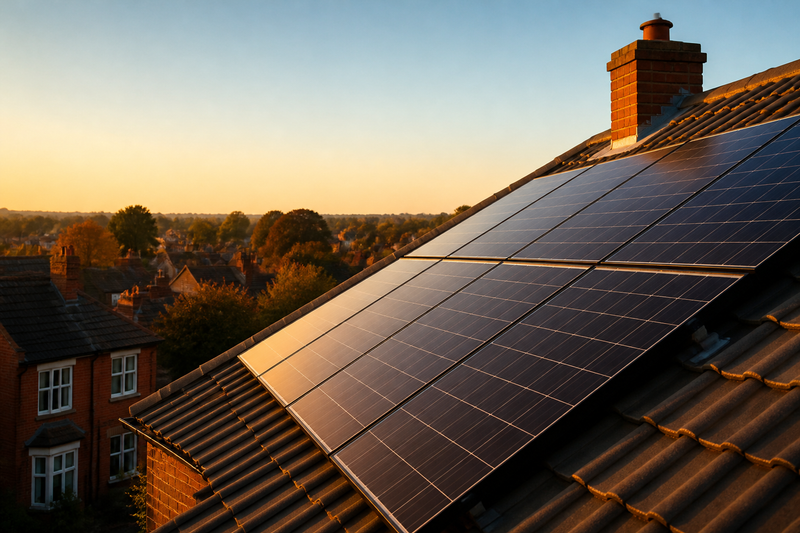
On 11 November 2026, GOV.UK reported that the Prime Minister confirmed major progress on two large-scale UK offshore wind projects designed to expand homegrown clean electricity generation.
This announcement builds directly on the energy infrastructure and green tax frameworks detailed in our full Budget 2026 guide. While public investment in wind generation supports long-term grid decarbonisation, domestic consumers and workplace benefit leaders face immediate choices around household power costs and upcoming tax rate adjustments.
1. Tracking How Grid Expansion Feeds Into Household Energy Tariffs
When major infrastructure projects reach milestones, the benefits to domestic power tariffs arrive over years rather than weeks. Offshore wind farms supply wholesale electricity to the National Grid, which reduces reliance on imported natural gas over time. However, network reinforcement costs and distribution charges mean domestic standing charges and unit rates remain sensitive to broader economic pressures.
Regional variations also persist across the UK. For example, on 11 November 2026, BBC News reported that electricity bills in Jersey will rise by 2.5% from March, adding just over £1 per week for a typical all-electric home. While island networks operate under distinct supply contracts, the update demonstrates how distribution and wholesale inputs continue to press upward on household budgets across British territories.
For households looking to lower utility expenses today, waiting for wholesale grid prices to soften is rarely the most effective strategy. Generating clean power directly on your roof isolates your household budget from network rate adjustments.
2. Calculating Solar Panel and Battery Storage ROI Ahead of April 2027
Households considering self-generation must account for a firm policy deadline set out in recent Treasury guidance. The 0% VAT rating on domestic energy installations, including solar panels, battery storage, and heat pumps, is scheduled to end on 31 March 2027. On 1 April 2027, VAT will return to 5%.
This tax step-up changes the financial payback calculation for homeowners. Installing equipment before the deadline saves 5% on both hardware and labor costs.
| Installation Component | Average Cost at 0% VAT (Until 31 March 2027) | Projected Cost at 5% VAT (From 1 April 2027) | Estimated Tax Difference | Notes & System Specifications |
|---|---|---|---|---|
| 4 kWp Solar Array | £6,000 | £6,300 | £300 | Premium monocrystalline panels on pitched tile roof |
| 5 kWh Home Battery | £3,500 | £3,675 | £175 | AC-coupled lithium iron phosphate (LFP) storage |
| Combined Solar & Battery System | £9,000 | £9,450 | £450 | 4 kWp array with integrated 5 kWh storage unit |
| Air Source Heat Pump | £11,500 | £12,075 | £575 | Standard installation before applying £7,500 BUS grant |
To maximise financial returns, householders should evaluate five key steps before booking an installation:
- Audit annual electricity consumption in kilowatt-hours (kWh) using recent utility statements.
- Inspect the main electrical cut-out fuse (typically 60A, 80A, or 100A) to ensure capacity for new hardware.
- Verify installer credentials with Microgeneration Certification Scheme (MCS) and TrustMark databases.
- Submit G98 grid notification documentation via your accredited installer for systems under 16A per phase.
- Confirm physical installation dates with your chosen installer well ahead of the 31 March 2027 VAT cutoff.
Combining solar panels with a battery allows you to store daytime generation for evening peak hours, reducing reliance on grid electricity regardless of external price movements.
3. Auditing Workplace Reward Packages for Home Energy Support
For HR directors and reward leaders, macroeconomic announcements around green investment highlight a growing trend: employees are seeking practical workplace support to handle persistent household bill pressures.
Budget 2026 introduced several administrative milestones that HR teams must navigate over the next 24 months. Mandatory payrolling of benefits in kind takes effect on 6 April 2027, requiring software updates and revised reporting processes for standard workplace perks. Simultaneously, the National Living Wage will increase to £13.21 per hour in April 2027, placing additional pressure on overall reward budgets.
Because traditional salary sacrifice structures carry administrative overhead and can interact with National Living Wage compliance, HR teams are turning to non-payroll benefit models. Providing staff with direct access to discounted home technology allows employers to enhance financial wellbeing without touching payroll systems.
4. Setting Up Low-Friction Benefits for Household Bill Reduction
When evaluating home energy perks for staff, HR leaders should prioritize schemes that eliminate administrative complexity while delivering verified savings to employees.
As employee demand for help with rising home energy bills continues to grow, employers can provide practical support without incurring administrative overhead. Joining The Net Zero Home Scheme allows organisations to offer staff member pricing on solar panels and a battery, installed by vetted MCS-accredited professionals with zero payroll deductions or salary sacrifice.
By introducing pre-vetted installation pathways, employers enable staff to lock in 0% VAT savings before the April 2027 deadline while protecting household budgets against ongoing tariff fluctuations.
Will offshore wind expansion lower domestic power bills immediately?
No. Infrastructure projects reported by GOV.UK on 11 November 2026 require several years to construct and connect to the transmission network. Domestic electricity prices remain tied to regional distribution charges and national wholesale market mechanisms in the short term.
How does the 2027 VAT change affect home energy installation costs?
On 1 April 2027, the VAT rate on qualifying residential clean energy equipment will rise from 0% to 5%. On a typical £9,000 solar and battery package, completing the installation before 31 March 2027 saves £450 in tax.