IEA Declares Age of Electricity as UK Prepares for 2027 Tax Shifts
The IEA declared the start of the age of electricity on 13 November 2026, signaling key steps for UK employers and homeowners before 2027 tax rules change.
- Written by
- Net Zero Home Scheme editorial team
- Last updated
- Topic
- energy bills, policy, tariffs

On 13 November 2026, The Guardian reported that International Energy Agency executive director Fatih Birol declared the world has entered the "age of electricity", with global clean power additions over the next decade set to double the rate of the previous ten years. The statement came as international leaders met at COP31 to discuss grid expansion and clean power investment.
This global pivot coincides directly with the UK policy timeline laid out in the UK government's recent fiscal announcements. As detailed in our full Budget 2026 guide, domestic power and heating choices are moving steadily away from fossil fuels. However, key tax relief deadlines in 2027 mean UK households and employers need to plan their energy transitions carefully over the next 18 months.
How Global Electrification Matches the UK Policy Roadmap
The IEA analysis published on 13 November 2026 highlighted that fossil fuel dominance is giving way to direct electrification across home heating, private transport and light industrial processes. In the UK, this transition is supported by targeted capital grants alongside upcoming adjustments to direct tax rules.
For UK households, the transition is tied to specific legal deadlines. The temporary 0% VAT rate on energy efficiency measures, which covers heat pumps, home battery storage and solar installations, is scheduled to end on 31 March 2027. On 1 April 2027, VAT on these domestic installations will rise to 5%. For a standard £10,000 heat pump or home battery project, this regulatory change adds £500 to the upfront cost. At the same time, HR teams face compulsory payrolling of benefits in kind from 6 April 2027, requiring clearer reporting systems for all employee rewards.
Timeline of Key Energy and Tax Policy Changes
To help reward managers and householders track these overlapping deadlines, the table below outlines the confirmed policy milestones from late 2026 through 2031.
| Date | Policy Milestone | Impact on UK Households | Impact on HR and Reward Teams |
|---|---|---|---|
| 1 April 2027 | Domestic Energy VAT Rises to 5% | Adds 5% VAT to solar panels, home batteries and heat pump installs | Increases urgency for staff wanting home energy upgrades |
| 6 April 2027 | Mandatory Payrolling of Benefits | No direct impact on home tariffs | Requires all taxable benefit values to be processed via monthly payroll |
| 6 April 2027 | National Living Wage Rises to £13.21 | Boosts baseline take-home earnings for lower-paid staff | Requires salary sacrifice compliance checks against minimum wage floors |
| 1 April 2028 | Pay-Per-Mile EV Road Tax Begins | Introduces distance-based taxation for electric vehicles | Requires updates to company car fleet policies and mileage tracking |
| 31 March 2031 | Fixed Company Car Tax Rates End | Maintains predictable Benefit-in-Kind tax steps for electric cars | Provides multi-year tax certainty for workplace EV schemes |
What UK Households Should Watch Before 2027 Tax Adjustments
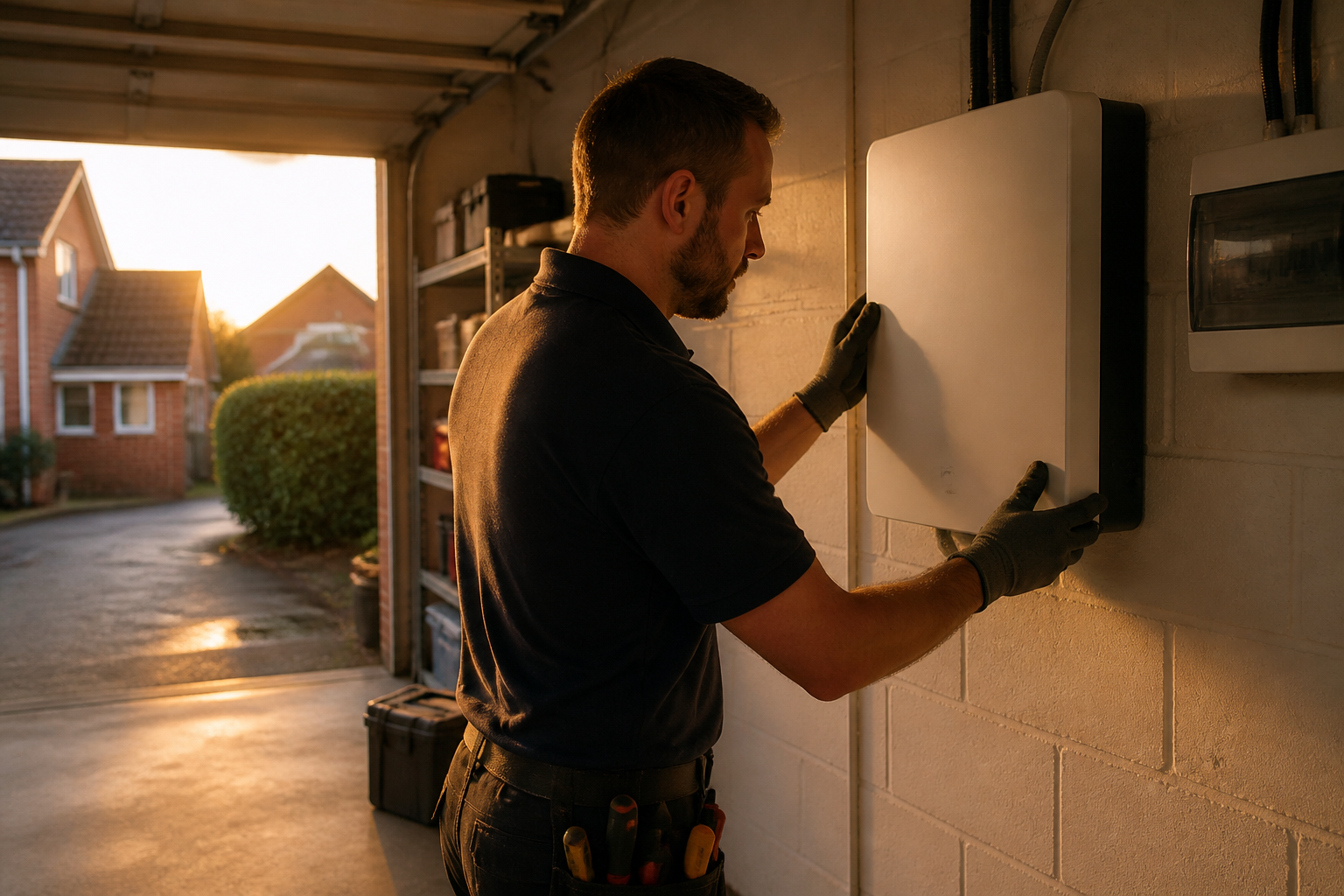
As power generation shifts toward renewables, home electricity prices are increasingly driven by dynamic time-of-use tariffs. Taking full advantage of off-peak power requires matching your home heating and storage capacity to your actual energy usage.
BBC News reported on 13 November 2026 that accurate heat loss calculations are essential before replacing a gas boiler. Over-sizing an air source heat pump increases capital costs needlessly, while under-sizing forces backup immersion heaters to run during peak tariff hours. A formal room-by-room heat loss calculation carried out to BS EN 12831 standards ensures the heat pump operates at an efficient Seasonal Coefficient of Performance (SCOP) of 3.0 to 4.0, delivering 3 to 4 kWh of heat for every 1 kWh of electricity consumed.
Similarly, pairing roof solar panels with a domestic storage battery allows you to capture daytime generation or charge from the grid during cheap night rates. Because the 0% VAT rate expires on 31 March 2027, scheduling surveys and securing Distribution Network Operator (DNO) approval under G98 or G99 rules during 2026 ensures installations are completed before the 5% tax takes effect.
Practical Steps for HR and Reward Leaders
Rising electricity demands and household energy bills have made domestic utility costs a primary concern for UK employees. Financial wellbeing packages are expanding beyond traditional savings apps to address core household overheads.
Employers can support staff with rising domestic energy costs without taking on administrative overhead or complex payroll deductions. As employee demand for help with domestic energy bills continues to grow, joining The Net Zero Home Scheme costs your organisation nothing while giving your staff access to member pricing on solar panels and home storage batteries. The scheme is delivered by Net Zero Benefits, the team behind The Electric Car Scheme and The Charge Scheme, and provides fully managed installations through MCS and TrustMark accredited installers across England, Scotland and Wales.
"The IEA's emphasis on global electrification confirms what we see daily across UK workplaces: employees are eager to protect their homes against volatile heating and power costs. By giving workers direct access to accredited installers and pre-negotiated member pricing before the 2027 VAT changes take effect, employers can deliver meaningful financial wellbeing support that reduces household bills for years to come."
Gaurav Ahluwalia, General Manager, The Net Zero Home Scheme
Planning Ahead for 2027 and Beyond
Over the next 12 to 18 months, UK energy markets will adapt to higher renewable generation on the grid alongside updated domestic tax rules. Staying ahead of these changes allows both homeowners and workplace leaders to maximize available savings.
Households planning to swap their gas boiler for a heat pump or install a rooftop battery should request accredited site surveys early to beat installer queues before the March 2027 VAT deadline. Reward teams should review their financial wellbeing offering to ensure staff have access to practical solutions that lower everyday home running costs.