Hot Water Heat Pump Installation: UK Householder Guide
A practical step-by-step guide to installing a domestic hot water heat pump in the UK, covering spatial checks, costs, G3 qualifications and realistic timelines.
- Written by
- Net Zero Home Scheme editorial team
- Last updated
- Topic
- heat pumps, energy efficiency, energy bills
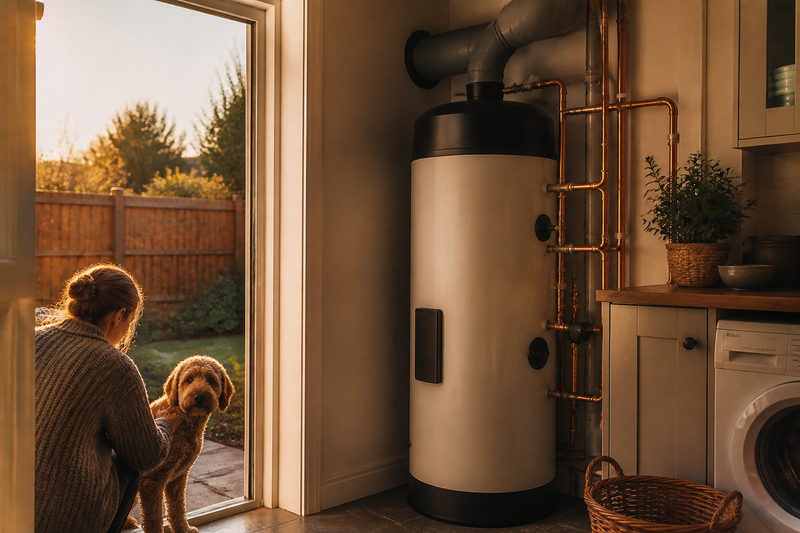
In a utility room in Gloucestershire, an electric immersion cylinder hums continuously, drawing 3 kW of electricity straight from the grid to keep 200 litres of water hot for a family of four. For millions of UK homes relying on direct electric heating or aging gas boilers, domestic hot water accounts for up to 18 percent of total home energy consumption according to Energy Saving Trust data. Swapping an inefficient hot water tank for a dedicated hot water heat pump reduces that electricity consumption by up to 70 percent without requiring a complete overhaul of your radiator network.
What is a heat pump water heater and how does it work?
A hot water heat pump is an integrated storage cylinder that uses a small sealed refrigeration circuit to extract low-temperature heat from air and transfer it directly into your domestic hot water supply. Unlike space-heating air source heat pumps that deliver warm water to radiators or underfloor loops, a heat pump water heater focuses exclusively on producing domestic hot water. The integrated compressor typically draws just 400 to 600 Watts of electricity while delivering 1.5 to 2.5 kW of thermal output, achieving a Seasonal Coefficient of Performance (SCOP) between 3.0 and 3.6 under standard UK indoor ambient conditions.
How do you check if your home is suitable for a hot water heat pump?
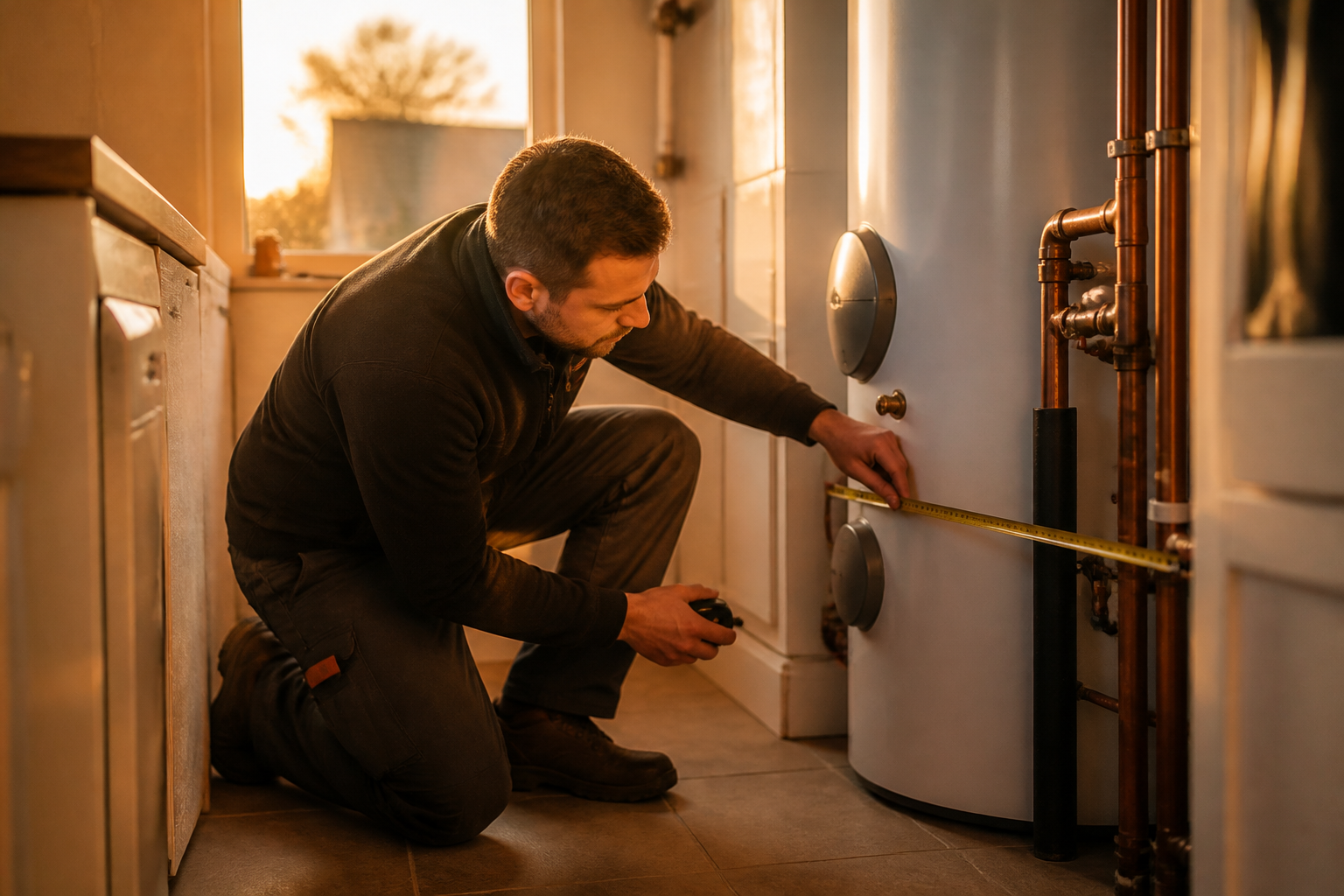
You check whether your home is suitable for a hot water heat pump by assessing the physical space, air volume, ventilation pathways and existing electrical supply around your hot water cylinder site. Because these units extract heat from surrounding or incoming air, they require either an unheated room with at least 20 cubic metres of air volume or external ducting to draw and expel outdoor air.
Key physical checks before planning an installation:
- Available Room Volume: An ambient indoor system needs a room volume of at least 20 to 30 m³ (such as an unheated garage, basement or large utility room) so it does not over-cool your primary living spaces.
- Ducting Access: If installed in an airing cupboard or small utility room, the unit requires two 150 mm or 160 mm insulated air ducts running through an external wall to pull in fresh outside air and discharge chilled exhaust air.
- Ceiling Height: Most 200L to 300L units stand between 1.6 metres and 1.9 metres tall, requiring a minimum ceiling clearance of 2.1 metres to allow for top-mounted duct connections and maintenance access.
- Floor Loading Capacity: A full 250-litre heat pump water heater weighs roughly 320 kg, meaning timber joists on upper floors may require structural reinforcement or positioning directly over load-bearing walls.
- Drainage and Safety Discharge: You need access to a 32 mm waste pipe for continuous condensate drainage and an unvented discharge pipe (tundish) routed safely outdoors in accordance with Building Regulations Approved Document G3.
What does installing a heat pump hot water cylinder cost in the UK?
Installing a domestic heat pump water heater in a UK property costs between £2,450 and £4,200 including equipment, pipework, electrical connections and labour. The exact cost depends on tank capacity, ducting complexity and whether existing plumbing requires upgrading to meet unvented safety standards.
| Component / Task | Typical Cost Range | Key Factors Influencing Price |
|---|---|---|
| Heat Pump Cylinder Unit (200L - 300L) | £1,400 - £2,300 | Tank material (duplex stainless steel), COP rating, smart controls |
| Core Installation Labour | £600 - £1,000 | 1 to 2 days of plumbing and electrical work |
| Wall Core Drilling & Air Ducting | £200 - £450 | Number of external wall penetrations and insulated duct runs |
| Electrical Fused Spur & Metering | £150 - £250 | Wiring from consumer unit, dedicated circuit protection |
| G3 Unvented Safety Pack & Discharge | £100 - £200 | Expansion vessel, pressure reducing valve, tundish piping |
| Total Turnkey Installation Cost | £2,450 - £4,200 | Includes commissioning, WRAS compliance and handover |
While space-heating heat pumps qualify for the £7,500 Boiler Upgrade Scheme grant in England and Wales, standalone hot water heat pumps generally do not qualify for central space heating grants unless installed as part of a wider building retrofit package. However, running costs are significantly lower than direct immersion heaters. Heating 200 litres of water per day with direct electric immersion costs roughly £3.20 at a standard grid rate of 24.5p per kWh, whereas a hot water heat pump with a SCOP of 3.2 reduces that daily cost to around £1.00, saving approximately £800 per year.
What qualifications and accreditations should your installer have?
Your installer must hold a valid G3 Unvented Hot Water qualification and be registered with a recognized competent person scheme such as APHC, CIPHE or NICEIC. Because a hot water heat pump operates under unvented mains pressure and contains a sealed refrigerant circuit, unqualified installation presents safety and legal risks.
Verify these accreditations before signing a contract:
- G3 Building Regulations Certification: Essential for installing unvented hot water storage systems to ensure pressure relief valves and discharge pipes comply with UK safety law.
- WRAS / KIWA Approval: Ensures the cylinder materials and internal heat exchanger comply with UK drinking water safety regulations.
- F-Gas Certification: Required if the unit features split refrigerant lines, though most packaged domestic units use hermetically sealed circuits pre-charged with propane (R290) or R134a.
- RECC or HIES Membership: Provides consumer protection, deposit insurance and independent dispute resolution.
What key questions should you ask your installer before booking?
You should ask your installer specific questions about air ducting requirements, Legionella pasteurisation cycles, noise ratings and warranty coverage before approving a quote. Clarifying these technical details prevents unexpected extra costs or poor performance after fitting.
Ask your prospective installer the following core questions:
- Will the unit run on ambient indoor air or will external wall ducting be fitted?
- What is the sound level of the compressor unit in decibels, and is sound insulation needed if placed near bedrooms?
- How is the mandatory weekly Legionella protection cycle managed, and does the integrated direct electric element handle thermal disinfection automatically?
- Does the price quote include drilling through external walls, installing insulated ductwork and fitting external weather louvres?
- Will the installation include a dedicated heat meter or smart energy monitoring to track daily electricity consumption?
What is the realistic timeline from site survey to installation?
The realistic timeline for installing a hot water heat pump in the UK is two to four weeks from initial consultation to final commissioning. Physical work on site typically takes just one to two days.
- Week 1: Initial Assessment and On-Site Survey. The installer calculates household peak hot water demand, measures room dimensions, assesses structural floor loading and plans ducting routes.
- Week 2: Quotation and Component Ordering. You review the detailed specification and cost breakdown. Once signed, the installer orders the heat pump cylinder and specialized ducting accessories.
- Week 3: Site Preparation and Drilling. External core drilling for intake and exhaust air vents is scheduled alongside electrical supply checks.
- Week 4: Installation and Commissioning (1 to 2 Days). The installer removes the old hot water cylinder, positions the new heat pump unit, connects water and duct lines, fills the system, tests safety relief valves and conducts the handover.
“Integrating micro-heat pump technology into domestic hot water cylinders is becoming one of the most accessible steps for UK households looking to cut electricity bills without disrupting their existing central heating setup. As international climate discussions at COP31 in November 2026 place renewed emphasis on rapid home electrification, practical energy upgrades like hot water heat pumps deliver immediate carbon and cost reductions. Helping households navigate installation standards and accredited tradespeople ensures these carbon gains translate into long term bill savings.” , Gaurav Ahluwalia, General Manager, The Net Zero Home Scheme
How can workplace benefit schemes help lower installation costs?
Workplace benefit schemes can significantly reduce upfront equipment and installation costs by matching employees with vetted, accredited installers who offer member pricing. If your workplace offers access to The Net Zero Home Scheme, you can secure discounted member rates on swapping your boiler for a heat pump, with every project carried out by fully certified installers. Delivered by the team behind The Electric Car Scheme and The Charge Scheme, the benefit is completely free for employers to introduce and involves no payroll deductions or administrative burden.