Hybrid Heat Pumps Explained: Physics, Costs and Trade-Offs
A clear look at how hybrid heat pumps balance gas and electricity, what the economics show, and where pure heat pumps differ.
- Written by
- Net Zero Home Scheme editorial team
- Last updated
- Topic
- heat pumps, energy efficiency, energy bills
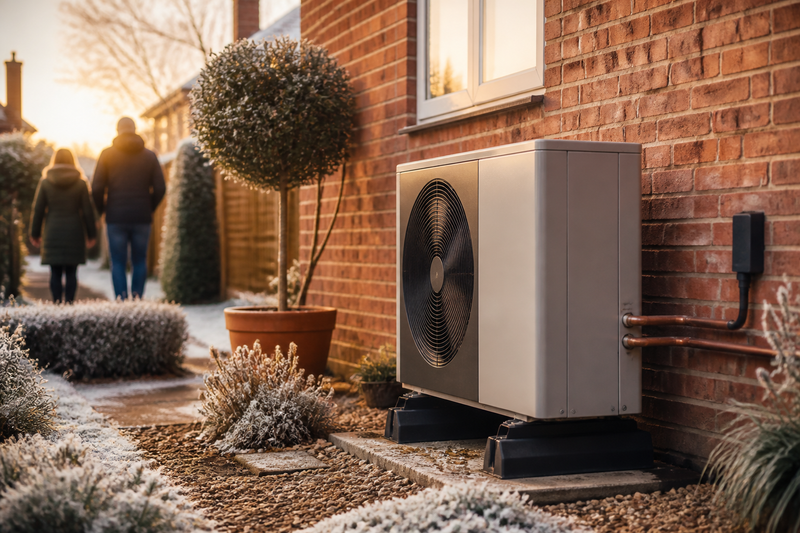
Many householders considering a move away from fossil fuel heating look at hybrid heat pumps as a comfortable compromise. The idea sounds straightforward: keep your existing gas or oil boiler to handle cold winter snaps, and add a smaller outdoor heat pump to supply space heating during milder weather. It promises lower upfront disruption while introducing clean electric warmth to your home.
However, the underlying physics and UK energy economics mean that retaining a dual-fuel system introduces real trade-offs. Understanding how bivalent temperature switching works, how electricity and gas price ratios affect your running costs, and how government grant rules apply is essential before deciding whether a hybrid system or a standalone heat pump suits your property.
How Hybrid Heating Works Under the Bonnet
A hybrid heat pump pairs an outdoor air-to-water heat pump unit (typically sized between 4 kW and 6 kW) with a standard gas or oil boiler. An intelligent controller manages both appliances, constantly determining which heat source delivers the required indoor temperature most efficiently.
The critical parameter governing this operation is the bivalent temperature. This is the outdoor ambient temperature threshold at which the system switches primary heating duties from the heat pump to the boiler, or runs both in tandem. Above the bivalent temperature, the heat pump absorbs heat from the outside air, compresses it, and transfers it to your central heating pipework. At an outdoor temperature of 7°C, a modern heat pump typically operates at a Coefficient of Performance (COP) between 3.2 and 4.0, meaning it generates 3.2 to 4.0 units of heat for every single unit of electricity consumed.
As outdoor temperatures fall toward freezing, the temperature difference between the refrigerant and the ambient air narrows. The compressor must work harder, and thermal physics dictates that the instantaneous COP drops. When the heat pump can no longer output flow temperatures high enough to keep your radiators warm without its COP falling below an economically viable threshold, the control logic fires up the boiler to take over.
The Economics of the Spark Spread and Fuel Prices
Whether a hybrid system saves money on your heating bill depends directly on the spark spread: the price ratio between a kilowatt-hour (kWh) of electricity and a kWh of mains gas.
Under Ofgem price cap figures for default domestic tariffs, unit rates for electricity are commonly three to four times higher than unit rates for gas. If electricity costs 24p per kWh and gas costs 6p per kWh, the ratio is exactly 4.0. To deliver heat at a lower cost per kWh than a 90% efficient gas boiler (which costs roughly 6.67p per delivered kWh of heat), your heat pump must operate at a COP higher than 3.6.
When outdoor temperatures drop and the heat pump COP drops to 2.5, the cost per delivered unit of electric heat rises to 9.6p per kWh (24p divided by 2.5). In that scenario, switching back to gas lowers your instantaneous running costs. Hybrid controllers use internal price settings to adjust the bivalent switching point automatically as tariff prices change.
However, retaining a gas boiler means you cannot disconnect from the gas grid. According to Ofgem tariff structures, gas standing charges add more than £100 per year to a home energy bill before you turn on a single radiator. A complete switch to an electric heat pump allows you to cap your gas supply entirely, eliminating that recurring fixed cost.
What Evidence Shows About Carbon and Field Performance
Data from the Department for Energy Security and Net Zero (DESNZ) Electrification of Heat demonstration project showed that standalone air source heat pumps perform reliably across all UK housing types, achieving average seasonal performance factors between 2.8 and 3.0 without requiring a fossil fuel backup.
Hybrid systems do reduce total household gas consumption by 50% to 70% in typical UK retrofits. However, their ultimate carbon savings are constrained because they continue to burn fossil fuels during the coldest winter months when space heating demand is highest.
Data from National Grid ESO shows that Great Britain's electricity grid carbon intensity has fallen below 150g CO2 per kWh on average, thanks to expanded wind and solar generation. Burning natural gas produces approximately 185g of CO2 per kWh of input, delivering heat at roughly 205g CO2 per kWh through a conventional boiler. An electric heat pump operating at a seasonal efficiency of 3.0 delivers heat at an effective carbon intensity of just 50g CO2 per kWh, offering four times the carbon reduction of gas.
| Feature or Metric | Hybrid Heat Pump System | Standalone Air Source Heat Pump |
|---|---|---|
| Primary Heat Source | Heat pump paired with gas/oil boiler | Monobloc or split air source heat pump |
| Gas Grid Connection | Retained (standing charge applies) | Removed or capped (zero gas standing charge) |
| Radiator Upgrades | Minimal (boiler provides high flow temps) | Moderate (sized for lower flow temperatures) |
| Hot Water Generation | Existing combi boiler or cylinder | Unvented hot water storage cylinder |
| Annual Servicing | Dual servicing (boiler plus heat pump) | Single appliance servicing |
| Government Grant Support | Excluded from £7,500 Boiler Upgrade Scheme | Eligible for £7,500 Boiler Upgrade Scheme |
| Annual Carbon Reduction | 50% to 70% reduction in gas emissions | 100% elimination of on-site gas emissions |
Practical Trade-Offs and Grant Rules
While hybrid systems allow householders to install a heat pump without replacing smaller radiators or upgrading hot water cylinders immediately, they introduce three main drawbacks:
- Exclusion from grant funding: In England and Wales, the UK Government's Boiler Upgrade Scheme provides a £7,500 upfront grant for property owners replacing fossil fuel systems with standalone heat pumps. Hybrid installations are explicitly excluded from this scheme, meaning you must pay the full installation cost out of pocket.
- Double maintenance overhead: Operating two heat sources means maintaining two separate appliances. You must continue paying for annual gas boiler servicing and safety checks alongside routine maintenance of the heat pump circuit.
- Control complexity: Dual-fuel heating controls require precise setup and reliable outdoor temperature sensors. Misconfigured switching points can cause the boiler to ignite too early, erasing potential carbon and cost savings.
For households with limited space for a hot water cylinder, or those in solid-wall properties where upgrading radiator sizes proves difficult, a hybrid system can provide a transitional option. But for most UK homes, installing a properly sized standalone heat pump combined with government grant funding delivers simpler operation, lower carbon emissions, and lower total lifetime costs.
For employers looking to help staff reduce home energy bills without adding HR administrative work, setting up access takes minimal effort. Joining The Net Zero Home Scheme gives your team access to member pricing when swapping your boiler for a heat pump installed by vetted, accredited installers, with zero cost to the employer and no payroll deductions.
Frequently asked questions about hybrid heat pumps
Can a hybrid heat pump connect to an existing combi boiler?
Yes, specific hybrid heat pump units are designed to interface with existing combination boilers using an interlocking control module. The heat pump supplies background space heating to your radiators, while the combi boiler fires up on demand to generate instant domestic hot water or to boost space heating when outdoor temperatures drop below the bivalent setpoint.
Why are hybrid systems excluded from the Boiler Upgrade Scheme?
The Boiler Upgrade Scheme is designed to achieve complete decarbonisation of domestic heating by removing fossil fuel burners from UK properties. Because hybrid systems retain a natural gas or heating oil boiler, government policy rules exclude them from the £7,500 grant, requiring householders to fund the installation without public subsidies.
At what outdoor temperature does a hybrid system switch to gas?
The exact switching threshold depends on your tariff rates and the heat pump's efficiency curve. In typical UK weather conditions with current electricity and gas unit prices, the bivalent switching temperature is usually set between 0°C and 3°C outdoor ambient temperature.
Sources
- Electrification of Heat Demonstration Project Key Findings, Department for Energy Security and Net Zero
- Energy Price Cap Rates, Ofgem
- Great Britain Carbon Intensity Data, National Grid ESO