Ineos Halts UK Production Over High Wholesale Gas Prices
Ineos halts production at UK plants as natural gas prices reach 12 times US rates, highlighting persistent wholesale energy price volatility.
- Written by
- Net Zero Home Scheme editorial team
- Last updated
- Topic
- energy bills, policy, home energy
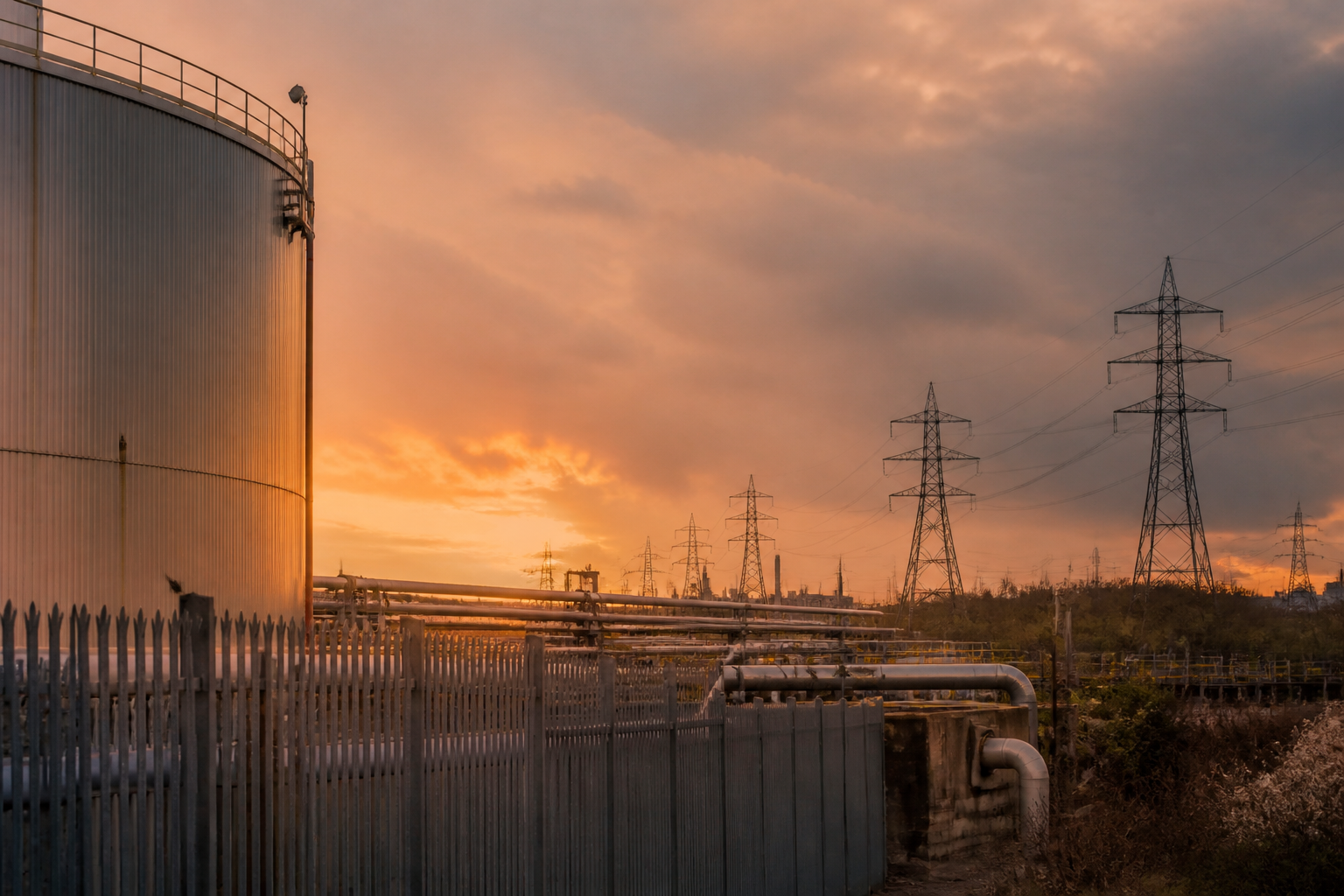
Chemical giant Ineos suspended production at key UK manufacturing facilities on 22 September 2026, citing natural gas prices that are twelve times higher than those in the United States (BBC News, 22 September 2026). The announcement by founder Sir Jim Ratcliffe highlights the stark disparity between North American energy costs and the wholesale prices paid by UK industrial and domestic consumers.
While industrial energy contracts operate under different structures from consumer tariffs, natural gas remains the primary marginal fuel setting wholesale power prices across Great Britain. On 23 September 2026, economic commentators further warned that persistent energy price volatility and Middle East tensions threaten wider national economic growth ahead of upcoming fiscal decisions (BBC News, 23 September 2026). Understanding why industrial plants are pausing operations gives householders and business leaders vital context on where household energy bills are headed and how to hedge against ongoing wholesale market risks.
Why British gas costs diverge from international markets
The United States benefits from abundant domestic shale gas reserves, keeping Henry Hub benchmark prices relatively low. By contrast, Great Britain relies heavily on imported liquefied natural gas delivered by tanker and pipeline imports from Europe and Norway. Because Britain has limited long-term gas storage capacity compared to continental neighbors, domestic wholesale gas contracts remain acutely sensitive to global supply constraints, transit disruptions, and international demand surges.
In the UK power market, gas-fired power stations frequently act as the marginal generator, setting the clearing price for all electricity sold on the wholesale market regardless of whether that power was generated by gas, wind, or solar. Consequently, when wholesale natural gas prices rise, wholesale electricity prices follow in close step. This structural mechanism directly feeds into the calculations used by energy regulator Ofgem when establishing the quarterly domestic energy price cap.
What the numbers say

The recent disruption highlights significant price gaps across international energy markets and domestic billing structures, as detailed in recent reporting:
| Market Indicator | Recorded Metric or Value | Source and Date | Practical Significance |
|---|---|---|---|
| Industrial Gas Cost Ratio | 12x higher in UK than US | BBC News, 22 September 2026 | Drives energy-intensive manufacturers to halt UK output |
| UK Economic Growth Impact | Slower forecast growth linked to gas volatility | BBC News, 23 September 2026 | Escalates financial pressure on households ahead of the Budget |
| Electricity Price Coupling | Gas sets wholesale power clearing price ~84% of time | Ofgem / DESNZ Market Reports 2026 | High wholesale gas prices directly increase retail power tariffs |
It is important to note that published industrial figures reflect wholesale spot and short-term forward contract prices paid by large energy users. They do not mean retail domestic tariffs will immediately increase twelvefold. Domestic gas rates remain governed by Ofgem price cap limits or pre-agreed fixed-rate terms. However, sustained industrial price pressure confirms that wholesale gas markets remain elevated well above historical averages.
What this means for your home
For UK householders, the suspension of industrial plant operations due to natural gas pricing serves as a clear signal that grid energy costs are unlikely to return to pre-2021 baseline levels in the near future.
Here is what the situation changes, and what it leaves unchanged, for your home energy strategy:
- What changes: The payback timeline for home generation upgrades remains highly favorable. Generating your own power with rooftop solar PV or storing lower-cost off-peak electricity in a home battery isolates your household budget from wholesale gas price swings.
- What changes: Heat pump adoption economics improve relative to gas boiler replacement over a ten-year horizon. While electricity unit rates track wholesale gas, a heat pump operating at a seasonal coefficient of performance (SCOP) of 3.2 delivers 3.2 kWh of heat for every 1 kWh of electricity consumed, making it significantly more energy efficient than burning gas at 85 percent to 90 percent boiler efficiency.
- What does not change: Your existing fixed energy tariff rates remain unchanged until your contractual period ends. If you are on a fixed tariff, your supplier cannot adjust your unit rate or standing charge mid-term.
- What does not change: Local distribution charges and policy levies included in your energy bill are set by regulatory frameworks and are not affected by short-term industrial manufacturing pauses.
Householders considering clean energy installations should focus on accredited equipment and qualified installers. Rooftop solar systems should be designed to match household base load, while heat pump installations must comply with Microgeneration Certification Scheme (MCS) standards to qualify for government grants such as the Boiler Upgrade Scheme across England and Wales.
What this means for employers
For human resources, reward, and sustainability leaders, industrial energy shocks reinforce that staff financial wellbeing is tied directly to household utility costs. As energy market volatility filters into domestic bills, employees face ongoing budget uncertainty during autumn and winter months.
Practical workplace benefits that help staff reduce home overheads are becoming a core element of competitive remuneration packages. Employers looking to support their workforce without adding payroll costs or balance sheet liabilities can provide direct access to household energy technology schemes.
Through the Net Zero Home Scheme, employers can give staff access to member pricing on solar panels, heat pumps, battery storage, and plug-in solar systems installed by accredited installers across England, Scotland, and Wales, with no cost to the business, no salary sacrifice, and no payroll deduction. Providing clear pathways for employees to lower their domestic energy consumption helps insulate staff from external energy shocks while supporting corporate sustainability goals.
Frequently asked questions
Does an industrial plant pause mean domestic gas supplies are running out?
No. The suspension of industrial production by Ineos was driven by economic pricing, not physical fuel scarcity. Great Britain maintains secure and diverse gas supply routes through domestic North Sea production, pipeline interconnectors with Norway and continental Europe, and liquefied natural gas (LNG) import terminals.
How quickly do wholesale gas price shifts affect domestic energy bills?
Wholesale price changes feed into standard variable domestic tariffs through Ofgem's quarterly price cap mechanism. Ofgem calculates the price cap based on forward wholesale energy contract prices during specific observation windows prior to each quarter. Fixed-rate tariffs change only when individual contracts expire and are renewed.
Will installing a home battery protect against wholesale price spikes?
Yes. A home battery allows you to store grid electricity during off-peak hours when demand and prices are lower, or capture excess generation from rooftop solar panels. You can then use that stored energy during peak evening hours, significantly reducing your reliance on expensive peak grid electricity.