Government Backs £90m Heat Network Boost for 750k Homes
The UK government has announced £90 million in funding for clean heat networks to reduce energy bills across 750,000 households.
- Written by
- Net Zero Home Scheme editorial team
- Last updated
- Topic
- energy efficiency, energy bills, heat pumps
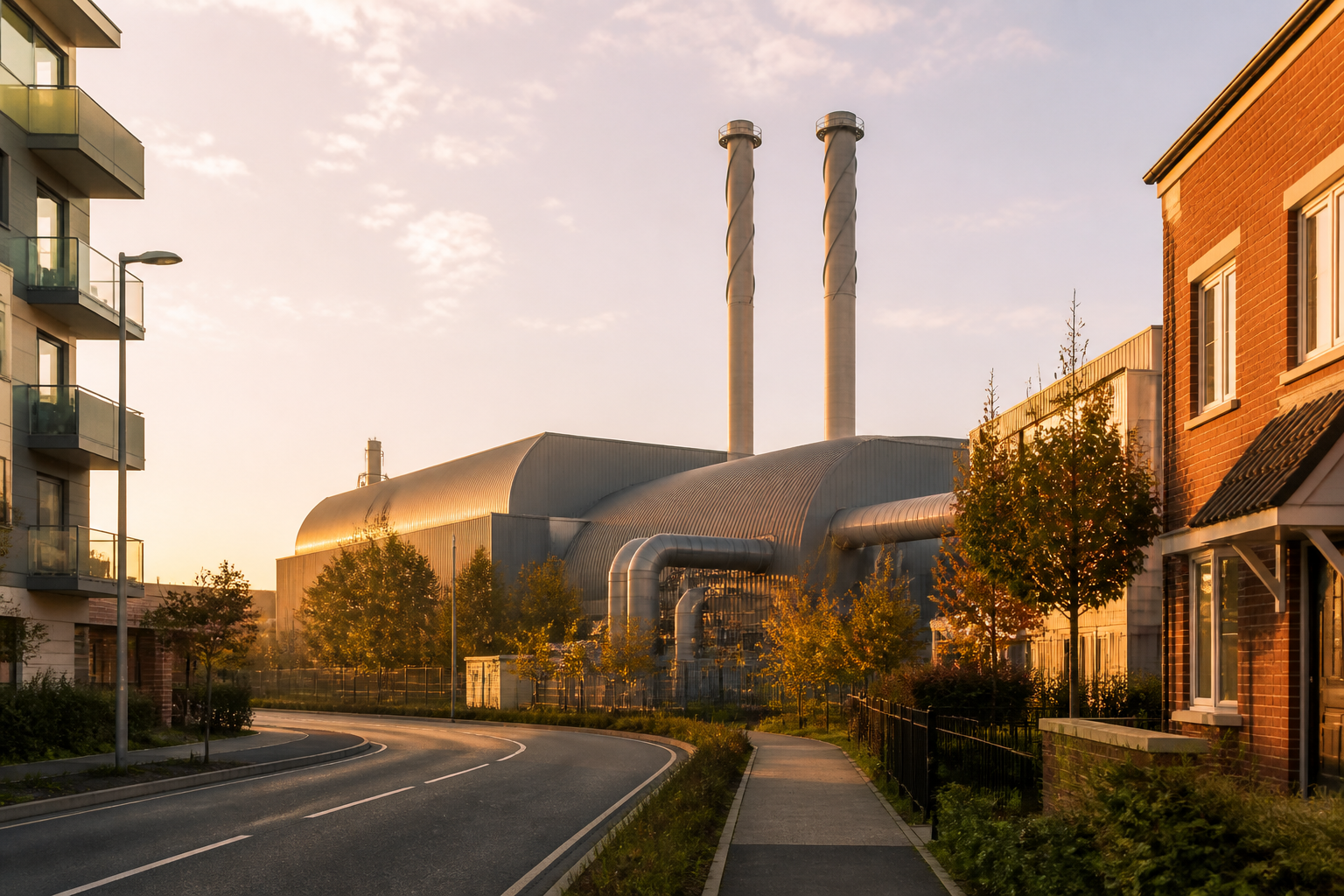
The UK government has committed £90 million in funding to build and expand district heat networks across England, aiming to lower home energy bills for 750,000 households. The package, published by GOV.UK on 23 September 2026 and reported by edie on 22 September 2026, allocates capital grants to municipal and private projects that deliver central, low-carbon heat to residential developments.
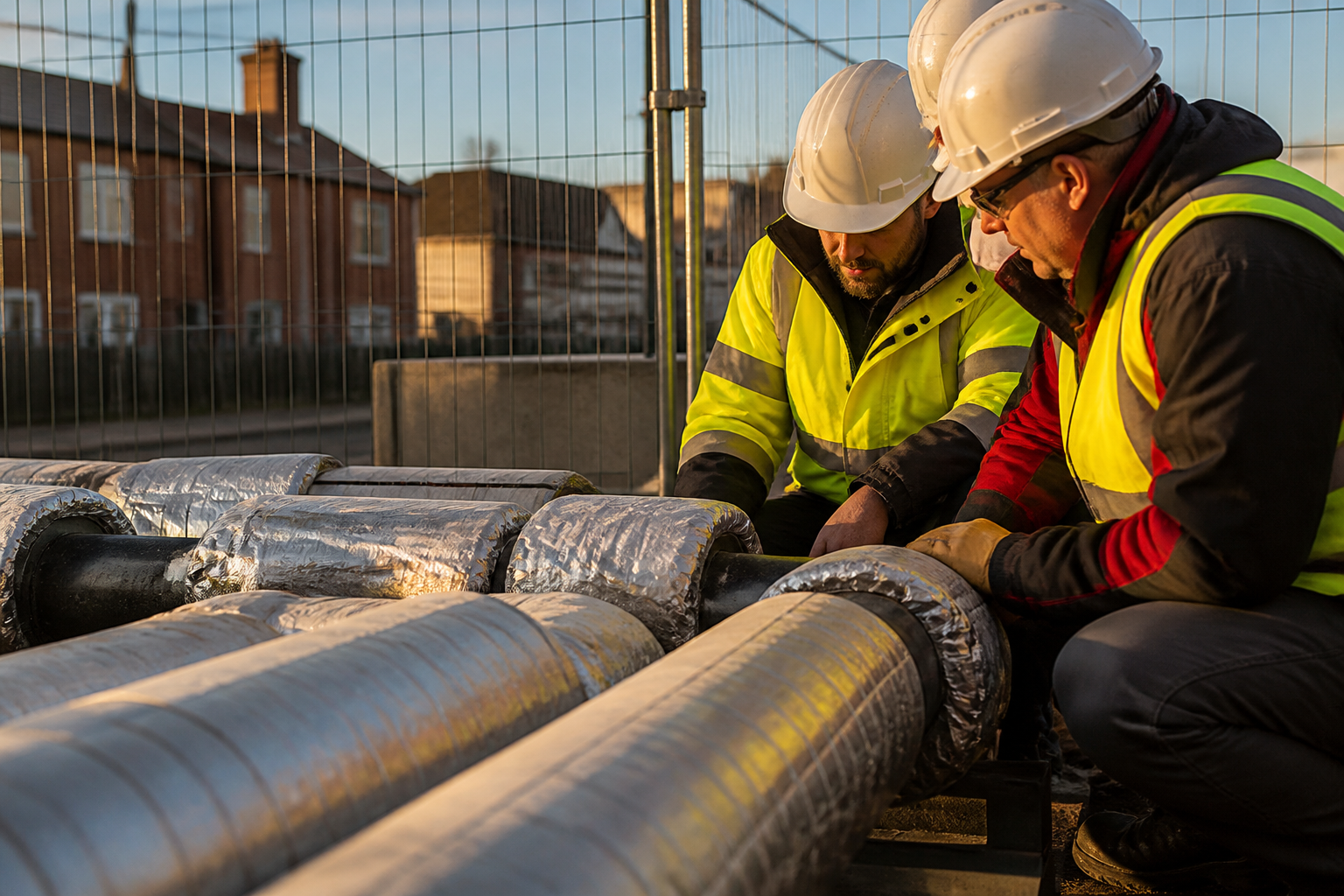
Heat networks supply heating and hot water to multiple buildings from a single central heat source, replacing individual gas boilers with insulated underground pipe networks. The newly announced funds will target both new installations and upgrades to existing infrastructure, drawing thermal energy from large-scale heat pumps, geothermal sources, and industrial waste heat.
How heat networks fit into UK home energy policy
District heating schemes form a key element of the UK strategy to decarbonise domestic heating, which currently accounts for roughly 14 percent of total national greenhouse gas emissions according to Department for Energy Security and Net Zero figures. By aggregating thermal demand across hundreds or thousands of dwellings, heat networks achieve operational efficiencies that individual home appliances cannot match in dense urban environments.
Centralised heat pumps operating within modern low-temperature networks can achieve a Seasonal Coefficient of Performance (SCOP) exceeding 4.0, meaning four units of heat output for every unit of electricity consumed. This scale allows networks to integrate large thermal storage tanks, enabling heat generation during off-peak hours when grid electricity prices are lowest or renewable power generation is high.
However, heat networks require high urban density to remain economically viable. The distribution losses over long pipe runs mean they are rarely suitable for rural or low-density suburban housing, where individual heat pumps or solar arrays remain the primary decarbonisation technology.
What the numbers say
- £90 million: Total capital funding announced by the UK Government to expand clean heat network projects across England (GOV.UK, 23 September 2026).
- 750,000 homes: Total estimated number of households targeted to receive lower energy bills and cleaner heat through upgraded and new network connections (edie, 22 September 2026).
- 2030 targets: Global renewable deployment must virtually double by the end of the decade to meet climate goals, according to a joint report released by the International Renewable Energy Agency and the Global Renewables Alliance on 22 September 2026.
Where the government reporting is incomplete, local authorities have noted uncertainty around exact connection costs and individual consumer protections. Heat networks are currently not regulated by Ofgem in the exact same manner as retail electricity and gas suppliers, although consumer protection frameworks are being phased in under the Energy Act 2023.
Comparing home heating choices
The table below outlines key technical and structural differences between heat network connections and individual home energy retrofits:
| Option | Upfront Consumer Cost | Typical Efficiency / SCOP | Ideal Property Type | Regional Availability |
|---|---|---|---|---|
| District Heat Network | Set by network developer | 3.5 to 4.5 central SCOP | High-density flats and urban terraces | Designated Heat Network Zones |
| Air Source Heat Pump | Subsidised by Boiler Upgrade Scheme | 2.8 to 3.8 individual SCOP | Detached, semi-detached, and terraced houses | Nationwide |
| Solar PV and Battery Storage | Self-funded or member benefits | 80% to 90% battery round-trip | Properties with suitable unshaded roofs | Nationwide |
What this means for your home
If you live in an urban area designated as a future Heat Network Zone, your local council may offer or require connection to a central thermal grid over the coming years. For residents in these areas, heat network connections can remove the need to buy and maintain an individual boiler or heat pump.
For the vast majority of UK homeowners, however, district heating will not be an option. Suburban and rural properties will continue to rely on individual building upgrades. If you are looking to lower household bills, individual interventions such as installing an air-source heat pump, rooftop solar PV, or home battery storage remain the most direct route.
Pairing a home heat pump with a solar PV system allows you to generate zero-carbon electricity on site, reducing reliance on grid power during peak tariff hours. Adding battery storage captures surplus midday solar generation for evening heating and appliance use, improving the overall financial payback of your home energy system.
What this means for employers
With household energy costs remaining a major financial pressure point for employees across the UK, reward and HR teams are increasingly looking at energy support beyond basic pay reviews. While municipal infrastructure projects like heat networks will gradually lower bills for specific urban pockets, millions of workers in suburban and rural settings receive no direct benefit from public network funding.
Employers seeking to support staff financial wellbeing and align with broader corporate environmental targets can offer practical home energy initiatives. Through the Net Zero Home Scheme, employers can give staff access to member pricing on accredited solar panels, heat pumps, and home battery storage installations with no payroll deductions, no salary sacrifice, and zero cost to the organisation.
Providing employees with accessible routes to upgrade their home infrastructure helps protect household budgets against future energy price volatility while contributing directly to scope 3 emissions reductions for remote and hybrid workforces.
Frequently asked questions
Are heat networks cheaper to run than gas boilers?
Operating costs depend on local network tariffs and energy sources. Because modern heat networks use high-efficiency central heat pumps or recovered waste heat, they generally offer lower running costs than gas boilers, though network maintenance charges can apply.
Can I install solar panels if my home is on a heat network?
Yes. A heat network connection only supplies space heating and domestic hot water. You can still install rooftop solar PV and home battery storage to cover your electrical appliances and lower your electricity bills.
Do heat networks require major internal changes to a house?
In most cases, an existing radiator network can be connected to a heat network via a heat interface unit (HIU). The HIU replaces your gas boiler and fits into a standard boiler cupboard, taking up similar or less space.