BBC Report Details Home Heat Loss Rules for 2027 Tax Transition
BBC News highlights the importance of room-by-room heat loss calculations ahead of the April 2027 VAT change on home heating installations.
- Written by
- Net Zero Home Scheme editorial team
- Last updated
- Topic
- heat pumps, energy efficiency, energy bills
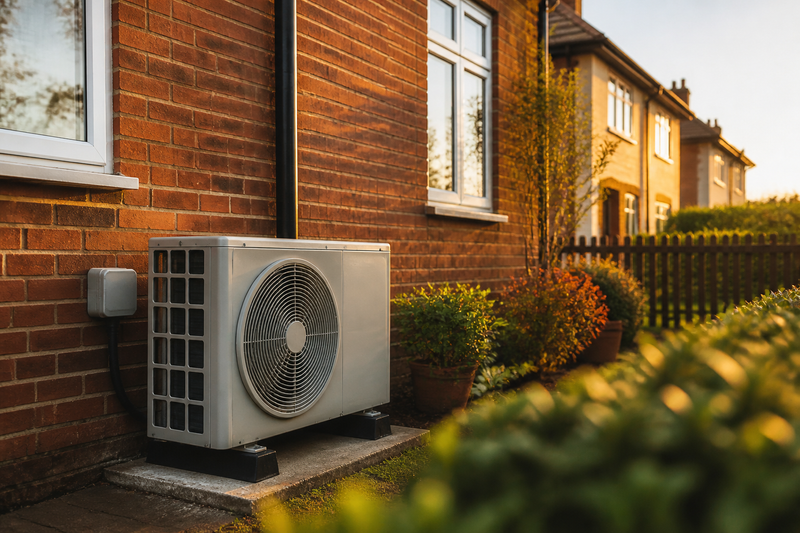
How will updated guidance on home heat loss affect your household budget and employee reward strategy before energy tax rates change? On 13 November 2026, BBC News reported that measuring exact room-by-room heat loss is the essential first step for UK householders before replacing a gas boiler with an air source heat pump. The reporting emphasized that without accurate heat loss calculations, installed systems risk running inefficiently or failing to maintain comfortable temperatures during peak winter freezing spells.
This technical guidance comes at a pivotal moment for workplace reward leads and staff planning home energy improvements. As set out in our full Budget 2026 guide, tax rules for domestic clean energy equipment will shift on 1 April 2027, when VAT on heat pump installations increases from 0% to 5%. Understanding room heat demand today ensures that householders can access current grant schemes and plan upgrades before tax adjustments take effect.
Illustration: Sizing a Heat Pump for a 1930s Semi-Detached House
To understand how heat loss assessments affect installation costs and bill savings, consider this hypothetical scenario. Mark, an operations analyst living in a three-bedroom 1930s semi-detached property in Yorkshire, currently uses 14,000 kWh of mains gas annually for space heating and hot water. His home has cavity wall insulation and 200mm of loft insulation, but retains original single-glazed timber windows in two bedrooms.
An accredited surveyor carrying out an assessment under Microgeneration Certification Scheme (MCS) standards calculates Mark's peak heat loss at 6.8 kW when the outdoor temperature drops to -3°C. If Mark installs an air source heat pump without upgrading his radiators, the flow temperature must reach 55°C to keep the living spaces at 21°C. At this high flow temperature, the unit's Seasonal Coefficient of Performance (SCOP) drops to 2.8, meaning 1 kWh of electricity generates 2.8 kWh of heat.
By replacing three undersized steel panel radiators with larger Type 22 double-convector models, the required flow temperature falls to 45°C. This design change increases the system's SCOP to 3.6, reducing annual electricity consumption for heating from 4,285 kWh to 3,333 kWh. At a representative electricity price of 24.5p per kWh, proper radiator sizing saves Mark £233 per year in running costs.
Financial Impact of the April 2027 VAT Increase
The timing of a heating system upgrade directly affects upfront installation costs due to scheduled tax changes announced by the Treasury. The table below outlines how installation expenses change for a standard £11,500 heat pump installation before and after 1 April 2027, incorporating the government's £7,500 Boiler Upgrade Scheme grant.
| Cost Component | Current Rules (0% VAT) | Post-1 April 2027 (5% VAT) |
|---|---|---|
| Gross Installation Price | £11,500 | £11,500 |
| Applied VAT Rate | 0% | 5% (£575) |
| Total Cost Before Grant | £11,500 | £12,075 |
| Boiler Upgrade Scheme Grant | -£7,500 | -£7,500 |
| Net Cost to Householder | £4,000 | £4,575 |
For a household spending £4,000 net after the grant, a system operating at an optimized SCOP of 3.6 yields a payback period approximately two years shorter than an undersized or poorly configured installation running at an SCOP of 2.8. Homeowners who complete work before 1 April 2027 also avoid the additional £575 VAT liability.
Practical Retrofit Checklist for Employers and Homeowners
HR leads looking to help employees manage energy costs and householders planning upgrades can use this checklist to ensure technical and financial compliance:
- Verify that the installer holds current MCS accreditation and is registered with a consumer protection body such as HIES or RECC.
- Ensure the survey includes a room-by-room heat loss calculation compliant with BS EN 12831 standards rather than a rough whole-house estimate.
- Confirm that electrical connection approval has been submitted to the local Distribution Network Operator (DNO) under G98 or G99 regulations.
- Check whether existing electrical consumer units require upgrading or main fuse headroom assessments by an NICEIC or ECA certified electrician.
- Review quotes to confirm whether prices include 0% VAT for completion before 1 April 2027.
"Accurate heat loss assessment ensures that heating upgrades deliver the efficiency savings families expect while keeping home comfort high throughout winter. As tax settings shift in April 2027, clear guidance helps employees make informed choices about upgrading their property's energy efficiency. We see strong interest from employers who want to provide practical, reliable support for staff looking to cut household energy bills."
Gaurav Ahluwalia, General Manager, The Net Zero Home Scheme
Workplace Benefits and Supporting Staff Home Upgrades
For HR and reward leaders, domestic energy efficiency has become a core component of employee financial wellbeing. Rising living costs mean staff actively look for employer support that reduces household overheads without creating complex tax obligations for the business.
Employers seeking to help staff upgrade home heating systems can offer access to member pricing through The Net Zero Home Scheme, which involves no payroll deduction or salary sacrifice administration. The scheme connects employees with accredited installers to deliver discounted installations for air source heat pumps across England, Scotland and Wales.