Switching From Heating Oil to a Heat Pump: UK Householder Guide
A practical checklist for UK householders replacing an oil boiler with an air source heat pump, covering grants, pipework, costs and real installation timelines.
- Written by
- Net Zero Home Scheme editorial team
- Last updated
- Topic
- heat pumps, home energy, energy bills
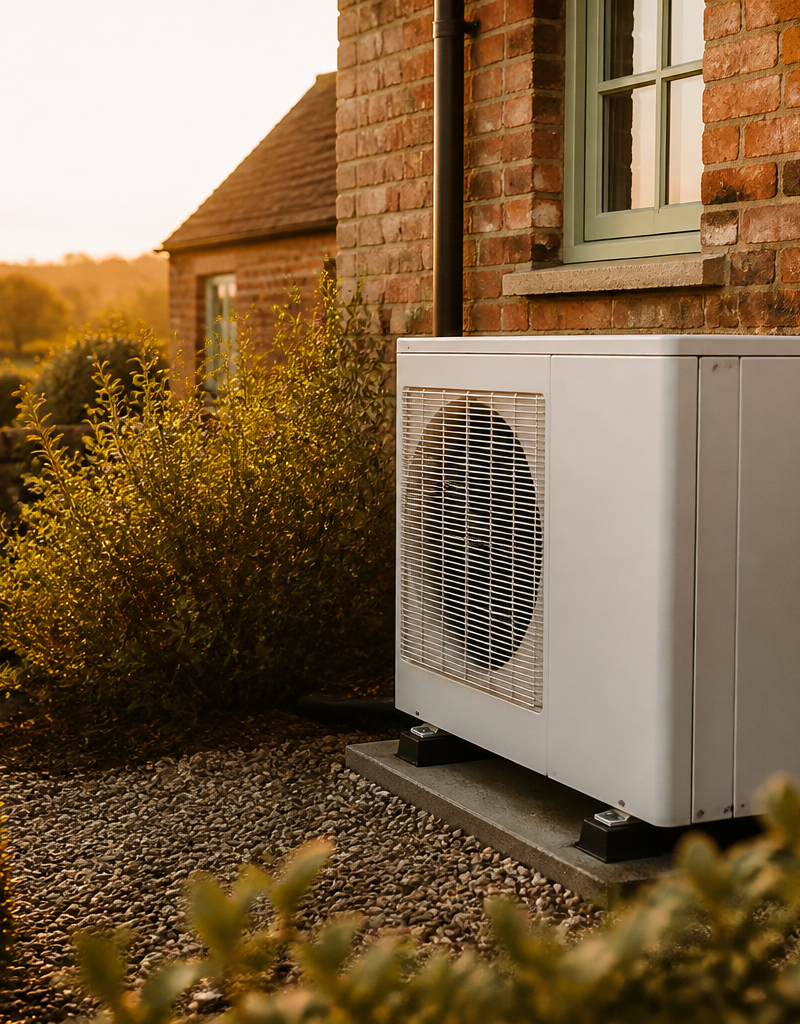
Many rural householders assume that replacing an oil boiler with an air source heat pump requires stripping out all existing pipework or that clean heating cannot keep older off-grid homes warm. This assumption often leads homeowners to install another oil boiler, locking in volatile fuel deliveries for another 15 years. BBC News reported on 22 October 2026 that high oil prices continue to force rural residents to restrict their heating use during cold periods. In practice, modern air source heat pumps operating at flow temperatures between 45°C and 55°C can easily heat off-grid homes when paired with correctly sized radiators and properly commissioned weather compensation controls.
Switching away from kerosene involves a distinct set of technical and logistical steps, from removing an old oil tank to upgrading electrical supply fuses. This step-by-step checklist outlines what to check, what it costs, and how to manage the transition smoothly.
Property and System Checklist Before Requesting Quotes
Before contacting installation companies, gather basic technical details about your home to ensure accurate preliminary designs:
- Electrical supply capacity: Heat pumps require a dedicated electrical circuit. Check your main service fuse rating on your consumer unit or electricity meter cutout. A standard 100-amp fuse is ideal; older 60-amp fuses may require a free fuse upgrade from your Distribution Network Operator (DNO).
- Existing pipework diameters: Measure the external diameter of visible radiator pipes. Standard 15mm or 22mm copper pipework usually delivers sufficient flow rates. Older microbore pipework (8mm or 10mm) can work but may require higher pump heads, buffer tanks, or partial re-piping to maintain target water flow.
- Hot water cylinder location: Heat pumps require a specialized heat pump cylinder with a larger internal coil surface area (typically 2.5m² or greater) to transfer heat efficiently. Measure your airing cupboard to ensure a standard 200-litre to 250-litre cylinder will fit.
- Outdoor unit placement: Identify a location on an exterior wall or concrete pad at least 1 metre from property boundaries to satisfy permitted development rules in England and Wales. The unit needs clear airflow and access for condensate drainage.
| Assessment Area | Technical Standard or Value | Why It Matters for Oil Replacements |
|---|---|---|
| Flow Temperature | 45°C to 55°C design flow | Lower flow temperatures raise the Seasonal Coefficient of Performance (SCOP) above 3.2. |
| Electrical Supply | 100A single-phase main fuse | Prevents fuse blowing when the heat pump compressor and household appliances run simultaneously. |
| Hot Water Coil Area | Minimum 2.5m² internal coil surface | Ensures rapid hot water recovery without raising flow temperature excessively. |
| Space Heating Load | Measured in kilowatts (kW) via heat loss calculation | Prevents over-sizing, which causes efficiency-robbing compressor cycling. |
| Oil Tank Clearance | Minimum 1.8m from non-fire-rated structures | Essential for safe access during professional decommissioning and removal. |
Understanding Capital Costs and Government Grants
Replacing an oil system involves extra tasks compared to replacing a gas boiler, such as draining and removing the oil tank and disposing of residual kerosene. However, off-grid homes replacing oil or LPG boilers in England and Wales qualify for significant government support.
Under the Boiler Upgrade Scheme (BUS), property owners can claim a upfront grant of £7,000 toward an air source heat pump installation. In Scotland, equivalent support is available via Home Energy Scotland grant and loan schemes.
Typical turnkey installation costs for a standard 3-bedroom detached off-grid home break down as follows:
- Heat pump equipment and cylinder: £7,000 to £9,000
- Radiator upgrades and hydraulic fittings: £1,500 to £3,000
- Electrical rewiring and DNO notification: £500 to £1,200
- Oil tank decommissioning and removal: £600 to £1,200
- Total gross cost before grant: £11,600 to £14,400
- Net cost after £7,000 BUS grant: £4,600 to £7,400
Running costs depend heavily on your electricity tariff and system SCOP. An air source heat pump with a SCOP of 3.5 generates 3.5 kWh of heat for every 1 kWh of electricity consumed, making operational costs competitive with kerosene while eliminating fuel delivery logistics.
Essential Installer Accreditations to Verify

To access government grants and guarantee installation quality, your installer must hold specific credentials:
- Microgeneration Certification Scheme (MCS): Mandatory for BUS grant eligibility. The installer must register the system on the MCS database upon completion.
- Consumer Code Membership: Verification of membership with either the Renewable Energy Consumer Code (RECC) or the Home Insulation and Energy Systems Contractors Scheme (HIES).
- TrustMark Registration: Ensures the business operates to government-endorsed quality and consumer protection standards.
- NICEIC or NAPIT Registration: Confirms the engineer is qualified to perform high-voltage electrical connections and submit DNO notifications.
Realistic Installation Timeline
Converting a property from heating oil to an electric heat pump usually takes between 3 and 5 working days on site. The overall project timeline from initial survey to completion typically spans 4 to 8 weeks.
- Weeks 1 to 2: Site survey, room-by-room heat loss calculations (BS EN 12831 standard), and formal quotation.
- Weeks 3 to 4: DNO application submission (Form SFA or G99) and MCS grant application booking.
- Week 5 (Days 1 to 2 on site): Draining the existing oil system, flushing radiators, removing the old boiler, and safely pumping out residual oil tank fuel.
- Week 5 (Days 3 to 4 on site): Installing the outdoor monobloc heat pump, fitting the new heat pump cylinder, and upgrading necessary radiators.
- Week 5 (Day 5 on site): Electrical connections, system filling, air purging, weather compensation setup, and hand-over demonstration.
Key Questions to Ask Your Heating Engineer
Before signing a contract, ask these direct operational questions:
- What design flow temperature did you use for the room-by-room heat loss calculations?
- Will the quote cover full decommissioning, certified oil disposal, and physical removal of my oil tank?
- Is the proposed heat pump an all-in-one outdoor monobloc unit or a split system, and why is it suitable for my floor space?
- Will you submit the Distribution Network Operator notification on my behalf before work begins?
- What length of manufacturer warranty is included, and what are the annual servicing conditions to maintain it?
Supporting Staff with Home Energy Upgrades
Employers seeking to support employees with high rural heating costs can offer practical support without administrative overhead. The Net Zero Home Scheme gives staff member pricing on heat pumps, solar panels, and battery storage delivered by accredited installers, requiring no salary sacrifice, payroll adjustments, or fee for the employer. Delivered by Net Zero Benefits alongside The Electric Car Scheme and The Charge Scheme, the platform offers a turnkey way for organisations to help staff reduce home energy costs.
Frequently Asked Questions
Can an air source heat pump replace an oil boiler without replacing every radiator?
Yes. Many off-grid homes keep between 50% and 80% of their existing radiators. Installers calculate the heat output of each existing radiator at a 45°C or 50°C flow temperature. Radiators in rooms with higher heat loss or smaller surface areas are selectively swapped for double-panel (Type 22) or triple-panel (Type 33) models.
How is an old heating oil tank safely removed?
Professional installers use specialised transfer pumps to drain residual kerosene into temporary storage containers. A certified technician then degasses the tank before cutting plastic tanks into manageable sections or transporting steel tanks whole. You should receive a formal waste transfer note confirming legal disposal.
Do I need planning permission to replace an oil boiler with a heat pump?
In England and Wales, installing an air source heat pump is usually considered Permitted Development, provided the outdoor unit is under 0.6 cubic metres in size, located at least 1 metre from property boundaries, and complies with MCS 020 noise criteria. Listed buildings and properties in conservation areas may require formal planning consent.
Sources
- Woman 'scared to turn heating on' due to oil cost, BBC News
- Boiler Upgrade Scheme, GOV.UK