R290 Propane vs R32 Heat Pumps: Physics and Retrofits
How refrigerant thermodynamics affect heat pump flow temperatures, SCOP, radiator requirements, and installation safety rules in UK retrofits.
- Written by
- Net Zero Home Scheme editorial team
- Last updated
- Topic
- heat pumps, energy efficiency, mcs
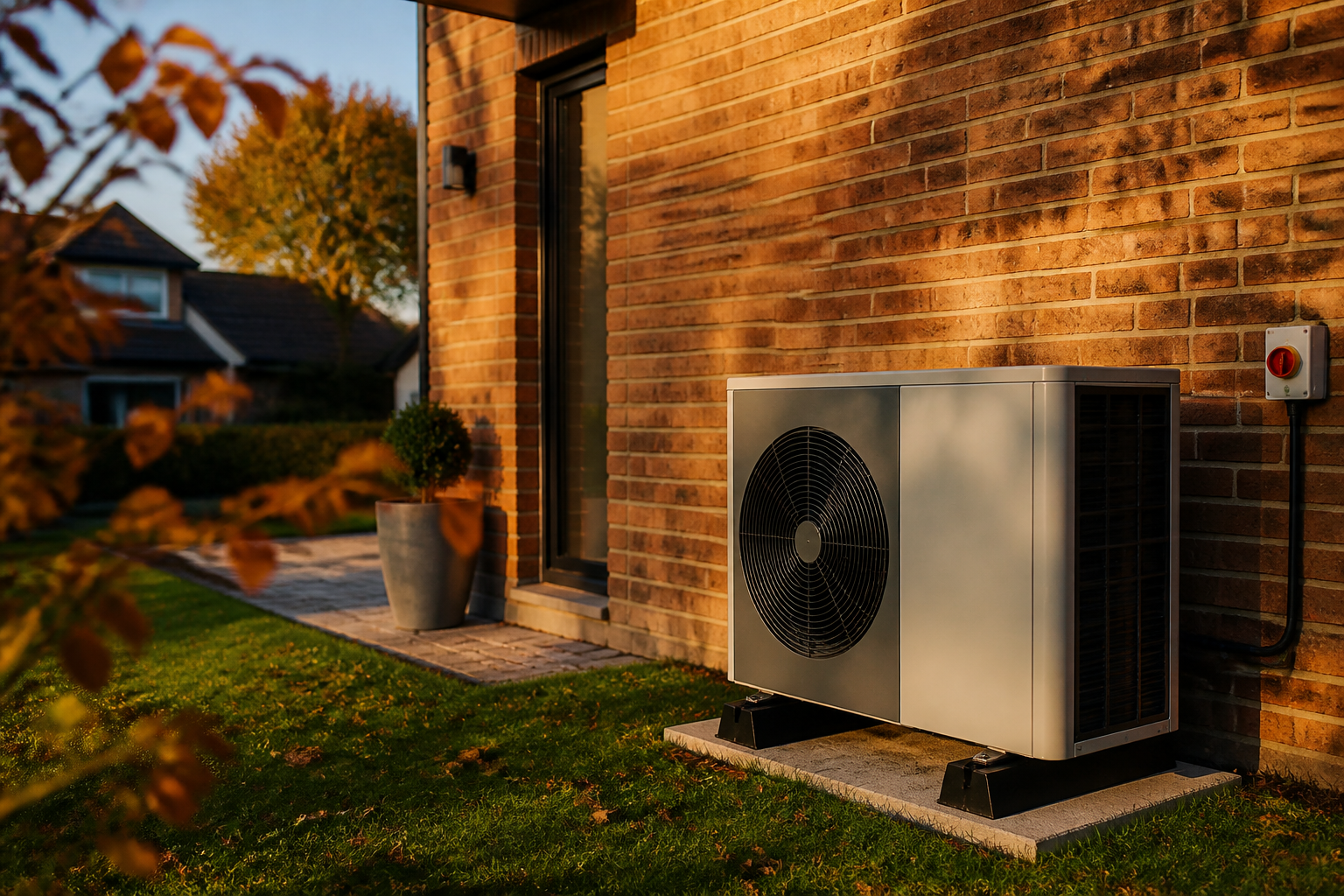
Choosing an air source heat pump used to be primarily about capacity in kilowatts and sound levels in decibels. Today, the underlying chemical refrigerant inside the vapor-compression cycle has become a primary factor determining how hot your radiators can run, how much space you need outside, and how future-proof your system will be against environmental regulations.
Most heat pumps installed in the UK over the past decade rely on synthetic fluorinated refrigerants such as R410A or R32. However, the UK heating sector is undergoing a rapid transition toward R290, which is high-purity propane. Understanding the physical properties of these refrigerants helps explain why R290 units can achieve higher flow temperatures without sacrificing system lifespan, and why safety rules dictate where the outdoor unit can sit.
How refrigerant thermodynamics shape heat pump performance
An air source heat pump does not create heat from fuel. Instead, it absorbs thermal energy from outdoor air into a circulating liquid refrigerant, causing it to boil into a low-pressure gas. A compressor then squashes this gas, elevating its temperature and pressure before a heat exchanger transfers that thermal energy into your central heating water circuit.
The chemical structure of the refrigerant determines its boiling point, critical pressure, and vapor density. R32 (difluoromethane) is a hydrofluorocarbon (HFC) with a Global Warming Potential (GWP) of 675. This means one kilogram of R32 released into the atmosphere traps 675 times more heat than one kilogram of carbon dioxide over a 100-year window. Under the UK Fluorinated Greenhouse Gases Regulations, high-GWP synthetic refrigerants are subject to phase-down quotas, driving manufacturer interest in low-GWP alternatives.
R290 is a naturally occurring hydrocarbon with a GWP of just 0.02 according to the Intergovernmental Panel on Climate Change (IPCC) Sixth Assessment Report. Beyond its environmental credentials, R290 has physical properties that make it exceptionally suited for home heating retrofits.
The physics of pressure, temperature and GWP
The fundamental thermodynamic advantage of R290 lies in its critical temperature and pressure characteristics. When a heat pump is asked to deliver water at 65°C to 75°C to power existing panel radiators, the refrigerant gas must be compressed to a point where its condensing temperature comfortably exceeds the water target.
For R32, operating at high discharge temperatures requires high compressor discharge pressures, often exceeding 35 to 40 bar. High discharge temperatures degrade the compressor lubricant over time and increase electrical energy consumption per unit of heat output, causing the coefficient of performance (COP) to drop sharply. To prevent internal damage, R32 heat pumps usually cap maximum flow temperatures around 55°C to 60°C.
R290 operates at lower compression ratios for the same output temperatures. Its molecular weight and enthalpy of vaporisation allow it to achieve flow temperatures up to 75°C without exceeding compressor thermal safety limits. This allows an R290 heat pump to deliver high-temperature heat into existing radiator networks during cold winter spells.
High flow temperatures versus seasonal efficiency
While R290 can push water to 75°C, physics still dictates that lower flow temperatures yield higher efficiency. A heat pump operating with a flow temperature of 35°C might achieve a COP of 4.5, producing 4.5 kWh of heat for every 1 kWh of electricity consumed. Pushing that same unit to deliver 70°C water drops the COP down to roughly 2.2 to 2.5.
The benefit of R290 is not that you should run your home at 75°C flow temperatures year round, but that the system can handle extreme cold weather peaks without needing backup direct electric immersion heaters. On milder autumn and spring days, weather compensation controls can dial the flow temperature down to 35°C or 45°C, delivering high seasonal coefficient of performance (SCOP) figures.
R290 vs R32 technical comparison
| Technical Parameter | R32 Refrigerant | R290 Propane Refrigerant |
|---|---|---|
| Chemical Classification | Hydrofluorocarbon (HFC) | Hydrocarbon (HC) |
| Global Warming Potential (GWP) | 675 | 0.02 |
| Flammability Class (ASHRAE/ISO) | A2L (Mildly Flammable) | A3 (Flammable) |
| Maximum Flow Temperature | 55°C to 60°C | 70°C to 75°C |
| Typical SCOP range (at 35°C flow) | 4.2 to 4.7 | 4.4 to 5.0 |
| Typical SCOP range (at 55°C flow) | 2.8 to 3.2 | 3.1 to 3.5 |
| Standard Outdoor Clearance (BS EN 378) | Minimal (100mm to 300mm) | 1.0m to 1.5m from openings/drains |
Safety regulations and outdoor siting constraints

The trade-off with R290 is flammability. Under safety standard BS EN 378, R290 is classified as an A3 refrigerant, meaning it is highly flammable. R32 is classified as A2L, which is mildly flammable and difficult to ignite.
Because R290 is flammable and heavier than air, UK installation guidelines under Microgeneration Certification Scheme (MCS) MIS 3005 and manufacturer safety manuals enforce strict physical clearances around the outdoor monobloc unit. The heat pump must not be installed within a specified zone, typically 1 metre to 1.5 metres, of:
- Ground-level air vents, openable windows, or doors leading into the property.
- Unsealed drains, inspection chambers, or lightwells where leaking gas could collect.
- External electrical spark sources, such as outdoor sockets, light switches, or EV chargers.
For a spacious detached home with a wide side passage, these clearances present no barrier. However, for a narrow Victorian terraced house with a tiny rear yard or a shared pathway, meeting the BS EN 378 safety zone for an R290 monobloc can be challenging, making R32 or split-system designs an easier physical fit.
Counter-arguments: why 70°C water is rarely the best answer
Some heating analysts argue that promoting high-temperature R290 heat pumps encourages poor retrofit practice. If an installer fits an R290 unit and leaves flow temperatures set to 70°C so that old, undersized steel radiators continue working, the householder will suffer high electricity bills.
According to data from the Energy Saving Trust, running a heat pump at a low flow temperature of 35°C to 45°C cuts electricity consumption by roughly 25 to 30 percent compared to running it at 60°C or above. Critics note that spending £500 to £1,500 to upgrade key radiators to larger Type 22 or Type 33 models usually pays for itself quickly through lower annual running costs, regardless of whether the heat pump uses R32 or R290.
In addition, R32 heat pumps remain widely produced by major manufacturers, feature lower upfront equipment costs, and face fewer placement restrictions on tight urban sites.
What this means for you
When evaluating a heat pump installation for your property, look beyond the manufacturer brand and ask your installer which refrigerant the outdoor unit uses and what maximum flow temperature it is designed for.
- If your home has tight boundary lines, unsealed drains near the only available wall, or limited garden space, an R32 unit may offer greater installation flexibility.
- If you have adequate outdoor space and wish to minimise radiator changes while future-proofing against chemical refrigerant phase-downs, an R290 monobloc unit provides superior thermodynamic capability.
If you are reviewing clean energy upgrades for your household, accredited installation remains essential for performance and safety. The Net Zero Home Scheme provides UK employees with member pricing on heat pumps and home energy retrofits installed by accredited contractors.
Frequently asked questions
Is an R290 propane heat pump safe outside my home?
Yes. R290 heat pumps sold in the UK are built as sealed monobloc units located entirely outdoors. The flammable refrigerant remains outside your home, while only warm water enters the property through insulated pipes. Certified MCS installers follow BS EN 378 safety distances to ensure any gas escape disperses harmlessly into the air.
Will an R290 heat pump let me keep my existing radiators?
In many cases, yes. R290 units can deliver flow temperatures of 65°C to 75°C, matching traditional gas boiler outputs during peak cold weather. However, swapping key radiators for larger double or triple panel units allows you to drop the flow temperature to 45°C or 50°C, lowering your monthly electricity bills.
Does R290 cost more to buy than R32 heat pumps?
Equipment costs for R290 heat pumps have fallen as major European and Asian manufacturers have scaled production. While initial unit costs can be slightly higher than entry-level R32 models, the difference is usually modest within the overall project cost, especially after applying the £7,500 Boiler Upgrade Scheme grant available in England and Wales.