Aviva Warns New UK Homes Risk Becoming Uninsurable
Aviva Chief Executive Amanda Blanc has warned that new UK homes risk becoming uninsurable due to escalating flood risks, highlighting the need for resilient home design.
- Written by
- Net Zero Home Scheme editorial team
- Last updated
- Topic
- energy efficiency, policy, regulation
Aviva Chief Executive Amanda Blanc has warned that newly constructed properties across England risk becoming uninsurable as climate-driven flood threats escalate. Reporting on 29 September 2026, BBC News revealed that property developments continue in areas vulnerable to surface water and river flooding without sufficient long-term climate resilience planning.
Blanc stated that England is for sure building homes that might be uninsurable at some point in the future if developers, planners, and regulators fail to integrate structural flood protection and sustainable drainage into site design. Her warning places climate resilience at the centre of discussions around housebuilding, property protection, and low-carbon infrastructure upgrades.
What the numbers say
In the interview reported by BBC News on 29 September 2026, Aviva highlighted mounting corporate concerns over the long-term insurability of properties built on vulnerable floodplains. Data from the Environment Agency indicates that over 5.2 million properties in England are currently at risk of flooding, with surface water pooling alone posing a threat to approximately 3.2 million homes.
Insurance industry metrics show that residential properties situated in high flood risk zones face significantly higher annual premiums, elevated excess thresholds, or restricted policy terms. Where structural flood defences are absent, private insurers may decline flood coverage altogether or rely on Flood Re, the joint government and insurance industry reinsurance scheme launched in 2016. Crucially, Flood Re cover does not automatically apply to properties constructed after 1 January 2009, leaving newer residential developments directly exposed to market underwriting decisions.
Economic figures from the Association of British Insurers confirm that repairing a flood-damaged home costs between £30,000 and £50,000 on average, alongside months of temporary displacement for occupants. When low-level electrical infrastructure, home batteries, or heat pump ground equipment suffer flood inundation, repair and replacement costs can increase rapidly.
How flood risk intersects with home clean energy upgrades
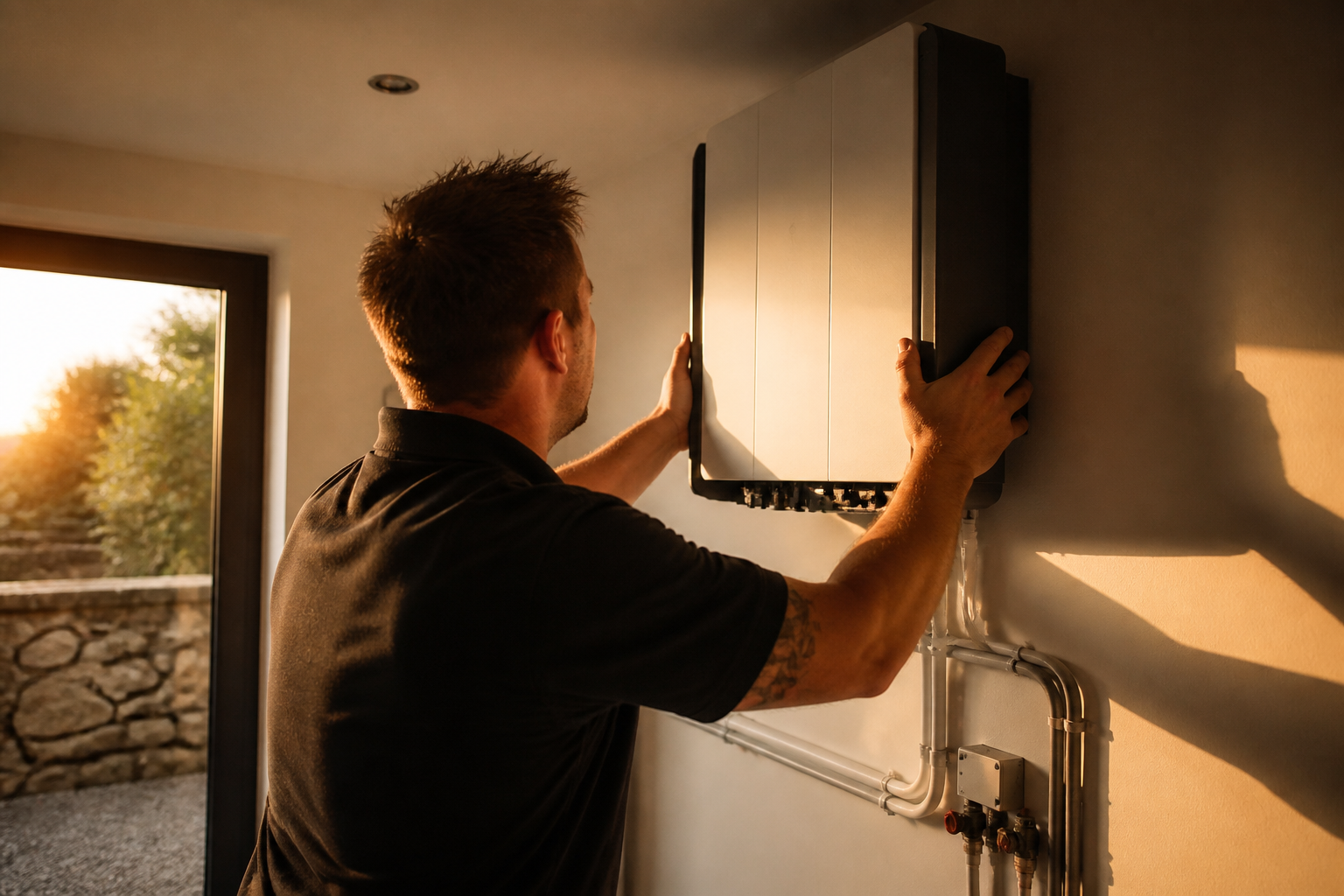
When householders evaluate clean energy installations such as heat pumps, solar microinverters, battery storage, or EV chargers, physical flood resilience is rarely the first consideration. However, the exact siting of external compressor units, internal consumer units, and battery storage banks directly influences property vulnerability.
Modern building retrofits follow standards such as PAS 2035, which mandates a comprehensive assessment of property condition, structural ventilation, and environmental hazards prior to specifying energy efficiency measures. If high-value electrical equipment is situated at ground level in areas prone to surface water pooling, sudden heavy rainfall can cause severe damage, trigger electrical short-circuits, and void installer warranties.
| System Component | Flood Risk Factor | Recommended Installation Practice | Compliance Standard |
|---|---|---|---|
| Solar PV Inverters & Batteries | Water ingress in ground-level or basement installations | Wall-mount at least 1 metre above finished floor level or locate in an upper utility area | BS 7671 IET Wiring Regulations |
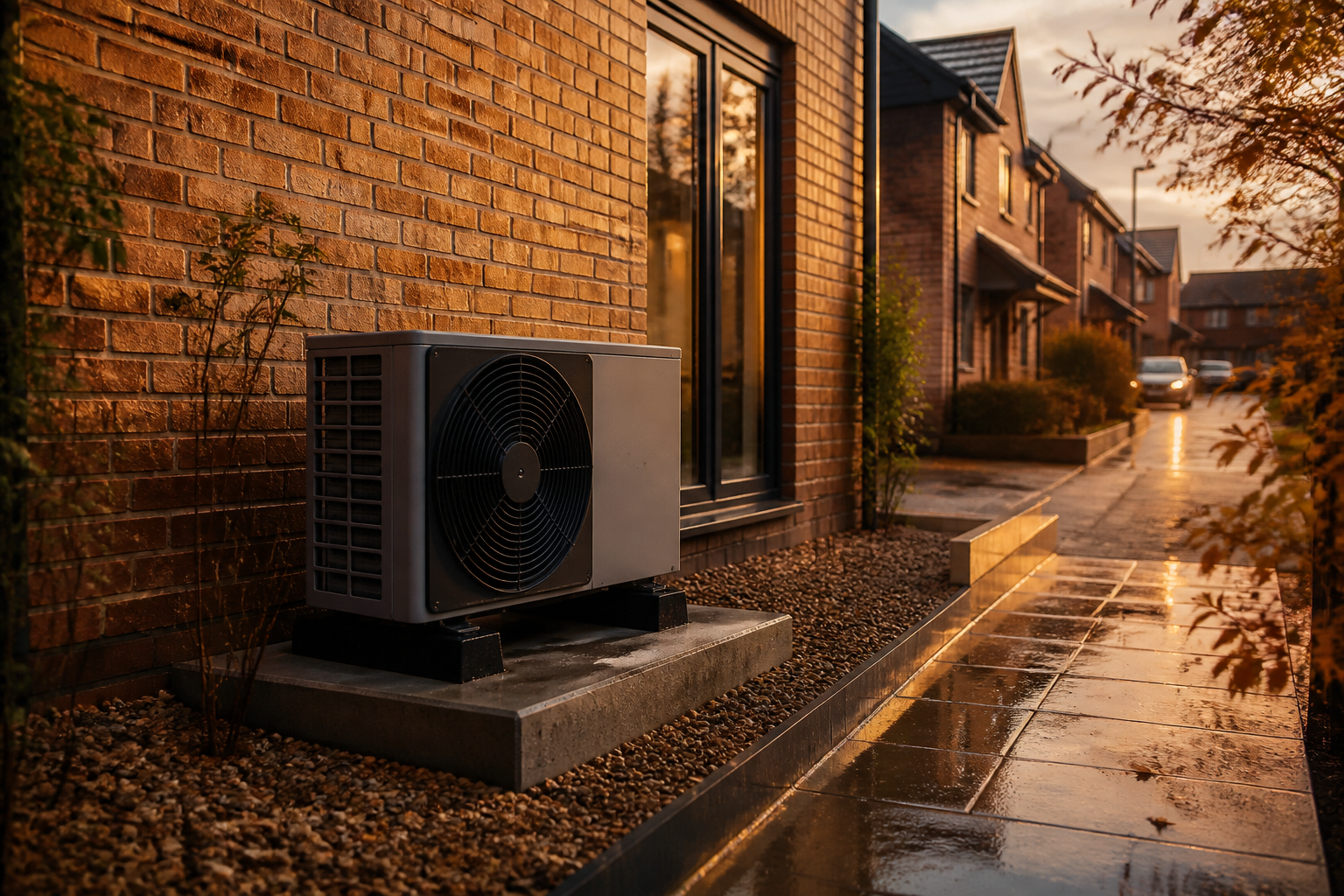
| Heat Pump Outdoor Units | Ground surface water accumulation around compressor base | Elevate on raised concrete plinths 300mm to 500mm above ground level with gravel soakaways | MCS MIS 3005-D Standard |
| Internal Floor Insulation | Moisture retention and timber rot following standing water events | Install closed-cell rigid insulation boards (PIR/XPS) with continuous damp-proof membranes | Building Regulations Part L |
| Electrical Consumer Units | Submersion risk causing total distribution panel failure | Relocate consumer unit above localized flood level during electrical board upgrades | PAS 2035 / BS 7671 |
What this means for your home
If you are planning energy retrofits or evaluating a property purchase this year, Aviva's warning underscores the necessity of considering localized flood risks before siting major infrastructure.
First, check your local flood risk profile using the official Environment Agency flood risk service in England, Natural Resources Wales, or the Scottish Environment Protection Agency. Establishing whether your plot faces surface water, river, or coastal risk enables installers to locate equipment safely.
Second, ensure installation technicians account for flood resilience during site surveys. Air source heat pump outdoor units should be positioned on elevated concrete pad plinths or strong wall brackets rather than set directly on soft ground soil. Battery storage arrays and solar string inverters should ideally be wall-mounted inside a dry utility area or elevated garage space.
Third, review your building insurance policy details prior to commencing work. Standard insurance contracts require homeowners to declare material property alterations, including high-value technology additions. Ensuring your installation complies with Microgeneration Certification Scheme (MCS) standards and Institute of Engineering and Technology (IET) wiring rules (BS 7671) ensures your building cover remains valid.
What this means for employers
For HR, reward, and employee benefit leaders, the intersection of rising climate risks, property maintenance, and household energy costs is increasingly relevant to workforce wellbeing. Escalating home insurance costs combined with persistent utility bills mean employees are seeking clear, practical routes to lower running costs and protect their primary asset.
Providing employees with factual guidance and access to vetted, accredited home energy upgrades helps protect domestic property value and reduces financial uncertainty. Employers seeking to support their workforce with home energy transition costs can offer the Net Zero Home Scheme. Delivered by Net Zero Benefits alongside The Electric Car Scheme, it is free for employers with no salary sacrifice or payroll deduction, providing staff with member pricing on MCS-accredited installations of solar panels, heat pumps, battery storage, and plug-in solar across England, Scotland, and Wales.
Frequently asked questions
Will installing a heat pump or solar battery affect my home insurance?
Installing a heat pump or solar battery storage system generally does not increase your home insurance premium, provided the work is completed by an MCS-accredited installer and complies with BS 7671 electrical standards. However, you must inform your insurer of the increased rebuild value of your home after completing major renewable installations.
How can householders protect ground-mounted heat pumps from flood damage?
Ground-mounted heat pumps should be elevated on concrete mounting blocks or wall-hung brackets between 300mm and 500mm above ground level. Installers should also ensure surrounding ground surfaces feature adequate soakaway drainage, such as gravel beds, to prevent standing surface water from reaching the unit's electrical components.
Does high flood risk affect the financial payback of home energy retrofits?
High flood risk does not directly alter solar panel generation or heat pump efficiency, but unaddressed flood risk increases potential repair costs in extreme weather events. Designing installations with raised electrical components and flood-resilient wall insulation ensures your equipment remains functional and protected, securing long-term financial payback.