MPs Urge Government to Shift Policy Levies Off Power Bills
The House of Commons ESNZ Committee has called for urgent reforms to shift policy levies from electricity to gas tariffs to reduce UK household energy bills.
- Written by
- Net Zero Home Scheme editorial team
- Last updated
- Topic
- energy bills, tariffs, policy
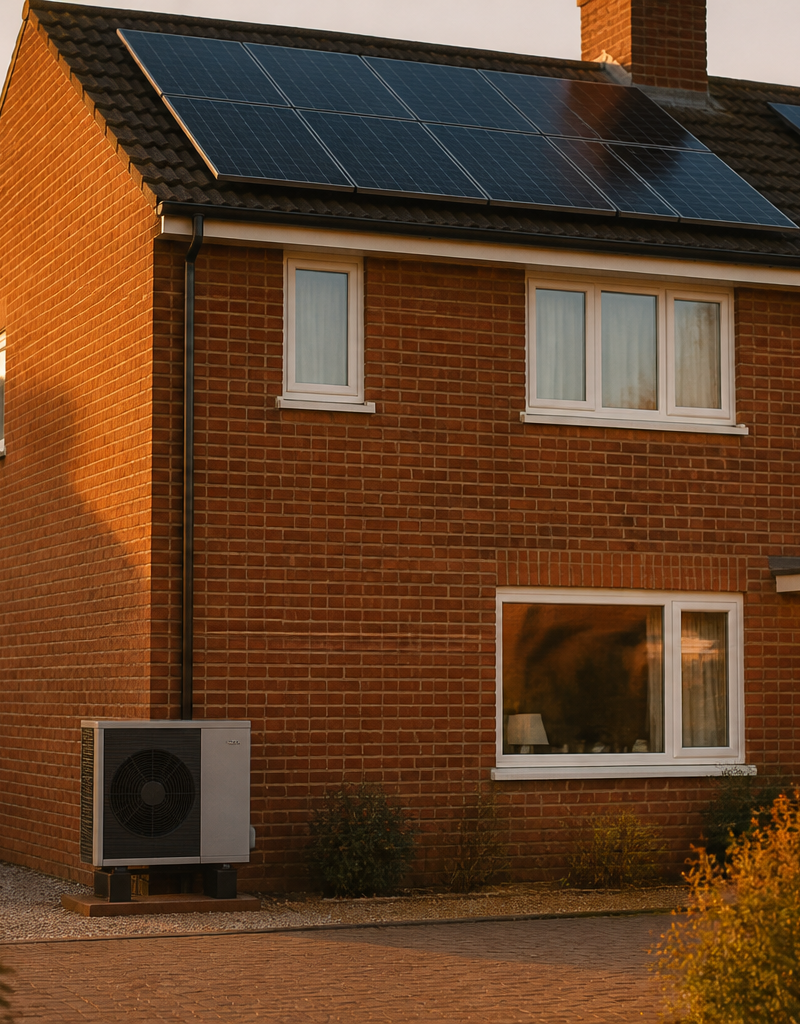
The House of Commons Energy Security and Net Zero (ESNZ) Committee published a report on 20 October 2026 calling on the UK Government to accelerate energy market reforms to reduce domestic energy bills. The committee's primary recommendation urges ministers to shift social and environmental policy levies off electricity tariffs and onto gas tariffs to lower power prices for households across England, Scotland and Wales.
Reporting by environmental publisher edie on 20 October 2026 details how the parliamentary committee examined the persistent price distortion between domestic gas and electricity unit rates. By moving legacy policy costs that currently inflate electricity rates, MPs argue the government can deliver swift relief to household budgets while establishing a stronger financial incentive for families to adopt heat pumps and home solar generation.
What the parliamentary committee recommended
The ESNZ Committee report highlights that policy levies, which fund legacy renewable subsidies and social support programmes such as the Warm Home Discount, are disproportionately loaded onto electricity bills rather than gas tariffs. Historically, this structure was designed when electricity generation was carbon-intensive. However, as Great Britain's grid has decarbonised through expanded wind and solar generation, charging policy costs on clean electricity effectively penalises households that switch away from fossil fuels.
According to the findings reported by edie on 20 October 2026, the committee concluded that failure to rebalance these levies keeps electricity artificially expensive relative to gas. Domestic electricity currently costs roughly three to four times more per kilowatt-hour (kWh) than mains gas. Because heat pumps operate at high efficiency, typically achieving a Seasonal Coefficient of Performance (SCOP) between 3.0 and 4.0, high electricity unit rates erode the operational savings that householders should expect when replacing a gas boiler.
MPs on the committee stressed that moving these levies off power bills would provide an immediate reduction in unit rates for all domestic electricity users. The report urges the Department for Energy Security and Net Zero to set out a binding timeline for tariff rebalancing, alongside targeted protections for vulnerable low-income households who currently rely exclusively on gas heating.
What the numbers say
The committee's report outlines clear operational metrics regarding how levies inflate domestic power costs and impact home heating economics, as reported by edie on 20 October 2026.
| Policy Area | Current Tariff Structure | ESNZ Committee Proposal | Expected Outcome for Households |
|---|---|---|---|
| Levy Distribution | Heavy weighting on electricity bills (~85% of policy costs) | Shift levies to gas tariffs or general taxation | Lower per-kWh electricity unit rates |
| Running Cost Ratio | Electricity priced at ~3.5x the cost of gas per kWh | Target ratio closer to 2.0x to 2.5x gas cost | Improved payback for heat pumps and batteries |
| Clean Heat Adoption | High power prices delay boiler replacements | Parity in running costs accelerates heat pump intake | Faster reduction in domestic carbon emissions |
| Fuel Poverty Protection | Flat levy structure impacts low earners | Targeted subsidies for vulnerable consumers | Shielding low-income households from gas rate hikes |
Inline reporting by edie on 20 October 2026 notes that policy levies currently account for approximately 9% to 10% of a standard dual-fuel energy bill, but the burden falls overwhelmingly on the electricity portion. Rebalancing these levies would reduce average household power bills while shifting costs to fossil gas, ensuring that polluters bear a fairer share of decarbonisation funding.
The policy debate over tariff rebalancing
While industry bodies and environmental groups have long advocated for shifting electricity levies, successive governments have proceeded cautiously due to the distributional impacts. Approximately 85% of UK homes rely on gas central heating. If policy costs are simply transferred onto gas unit rates without targeted support, households unable to afford retrofits could see their heating bills increase.
To address this trade-off, the ESNZ Committee recommended a phased approach. Ministers could move a portion of policy costs into general taxation while gradually adjusting unit rates over several years. This approach would prevent sudden gas price spikes for low-income tenants while giving home owners clear financial visibility to invest in solar PV, home battery storage, and heat pumps.
What this means for your home
For UK householders, the committee's call for levy reform reinforces the importance of planning domestic energy upgrades around long-term tariff trends.
- Watch for tariff changes: If the government adopts the committee's recommendations, standard unit rates for electricity will fall while gas unit rates rise. This will make electric heating and home charging significantly cheaper to run relative to gas boilers.
- Calculate heat pump returns on realistic efficiencies: A well-designed heat pump operating at a SCOP of 3.5 already matches or slightly beats gas boiler running costs under current tariffs. A reduction in electricity levies will widen that running cost advantage substantially.
- Maximise self-consumption with solar and storage: Installing rooftop solar PV alongside domestic battery storage allows you to generate and store low-cost power, insulating your home against grid price volatility regardless of policy shifts.
- Consider plug-in solar for lower upfront commitment: Renters and flats can benefit from plug-in solar kits, which generate clean power directly into home sockets to offset baseload electricity demand.
Householders evaluating home upgrades should ensure installations are carried out by contractors accredited under the Microgeneration Certification Scheme (MCS), TrustMark, and the Renewable Energy Consumer Code (RECC) to guarantee technical standards and preserve eligibility for government grants like the Boiler Upgrade Scheme.
What this means for employers
For HR, reward, and financial wellbeing leaders, persistent energy price pressure remains a top concern for employees. Household bills continue to strain family budgets, driving demand for practical, non-taxable workplace benefits that offer genuine cost relief.
As regulatory reforms move toward cheaper domestic electricity, staff will increasingly look for accessible ways to upgrade their homes. Offering practical guidance and clear benefit pathways helps employees improve their financial resilience while supporting corporate ESG objectives.
Employers seeking to support staff with rising home energy costs can offer access to the Net Zero Home Scheme, which gives employees member pricing on solar panels, heat pumps, battery storage and plug-in solar installed by accredited contractors across England, Scotland and Wales, at no cost to the business and without payroll deductions. For organisations also looking to support staff commuting choices, sister programmes like The Electric Car Scheme provide structured salary sacrifice options for electric vehicles.
Frequently asked questions
Why are policy levies currently charged mainly on electricity?
Policy levies were historically added to electricity tariffs when coal and gas dominated power generation. The goal was to fund early renewable energy deployment and energy efficiency schemes. Now that the grid relies heavily on wind and solar, charging levies on clean electricity creates an unintended barrier to switching away from gas.
How much could heat pump running costs drop if levies are moved?
If policy levies are moved off electricity, industry models suggest domestic power unit rates could drop by several pence per kilowatt-hour. For an average home using 3,000 kWh of heating energy annually through a heat pump, this could reduce annual running costs by £100 to £250 depending on standard tariff rates.
Will gas bills increase if levies are shifted to gas tariffs?
If levies are transferred directly onto gas unit rates without government subsidies, domestic gas prices would rise slightly. To prevent fuel poverty, parliamentary committee members have recommended moving part of the levy burden into general taxation or offering targeted rebates to low-income households unable to install clean heating.