Installing Infrared Heating Panels in UK Homes
A practical guide to fitting infrared radiant heating panels in UK homes, covering sizing, wiring checks, costs, installer standards and timelines.
- Written by
- Net Zero Home Scheme editorial team
- Last updated
- Topic
- energy efficiency, energy bills, home energy

According to official housing statistics published by the Department for Energy Security and Net Zero, space heating accounts for roughly 60% of all energy consumed inside a typical British home. As householders search for alternatives to ageing storage heaters or gas boilers, radiant electric panels have grown in popularity. Infrared panels offer a direct way to warm living spaces by heating solid surfaces rather than circulating hot air, making them an appealing option for hard-to-heat rooms, modern extensions or homes without central pipework.
Making the switch requires clear planning around electrical capacity, panel output and digital temperature controls. This guide outlines every technical check, financial figure, installer qualification and practical setup step you need to consider before upgrading your property.
How do infrared heating panels work in a domestic home?
Infrared heating panels work by emitting radiant far-infrared electromagnetic waves that directly warm people, walls, floors and furniture rather than heating the surrounding air. When radiant heat strikes a solid object, the material absorbs the thermal energy and slowly re-radiates it back into the room. This process creates an even distribution of warmth without relying on convection currents, which can draw warm air up to the ceiling while leaving floors cold.
Because walls absorb thermal energy directly, they stay dry and retain heat longer, reducing the risk of damp and surface mould. Convective systems like standard water radiators heat air that rises, cools near the ceiling, and drops back down, creating temperature gradients and moving dust around the living space. Infrared panels deliver immediate radiant warmth as soon as they are powered on, allowing you to heat individual zones on demand rather than keeping an entire central heating circuit running.
How much does installing infrared heating panels cost in the UK?
Installing infrared heating panels in a typical three-bedroom UK home generally costs between £3,500 and £6,000 including full electrical wiring, smart thermostats and professional labor. Individual panel prices range from £150 for a basic 300-watt wall unit to upwards of £600 for a high-output 1,000-watt mirrored or ceiling-mounted panel. Labour costs vary based on the complexity of your property's existing consumer unit and whether internal walls need chasing for cables.
The overall expenditure depends heavily on room dimensions, ceiling heights and insulation quality. A single small bedroom or home office setup might require one panel costing £300 plus £200 for fitting, whereas a complete home overhaul with individual room thermostats requires multiple high-capacity panels and additional consumer unit work.
| Room Type | Room Floor Area (m²) | Recommended Panel Wattage | Hardware Cost Range | Typical Fitting Cost |
|---|---|---|---|---|
| Small Home Office | 8 to 10 m² | 400 W to 600 W | £180 to £350 | £150 to £250 |
| Double Bedroom | 12 to 15 m² | 700 W to 900 W | £280 to £500 | £150 to £250 |
| Main Living Room | 20 to 25 m² | 1,400 W to 1,800 W (2 panels) | £550 to £950 | £250 to £400 |
| Family Bathroom | 5 to 7 m² | 350 W to 500 W (IP44 mirror) | £250 to £450 | £150 to £200 |
How do you calculate what size infrared heating panel you need?
You calculate the required infrared panel size by multiplying your room volume in cubic metres by the recommended heat requirement in watts per cubic metre based on the property's insulation level. For a modern, well-insulated home built after 2006, you typically allow 20 to 25 watts per cubic metre. Older properties with uninsulated cavity walls or single-glazed windows require 35 to 40 watts per cubic metre to compensate for higher rate of heat loss through the fabric of the building.
To find the volume of a room, multiply floor length by width and room height. For example, a living room measuring 5 metres long, 4 metres wide and 2.4 metres high has a total volume of 48 cubic metres. If the house has average cavity insulation, multiplying 48 cubic metres by 30 watts gives a target heater output of 1,440 watts. You can achieve this figure by installing two 750-watt panels on opposite sides of the room to ensure heat spreads evenly across the space.
What electrical checks are needed before fitting infrared panels?
Before fitting infrared panels, your installer must verify that your home's main electrical supply and consumer unit have sufficient spare capacity to handle the extra current load. Adding 4,000 to 6,000 watts of direct electric heating across a home adds a peak load of roughly 17 to 26 amps to your electrical installation. The electrician will inspect your main service fuse, which is typically rated at 60, 80 or 100 amps in standard UK properties, to ensure it will not overload when heating, cooking appliances and shower units run at the same time.
The installer will also check that your consumer unit has RCD protection and available way slots for dedicated radial circuits. High-power heating installations should not simply plug into existing 13-amp ring main sockets using extension leads. Instead, each room or heating zone ought to be wired directly through fused spur connection units or dedicated radial feeds back to the fuse board to meet current BS 7671 wiring regulations.
What accreditations should an infrared heating installer have?
An infrared heating installer should be registered with an approved electrical competent person scheme such as NICEIC, NAPIT or Select, and hold TrustMark accreditation for domestic building works. Because fitting radiant panels involves fixed electrical wiring and minor wall alterations, using a registered electrician ensures all work complies with Part P of the Building Regulations in England and Wales or equivalent standards in Scotland.
When evaluating quotes, ask tradespeople to confirm that they will issue an Electrical Installation Certificate (EIC) upon completion of the job. You should also confirm that the products being supplied carry standard UKCA or CE safety markings, IP44 water-ingress ratings for bathroom ceiling installations, and manufacturer warranties of at least five years on heating elements.
If your employer offers home upgrades as a workplace perk, you can access verified tradespeople without your company spending a penny. Joining The Net Zero Home Scheme is free for employers to set up and involves no salary sacrifice or payroll deduction. It provides employees with up to 15% off installed equipment through vetted, accredited heating and electrical installers across England, Scotland and Wales.
What happens during an infrared heating installation day?
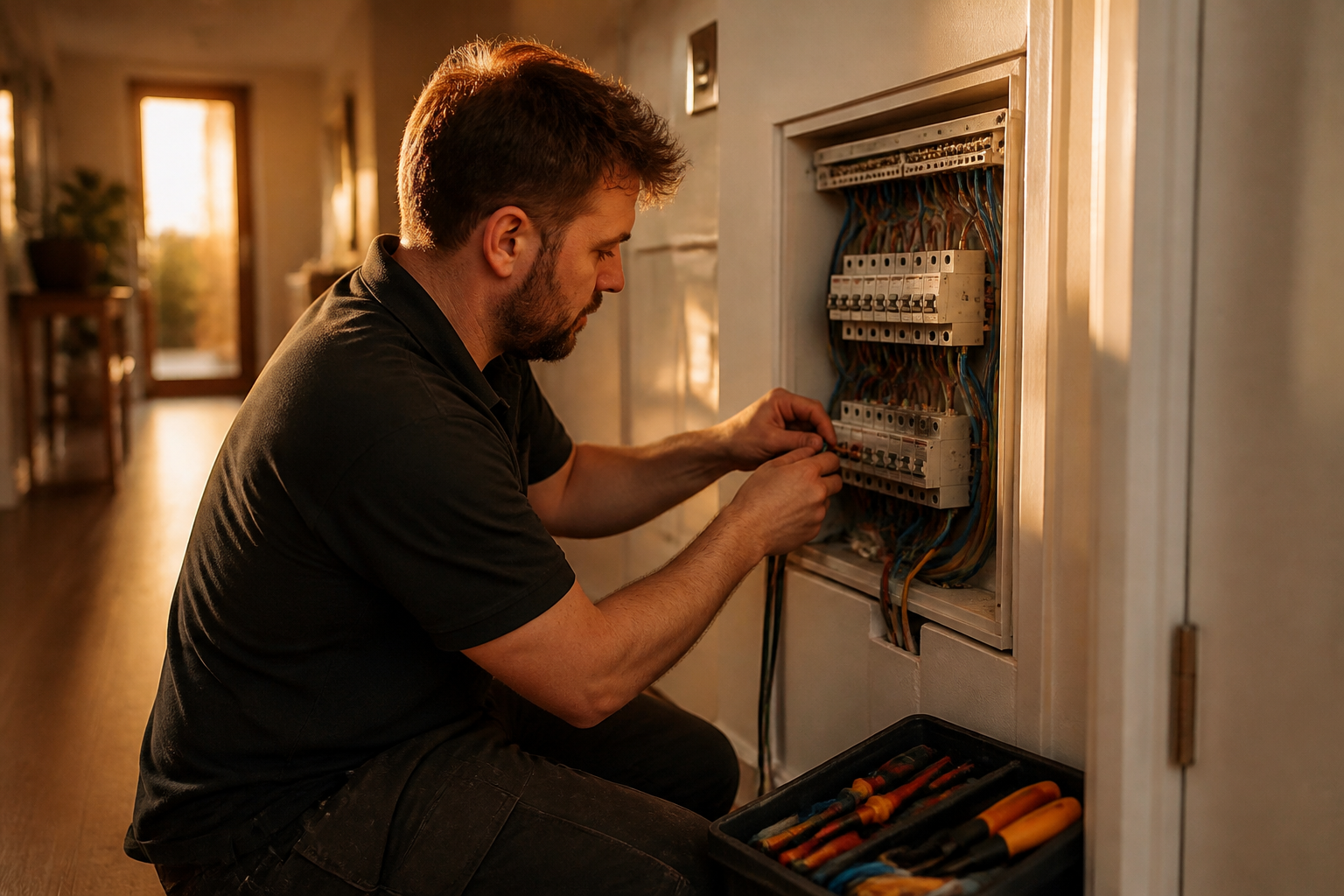
On installation day, electricians mount the panels to walls or ceilings, run hidden cabling back to fused spurs or wireless smart thermostats, and test each electrical circuit for safety. Surface-mounted cabling can be hidden inside neat plastic trunking, or cables can be chased directly into plaster walls if you choose to redecorate after the installation. Ceiling installations require timber joist fixings to ensure heavy panels remain securely suspended over time.
A complete home installation takes between one and two days for a qualified two-person electrical team. Once the physical mounting and wiring are finished, the installer powers up each panel, pairs the smart wireless thermostats or smartphone controls, sets up your room heating schedules, and completes mandatory earth continuity and insulation resistance tests before handing over your certificate.