How to Size an Air Source Heat Pump for Your Home
Sizing a heat pump requires precise heat loss calculations rather than matching gas boiler ratings, ensuring high seasonal efficiency and lower winter heating bills.
- Written by
- Net Zero Home Scheme editorial team
- Last updated
- Topic
- heat pumps, energy efficiency, energy bills
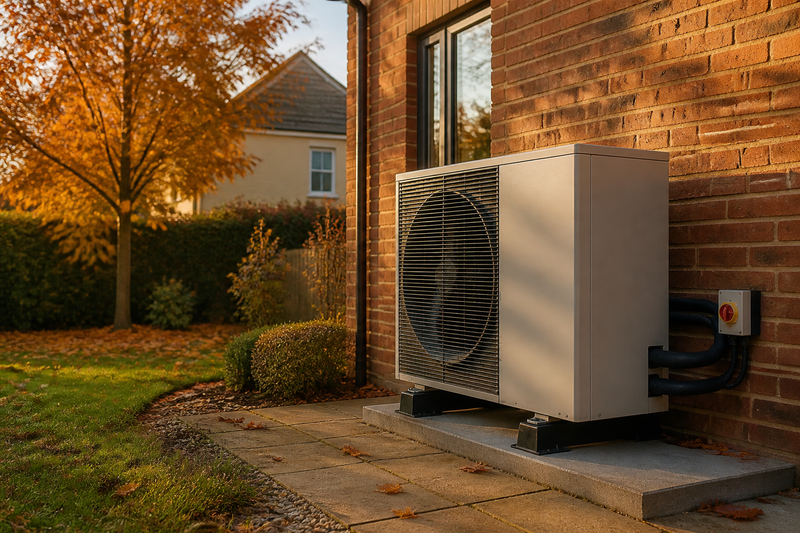
Should you choose a larger heat pump just to be safe, or will an oversized unit actually drive up your electricity bills? When replacing a fossil fuel boiler, many homeowners assume that picking a higher kilowatt capacity guarantees a warmer house in winter. However, the thermodynamics of heat pumps work very differently from traditional gas or oil boilers. While a gas boiler can easily cycle on and off to meet low demand, an oversized heat pump suffers from severe efficiency losses, higher wear on its compressor, and elevated running costs.
Sizing an air source heat pump correctly requires moving away from crude thumb rules and conducting room-by-room heat loss calculations under British Standards. This guide walks you through the five step decision process to ensure your new heating system delivers comfortable indoor temperatures while keeping your annual energy bills as low as possible.
Step 1: Calculate your property heat loss accurately
Traditional UK plumbing practices often relied on oversized gas boilers, installing 24 kW or 30 kW units in homes that only required 6 kW of heat at peak winter conditions. Gas boilers operate efficiently across wide temperature drops because flame combustion creates high immediate heat. Heat pumps, by contrast, extract ambient heat from outdoor air using a vapour compression refrigeration cycle. Their output and efficiency depend directly on the difference between outdoor air temperature and indoor flow temperature.
To size a system correctly, an accredited installer must follow the MCS MIS 3005-D standard, which mandates room-by-room heat loss calculations. This calculation measures the rate at which thermal energy escapes through walls, floors, roofs, windows, and controlled ventilation rates.
Heat loss is measured in Watts per Kelvin (W/K), representing the power required to maintain a one degree temperature difference between indoors and outdoors. For example, a typical 1930s semi-detached home with partial cavity wall insulation and double glazing might have a heat loss coefficient of 250 W/K. If the internal design temperature is 21°C and the external design temperature is -3°C (a 24°C temperature difference), the peak heat demand is calculated as:
Peak Heat Loss = 250 W/K × 24 K = 6,000 W = 6.0 kW
| Property Type | Typical Fabric U-Value Range (W/m²K) | Estimated Peak Heat Loss at -3°C | Recommended Heat Pump Capacity Range |
|---|---|---|---|
| 1970s Detached (120 m², uninsulated cavity) | Walls: 1.5, Roof: 0.4, Windows: 2.8 | 8.5 kW to 11.0 kW | 9 kW to 12 kW |
| 1990s Semi-Detached (95 m², insulated cavity) | Walls: 0.45, Roof: 0.2, Windows: 1.8 | 4.5 kW to 6.0 kW | 5 kW to 7 kW |
| New Build / Modern Retrofit (110 m², high insulation) | Walls: 0.18, Roof: 0.11, Windows: 1.2 | 2.5 kW to 3.8 kW | 4 kW to 5 kW |
If an installer attempts to quote a heat pump size without measuring room dimensions, window surface areas, and insulation levels, the calculation will almost certainly be inaccurate.
Step 2: Understand compressor modulation and cycling losses
Once you know your peak heat loss, you might wonder why adding a 2 kW or 4 kW safety margin could cause problems. The answer lies in how modern inverter-driven compressors regulate output.
Modern heat pumps use variable-speed compressors that adjust their electrical input to match heat demand. A typical 8 kW unit might modulate down to 30 percent of its maximum capacity, providing roughly 2.4 kW of output during mild spring or autumn days when outdoor temperatures hover around 10°C.
If you install a 14 kW unit in a home that only needs 6 kW on the coldest day of the year, its minimum modulated output might be 4.2 kW. On mild days when your house only requires 1.5 kW of heat, the unit cannot turn down low enough. Instead, the heat pump is forced to turn on and off continuously, a process known as cycling.
Frequent compressor cycling causes three direct problems:
- Reduced seasonal efficiency: Every startup sequence requires power to establish refrigerant pressure before efficient heat transfer occurs, lowering your Seasonal Coefficient of Performance (SCOP).
- Increased component wear: Frequent mechanical stops and starts accelerate wear on the inverter drive and compressor bearings, potentially shortening system lifespan.
- Temperature swings: Short bursts of intense heat cause indoor temperatures to overshoot set points, leading to uneven comfort across rooms.
A correctly sized heat pump operates continuously at low compressor speeds for long periods, maintaining steady warmth while consuming minimal electricity.
Step 3: Select external design temperatures and supplementary heat rules
When sizing a system, installers select a target outdoor design temperature based on local historical weather data recorded across the UK. In southern England, the outdoor design temperature is typically -2°C to -3°C, whereas in northern Scotland or elevated inland areas, it may drop to -5°C or colder.
Sizing your heat pump to meet 100 percent of heat loss at absolute historical minimum temperatures (such as an extreme -10°C event that occurs once every decade) creates an oversized system for the remaining 99 percent of the winter season.
Under MCS guidelines, installers evaluate whether to size the heat pump for pure monovalent operation (where the heat pump supplies 100 percent of peak load down to the design temperature) or bivalent operation with a back-up direct electric immersion heater. An inline electric booster heater can automatically cover short peak deficits during rare cold snaps without requiring you to buy a larger, less efficient heat pump.
For instance, if your home requires 7.0 kW at -3°C but only 4.5 kW at 2°C, choosing a 6 kW heat pump paired with an automatic 2 kW supplementary immersion heater allows the main unit to run at optimal modulation efficiency for more than 95 percent of the heating season.
Step 4: Match flow temperatures and radiator emitter outputs
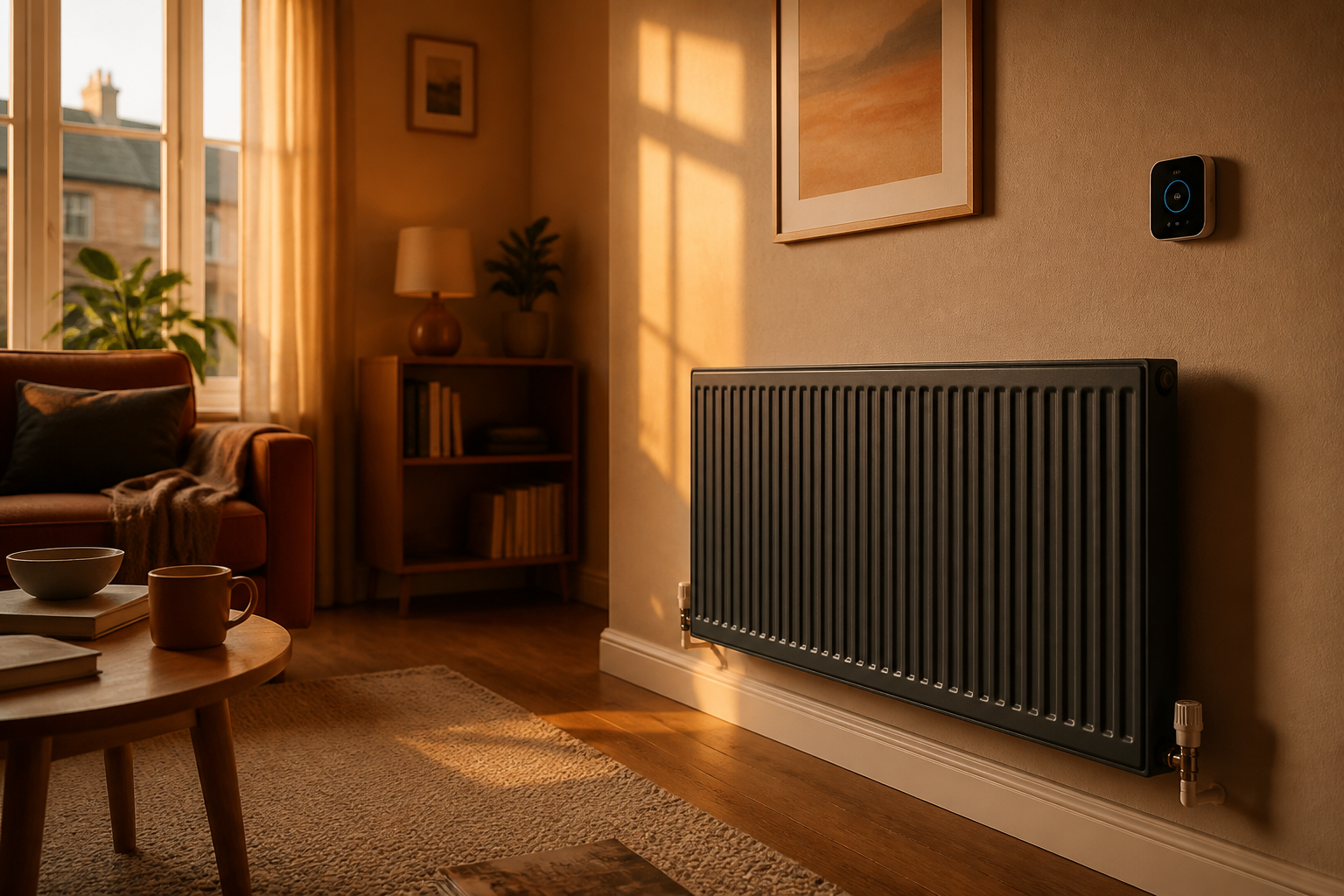
Heat pump output and electrical consumption depend heavily on the temperature of the water circulating through your radiators or underfloor heating circuits.
The Carnot efficiency principle dictates that as the temperature gap between outdoor air and indoor radiator water narrows, the heat pump uses significantly less electricity. Raising water flow temperature from 35°C to 55°C can drop your system's SCOP from 4.0 down to 2.8, meaning you use roughly 40 percent more electricity to produce the exact same amount of heat indoors.
When evaluating system sizing, you must look at radiator output alongside heat pump capacity:
- Standard gas boiler setup: Radiators operate at flow temperatures of 65°C to 70°C, producing high heat output from small radiator panel surface areas.
- Efficient heat pump setup: Radiators operate at flow temperatures of 45°C to 50°C, requiring larger single, double, or triple-panel radiators (or underfloor heating) to distribute the same heat volume into the room.
If you retain small existing radiators, the heat pump must run at higher flow temperatures to keep rooms warm. This reduces effective thermal output and forces you to choose a larger kilowatt capacity heat pump to deliver sufficient energy at high temperatures. Upgrading key radiators in main living spaces allows you to run lower flow temperatures, which in turn permits installing a smaller, more efficient heat pump unit.
Step 5: Verify installer heat loss calculations and MCS documentation
Before committing to an installation, review the detailed sizing proposal provided by your installer. A qualified MCS installer must provide a complete heat loss report and performance estimate before work begins.
Check the following details on your calculation sheet:
- Design temperatures: Verify that internal set points match standard guidelines (typically 21°C for living rooms and 18°C for bedrooms and hallways).
- Air change rates: Ensure air infiltration rates reflect your home's actual draughtproofing and ventilation status rather than generic default assumptions.
- Radiator output schedules: Confirm that individual room heat losses match the listed radiator heat outputs calculated at lower flow temperatures.
- Estimated annual electricity consumption: Review predicted annual energy use in kilowatt-hours (kWh) alongside the projected SCOP rating (typically between 3.2 and 4.2 for well-designed systems).
To help employees manage the upfront cost of residential home energy upgrades without navigating complex financial products, employers can offer support through workplace benefits. Joining The Net Zero Home Scheme gives staff access to member pricing on heat pumps installed by vetted, accredited engineers. Delivered by Net Zero Benefits, the team behind The Electric Car Scheme and The Charge Scheme, the scheme is completely free for employers to introduce, with no salary sacrifice or payroll administration required.
Frequently asked heat pump sizing questions
Will a smaller heat pump struggle to keep my home warm on freezing winter days?
No, provided the heat pump is sized to match your property's heat loss at the local external design temperature (typically -3°C in most of the UK). Heat pumps are engineered to run continuously over long periods, maintaining steady indoor warmth rather than delivering rapid, intermittent blasts of heat like traditional boilers. If outdoor temperatures fall below design limits during extreme weather, internal back-up booster heaters step in automatically to bridge any temporary deficit.
Why cannot an installer just swap a 24 kW gas boiler for a 24 kW heat pump?
Gas boilers were historically oversized to provide instant domestic hot water performance or rapid warm-up from cold. A 24 kW heat pump would be far too large for almost any standard UK residential property, causing extreme compressor cycling, low seasonal efficiency, and unnecessarily high electricity consumption. Most UK homes actually require a heat pump rated between 4 kW and 12 kW to cover peak space heating demand comfortably.
Does fitting larger radiators eliminate the need for a bigger heat pump?
Installing larger radiators allows your heating system to emit required room warmth while running at lower water flow temperatures, such as 45°C instead of 60°C. Because heat pumps operate far more efficiently at lower flow temperatures, fitting larger radiators often enables you to specify a smaller, more efficient heat pump unit rather than buying a larger heat pump to overcome undersized radiators.
Sources
- MCS Heat Pump Design Standard MIS 3005-D, Microgeneration Certification Scheme
- In-Depth Guide to Heat Pumps, Energy Saving Trust