Government Amends Approved Documents L and F for English Homes
The government has issued Circular 04/2026, updating Approved Documents L and F on home energy efficiency and ventilation compliance standards in England.
- Written by
- Net Zero Home Scheme editorial team
- Last updated
- Topic
- energy efficiency, policy, regulation
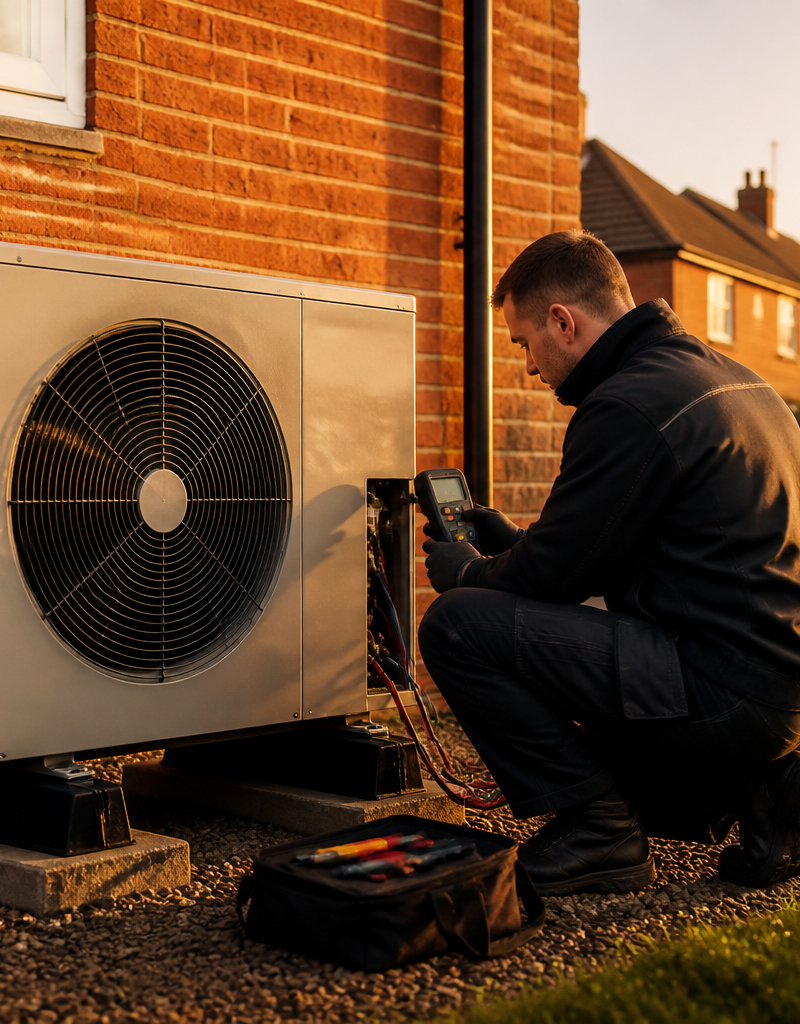
On 8 September 2026, the government issued Circular 04/2026 on GOV.UK, announcing formal amendments to Approved Document L and Approved Document F of the Building Regulations in England. The updates clarify energy efficiency requirements, greenhouse gas emission limits, and ventilation standards for both new residential developments and existing home upgrades.
Circular 04/2026 addresses technical corrections and operational guidelines across Approved Document L, which covers the conservation of fuel and power, and Approved Document F, which covers ventilation. Approved Document L governs the energy performance of building fabrics, heating system efficiency thresholds, and maximum low-temperature flow rates. Approved Document F sets mandatory air exchange standards to protect indoor air quality when energy efficiency measures make homes more airtight.
Clarifying Building Regulations for Heating and Insulation
The amendments set out detailed guidance for installers, building control inspectors, and property owners undertaking domestic retrofits. Under Part L rules, major alterations to heating systems, including replacing boilers with low-carbon heat pumps or fitting rooftop solar PV arrays, must comply with strict primary energy and emission targets. Concurrently, Part F regulations mandate that any work improving a building's thermal envelope must not compromise indoor ventilation.
When home improvements such as cavity wall insulation, loft top-ups, or double glazing reduce unintended draughts, proper background ventilation must be maintained. Circular 04/2026 ensures alignment between energy conservation guidelines and ventilation requirements, preventing moisture buildup, condensation, and damp in upgraded properties.
| Document | Primary Focus | Key Technical Area | Compliance Relevance |
|---|---|---|---|
| Approved Document L (Volume 1) | Conservation of fuel and power | Fabric standards, heating flow temperatures, solar PV, heat pump efficiencies | Mandatory for new builds, extensions, and heating replacements |
| Approved Document F (Volume 1) | Ventilation in dwellings | Background ventilators, mechanical extract rates, purge ventilation | Required whenever airtightness or heating systems are upgraded |
What the numbers say

According to the publication on GOV.UK on 8 September 2026, Circular 04/2026 amends technical parameters within Approved Documents L and F to ensure consistent enforcement by local authority building control and approved inspectors.
Key figures and technical baselines specified under these documents include:
- Maximum flow temperature limit: Under Approved Document L (Volume 1), all new and replacement wet central heating systems in English homes must be designed and installed to operate at a maximum flow temperature of 55 degrees Celsius or lower, down from traditional 75 degrees Celsius baselines.
- Minimum heat pump SCOP threshold: The regulations mandate a minimum Seasonal Coefficient of Performance (SCOP) of 2.8 for space heating installations, ensuring that low-carbon heating delivers measurable carbon and energy savings.
- Minimum background ventilation area: Under Approved Document F (Volume 1), habitable rooms in naturally ventilated homes require background trickle ventilators providing a minimum equivalent area of 8,000 square millimetres (mm²) per room, or 10,000 mm² in single-storey dwellings.
- Air permeability thresholds: For new builds and major retrofits achieving an air permeability tighter than 5 cubic metres per hour per square metre (m³/h·m²) at 50 Pascals, continuous mechanical extract ventilation (MEV) or mechanical ventilation with heat recovery (MVHR) becomes mandatory under Part F guidelines.
- Primary energy metrics: Compliance under Part L relies on meeting Target Primary Energy Rates (TPER) expressed in kilowatt-hours per square metre per year (kWh/m²/year), alongside Target Emission Rates (TER) measured in kilograms of carbon dioxide equivalent (kgCO2e/m²/year).
How the Changes Affect Solar, Heat Pumps and Ventilation
The clarification of Approved Documents L and F directly impacts how domestic renewable energy and insulation projects are planned and signed off. For heat pump installations, adhering to the 55 degrees Celsius flow temperature cap requires careful hydronic balancing and radiator sizing to maintain room comfort during peak winter conditions. Installers must provide formal commissioning documentation confirming that the low flow temperature design has been achieved before building control sign-off.
For solar PV and battery storage systems, Part L regulations require proper integration with hot water cylinders and home energy management controls to ensure generated clean electricity is prioritised over grid imports. Furthermore, when installers carry out comprehensive retrofits combining external wall insulation or airtight draught-proofing with low-carbon heating, Approved Document F compliance requires explicit verification that ventilation provisions remain adequate.
What this means for your home
If you are planning to upgrade your home's heating system, install solar panels, or add insulation, Circular 04/2026 provides essential clarity on the regulatory standards your installer must meet.
- Verify heating design flow temperatures: Ensure your installer designs your heat pump or radiator replacement to operate at 55 degrees Celsius or below, which keeps system efficiency high and ensures Part L compliance.
- Check ventilation when insulating: If you are sealing draughts, insulating walls, or replacing windows, review your room ventilation. Approved Document F requires trickle vents or continuous extract fans to protect your home from humidity and indoor air pollutants.
- Obtain proper building control certification: Any major heating or structural energy upgrade requires certification through a competent person scheme (such as MCS or NICEIC) or directly from local authority building control to maintain valid EPC records and property deeds.
- Balance tech upgrades for maximum yield: Combining solar PV with a heat pump or hot water diverter helps lower operational running costs while satisfying Part L primary energy compliance criteria.
What this means for employers
For HR directors, reward managers, and sustainability leads, evolving building regulations underscore the growing complexity and cost households face when trying to decarbonise their homes. As statutory energy efficiency standards become tighter, employees increasingly seek trustworthy advice and cost-effective routes to upgrade their heating, insulation, and clean power generation.
Offering practical workplace benefits that help staff reduce home energy bills and meet regulatory standards improves financial well-being and aligns corporate ESG targets with employee needs. The Net Zero Home Scheme provides employees with member pricing on MCS-accredited solar PV, heat pumps, battery storage, and plug-in solar installations across England, Scotland, and Wales, delivered at zero cost to the employer with no salary sacrifice or payroll deduction required.
Frequently asked questions
Do the amendments in Circular 04/2026 apply across the entire UK?
No. Circular 04/2026 applies specifically to Approved Documents L and F in England. Building regulations are a devolved matter in Scotland, Wales, and Northern Ireland, where separate building standards guidance applies, although technical objectives for low-temperature heating and ventilation remain broadly similar.
Will existing homes need to upgrade ventilation if no building work is taking place?
No. Approved Document F applies when building work is carried out, such as replacing windows, adding wall insulation, or installing new heating systems. It does not impose retrospective ventilation requirements on un-renovated homes.
How do Part L rules affect heat pump installation grants?
Part L rules set the legal baseline for heating design, requiring maximum 55 degrees Celsius flow temperatures regardless of grant funding. Meeting Part L standards is a prerequisite for MCS certification, which in turn unlocks government incentives such as the Boiler Upgrade Scheme grant.