Bristol City Leap to Upgrade Council Buildings with Heat Pumps
Bristol City Leap announced plans on 7 September 2026 to upgrade heating systems across three council buildings with low-carbon heat pumps.
- Written by
- Net Zero Home Scheme editorial team
- Last updated
- Topic
- heat pumps, energy efficiency, policy
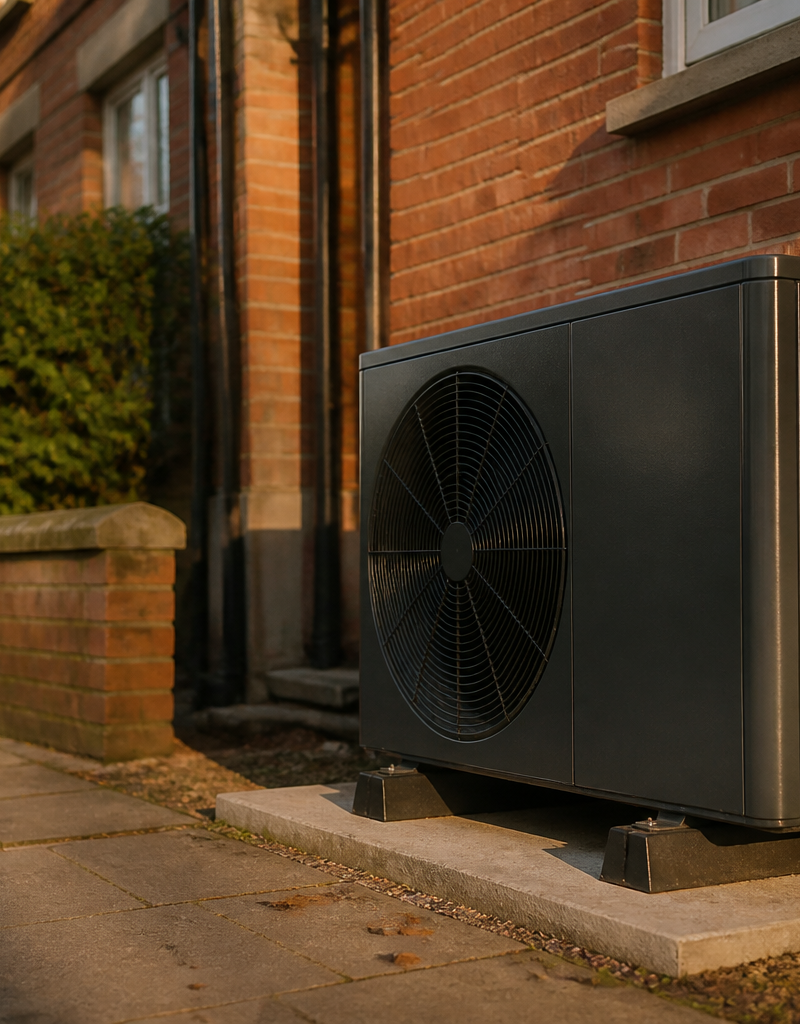
On 7 September 2026, sustainable business news outlet edie reported that Bristol City Leap has announced plans to upgrade the heating and energy systems of three council-owned buildings using low-carbon heat pumps. The public-private partnership aims to cut operational emissions, lower municipal energy consumption, and strengthen the resilience of civic services as part of Bristol's citywide net zero target.
The project targets public council facilities, replacing traditional heating infrastructure with high-efficiency heat pump systems. Bristol City Leap operates as a 20-year joint venture between Bristol City Council and clean energy infrastructure provider Ameresco, working in partnership with district heating specialist Vattenfall. This latest announcement marks another practical phase in scaling low-carbon heat across municipal properties.
What the numbers say

According to edie's report on 7 September 2026, the new retrofit phase focuses on upgrading heating and energy management across three council-owned sites. While specific capital expenditure figures for this three-building package were not detailed in the initial announcement, Bristol City Leap operates under a commitment to deploy more than £1 billion of clean energy investment into Bristol over its 20-year agreement.
Across the wider UK commercial and municipal sector, heat pump installations in public buildings typically target a Seasonal Coefficient of Performance (SCOP) between 3.0 and 4.0. This means the systems deliver three to four units of useful heat energy for every single kilowatt-hour (kWh) of electricity consumed. Data from the Department for Energy Security and Net Zero (DESNZ) on non-domestic decarbonisation shows that replacing gas boiler plant with electrified heat pumps reduces direct onsite carbon emissions by 60 percent to 80 percent, depending on the carbon intensity of the national grid.
| Operational Feature | Municipal Public Building Retrofit | Domestic Residential Retrofit |
|---|---|---|
| Primary Objective | Lower municipal carbon emissions and operational costs | Cut household carbon footprint and lower heating bills |
| Typical System Capacity | Tens to hundreds of kilowatts (kW) output | Typically 4 kW to 16 kW output |
| Heat Source Tech | Commercial air source, ground source, or district heat | Air source or ground source heat pump |
| Primary Funding Route | Public Sector Decarbonisation Scheme or joint venture capital | Boiler Upgrade Scheme (£7,500 grant) or self-funding |
| Engineering Standard | Non-domestic CIBSE and BSRIA installation standards | MCS (Microgeneration Certification Scheme) standards |
What municipal heat pump upgrades mean for technology adoption
Large public sector decarbonisation projects provide practical performance data across complex building envelopes. Decarbonising municipal property requires retrofitting existing pipework, sizing low-temperature heat emitters, and balancing hydronic flows. When municipal partnerships demonstrate successful heat pump deployment in multi-use public buildings, local supply chains gain scale, skilled installation capacity increases, and public familiarity with low-carbon heating deepens.
Commercial and public building heat pump retrofits also demonstrate how space heating and hot water demands can be met efficiently without fossil fuels. Installers working on public contracts refine their expertise in low-temperature system design, which directly benefits the broader regional market by expanding the pool of qualified engineers available for residential work.
However, public sector projects do not alter the physical constraints or installation costs of individual domestic properties, nor do they replace the need for bespoke property assessments.
What this project does not change for households
While the Bristol City Leap announcement highlights progress in public sector energy infrastructure, it does not directly alter domestic energy tariffs or home grant structures. Residential electricity tariffs remain subject to Ofgem's quarterly price cap and global wholesale energy markets. Furthermore, local authority building retrofits do not automatically upgrade nearby domestic grid connections or guarantee fast-track planning approvals for nearby residential properties.
Homeowners considering a transition from gas or oil heating must still evaluate their own home's thermal efficiency, radiator sizing, and electrical incoming supply independently.
What this means for your home
If you are planning to replace an aging gas or oil boiler with an air source or ground source heat pump, this municipal milestone reinforces several key operational steps for domestic projects:
- Commission a room-by-room heat loss assessment: Ensure your installer conducts accurate heat loss calculations under MCS guidelines rather than relying on rough estimates based on floor area.
- Assess radiator sizing and flow temperatures: Heat pumps operate at peak efficiency with flow temperatures between 35°C and 45°C, which may require upgrading standard panel radiators to larger double-convector models.
- Confirm grant eligibility: Homeowners in England and Wales can access a £7,500 non-repayable grant through the Boiler Upgrade Scheme when using an MCS-certified installer.
- Review hot water storage: Heat pump systems require a dedicated cylinder with a large heat-exchanger coil area to ensure rapid water heating at lower flow temperatures.
What this means for employers
For HR professionals, reward leaders, and sustainability directors, high-profile civic energy projects reflect growing public focus on heating efficiency and household energy stability. Volatile wholesale gas prices continue to impact staff household finances, making practical energy benefits an increasingly valuable part of employee support packages.
Providing employees with structured pathways to improve home energy efficiency helps organizations meet corporate social responsibility targets while offering direct financial value. Through the Net Zero Home Scheme, delivered alongside The Electric Car Scheme, employers can give staff access to member pricing on accredited solar, heat pump, battery storage, and plug-in solar installations at zero employer cost, with no salary sacrifice and no payroll deduction.
Frequently asked questions
Does a municipal heat pump project affect domestic energy bills?
No. Public sector heating upgrades do not directly impact domestic electricity or gas tariffs. Household energy rates are determined by wholesale market prices, network distribution charges, and Ofgem regulatory limits.
Can householders access the funding used for council building retrofits?
No. Public sector buildings are funded through municipal budgets, specialized public sector decarbonisation grants, or public-private joint ventures. Homeowners in England and Wales must access domestic support mechanisms, such as the £7,500 Boiler Upgrade Scheme grant.
Why are public heat pump projects relevant to residential homeowners?
Public sector retrofits help scale regional installer networks, demonstrate heat pump reliability in older or complex buildings, and build public trust in low-temperature hydronic heating systems.