Rising School Energy Bills Prompt Warnings Over Cold Classrooms
BBC News reports warnings from the Children's Commissioner as rising school gas and electricity bills force budget cuts and energy rationing across educational settings.
- Written by
- Net Zero Home Scheme editorial team
- Last updated
- Topic
- energy bills, energy efficiency, policy

As autumn temperature drops begin to increase space heating demands, educational authorities across the UK have warned that school gas and electricity bills are set to escalate significantly. In coverage published by BBC News on 7 October 2026, the Children's Commissioner for England emphasised that pupils must not be forced to learn in unheated classrooms as headteachers scramble to offset rising utility expenses with emergency cost-saving measures.
The warning comes as education executives outline potential energy rationing tactics, including lowered thermostat settings and reduced heating operating hours, to prevent utility budget overruns from eroding teaching funds. The development underscores a broader ongoing struggle with volatile energy tariffs across both public sector institutions and domestic households as winter approaches.
What the numbers say
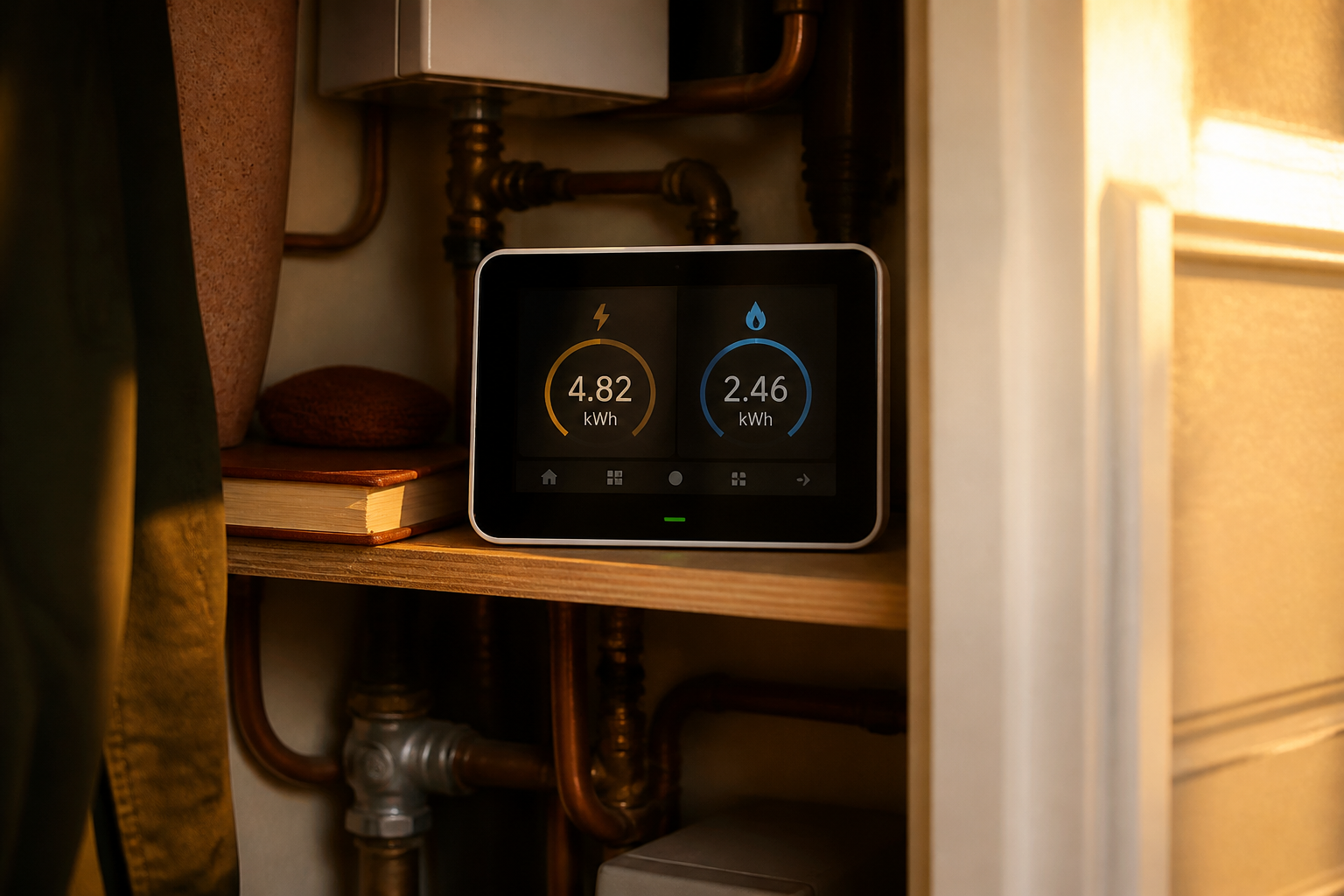
According to reporting by BBC News on 7 October 2026, educational authorities have highlighted severe budget pressures driven by rising commercial gas and electricity contracts. Unlike domestic properties covered by standard energy price caps, public buildings operate on varying commercial contracts that leave institutional budgets vulnerable to market fluctuations.
To contextualise the broader environment facing staff and institutions, consider how energy management factors compare across public settings and residential properties:
| Setting Category | Primary Energy Drivers | Policy & Consumer Controls | Key Mitigation Strategy |
|---|---|---|---|
| Schools & Public Buildings | Central boiler plant operation, high volume ventilation | Department for Education guidance, commercial procurement | Thermal efficiency upgrades, solar PV deployment |
| Residential Properties | Space heating, domestic hot water, household appliances | Ofgem domestic price cap, standard variable tariffs | Insulation upgrades, heat pumps, battery storage |
| Remote Workplace Settings | Daytime home heating, office equipment draw | Individual household tariff selection | Smart meter tracking, off-peak load shifting |
Where precise institutional contract data remains subject to ongoing commercial negotiations between local councils and energy suppliers, sector representatives stress that high standing charges and peak unit rates continue to swallow significant portions of non-staff budgets.
Rising utility pressures across public and home settings
The challenges reported in schools mirror the financial headwinds facing individual households. For headteachers, teachers, support staff, and working parents, utility costs represent an increasing proportion of monthly outgoings. When energy bills surge in public buildings, institutions face painful trade-offs between essential operations and physical comfort. In domestic settings, employees face identical pressures when deciding how long to run heating systems during cold spells.
This shared exposure to high energy rates highlights the link between institutional energy efficiency and individual financial wellbeing. As organisations examine their own facilities for energy waste, employees are similarly looking for ways to insulate their personal finances against unmanageable winter bills.
What this means for your home
For UK householders and working parents, the wider energy cost climate signals a clear need to review home energy resilience before deep winter sets in. The key operational steps to consider include:
- Track baseline consumption: Use a smart meter to measure daily kilowatt-hour (kWh) usage for both gas and electricity. Identifying high baseload usage allows you to spot inefficient appliances early.
- Improve thermal retention: Basic measures such as draught-proofing windows, topping up loft insulation to the recommended 270mm depth, and insulating suspended timber floors significantly reduce space heating requirements.
- Evaluate low-carbon heating: Replacing aging gas boilers with air source heat pumps operating at a Seasonal Coefficient of Performance (SCOP) of 3.0 to 4.0 can reduce delivered energy requirements, especially when paired with low-temperature radiators.
- Consider self-generation: Installing rooftop solar photovoltaic (PV) panels measured in peak capacity (kWp) alongside home battery storage allows households to capture daytime generation and store off-peak grid electricity for evening use.
Taking early action to upgrade home efficiency provides long-term insulation against unpredictable retail energy price spikes.
What this means for employers
For HR, reward, and benefits leaders, rising utility bills across schools and homes directly affect employee stress levels, retention, and financial resilience. Staff members who face high home heating bills during winter remote-working months often seek practical workplace support that extends beyond conventional pay reviews.
Employers evaluating their wellness and sustainability strategies are increasingly looking at practical tools that help staff lower their personal cost of living. Employers seeking to support staff with rising household running costs can offer the Net Zero Home Scheme, a free employee benefit delivered alongside The Electric Car Scheme that provides member pricing on accredited solar, heat pump, battery storage, and plug-in solar installations without salary sacrifice or payroll deductions.
Providing clear, non-salary benefits that enable home energy efficiency helps staff lower their running costs while directly supporting corporate scope 3 emissions reduction targets.
Frequently asked questions
How do commercial school energy contracts differ from home tariffs?
Schools and commercial buildings purchase energy through non-domestic contracts, which are not governed by the domestic Ofgem price cap. These contracts are often negotiated in multi-year blocks or bought flexibly on wholesale markets, meaning rate spikes can hit institutional budgets differently than residential bills.
Can home solar and battery systems help during winter months?
While solar PV generation is lower during UK winter months due to shorter daylight hours, pairing panels with a home battery allows householders to charge the battery overnight using cheaper off-peak electricity tariffs, offsetting expensive peak daytime energy costs.
What standards should householders look for when installing clean energy technology?
Householders should ensure installers are accredited under the Microgeneration Certification Scheme (MCS) and registered with a consumer protection body such as the Renewable Energy Consumer Code (RECC) or the Home Insulation and Energy Systems Quality Assured Contractors Scheme (HIES). Electrical work must comply with NICEIC or equivalent safety standards.