Understanding Solar PVT Physics and UK Home Economics
Solar PVT collectors generate electricity and hot water from one panel, but high capital costs and system complexity require careful evaluation.
- Written by
- Net Zero Home Scheme editorial team
- Last updated
- Topic
- solar, energy efficiency, energy bills
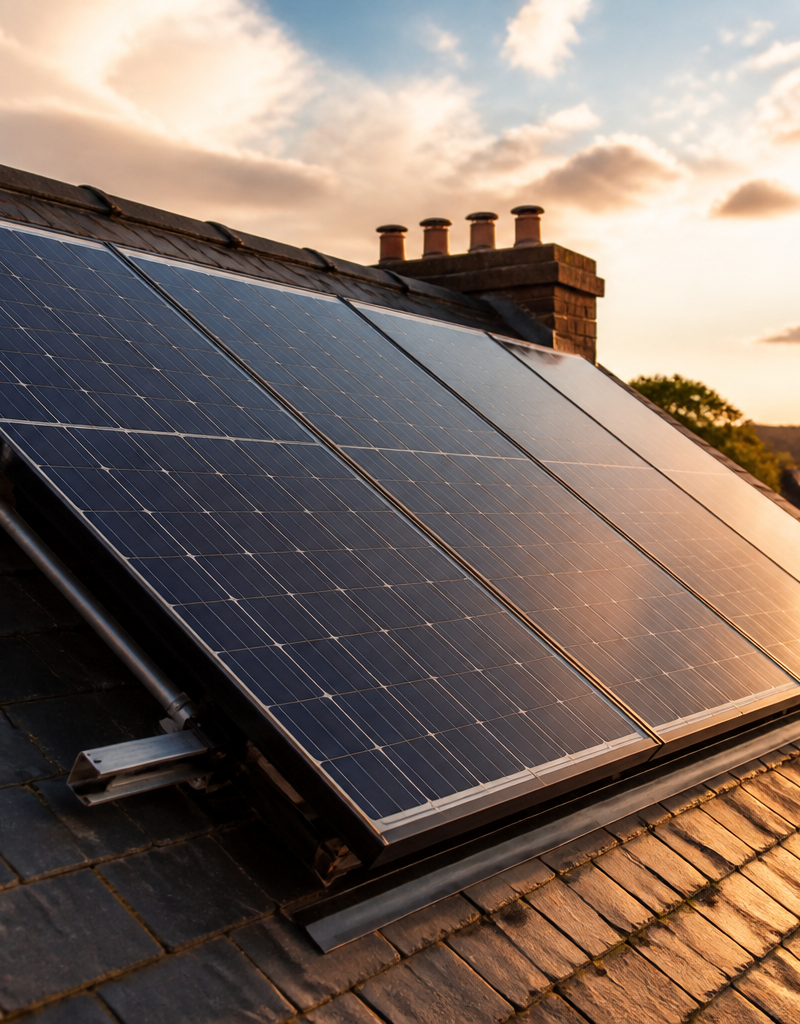
Solar photovoltaic-thermal (PVT) collectors combine solar electricity generation and thermal energy harvesting in a single module. For UK homeowners with restricted roof space who want both zero-carbon electricity and domestic hot water, PVT presents a dual-purpose solution. However, understanding the physical mechanisms, installation requirements, capital expenditure, and performance trade-offs is essential before choosing a hybrid system over standalone solar technologies.
How PVT Physics Work: Cell Cooling and Thermal Harvesting
A standard solar photovoltaic (PV) panel converts roughly 18% to 22% of incoming solar irradiance into usable electricity. The remaining 78% to 82% of solar energy is absorbed as heat or reflected. As silicon PV cells heat up under daylight, their electrical efficiency declines according to their temperature coefficient, typically around -0.35% to -0.45% per degree Celsius above the standard testing condition of 25°C. On a warm summer afternoon in the UK, a roof-mounted PV panel can reach cell temperatures of 65°C, reducing its electrical power output by 14% to 18% compared to its rated peak capacity (kWp).
A PVT module addresses this thermal drop by mounting a fluid heat exchanger directly behind the PV absorber layer. A liquid coolant, usually a mixture of water and polypropylene glycol, circulates through the exchanger. This fluid extracts heat from the rear of the solar cells, serving two distinct physical functions:
- Cell Cooling: Lowering the PV cell operating temperature towards ambient levels restores electrical efficiency, increasing annual electricity yield by approximately 5% to 12% compared to an uncooled panel in equivalent solar conditions.
- Thermal Harvesting: The extracted heat is transferred to a domestic hot water cylinder or thermal store via a heat exchanger coil, providing low-carbon thermal energy measured in thermal kilowatts (kWth).
When combined, an unglazed PVT panel can achieve a total solar energy conversion efficiency of 60% to 70%, comprising around 18% electrical efficiency and up to 50% thermal efficiency.
System Architectures in UK Homes
PVT systems installed across England, Scotland, and Wales fall into two primary mechanical configurations:
Unglazed PVT Systems
Unglazed modules use standard toughened glass over the PV cells but leave the rear thermal absorber exposed or insulated without a secondary front glass cover. These modules run at relatively low fluid temperatures, between 25°C and 50°C. They are optimal for preheating domestic hot water, supplying swimming pools, or feeding the source side of a ground source or water-source heat pump. Lower operating temperatures prevent thermal stress on the electrical bypass diodes and silicon wafers.
Glazed PVT Systems
Glazed modules feature an additional layer of glass above the PV cells, creating an insulating air gap similar to a traditional solar thermal collector. This enables the fluid to reach temperatures between 60°C and 80°C, suitable for direct domestic hot water production. However, the trapped heat keeps the PV cells warmer during peak sunshine, which diminishes the cell-cooling benefit and reduces electrical efficiency compared to unglazed designs.
In a typical residential setup, glycol fluid is pumped from the roof array to an indirect hot water cylinder. Electrical output passes through a standard string inverter or microinverters to the main consumer unit, adhering to BS 7671 wiring regulations and DNO notification rules under Engineering Recommendation G98 for systems up to 16A per phase.
Costs, Energy Yields and Technology Comparison

The capital investment for a domestic PVT installation is higher than that of standalone solar PV due to dual plumbing and electrical integration requirements. According to market data from MCS-certified installers, a 3 kWp electrical / 2 kWth thermal PVT array costs between £8,500 and £13,500 installed, including the twin-element hot water cylinder, solar pump station, inverter, and controls.
| Technology Option | Typical Installed Cost (3-4 kW System) | Annual Electrical Output | Annual Thermal Output | Primary Constraint |
|---|---|---|---|---|
| Standalone Solar PV | £5,000 - £7,500 | 3,000 - 3,800 kWh | 0 kWh | Requires 16-20 m² roof space |
| Standalone Solar Thermal | £4,000 - £6,000 | 0 kWh | 1,500 - 2,200 kWh | Requires 3-5 m² roof space |
| Hybrid Solar PVT | £8,500 - £13,500 | 3,200 - 4,000 kWh | 1,200 - 1,800 kWh | Higher capital cost and plumbing complexity |
All figures represent typical ranges for UK residential retrofits as of 2026. Under current HMRC rules, supply and installation of qualifying residential energy-saving materials benefit from a zero rate of VAT until 31 March 2027.
Physical Limitations and Counter-Arguments
While the physics of PVT technology are proven, several real-world operational challenges affect overall return on investment:
- Thermal Stagnation: On sunny midsummer days when the domestic hot water cylinder reaches its target temperature (typically 60°C), fluid circulation stops. Without active cooling, heat builds up in the panel array. During these stagnation periods, PV cell temperatures rise sharply, dropping electrical efficiency to levels below those of a standard ventilated PV module.
- Seasonal Mismatch: UK solar irradiance is heavily concentrated between April and September. During winter months, low solar radiation levels limit thermal fluid temperatures, requiring supplementary water heating from an immersion heater, heat pump, or boiler.
- Installer Availability and Certification: PVT installations require dual expertise in hydronic heating circuits and high-voltage DC electrical wiring. Installers must hold appropriate Microgeneration Certification Scheme (MCS) accreditation for both solar PV (MCS 005) and solar heating (MCS 004) to enable Smart Export Guarantee (SEG) registration for exported electricity.
- Roof Orientation and Pitch: PVT arrays require optimal south or south-west facing roof pitches between 30 and 45 degrees to balance summer thermal capture with spring and autumn performance.
What this means for you
If your property has limited suitable roof orientation or space, such as a compact urban terrace, solar PVT allows you to generate both electricity and hot water from a single roof surface. If ample unshaded roof space is available, installing a separate standalone solar PV array paired with a solar immersion diverter or heat pump often delivers a lower capital cost and simpler maintenance regime.
Before commissioning a system, confirm your installer is MCS-accredited and registered with a Consumer Code Scheme such as RECC or HIES. Ensure a detailed SAP energy calculation is provided to estimate seasonal performance factors. Employees exploring home energy retrofits can also evaluate member pricing on solar and heat pump installations through the Net Zero Home Scheme.
Frequently asked questions
Can solar PVT panels be paired with a heat pump?
Yes. Unglazed PVT panels can act as a solar heat source for heat pumps, raising the fluid temperature entering the heat pump evaporator coil. This elevates the System Coefficient of Performance (SCOP), reducing the electrical energy required to compress refrigerant during cool but daylight hours.
Do PVT panels require special maintenance?
PVT arrays require annual checks on glycol fluid pH and pressure levels, identical to standard solar thermal systems, alongside regular visual checks of DC electrical connections and inverter status. Fluid replacement is typically recommended every five to seven years to prevent pipework corrosion.
How does PVT compare to a PV array with a solar immersion diverter?
A standard solar PV array connected to an electronic immersion diverter routes surplus electricity to a hot water cylinder heater. This approach uses simple electrical controls without roof plumbing. PVT delivers higher total energy conversion per square metre, but the immersion diverter approach is generally less expensive to install and easier to maintain.