Monobloc vs Split Heat Pumps: Physics and Trade-Offs
Understand the thermodynamic, installation, and efficiency differences between monobloc and split air source heat pumps in the UK.
- Written by
- Net Zero Home Scheme editorial team
- Last updated
- Topic
- heat pumps, energy efficiency, mcs
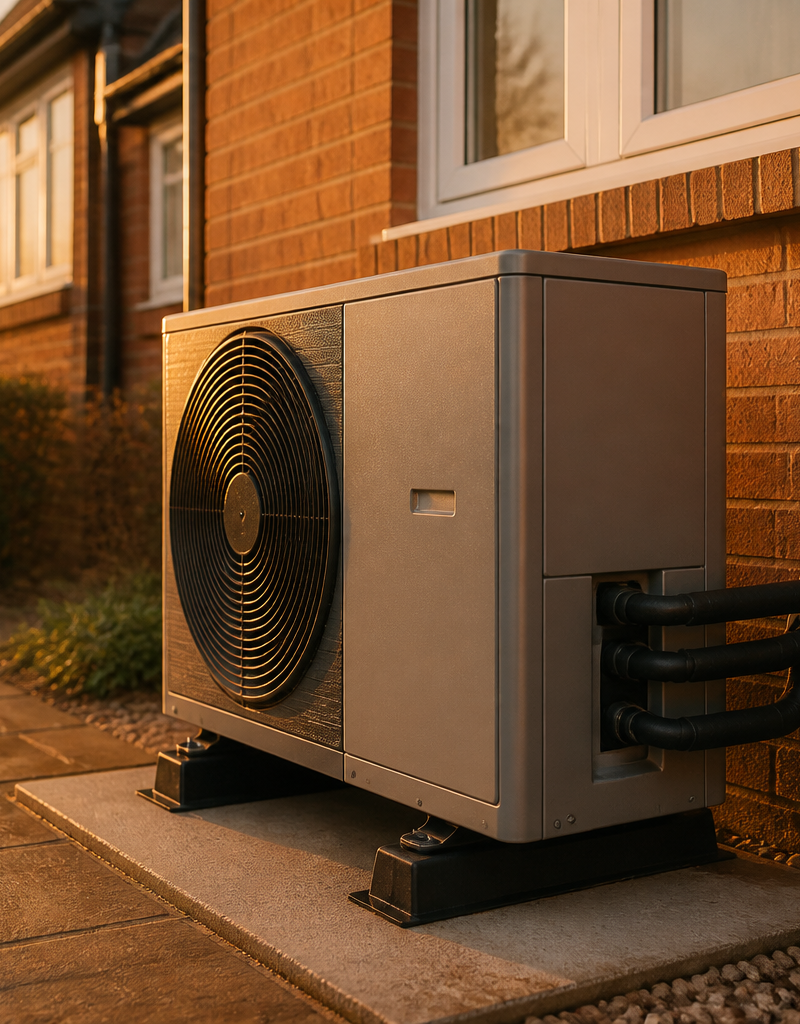
When choosing an air source heat pump for a UK home, householders and installers face a fundamental architectural choice: whether to specify a monobloc or a split system. Both technologies use the vapour-compression refrigeration cycle to extract low-grade thermal energy from ambient outdoor air and upgrade it to space heating and hot water. However, they package and transport that heat in very different ways, with distinct consequences for system efficiency, indoor space requirements, installation complexity, and long-term maintenance.
Understanding the physics and practical trade-offs between monobloc and split systems allows property owners to make informed decisions that match their building constraints and heating demands.
How monobloc and split heat pumps differ in design
The fundamental difference between a monobloc and a split heat pump lies in where the refrigerant cycle is contained.
In a monobloc system, the entire refrigeration loop, including the compressor, evaporator, expansion valve, and plate heat exchanger, is sealed within a single outdoor unit. Water from the home's central heating circuit is pumped directly out to the exterior unit, where it absorbs heat from the refrigerant via the plate heat exchanger, and returns back into the house to supply radiators, underfloor heating, or a hot water cylinder.
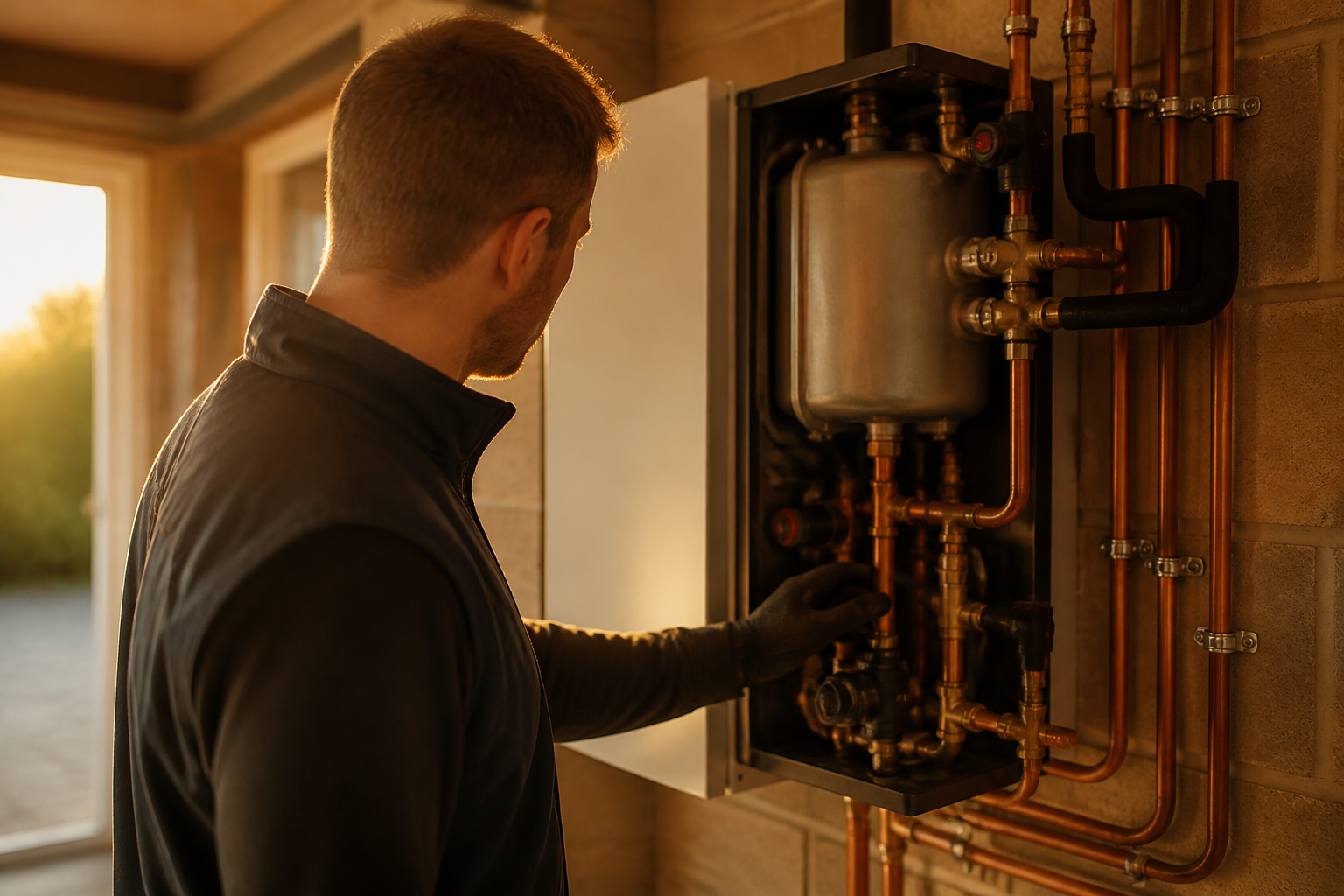
In a split system, the refrigeration loop is divided into two separate units connected by insulated copper refrigerant pipework. The outdoor unit houses the compressor and evaporator heat exchanger, while the indoor unit, often referred to as a hydrobox, houses the expansion valve, plate heat exchanger, and system pumps. Refrigerant circulates between the indoor and outdoor units, and heat transfer to the central heating water occurs entirely inside the thermal envelope of the building.
Thermodynamics and fluid efficiency: Water vs glycol
Because a monobloc unit circulates heating water outdoors, it carries an intrinsic thermodynamic vulnerability: freezing. If power fails during freezing weather, static water inside the outdoor unit can freeze, expand, and burst the heat exchanger. To prevent this, installers must either install mechanical anti-freeze valves or fill the hydronic circuit with a mixture of water and glycol anti-freeze.
While glycol prevents freezing, it alters the thermophysical properties of the circulating fluid:
- Viscosity: Propylene glycol is denser and more viscous than pure water. According to chemical fluid data cited by the Energy Saving Trust, a 25% to 30% glycol mixture increases pumping power requirements, requiring higher pump speed settings to maintain design flow rates.
- Specific Heat Capacity: Pure water has a high specific heat capacity of approximately 4.18 kJ/kg·K. Adding 30% propylene glycol reduces the specific heat capacity of the fluid to around 3.8 kJ/kg·K. As a result, the fluid carries less heat energy per litre for a given temperature differential.
- Heat Transfer Co-efficient: The higher viscosity reduces fluid turbulence inside the heat exchanger, slightly degrading heat transfer effectiveness.
Field measurements analysed by the Energy Saving Trust indicate that the combined hydrodynamic and thermal penalties of a typical glycol mix can reduce overall Seasonal Coefficient of Performance (SCOP) by between 2% and 4% compared to a pure water system. Split systems, keeping all water within the heated building envelope, run on pure water and avoid this parasitic fluid loss entirely.
Installation standards and refrigerant safety rules
The choice between monobloc and split systems also impacts installation compliance and installer certification under UK standards.
Because monobloc systems arrive as pre-sealed, factory-tested units, the installer does not touch the refrigerant circuit during fitting. Connection involves standard plumbing and electrical connections. Consequently, installers fitting monobloc units do not require F-Gas certification, provided they do not open the sealed circuit.
Split systems require custom copper pipework to be flared, joined, pressure-tested with nitrogen, vacuum-purged, and charged with refrigerant on site. Under UK environmental regulations enforced by the Environment Agency, technicians installing split systems must hold valid City & Guilds 2079 or CITB F-Gas qualifications.
Refrigerant selection is another critical factor. Monobloc systems increasingly utilize propane (R290), an A3 natural refrigerant with a Global Warming Potential (GWP) of just 3. Because R290 is flammable, safety standard BS EN 378 limits indoor charge weights. Because monobloc units hold their entire refrigerant charge outdoors, they can safely accommodate R290. Split systems, which pipe refrigerant indoors, must comply with strict charge limits under BS EN 378 when using flammable gases, leading most split designs to rely on fluorinated gases such as R32 or R410A, which carry higher GWP values.
Comparing monobloc and split heat pump features
| Feature | Monobloc Heat Pump | Split Heat Pump |
|---|---|---|
| Primary Outdoor Fluid | Water and glycol mixture | High-pressure refrigerant (R32 or R410A) |
| On-site Refrigerant Works | None required (factory sealed) | Required (flaring, evacuation, leak testing) |
| Indoor Wall Space | Low (requires cylinder and controls) | Higher (requires hydrobox unit and cylinder) |
| Low GWP Refrigerants (R290) | Unrestricted outdoors under BS EN 378 | Restricted by indoor charge limits |
| System Fluid Efficiency | 2% to 4% lower due to glycol viscosity | Maximum thermal capacity (pure water circuit) |
| Freeze Risk Mitigation | Anti-freeze valves or glycol required | Inherently freeze-safe (water inside house) |
| Maximum Pipe Run to Outdoor Unit | Typically up to 5 to 10 metres | Up to 30 to 50 metres with minimal heat loss |
What are the practical trade-offs and counter-arguments?
While monobloc systems dominate current UK sales due to their lower installation complexity, split systems offer clear advantages in specific building scenarios:
- Distance and Heat Loss: Water pipes running from an outdoor monobloc to a boiler room lose heat to the ambient air, even when insulated to MCS standards. Split systems pipe high-pressure refrigerant over longer distances with negligible thermal loss before converting heat inside the building envelope. For homes where the outdoor unit must sit 15 to 30 metres from the cylinder, a split system is often superior.
- Indoor Space vs Outdoor Footprint: Monobloc outdoor units are physically larger because they house the internal heat exchanger and circulation pumps. For compact urban plots or wall-mounting, a split outdoor unit is lighter and smaller, though it requires indoor wall space for the hydrobox.
- Maintenance and Lifespan: Anti-freeze valves on monobloc systems can drip or fail over time if not serviced, while glycol requires chemical testing and topping up every three to five years to prevent corrosion. Split systems avoid glycol maintenance entirely, though their indoor electronic expansion valves and extra flare connections represent potential leak points if not installed correctly.
What this means for you
If you are planning an air source heat pump upgrade for a standard UK property, a monobloc system offers a straightforward installation path, compatibility with environmentally friendly R290 refrigerant, and minimal impact on indoor living space. However, if your property requires a long pipe run between the outdoor unit and the hot water cylinder, or if indoor plant room space is ample while outdoor garden space is severely constrained, a split system may provide higher operational efficiency and easier freeze protection.
For advice on selecting MCS-accredited heating equipment, householders should consult an accredited installer to evaluate pipe distances, heat loss, and floor plans. If you are exploring energy upgrades through an employer benefit, the Net Zero Home Scheme provides UK employees with member pricing on accredited heat pump installations, solar PV, and battery storage across England, Scotland, and Wales.
Frequently asked questions
Do split heat pumps cost more to install than monobloc systems?
Yes, split heat pumps generally incur higher installation labour costs because the installer must hold F-Gas certification and spend additional time flaring copper lines, vacuuming the pipework, and leak-testing the refrigerant loop on site.
Can I convert a monobloc system to pure water without glycol?
Yes, provided the installation includes mechanically approved anti-freeze valves fitted to the external pipework. These valves automatically open and drain the heat exchanger fluid to ground level if temperatures drop near freezing during a prolonged power outage.
Which system type lasts longer?
Both monobloc and split heat pumps have an expected operational lifespan of 15 to 20 years when serviced according to manufacturer instructions and installed in accordance with MCS standards.
Sources
- Air Source Heat Pump Guide, Energy Saving Trust
- MCS Heat Pump Standards and Installation Guidance, Microgeneration Certification Scheme
- F-Gas Regulations for Heating and Cooling Contractors, Environment Agency