Heat Pump Water Treatment Rules and BS 7593 Explained
Learn how BS 7593 water quality standards protect heat pump heat exchangers from magnetite sludge, corrosion, and bacterial growth in UK homes.
- Written by
- Net Zero Home Scheme editorial team
- Last updated
- Topic
- heat pumps, mcs, regulation
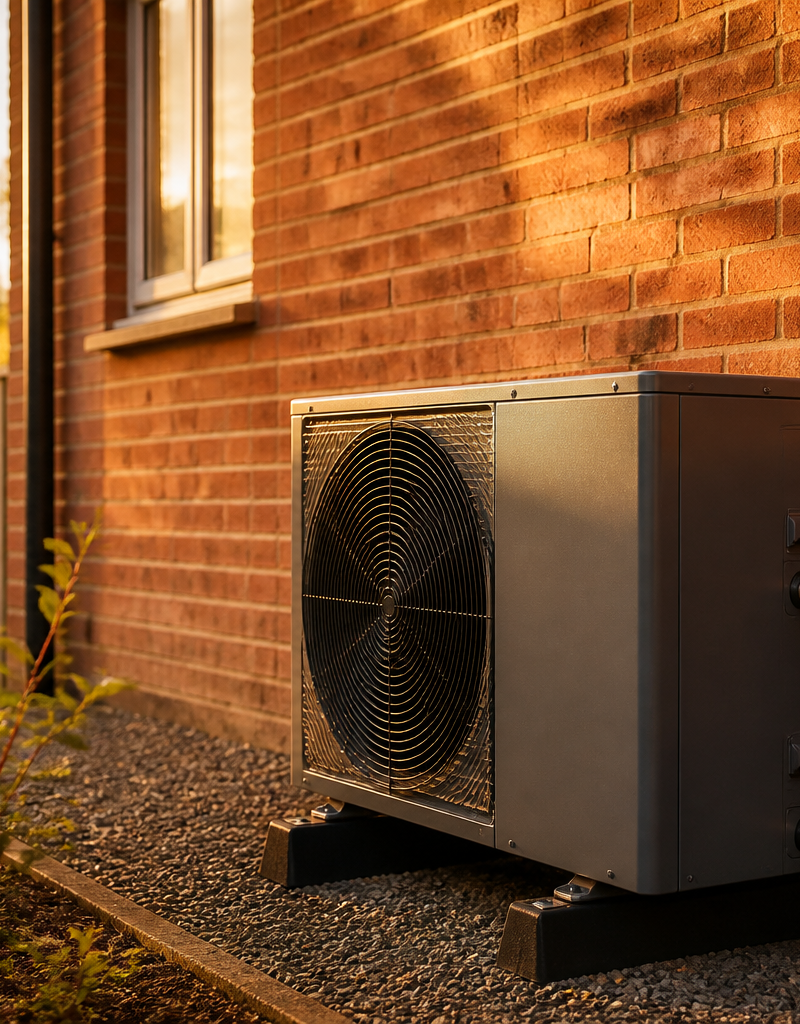
When replacing a fossil fuel boiler with a hydronic air source or ground source heat pump, central heating water quality becomes a critical factor for long-term system performance. While gas boilers operate with high thermal output and high flow temperatures, heat pumps rely on narrow heat exchangers and lower flow temperatures to maximize efficiency. Poor water quality can reduce system output, increase electricity consumption, and cause premature component failure.
In the UK, central heating water treatment is governed by British Standard BS 7593:2019, titled Code of Practice for Preparation, Commissioning and Maintenance of Domestic Central Heating and Cooling Water Systems. Compliance with BS 7593 is mandatory under Part L of the Building Regulations in England and Wales, as well as Section 6 of the Scottish Building Standards. The Microgeneration Certification Scheme (MCS) also incorporates these water quality requirements into its heat pump installation standard, MCS MIS 3005-D. Understanding these rules ensures your heating system operates at peak efficiency for its full design life.
Why heat pump water quality differs from boiler water

Hydronic central heating systems circulate water between the heat generator and the emitters, such as radiators or underfloor heating circuits. Over time, untreated water reacts with internal steel, iron, copper, and aluminium components, creating black iron oxide sludge known as magnetite. In traditional gas boilers, large heat exchangers and high pump head pressure can often tolerate mild sludge accumulation without immediate breakdown, although efficiency degrades.
Heat pumps are substantially more sensitive to water quality issues for three specific technical reasons:
-
Plate heat exchanger dimensions: Heat pumps transfer heat from refrigerant loops to heating circuit water using brazed stainless steel plate heat exchangers. The fluid channels between these plates are narrow, often measuring less than 1.5 millimetres across. Magnetite sludge and limescale deposits easily clog these channels, restricting fluid flow and triggering high-pressure fault codes on the compressor.
-
Lower operating flow temperatures: Conventional gas boilers run at flow temperatures between 60°C and 75°C. At these high temperatures, most bacterial growth inside the pipework is naturally controlled. Heat pumps, by contrast, operate most efficiently at flow temperatures between 35°C and 55°C. These lower temperatures create favorable conditions for microbial growth, including Pseudomonas bacteria, which produce biological slimes that insulate heating surfaces and restrict flow.
-
Flow rate and delta T dependencies: Heat pumps operate across a narrow temperature differential between flow and return pipes, typically between 5°C and 8°C (known as Delta T). To transfer adequate thermal energy into the home at low flow temperatures, the circulation pump must maintain a precise flow rate in litres per minute. Blockages or restrictions caused by scale and sludge drop the flow rate, forcing the unit to cycle on and off frequently and lowering the seasonal coefficient of performance (SCOP).
Core requirements of BS 7593:2019 for heat pump installations
The BS 7593 standard outlines five primary operational requirements that installers must carry out when setting up or retrofitting a central heating loop.
System flushing and cleaning
Before connecting a new heat pump to existing pipework and radiators, the installer must perform a thorough system flush. For retrofit installations containing existing radiators, a dynamic power flush or mains-pressure chemical flush is used to mobilize and remove built-up magnetite and debris. For brand new systems, a mains flush removes manufacturing oils, flux residues, and installation debris.
Chemical inhibitor dosing
Once cleaned, the system must be treated with a high-performance chemical inhibitor certified under the BuildCert or NSF International testing frameworks. Inhibitors neutralize dissolved oxygen and adjust fluid chemistry to prevent galvanic corrosion between dissimilar metals.
Biocide treatment
BS 7593 mandates the addition of a specialized biocide chemical for any heating system operating with a flow temperature under 60°C. Biocides prevent the growth of microbiological slimes and fungal mats inside low-temperature loops, such as underfloor heating manifolds and heat pump heat exchangers.
Inline magnetic filter installation
The standard requires a permanent inline magnetic filter to be installed on the return pipework, positioned immediately upstream of the heat pump heat exchanger. This filter captures microscopic iron oxide particles before they can enter the narrow plate channels.
Annual water quality testing
Inhibitors and biocides break down over time due to thermal stress and system dilution. BS 7593 requires heating system water to be tested annually for chemical inhibitor concentration, total dissolved solids (TDS), and pH levels. The pH level must remain within the range specified by the heat pump manufacturer, typically between 6.5 and 8.5 for copper systems, or 8.0 and 8.5 for systems with aluminium components.
Water quality standards and testing criteria
| Water Parameter | Standard Metric Range | Operational Risk If Out of Spec | Corrective Action |
|---|---|---|---|
| pH Level | 7.5 to 8.5 (Aluminium safe) | Acidic corrosion or alkaline metal degradation | Flush and re-dose with approved inhibitor |
| Total Dissolved Solids (TDS) | Under 1,000 µS/cm | Mineral scale formation on heat exchanger | Partial drain down and soft water flush |
| Dissolved Iron | Under 1.0 mg/L (ppm) | Active corrosion and magnetite accumulation | Clean magnetic filter pot and check inhibitor level |
| Chemical Inhibitor Level | 100% of target concentration | Accelerated internal corrosion and gas formation | Top up chemical inhibitor dosage |
| Biocide Level | Active biocide residual present | Biological slime growth and manifold clogging | Dose with low-temperature system biocide |
How MCS standards and manufacturer warranties align
The Microgeneration Certification Scheme standard MCS MIS 3005-D requires installers to comply fully with BS 7593 and manufacturer installation manuals during heat pump commissioning. When an installer submits a benchmark commissioning checklist to complete an MCS registration, they must sign off that the central heating fluid has been cleaned, treated with inhibitor, biocide treated, and filtered.
Major heat pump manufacturers, including Daikin, Mitsubishi Electric, Vaillant, and Panasonic, mandate strict water quality parameters in their installation terms. If a heat exchanger fails or a primary circulation pump seizes within the warranty period, manufacturers routinely request a sample of the system water for laboratory analysis. If the analysis reveals high magnetite concentrations, absence of biocide, or improper pH levels, the warranty claim may be rejected, leaving the property owner responsible for replacement costs.
What this means for you
When planning a heat pump installation or taking over a property with an existing system, you can protect your investment by following clear operational steps:
- Ask your installer for proof of system flushing and water treatment chemical certificates upon completion.
- Ensure an inline magnetic filter with accessible isolation valves is fitted in an accessible location for easy annual servicing.
- Verify that your installer records fluid test results on the benchmark commissioning sheet.
- Include a water quality check as part of your annual heat pump service agreement, ensuring inhibitor and biocide levels are topped up.
If you are evaluating home heating options through your employer, the Net Zero Home Scheme offers member pricing on heat pumps, solar panels, and battery storage installed by accredited contractors across England, Scotland, and Wales. Delivered by Net Zero Benefits alongside The Electric Car Scheme, the UK's largest independent salary sacrifice provider, it is free for employers and involves no salary sacrifice or payroll deductions.
Frequently asked questions
Do I need a biocide if my heat pump runs an anti-legionella cycle?
Yes. Anti-legionella cycles pasteurize the domestic hot water cylinder by heating stored water above 60°C periodically. However, central heating water in your radiators and underfloor heating pipes remains entirely separate from domestic hot water and operates continuously at lower temperatures (35°C to 55°C). Biocide is specifically required inside the space heating loop to prevent microbial growth.
Will failure to comply with BS 7593 invalidate my heat pump warranty?
Most major heat pump manufacturers require full compliance with BS 7593 as a condition of their multi-year equipment warranties. If a component such as the plate heat exchanger or internal pump fails, manufacturers frequently test fluid samples for pH, iron content, and inhibitor concentration before approving warranty claims.
How often should heat pump filter pots and chemical levels be checked?
Inline magnetic filter pots should be cleaned during the initial 30-day post-installation inspection and subsequently during annual system servicing. Chemical inhibitor and biocide concentrations should also be tested annually using simple dip-strip or digital meter tests, with top-ups applied whenever concentration drops below required threshold levels.
Sources
- BS 7593:2019 Code of Practice for Water Treatment, British Standards Institution
- MCS MIS 3005-D Heat Pump Standard, Microgeneration Certification Scheme
- Heating and Hot Water Industry Council Water Quality Guidance, Heating and Hot Water Industry Council