Installing Wastewater Heat Recovery in UK Homes
A complete practical guide to domestic wastewater heat recovery, covering vertical and drain options, plumbing checks, WRAS rules, and expected energy savings.
- Written by
- Net Zero Home Scheme editorial team
- Last updated
- Topic
- energy efficiency, energy bills, home energy
Heating domestic hot water accounts for roughly 18% of the average UK home's energy consumption, according to estimates published by the Energy Saving Trust. Showers are responsible for the largest single share of that hot water usage. When you take a shower, water heated to around 38°C to 40°C flows down the drain after touching your skin for only a few seconds, carrying away valuable thermal energy. A wastewater heat recovery system, often abbreviated to WWHRS, captures this heat before it enters the drainage system and uses it to pre-heat incoming cold mains water.
Because wastewater heat recovery is passive, silent, and uses no electrical power, it offers a reliable way to cut home running costs and reduce carbon emissions. However, successful performance depends heavily on choosing the correct system geometry, verifying water pressure, and ensuring compliant plumbing integration.
How wastewater heat recovery works in practice
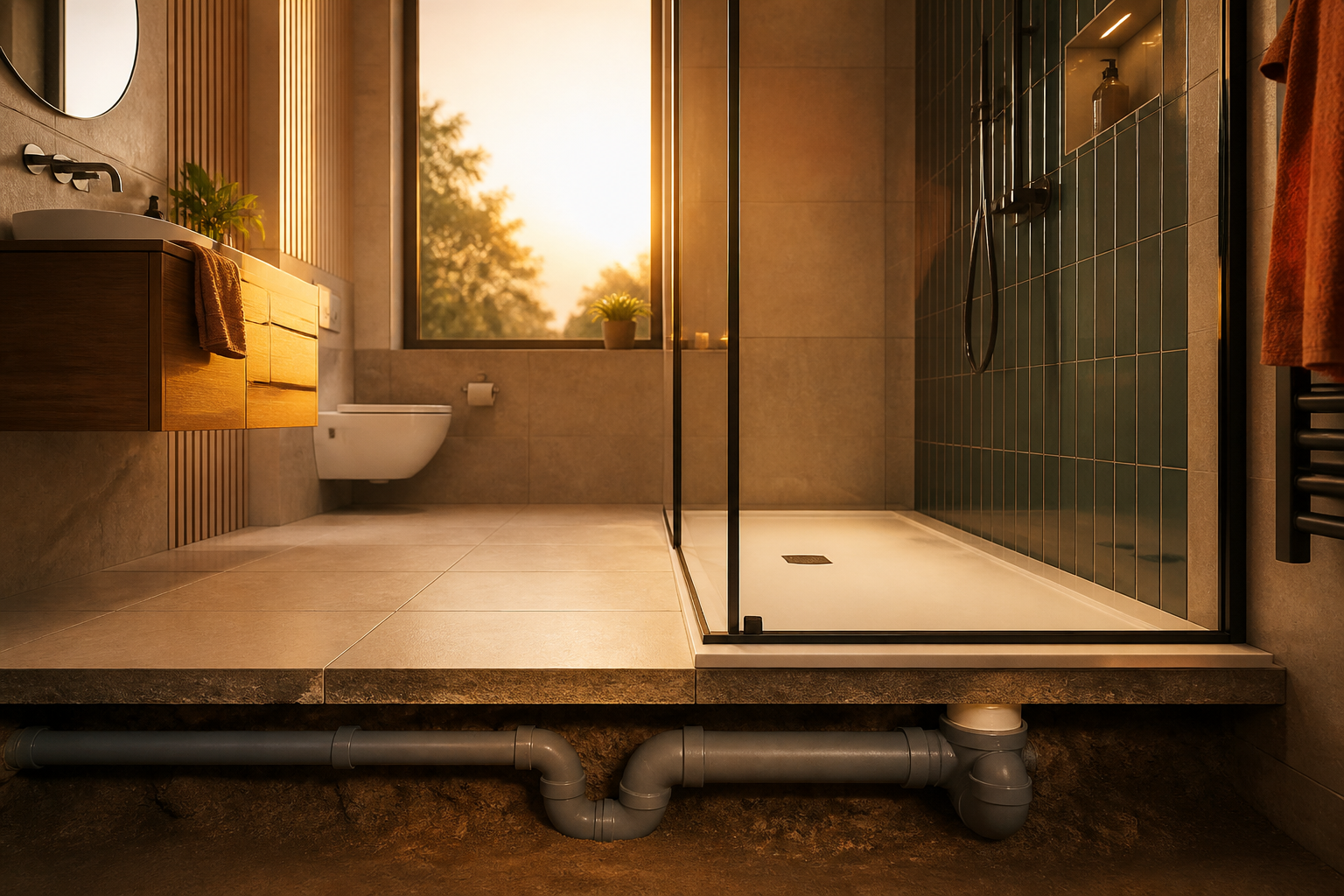
A wastewater heat recovery unit operates as a counter-current heat exchanger. As warm waste water runs down the drain, incoming cold mains water passes in the opposite direction through an adjacent copper casing. Thermal energy transfers naturally through the highly conductive copper wall, raising the incoming mains water temperature from approximately 10°C up to 25°C or higher before it reaches your shower mixing valve or heating appliance.
The efficiency of these exchangers is tested under BS EN 1717 standards and recorded within the UK Standard Assessment Procedure database, known as SAP. Vertical pipe exchangers, categorized as System A, deliver thermal efficiencies between 50% and 65%. Horizontal under-bath units (System B) and shower tray drain units (System C) generally achieve efficiencies between 30% and 45% due to lower fluid velocity and reduced contact area.
Pre-heated water can be plumbed in three different configurations. Option 1 feeds pre-heated water to both the shower cold inlet and the hot water cylinder or combi boiler inlet, yielding the highest energy savings. Option 2 feeds only the shower valve cold inlet, while Option 3 feeds only the water heater inlet. Option 1 is standard for maximum SAP performance scores during home refurbishments or new builds.
Technical checks before choosing a system
Before specifying a unit, you must confirm several spatial and technical parameters inside your home:
- Vertical clearance: System A vertical pipe exchangers require a straight, vertical drop of 1.5 to 2.1 metres directly beneath the shower drain. This makes them ideal for first-floor showers where pipework can run through a ground-floor utility space, partition wall, or service riser.
- Floor structure: If your shower is located on a ground floor with a solid concrete slab, vertical pipe units are rarely practical without extensive structural chasing. In these cases, horizontal under-bath or low-profile drain tray units are required.
- Water pressure and flow: Heat exchangers introduce minor pressure drop in the cold supply line, typically reducing flow by 1 to 2 litres per minute. Your mains water supply should deliver at least 1.5 bar static pressure and a minimum flow rate of 10 to 12 litres per minute.
- Backflow prevention: Under the Water Supply (Water Fittings) Regulations 1999, heat exchangers connecting potable drinking water to waste drainage lines must feature double-wall separation. This prevents drain fluid from contaminating the drinking supply if internal corrosion ever occurs. Ensure your chosen unit holds certification from the Water Regulations Advisory Scheme, known as WRAS.
Step-by-step installation process and timelines
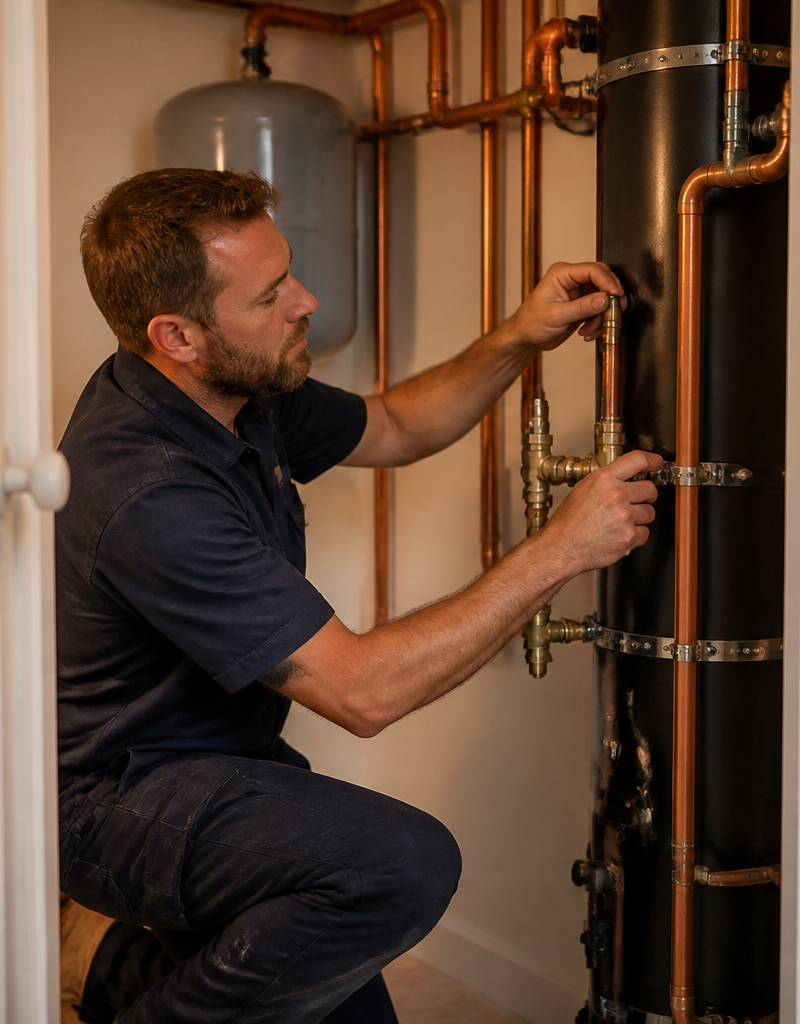
Installing a wastewater heat recovery system should always be completed by a qualified plumber, preferably registered with the Chartered Institute of Plumbing and Heating Engineering, or CIPHE.
- Survey and route design: The plumber verifies the vertical drop, confirms the route for copper supply pipes, and selects the plumbing configuration (Option 1, 2, or 3).
- Mounting the exchanger: For vertical units, acoustic rubber-lined brackets secure the copper pipe to structural wall studs or masonry. Proper isolation prevents flow noise from transmitting into living spaces.
- Drainage connections: The top shower drain tailpiece connects to the exchanger using standard solvent-weld or push-fit waste pipework.
- Potable water connections: Cold mains lines are routed through the outer copper chamber using standard compression or press-fit copper joints.
- Testing and commissioning: The system is pressure tested to confirm leak-free performance under full mains pressure and flushed to ensure no debris restricts flow.
For a bathroom renovation or new build, installation typically takes between 3 and 6 hours of plumber time once access is prepared. Retrofitting into an existing, decorated home may require additional time to open and restore boxing or service ducts.
Costs, energy savings and SAP performance
The financial return of a wastewater heat recovery system depends on household size, shower frequency, and your primary heating fuel.
| System Type | Typical Hardware Cost | Average Efficiency | Ideal Location | Primary Advantage |
|---|---|---|---|---|
| System A (Vertical Pipe) | £500 to £900 | 50% to 65% | First-floor showers with void below | High thermal efficiency and self-cleaning vertical flow |
| System B (Under-Bath Unit) | £400 to £750 | 30% to 45% | Ground-floor bathrooms with baths | Fits beneath standard bath tubs without floor drops |
| System C (Shower Drain Tray) | £450 to £800 | 30% to 40% | Walk-in wet rooms and low-profile trays | Integrated into floor drainage with low visual profile |
Operational costs are £0 per year because WWHRS units contain no pumps, motors, or electronic controls. A four-person household taking daily four-minute showers can save between 300 kWh and 700 kWh of energy per year, according to dataset figures published by the Building Research Establishment in SAP 10 documentation. On gas heating, this equates to savings of £25 to £60 per year, while on direct electric heating, annual savings can reach £80 to £160.
When installed alongside an air source heat pump, WWHRS reduces the demand placed on the hot water cycle, allowing the heat pump to operate more often in lower-temperature, higher-COP space heating modes.
What to ask your plumbing installer
When gathering quotes for an installation, ask the following questions:
- Is the specified unit double-walled and certified by WRAS?
- Which plumbing configuration (Option 1, 2, or 3) are you quoting for, and why?
- Does the installation require fire-stopping collar sleeves where the pipe passes through floor joists or fire-rated ceilings under Building Regulations Part B?
- Is there accessible provision for inspecting the waste trap and cleaning access points?
What this means for you
If you are planning a bathroom renovation, building an extension, or upgrading your heating system, installing a wastewater heat recovery system offers a durable, zero-maintenance method to lower energy bills. It operates passively for decades with no mechanical wear parts.
Householders looking to upgrade their home energy systems alongside heat pumps or solar setups can explore member benefits offered through the Net Zero Home Scheme, delivered by Net Zero Benefits.
Frequently asked questions
Does wastewater heat recovery require any electricity?
No. Wastewater heat recovery systems are entirely passive. They rely on gravity to draw warm drain water down the inside of copper tubes and mains pressure to push incoming cold water through the surrounding outer chamber.
Can a wastewater heat recovery system be retrofitted to any existing shower?
Not always easily. Vertical pipe systems require an accessible vertical drop beneath the shower, which usually requires access to a room, duct, or ceiling void below. Ground-floor showers built on solid concrete floors usually require under-bath or specialized drain tray units, which are easiest to fit during a full bathroom remodel.
What maintenance does a wastewater heat recovery system require?
Maintenance is minimal. Vertical pipe systems are largely self-cleaning due to the high velocity of falling water. You should clear hair and debris from the top shower trap regularly, just as you would with standard plumbing, and avoid using harsh caustic drain cleaners that could damage copper components.
Sources
- Wastewater Heat Recovery Systems in SAP, Building Research Establishment
- Water Supply (Water Fittings) Regulations 1999, UK Government
- Energy Saving Trust Hot Water Advice, Energy Saving Trust