Installing Solar PV on Slate Roofs: A UK Home Guide
A step-by-step practical guide to installing solar PV on natural slate roofs in the UK, covering slate hooks, weatherproofing, costs and installer credentials.
- Written by
- Net Zero Home Scheme editorial team
- Last updated
- Topic
- solar, mcs, home energy
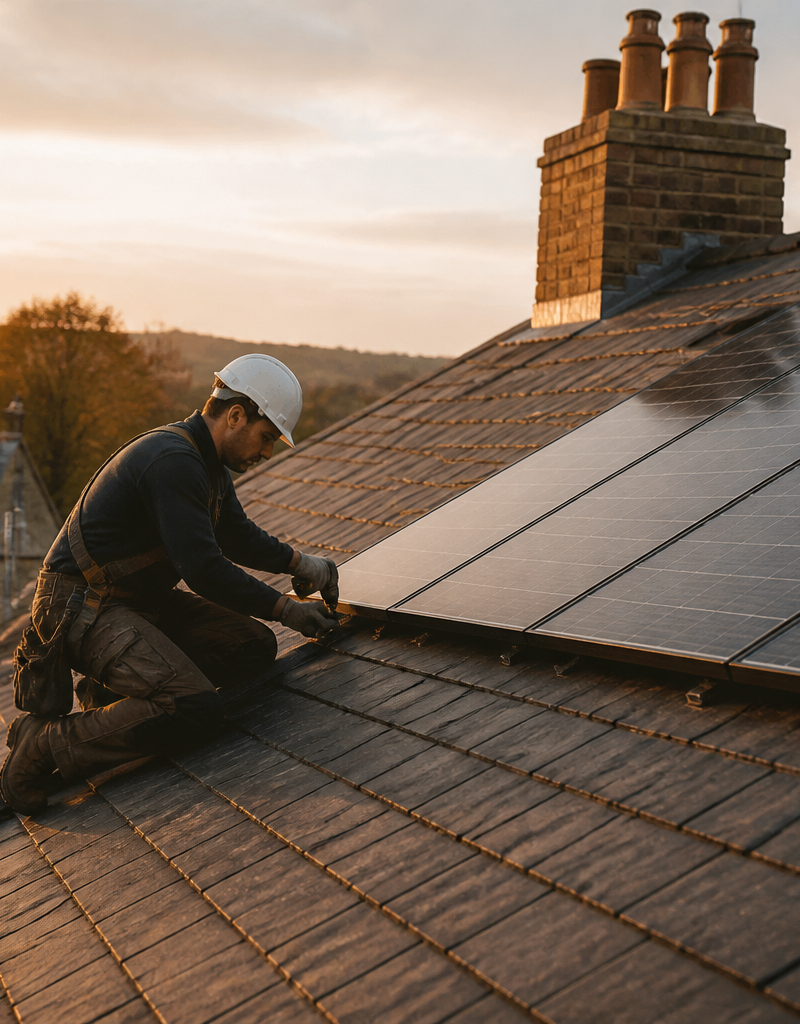
Installing solar photovoltaic (PV) panels on a slate roof requires a different practical approach to standard interlocking concrete roof tiles. Slate is natural stone, brittle under point pressure, and secured with individual copper or galvanized nails. Drilling directly through slate or relying on mastic sealants creates long-term leakage risks and violates UK building standards. However, with purpose-engineered mounting systems and experienced roofers, a slate roof provides an exceptionally durable substrate for a household solar array.
This guide breaks down the essential pre-installation checks, specialized mounting brackets, true installation costs, installer accreditations and practical timescales for UK homeowners considering a slate roof solar installation.
Pre-installation roof and structural checks
Before signing a contract or ordering hardware, your roof must undergo a thorough physical and structural assessment. Natural Welsh, Cornish or imported Spanish slates behave differently from fibre cement or synthetic slate substitutes, requiring specific fixing methods.
Key structural factors to inspect include:
- Slate integrity and age: Old slates can become soft or delaminate over decades. Any damaged, cracked or slipping slates must be replaced prior to mounting solar rails.
- Batten size and rafter alignment: Mounting brackets anchor directly into structural rafters, not the slate battens. Rafter spacings in older UK properties vary from the modern standard 400mm or 600mm centres, which affects rail span calculations.
- Roof pitch and wind exposure: Slate roofs typically range between 30 degrees and 45 degrees pitch. Higher pitches increase wind uplift loads, which must be calculated in compliance with MCS 012 standard for solar mounting kit safety.
- Loft space access: Installers need clear access to inspect timber rafter dimensions and verify the condition of the underlying breathable roof membrane or sarking felt.
Under Part A of the UK Building Regulations, a structural calculation is required if the total solar installation adds more than 15 percent to the weight of the roof structure. Standard retrofitted solar arrays add approximately 12kg to 16kg per square metre, which is rarely a structural issue for healthy timber rafters, but historical roof decay must be ruled out first.
Weatherproofing methods: hooks, flashing kits and slate protection
To install solar panels without causing leaks, installers must gain access to the rafters beneath the slate layer. Traditional practice involved cutting or notch-drilling slates, which often led to cracking and water ingress. Modern accredited installers use engineered slate mounting systems designed to preserve roof integrity.
There are two primary weatherproofing methods used on UK slate roofs:
-
Specialist slate roof hooks with weatherproof flashing: A custom stainless steel roof hook is fixed directly to the rafter. The slate above the hook position is carefully removed using a slate ripper tool. A metallic or rubberized flashing replacement plate (such as SolarFlash or Genius Roof Solutions kits) is installed underneath the surrounding slates to create a lead-equivalent watertight seal. The original slate or a trimmed replacement slate is then refitted over the flashing kit.
-
Roof integrated slate solar systems: For homeowners requiring complete roof replacement or high aesthetic integration, roof-integrated frames replace a section of slate entirely. Interlocking flashing trays sit directly on the roof battens, creating a flush appearance where the solar panels act as the primary weather barrier.
Never permit an installer to use silicone sealant, mastic sealant or exposed foam tape as a primary weatherproofing solution on slate. These materials degrade under ultraviolet radiation within three to five years, leading to costly water damage inside the roof space.
Realistic installation costs and project timelines
Installing solar panels on slate involves additional labour and specialist mounting kits. On average, mounting solar PV on natural slate carries a premium of £800 to £1,500 over a standard concrete tile roof installation.
| System Specification | Typical Total Installed Cost (Including VAT) | Additional Slate Hardware Labour | Typical On-Site Install Time |
|---|---|---|---|
| 3.2 kWp Array (8 Panels) | £6,200 - £7,400 | Included | 1 to 2 Days |
| 4.4 kWp Array (11 Panels) | £7,500 - £8,900 | Included | 2 Days |
| 6.0 kWp Array (15 Panels) | £9,500 - £11,500 | Included | 2 to 3 Days |
| Slate Flash Kit Hardware Pack | £350 - £600 (Parts only) | N/A | Included in installation |
Standard UK residential energy retrofits currently benefit from 0% VAT on solar PV equipment and installation.
Practical project timeline
- Week 1: Desktop solar assessment, shading analysis, and initial site survey by an accredited surveyor.
- Week 2 to 3: Structural calculation check, roof timber survey, and DNO (Distribution Network Operator) application. Systems under 3.68 kW per phase fall under G98 fast-track notifications, while larger systems require G99 prior approval from the network operator.
- Week 4: Scaffolding erection around eaves. Scaffolding must comply with TG20 standards to protect the slate roof perimeter.
- Week 5: System installation (1 to 3 days on site), DC and AC wiring, electrical sign-off under BS 7671 standards, commissioning and handover.
- Week 6: Receipt of final MCS certificate, DNO notification confirmation, and registration for Smart Export Guarantee (SEG) tariffs.
How to choose an accredited installer and key questions to ask
Slate work requires experienced roofer involvement alongside qualified electrical professionals. When vetting installation companies, verify that they possess the following accreditations:
- MCS (Microgeneration Certification Scheme): Mandatory for solar PV installation quality assurance and essential if you wish to apply for export tariffs under the Smart Export Guarantee.
- TrustMark: Demonstrates government-endorsed quality standards and consumer protection compliance.
- RECC (Renewable Energy Consumer Code) or HIES (Home Insulation & Energy Systems): Provides consumer deposit protection and mandatory dispute resolution procedures.
- NICEIC or NAPIT Registration: Ensures the electrical contractor is certified to sign off AC connections and consumer unit alterations under Building Regulations Part P.
Before placing a deposit, ask your prospective installer these four specific operational questions:
- Which specific brand of slate flashing kit will you use, and does it carry BBA (British Board of Agrément) certification?
- Will a qualified roofer carry out the slate removals and refitting, or do electricians perform all roof work?
- How do you protect surrounding slates from cracking under foot traffic while working on the roof slope?
- Are spare matching slates included in the estimate to replace any tiles damaged during installation?
For UK employees looking to install solar PV, battery storage or heat pumps with pre-vetted installers, the Net Zero Home Scheme offers member pricing without salary sacrifice or payroll deductions.
What this means for you
Installing solar PV on a slate roof is entirely viable and safe when executed using correct weatherproofing flashing and rafter-mounted hooks. While slate retrofits require a higher upfront investment in specialized hardware and skilled labour, the long-term energy generation benefits match those of any other roof type.
To ensure a successful installation:
- Confirm your roof slates and timber structure are inspected in person before signing a contract.
- Insist on purpose-engineered flashing kits rather than surface sealants or cut slates.
- Ensure scaffolding is designed to protect your gutters and slate eaves from falling tools or foot pressure.
- Verify all four core industry accreditations (MCS, TrustMark, RECC/HIES, and NICEIC/NAPIT) before paying a deposit.
Frequently asked questions
Can solar panels be installed on fibre cement or synthetic slates?
Yes, but synthetic and fibre cement slates require different mounting hardware than natural stone slate. Fibre cement slates manufactured before 1999 may contain asbestos, requiring specialist testing and handling procedures before any roof work begins.
Will installing solar panels invalidate an existing roof guarantee?
If your slate roof carries a builder or roofing contractor warranty, you must check whether retrofitting solar panels alters the terms. Using MCS 012 certified mounting kits installed by qualified roofers ensures weatherproofing integrity is maintained without damaging the structure.
What happens if slates break during the solar installation?
Natural slate can occasionally snap during handling or bracket fitting. Professional installers will carry spare matching slates to replace any broken units immediately using copper slate hooks (hallhooks) or traditional copper rivets.