UK Solar Bond Proposal Aims to Lower Home Panel Financing Costs
A proposal published in August 2026 outlines how government-backed solar bonds could cut high loan interest rates for UK household solar panel installations.
- Written by
- Net Zero Home Scheme editorial team
- Last updated
- Topic
- solar, energy bills, policy
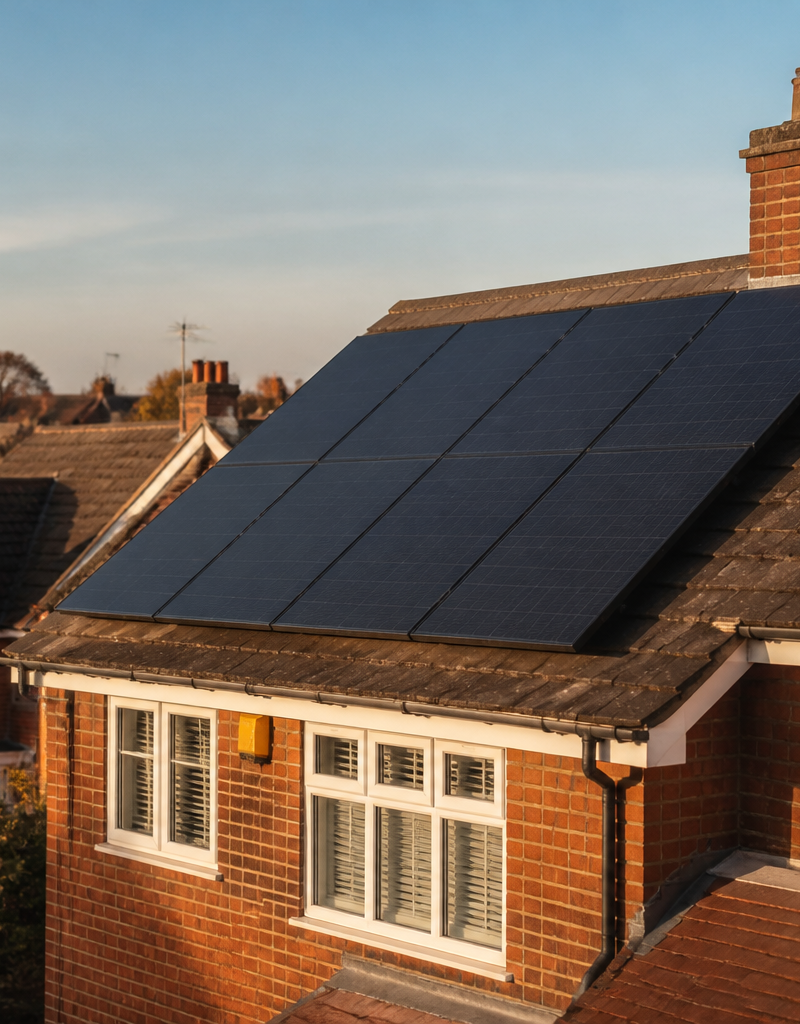
Ministers are facing fresh calls to back a national solar bond mechanism designed to lower the borrowing costs for household rooftop solar installations, according to details published by The Guardian on 30 August 2026. The financial framework proposes aggregating residential renewable energy loans into government-backed bond structures, lowering the interest burden for homeowners who lack upfront capital.
Under current market conditions, financing a domestic solar array through commercial personal loans or high-street credit often incurs interest rates ranging between 8 percent and 14 percent. High borrowing costs significantly stretch the payback period of a typical domestic installation, offsetting a substantial portion of the bill savings generated by the panels.
How government-backed solar bonds operate
Solar bonds function by pooling individual household borrowing into standardized, low-risk financial assets backed by public institutions or municipal authorities. Because institutional investors accept lower yields on government-guaranteed green debt, the interest rate offered to the end consumer can drop closer to 3 percent to 5 percent.
In analysis published by The Guardian on 30 August 2026, academic and finance experts noted that rising capital costs have become the single largest obstacle to mass domestic solar adoption in Great Britain. While equipment prices for photovoltaic modules have remained relatively stable, higher interest rates over the past three years have added thousands of pounds to total repayable loan balances.
For a standard UK household installing a 4 kWp rooftop solar PV system costing approximately £6,000, borrowing over a ten-year term at standard commercial rates can add more than £2,500 in cumulative interest payments. Reducing that interest rate via a structured bond scheme could save householders upwards of £1,200 in finance charges, restoring the economic incentive for retrofitting.
What the numbers say
Financing costs dictate whether home energy retrofits make financial sense for households without surplus cash reserves. The table below illustrates how fixed interest rates impact the total cost of installing a standard 4 kWp domestic solar array priced at £6,000 over a 10-year term.
| Financing Mechanism | Indicative Interest Rate | Estimated Monthly Payment | Total Interest Paid Over 10 Years | Total Cost of Installation |
|---|---|---|---|---|
| High-Street Personal Loan | 12.0% | £86 | £2,330 | £8,330 |
| Standard Unsecured Green Loan | 8.5% | £74 | £1,570 | £7,570 |
| Proposed Government Solar Bond | 4.0% | £61 | £710 | £6,710 |
| Direct Cash Purchase | 0.0% | N/A | £0 | £6,000 |
According to figures referenced in The Guardian on 30 August 2026, lowering capital costs through bond issuance directly improves household monthly net cash flow. When an energy bill reduction exceeds the monthly finance payment, the home retrofit becomes cash positive from month one.
However, industry experts caution that bond mechanisms require robust central admin structures and clear consumer protection rules. Without official government underwriting or backing from local authorities, private green bonds can suffer from illiquidity and administrative fees that eat into potential savings.
What this means for your home
If you are considering rooftop solar, this proposal highlights the importance of evaluating borrowing costs alongside installer quotes. Equipment specifications and warranties matter, but the cost of your capital determines your true return on investment.
For UK households evaluating solar PV today, there are several concrete points to consider:
- Compare total finance charges, not just upfront panel costs. An installer offering cheaper panels with a high-interest finance agreement can cost more overall than a premium system funded through low-cost capital.
- Check whether your mortgage provider offers low-cost additional borrowing or green mortgage top-ups. Several UK lenders offer preferential rates below 5 percent for home energy improvements, matching some of the benefits outlined in the solar bond proposal.
- Ensure any installer you choose is registered with the Microgeneration Certification Scheme (MCS) and a consumer code such as HIES or RECC. Certification is mandatory to qualify for Smart Export Guarantee (SEG) payments for excess electricity sent back to the grid.
- Consider system sizing carefully. A 3 kWp to 5 kWp system paired with a 5 kWh to 10 kWh battery storage unit typically allows households to consume 70 percent or more of their self-generated clean power, protecting against volatile grid electricity prices.
If you have direct savings available, purchasing a system outright remains the most cost-effective path, as it eliminates interest charges entirely. If you need financing, keeping track of emerging low-cost loan schemes and local authority green finance pilots is essential.
What this means for employers
Rising energy bills and high borrowing costs continue to put pressure on household budgets across the UK. For HR directors, reward managers, and sustainability leads, financial wellbeing and workplace decarbonisation are increasingly linked.
Employees who want to reduce their home running costs often face the same borrowing barrier identified in recent news coverage: high interest rates on personal loans make green technology hard to reach without upfront capital. Offering practical paths to home upgrades can significantly support staff wellbeing while contributing to scope 3 carbon reduction goals.
The Net Zero Home Scheme provides employees with member pricing on solar PV, heat pumps, battery storage, and plug-in solar, installed by accredited contractors across England, Scotland, and Wales, at zero cost to the employer and without salary sacrifice.
By helping staff access certified installers and pre-negotiated rates, employers can help workforce families lower their energy exposure without taking on complex financial debt.
Frequently asked questions
What is a solar bond and how does it work for homeowners?
A solar bond is a financial instrument where municipal authorities or government entities issue fixed-income debt to raise capital for domestic solar projects. The pooled funds are loaned to homeowners at lower interest rates than commercial lenders, backed by the predictable savings generated by the solar PV installations.
Is the UK government currently offering solar bond financing to households?
No, the solar bond mechanism remains a policy proposal put forward by industry groups, finance experts, and campaign bodies, as reported by The Guardian on 30 August 2026. While some local councils run targeted municipal green bonds, a national scheme for domestic homeowners has not yet been formally launched by HM Treasury.
Should I wait for solar bonds before buying solar panels?
Waiting for policy proposals to become legislation can take months or years. If your home has high daytime electricity demand, installing an MCS-certified solar PV system now may generate energy bill savings that outweigh the potential interest savings of waiting for future finance schemes.
Sources
- Why solar bonds are a bright idea, The Guardian