Industry Focus Shifts to Bio-Based Building Materials in UK
UK building strategies are increasing focus on bio-based materials for thermal performance and lower embodied carbon, following industry reporting on 28 August 2026.
- Written by
- Net Zero Home Scheme editorial team
- Last updated
- Topic
- policy, energy efficiency, insulation
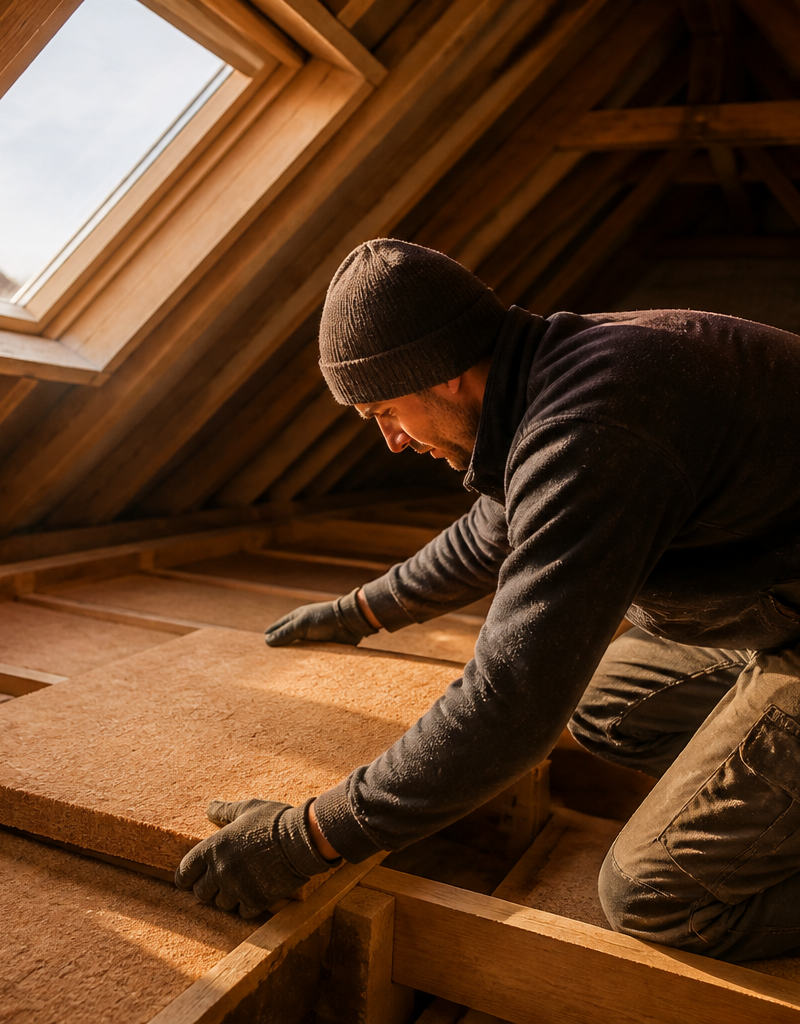
On 28 August 2026, sustainable business publication edie reported on the accelerating role of bio-based materials within lower-carbon building strategies across the UK. The update highlights how materials such as timber, hemp, wool and wood fibre are being specified to cut embodied carbon while maintaining high thermal performance in modern construction and building retrofits.
The shift comes as developers, energy assessors and retrofitters seek ways to meet strict UK energy standards without relying heavily on carbon-intensive synthetic insulation or energy-dense manufacturing processes. By examining supply chain resilience, thermal phase shift and circular economy principles, the industry is establishing how natural materials fit alongside established building regulations.
Bio-based materials in UK building specification
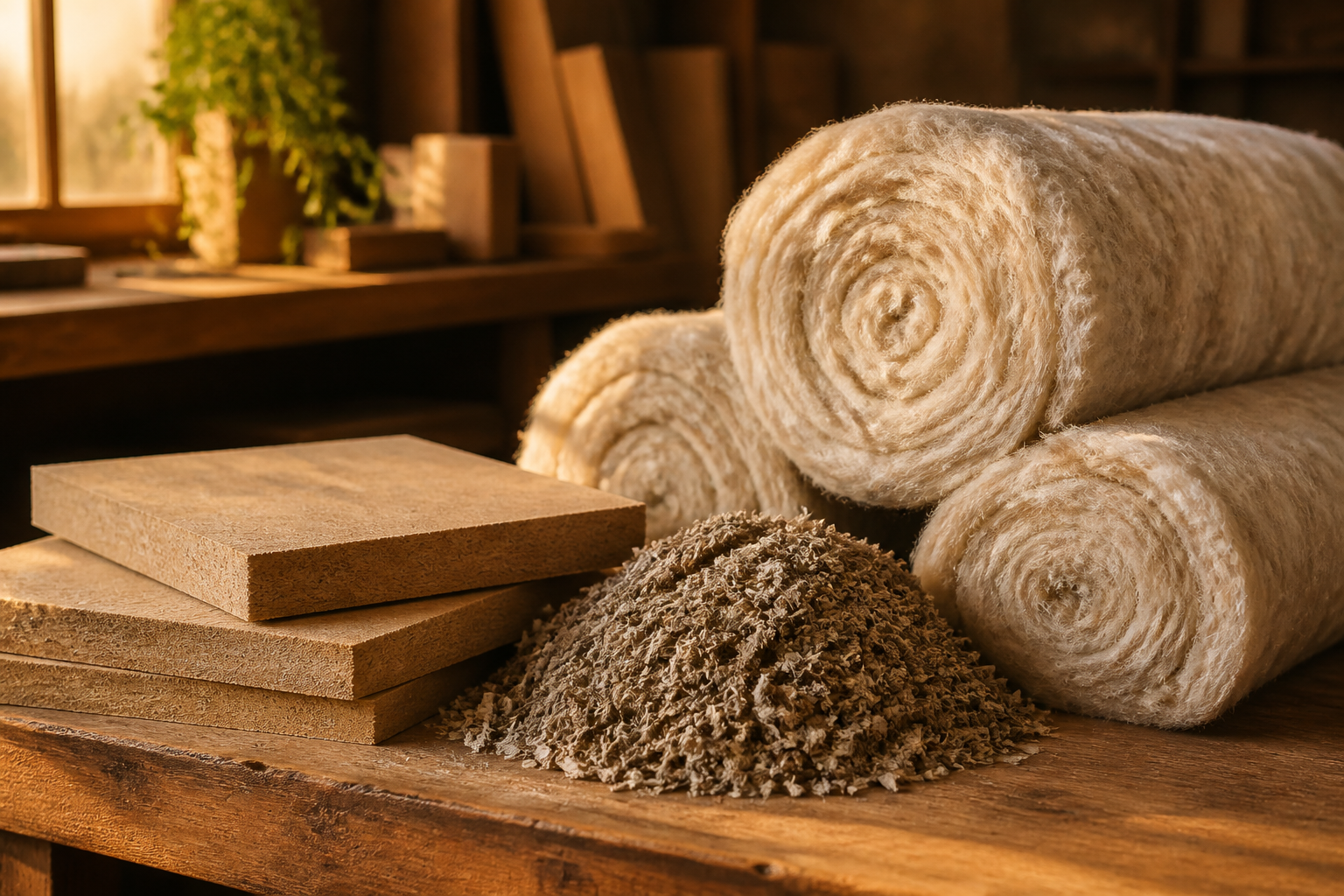
Bio-based building materials derive from biological sources that absorb carbon dioxide during their growth phase. In home retrofits and new residential construction, these products primarily replace standard petrochemical insulations such as expanded polystyrene (EPS) or polyisocyanurate (PIR) boards, as well as mineral wools.
The main products entering UK residential specifications include wood fibre insulation boards, hempcrete (a mixture of hemp shiv and lime binder), blown cellulose made from recycled newspaper, and processed sheep's wool. Each material offers distinct thermal properties, but their primary distinction lies in vapor permeability and thermal mass.
Unlike standard synthetic boards that form vapour-impermeable barriers, bio-based insulations are naturally hygroscopic. They can absorb and release moisture vapour from indoor air without losing their thermal resistance, reducing condensation risks in solid-wall properties built before 1919. Furthermore, high-density wood fibre boards provide high specific heat capacity, which delays solar heat gain in summer and reduces roof space overheating.
What the numbers say
Reporting by edie on 28 August 2026 emphasised that evaluating building products now requires equal focus on operational performance and embodied emissions over the full life cycle of a property.
Operational energy performance in the UK is governed by thermal conductivity, measured as a lambda value in Watts per metre-kelvin (W/mK). Lower figures represent better insulation performance per millimetre of thickness. Bio-based materials achieve thermal conductivities close to conventional mineral wool, though slightly thicker layers are required compared to synthetic PIR boards.
| Material Type | Typical Thermal Conductivity (W/mK) | Specific Heat Capacity (J/kgK) | Primary Retrofit Application | Vapor Permeability & Moisture Handling |
|---|---|---|---|---|
| Wood Fibre Board | 0.038 - 0.045 | 2,100 | External wall insulation, internal wall insulation, roof sarking | Highly permeable, controls summer overheating |
| Hemp Lime / Hempcrete | 0.060 - 0.070 | 1,500 - 1,700 | Solid wall internal lining, timber frame infill | Hygroscopic buffering, locks away atmospheric carbon |
| Blown Cellulose | 0.038 - 0.040 | 2,150 | Loft floor void, timber stud cavities | Recycled material, fills irregular gaps seamlessly |
| Processed Sheep's Wool | 0.038 - 0.042 | 1,800 | Loft joists, rafter insulation, internal partitions | High moisture absorption, binds trace air pollutants |
Data from UK material testing demonstrates that while PIR board achieves a low thermal conductivity around 0.022 W/mK, its manufacturing process carries high upfront carbon costs. Wood fibre board, operating between 0.038 and 0.045 W/mK, requires a thicker installation profile to achieve the same U-value, but sequesters atmospheric carbon within the building fabric for its entire lifespan.
Frequently asked questions
How do bio-based insulation materials meet UK fire safety standards?
Bio-based insulation products must comply with Building Regulations Approved Document B. Manufacturers achieve required fire ratings by treating natural fibres with non-toxic mineral salts or ammonium phosphate. Wood fibre and dense hemp boards char slowly when exposed to flame, creating a protective surface layer that slows heat transmission through the wall assembly.
Do bio-based building materials require breathable wall assemblies?
Yes, bio-based insulations deliver their greatest moisture-control benefits when paired with vapour-permeable lime plasters, silicate paints and breathable membrane layers. Sealing a hygroscopic material behind non-breathable vinyl paints or synthetic vapour barriers stops natural moisture movement and increases humidity risk within timber frames.
How do bio-based materials affect home EPC ratings compared to synthetic insulation?
Standard Energy Performance Certificate (EPC) software, including RdSAP 10, calculates ratings strictly based on thermal resistance (U-values) and heating system fuel types. Because U-values measure heat flow regardless of material origin, a wall insulated to 0.18 W/m²K using bio-based insulation receives the same EPC improvement as one insulated to 0.18 W/m²K using conventional materials.
What this means for your home
If you are planning home insulation or energy retrofits, the growing adoption of bio-based materials gives you broader choices for managing thermal comfort and moisture balance. Households living in older, solid-wall brick or stone properties often struggle with trapped moisture when applying standard synthetic insulation internally. Natural materials like wood fibre or hemp lime offer a vapour-permeable alternative that lowers structural damp risks while insulating the living space.
For roof spaces and loft retrofits, products like blown cellulose or sheep's wool provide straightforward thermal upgrades that fit between irregular timber joists. When planning an installation alongside low-temperature heating systems like heat pumps, accurate U-value calculations remain essential. Lowering room heat loss using bio-based insulation allows heat pumps to operate at lower flow temperatures, directly reducing electricity consumption and annual energy bills.
Payback periods for bio-based insulations depend on current fuel prices, wall dimensions and structural preparation costs. While bio-based materials carry higher initial material costs than synthetic options, their ability to prevent timber rot and regulate summer temperatures adds long-term value to home maintenance.
What this means for employers
Rising household energy bills and tightening UK building performance standards mean employees are increasingly seeking practical guidance and direct support for home energy improvements. HR and reward managers who monitor sustainability policy will recognize that home thermal efficiency forms the essential baseline before installing heat pumps, solar PV or battery storage systems.
Providing practical pathways for staff to upgrade home energy systems supports broader corporate Scope 3 carbon reduction goals. Through the Net Zero Home Scheme, employers can give staff access to member pricing on accredited solar, heat pump, battery storage and plug-in solar installations, with no cost to the business and no salary sacrifice setup required. Offering clean energy schemes alongside structured workplace benefits helps employees manage home running costs effectively while building long-term resilience against energy market fluctuations.