Installing High Heat Retention Storage Heaters in the UK
A practical guide to upgrading UK storage heaters, covering equipment costs, electrical checks, asbestos rules, installer credentials, and timelines.
- Written by
- Net Zero Home Scheme editorial team
- Last updated
- Topic
- energy efficiency, energy bills, tariffs
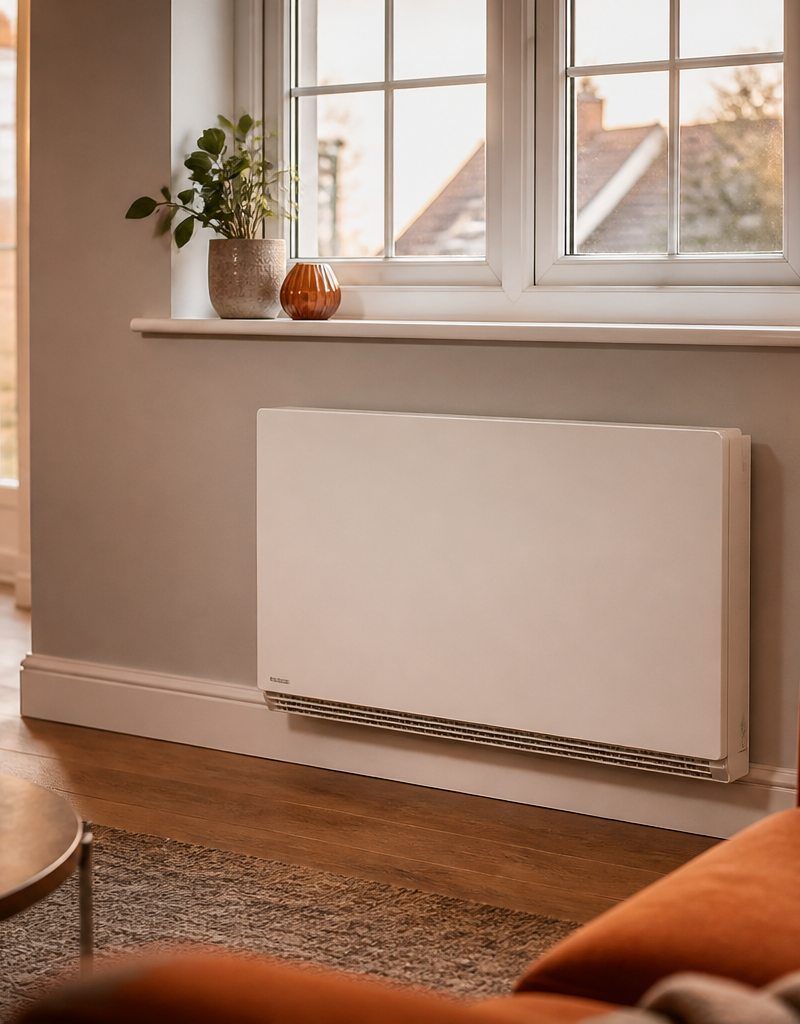
Upgrading older electric heaters to modern high heat retention storage heaters can significantly improve comfort and reduce heating bills for homes without a main gas connection. According to the Energy Saving Trust, high heat retention storage heaters can reduce running costs by up to 27 percent compared to standard manual storage heaters. They work by absorbing heat during cheaper off-peak electricity hours, storing it in dense internal bricks, and releasing it on demand using insulated casings and fan-assisted controls.
Replacing an existing electric heating system requires careful planning around electrical capacity, tariffs, floor loadings, and safe disposal of legacy equipment. This practical guide outlines what to check, realistic equipment and installation costs, how to select a qualified installer, and what to expect during the installation process.
Evaluating your home for high heat retention storage heaters
Before purchasing equipment, you must confirm that your home has the right energy infrastructure to support storage heating.
First, check your energy tariff. Storage heaters rely entirely on differential pricing between off-peak and peak electricity hours. If you are on a standard single-rate electricity tariff, high heat retention heaters will cost substantially more to run than conventional panel heaters or heat pumps. According to Ofgem, typical off-peak tariffs such as Economy 7 offer lower rates for seven hours overnight, while modern smart tariffs provide flexible off-peak windows.
Second, check your electrical supply. Traditional storage heaters operate on a single dedicated off-peak circuit that energises only during cheap rate hours. High heat retention heaters require a dual supply, comprising a dedicated off-peak circuit to charge the heat storage core, alongside a permanent 24-hour supply to power digital displays, electronic thermostats, and internal fans.
Third, calculate individual room heat loss. Radiators and heaters should never be bought on arbitrary room dimensions alone. Your installer must conduct a heat loss calculation measured in watts, taking into account room volume, window surface area, wall insulation levels, and floor layout.
Comparing legacy storage heaters with high heat retention models
Modern units comply with European EcoDesign Directive rules, often referred to as Lot 20, which mandates programmable controls, open window detection, and adaptive start technology.
| Feature | Legacy Manual Storage Heater | High Heat Retention Storage Heater |
|---|---|---|
| Thermal insulation core | Basic mineral wool casing | High-density ceramic or magnetite with microtherm insulation |
| Heat release control | Uncontrolled surface convection | Internal damper with thermostat-controlled fan assistance |
| Electrical requirement | Single off-peak radial circuit | Dual supply (24-hour control board and off-peak charging line) |
| System efficiency rating | Class C or Class D | Class A (Lot 20 compliant) |
| Standard warranty period | 1 to 2 years manufacturer coverage | 5 to 10 years manufacturer coverage |
Crucial pre-installation checks and asbestos safety
Replacing older heating units involves two physical constraints that require professional assessment before work begins on site.
The first issue is asbestos content in older equipment. According to Health and Safety Executive safety guidelines, many storage heaters manufactured prior to 1999 contain asbestos insulation components or internal seal gaskets. Never attempt to open, dismantle, or move pre-2000 storage heaters yourself. A qualified installer or specialist contractor must identify the model and arrange safe removal and hazardous waste disposal in accordance with UK environmental health regulations.
The second issue is structural floor loading. High heat retention heaters use dense ceramic or magnetite thermal storage bricks to retain heat efficiently. An assembled 3.0 kW storage heater can weigh between 140 kg and 180 kg. Before installation, your installer must verify that floorboards and timber joists can safely support the point load, particularly on upper floors. In some cases, floor reinforcement or load-spreading mounting plates may be required.
How to choose an accredited installer and key questions to ask
Electrical work for storage heaters involves high-current circuits and dual-supply wiring, which fall under Part P of the Building Regulations in England and Wales.
You should hire an installer registered with a recognised competent person scheme, such as the National Inspection Council for Electrical Installation Contracting (NICEIC) or the National Association of Professional Inspectors and Testers (NAPIT). In addition, look for contractors registered with TrustMark, the UK government-endorsed quality scheme for home improvements.
When requesting quotes from electrical contractors, ask the following key questions:
- Will you complete a room-by-room heat loss assessment to determine exact kW ratings?
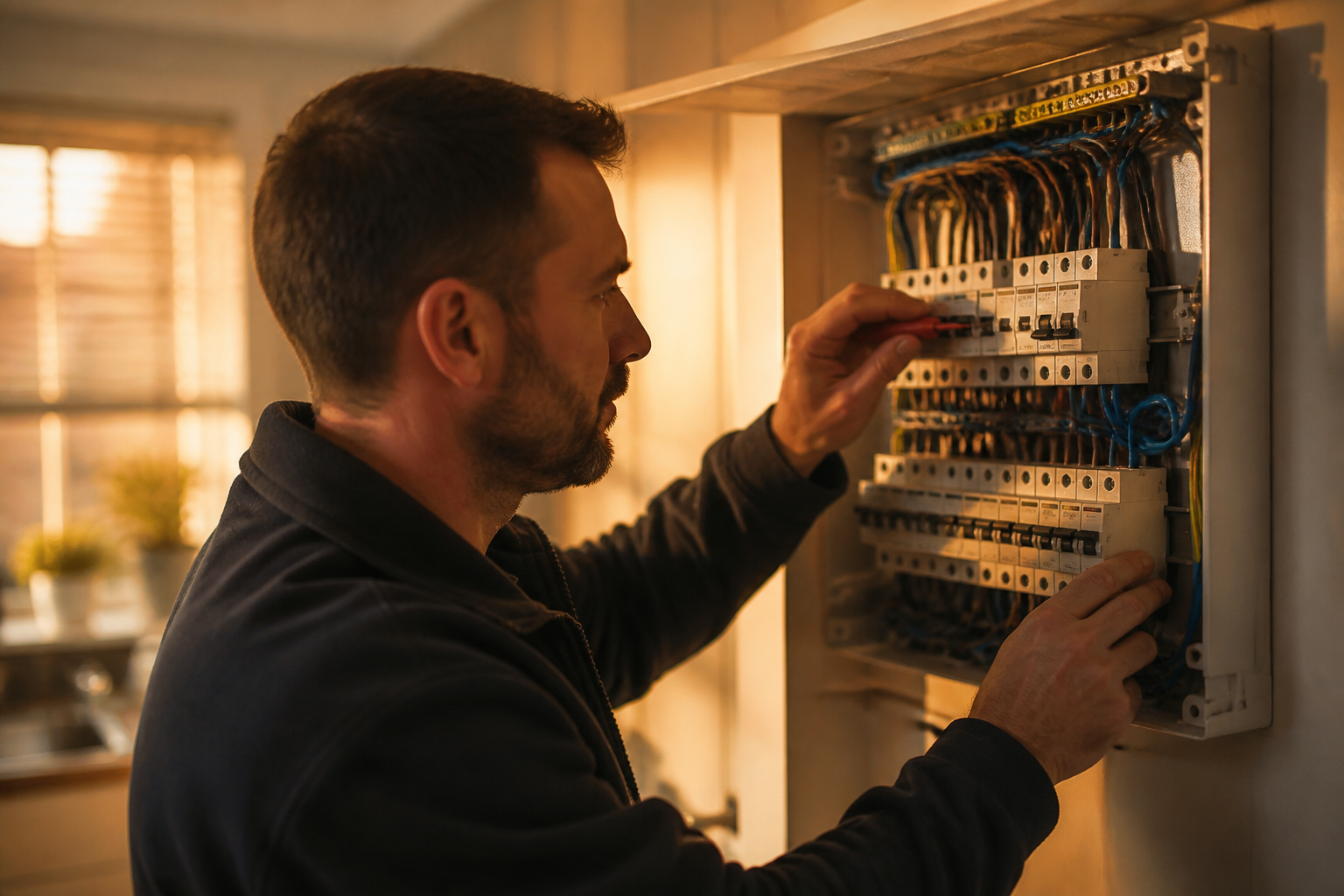
- Does my current consumer unit have sufficient spare ways and Residual Current Device (RCD) protection for dual-supply connections?
- Is safe removal and hazardous waste disposal of my old storage heaters included in the quote?
- Will you issue an Electrical Installation Certificate (EIC) and register the work under Building Regulations Part P upon completion?
Realistic timeline and installation process
Installing high heat retention storage heaters in a typical three-bedroom home usually takes between one and two days, following a structured sequence.
- Initial site survey (1 to 2 hours): The electrician measures room dimensions, assesses wall construction, checks consumer unit capacity, and checks existing storage heater models for asbestos risk.
- Equipment ordering and preparation (1 to 2 weeks): Heaters and thermal bricks are ordered and delivered. Because of their weight, bricks are shipped separately from the heater chassis.
- Electrical isolation and removal (2 to 4 hours): The electrician isolates the mains electricity, safely disconnects older heaters, and removes them from the premises.
- Circuit wiring and chassis mounting (half a day): New dual-supply cable routes are installed or adapted from existing wiring. Chassis units are securely anchored to wall studs or masonry.
- Brick loading and assembly (half a day): Thermal bricks are manually stacked inside the chassis according to manufacturer specifications, and front insulation panels are sealed.
- Testing, commissioning, and handover (2 to 3 hours): The system is powered up, controls are programmed, electrical safety tests are completed, and the user is shown how to operate the controls.
Up-front costs and trade-offs
According to Energy Saving Trust estimates, individual high heat retention storage heater units cost between £700 and £1,200 depending on output size, which typically ranges from 1.0 kW to 3.3 kW. Installation labor, cable upgrades, and safe disposal of old units add approximately £150 to £300 per heater. A full system replacement for a small home with four heaters generally costs between £3,500 and £6,000.
While high heat retention heaters offer lower running costs than older electric heaters, they are not suitable for every property. Homes with existing wet central heating systems or access to mains gas will usually find gas boilers or air source heat pumps more cost-effective to run. Furthermore, storage heaters require active management of off-peak electricity tariffs to deliver maximum financial savings.
What this means for you
If your home relies on electric heating and off-peak electricity, upgrading to high heat retention storage heaters can improve your thermal comfort while lowering energy bills. Begin by requesting a site survey from a registered electrician, checking your current electricity tariff structure, and confirming safe disposal plans for your existing heaters.
If your employer participates in the Net Zero Home Scheme, you can access member pricing on accredited home energy technology delivered by certified installers across England, Scotland, and Wales.
Frequently asked questions
Can I install high heat retention storage heaters as a DIY project?
No. Installing storage heaters requires fixed electrical wiring, circuit testing, and dual-supply installation. In England and Wales, fixed electrical installation work must comply with BS 7671 standards and be certified under Part P of the Building Regulations by a qualified electrician.
Do high heat retention storage heaters need a modern consumer unit?
In most cases, yes. Because high heat retention heaters require both peak and off-peak electricity feeds, your consumer unit must have adequate circuit space and modern RCD protection. An electrician will assess your fuse box during the initial site survey.
How do high heat retention heaters stop rooms from overheating in the morning?
Legacy heaters radiated heat through their front panels immediately after charging overnight. Modern high heat retention units use high-grade insulation around the brick core and closed dampers. The stored heat remains trapped inside the core until an electronic thermostat turns on an internal fan to distribute warm air when needed.
Sources
- Storage Heaters Advice, Energy Saving Trust
- Asbestos Safety Guidance, Health and Safety Executive
- Energy Price Cap and Tariff Information, Ofgem