Heat Pump Installation with Microbore Pipework UK Guide
A practical step-by-step guide to installing an air source heat pump in a UK home with 8mm or 10mm microbore plumbing, covering flow rates, costs and MCS standards.
- Written by
- Net Zero Home Scheme editorial team
- Last updated
- Topic
- heat pumps, energy efficiency, home energy
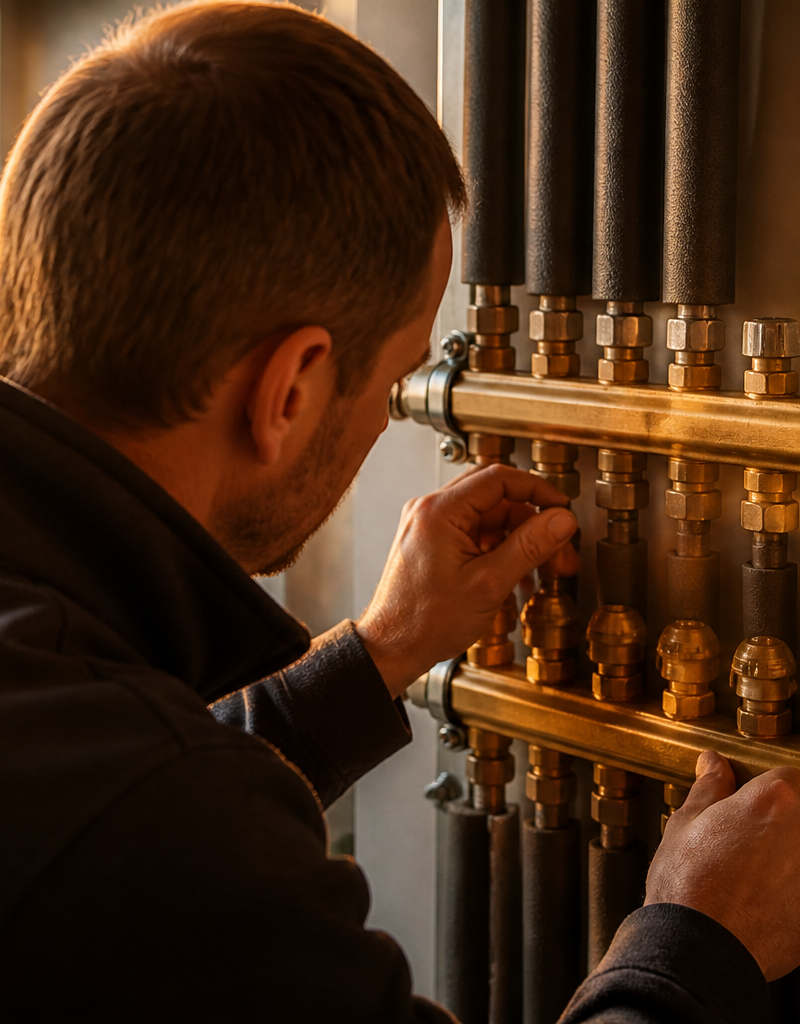
Many UK homes built between the late 1970s and the 1990s rely on microbore plumbing, where flexible copper or plastic pipes with an outer diameter of 8mm or 10mm feed individual radiators from central manifolds. A common concern among householders looking to decarbonise their heating is whether an air source heat pump can work effectively with these narrow pipes, or whether every floorboard must be pulled up to replace the entire network with standard 15mm or 22mm pipework.
While traditional gas boilers operate with high flow temperatures around 65°C to 70°C and wide temperature drops, heat pumps operate most efficiently at lower flow temperatures between 35°C and 45°C. Lower temperatures require higher volumetric water flow rates to deliver the same thermal energy. Passing high water volumes through narrow microbore pipework increases hydraulic resistance, which can strain pumps and cause velocity noise if the system is not properly engineered. However, with accurate room-by-room heat loss calculations and hydraulic separation, many microbore properties can host a heat pump without full re-piping.
What is the hydraulic challenge with microbore pipes?
To understand how a heat pump functions on microbore, you must examine fluid dynamics and delta T, which is the temperature difference between the supply flow and return water. A legacy gas boiler delivering 1.5 kW to a lounge radiator running at a 20°C delta T requires a flow rate of approximately 1.1 litres per minute. An air source heat pump delivering that same 1.5 kW at a narrow 5°C delta T requires 4.3 litres per minute, quadrupling the water volume moving through the pipework.
When water velocity in copper pipework exceeds 1.0 metre per second, friction generates noticeable rushing noises and accelerates internal pipe erosion. In 8mm microbore pipework, which has an internal diameter of roughly 6.2mm, high flow rates quickly breach these velocity limits. The design objective for a microbore heat pump retrofit is therefore to manage flow velocities, limit circuit pressure losses, and maintain a high Seasonal Coefficient of Performance, ideally above 3.5.
| Pipe Outer Diameter | Max Thermal Output (ΔT 5°C) | Max Thermal Output (ΔT 7°C) | Max Recommended Flow Rate | Standard Retrofit Action |
|---|---|---|---|---|
| 8mm Copper | 0.6 kW | 0.8 kW | 1.2 litres/min | Replace long runs, split circuits, or use low-temperature fan radiators |
| 10mm Copper | 1.2 kW | 1.7 kW | 2.5 litres/min | Retain for smaller rooms, upgrade feeds to high-heat rooms |
| 15mm Copper | 3.0 kW | 4.2 kW | 6.0 litres/min | Standard distribution pipework, suitable for primary feeds |
| 22mm Copper | 7.5 kW | 10.5 kW | 15.0 litres/min | Main flow and return trunking from heat pump to manifolds |
Step-by-step checklist before installing a heat pump
Before signing a contract or committing to equipment, complete these essential steps with your survey engineer:
- Measure internal and external pipe diameters at radiator tails and accessible manifolds to identify whether the system uses 8mm, 10mm, or 12mm pipework.
- Commission a room-by-room heat loss calculation compliant with CIBSE Guide B and MCS MIS 3005-D standards rather than relying on whole-house estimates.
- Inspect manifold locations to determine if primary 22mm or 28mm distribution trunks can be run directly from the outdoor unit to central connection points on each floor.
- Check radiator sizing to confirm whether existing panels can deliver required heat outputs at 45°C flow temperatures, or if low-capacity microbore loops need larger radiators or fan-assisted units.
- Test water quality and system pressure, ensuring the existing pipework can withstand power flushing and closed-loop pressurisation up to 1.5 bar in accordance with BS 7593 standards.
What hydraulic changes does a microbore system need?
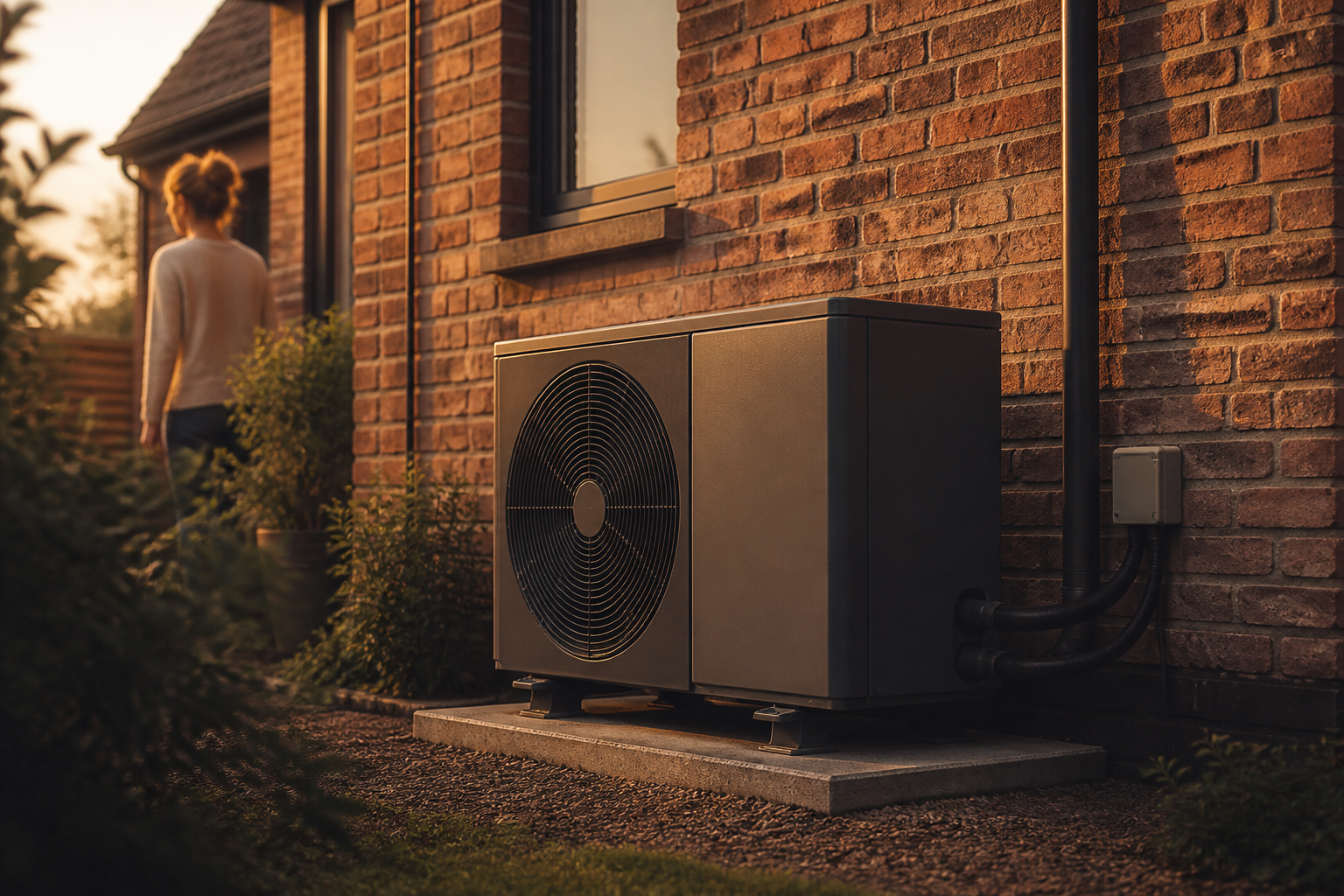
Installing a heat pump on microbore pipework almost always requires hydraulic separation between the primary heat pump circuit and the secondary emitter circuits. This is typically achieved using a buffer vessel or a low loss header.
The heat pump's internal circulation pump maintains a high, constant flow rate through the primary circuit to the buffer tank, ensuring the heat exchanger operates within manufacturer limits. A secondary, variable-speed circulation pump then draws warm water from the buffer and distributes it through the microbore manifolds at a controlled pressure. This prevents high pressure drop across the heat pump and stops circuit velocity noise.
In rooms with high heat demand, such as open-plan living areas, installers can run dedicated 15mm or 22mm feeds from the manifold while leaving 10mm microbore intact for smaller bedrooms and bathrooms. Alternatively, designing the secondary circuit around a 7°C or 8°C delta T reduces the required flow rate, making original microbore pipework viable without structural disruption.
What does installation cost and how long does it take?
Retrofitting an air source heat pump into a house with microbore plumbing typically requires three to five days of onsite work, compared to two to three days for a standard 15mm replacement. The extended timeline accounts for installing buffer tanks, balancing manifold valves, and potentially replacing targeted pipe runs.
The cost of a complete system installation for a typical three-bedroom semi-detached home ranges between £9,000 and £13,000 before government subsidies. The addition of hydraulic buffer vessels, low loss headers, and manifold balancing adjustments adds roughly £600 to £1,500 to standard installation costs.
Under the UK Government's Boiler Upgrade Scheme, eligible homeowners in England and Wales can receive a upfront grant of £7,500 towards an air source heat pump. Interest in clean heating grants remains high; according to GOV.UK figures published on 27 August 2026, a record number of off-gas households relying on heating oil applied for the £7,500 heat pump grant during the summer season. After applying the grant, net out-of-pocket installation costs generally fall between £1,500 and £5,500.
What questions should you ask your installer?
To ensure your installer understands low-temperature microbore hydraulics, ask these specific operational questions during the survey phase:
- Will you be designing the system with a low loss header or a buffer tank to separate primary and secondary flow rates?
- What flow velocity and delta T have you calculated for the microbore circuits, and will any runs exceed 1.0 metre per second?
- Are you using MCS MIS 3005-D software to calculate individual circuit pressure losses and pump head requirements?
- Will any microbore runs need to be replaced with 15mm or 22mm pipework, and which specific rooms require new feeds?
- What balance valves will be fitted to the existing manifolds to ensure equal flow across short and long pipe runs?
What accreditation standards should you look for?
Home energy upgrades involving heat pumps require strict compliance with national standards. Always verify that your chosen installation business holds the following accreditations:
- MCS (Microgeneration Certification Scheme): Essential for validating system efficiency designs and claiming the £7,500 Boiler Upgrade Scheme grant.
- TrustMark Registered: Ensures the business operates under government-endorsed quality standards and consumer protection frameworks.
- RECC (Renewable Energy Consumer Code) or HIES (Home Insulation & Energy Systems Contractors Scheme): Provides consumer protection, dispute resolution, and deposit insurance.
- NICEIC or NAPIT Registration: Guarantees that electrical connections to the outdoor compressor, consumer unit, and unvented cylinder controls meet BS 7671 wiring regulations.
What this means for you
Having microbore pipework does not disqualify your home from getting an efficient air source heat pump. By combining targeted manifold upgrades, buffer storage, and precise low-temperature hydraulic balancing, householders can preserve original flooring while enjoying steady, low-carbon heating. If your employer offers access to the Net Zero Home Scheme, delivered by Net Zero Benefits alongside The Electric Car Scheme, you can access member pricing on accredited heat pump installations without salary sacrifice or payroll deductions.
Frequently asked questions
Can 8mm microbore pipework work with a heat pump?
Yes, but 8mm pipework has strict hydraulic limits. It usually handles thermal loads up to 0.8 kW per circuit at low flow temperatures. Rooms requiring more heat may need secondary 15mm feeds, fan-assisted low-temperature radiators, or double-piping setups to avoid high flow resistance and velocity noise.
Do I need to replace all my radiators when upgrading microbore?
Not necessarily all of them, but radiators on microbore circuits usually need to be larger to deliver sufficient warmth at 45°C flow temperatures compared to 70°C boiler systems. Double-panel, double-convector (Type 22) radiators or fan-assisted radiators are commonly specified to maximise surface area.
Will a heat pump on microbore pipes cause noisy radiators?
No, provided the installer uses hydraulic separation such as a buffer tank or low loss header and balances the secondary circuit pumps correctly. Noise only occurs if high water volumes are forced directly through narrow pipes above 1.0 metre per second velocity.