Why Solar Tiles Struggle to Match Solar Panels on UK Roofs
Solar tiles promise invisible green power, but thermal losses, low cell efficiency, and high installation costs keep standard solar panels ahead for UK homes.
- Written by
- Net Zero Home Scheme editorial team
- Last updated
- Topic
- solar, energy efficiency, home energy
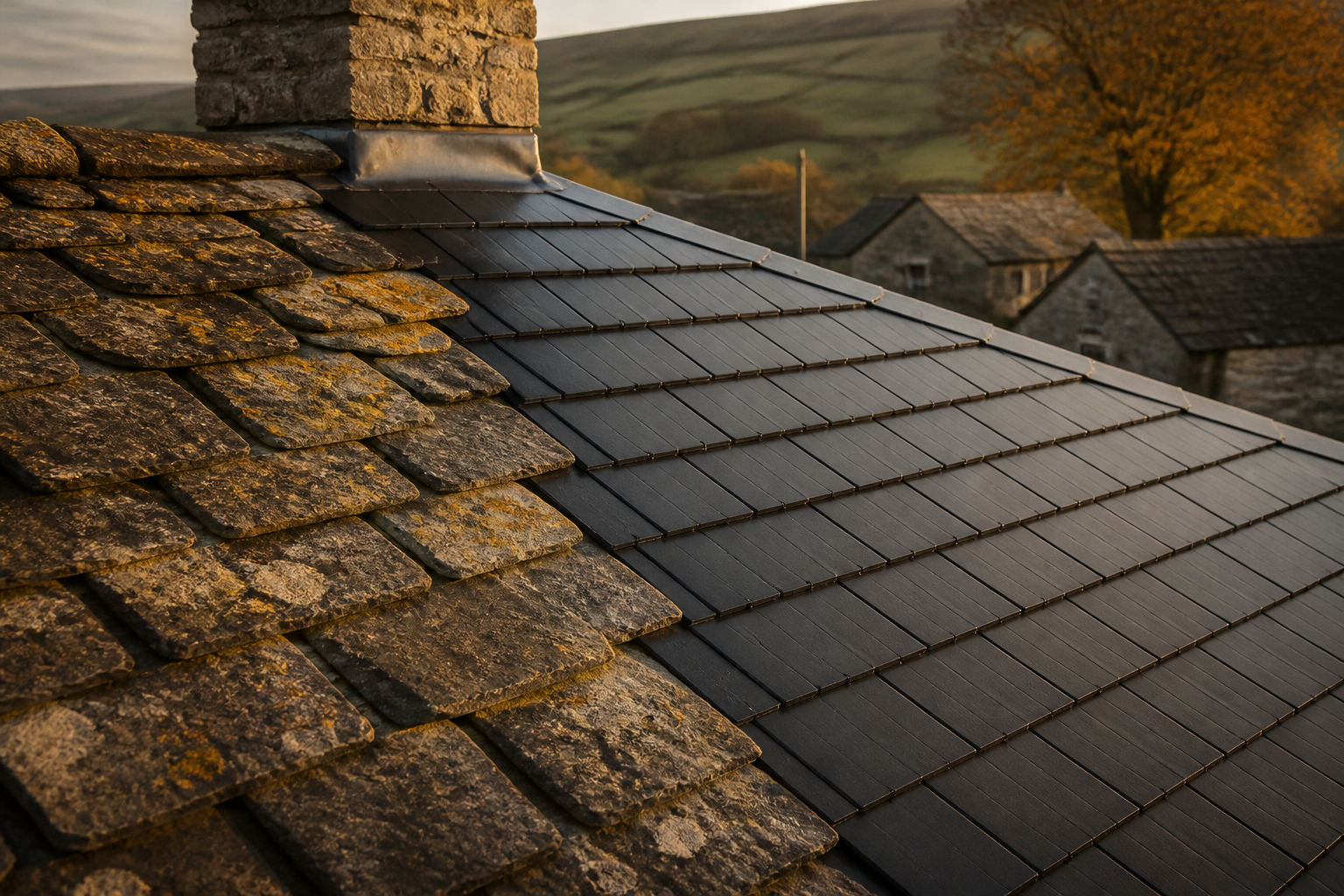
Solar tiles have long been presented as the aesthetic solution to home solar generation. By integrating photovoltaic cells directly into ceramic, slate, or composite roof tiles, building-integrated photovoltaics (BIPV) allow householders to generate electricity without mounting visible panels above their tiles. Yet despite decades of product launches and strong consumer interest, solar tiles represent less than 1 percent of domestic solar installations in the United Kingdom.
A report published by BBC News on 8 October 2026 examined why solar tiles have failed to capture mainstream market share. The answer lies in a combination of semiconductor physics, thermal management, installation economics, and ongoing maintenance challenges. Understanding these technical trade-offs helps householders determine whether solar tiles or traditional solar panels represent the right investment for their property.
Thermal Physics and the Rear Airflow Gap
The primary performance difference between solar tiles and traditional solar panels stems from how silicon solar cells handle heat. Photovoltaic cells convert sunlight into direct current (DC) electricity through the photoelectric effect, but they also absorb solar thermal energy.
Why Cell Temperature Matters for Generation
Standard monocrystalline silicon PV cells are rated at Standard Test Conditions (STC), which assume a cell temperature of 25 degrees Celsius and solar irradiance of 1,000 Watts per square metre (W/m²). In real UK weather conditions, bright sunlight heats solar cells well above ambient air temperature.
As silicon cells heat up, their semiconductor bandgap contracts, lowering the output voltage. This relationship is quantified by the temperature coefficient of maximum power (Pmax), which typically ranges between -0.35% and -0.40% per degree Celsius above 25°C. If a cell reaches 65°C on a summer afternoon, its electrical output falls by roughly 14% to 16% purely due to thermal degradation.
Ventilation and Nominal Operating Cell Temperature
On-roof solar panels are mounted on aluminum rails, creating a continuous rear airflow gap of 70mm to 100mm between the tiles and the module glass. Natural convection draws cool air beneath the array, dissipating heat and keeping the Nominal Operating Cell Temperature (NOCT) lower.
In contrast, solar tiles sit flush against roof underlayment or counter-battens. Without an open, unconstrained airflow channel behind the modules, heat builds up rapidly in the roof structure. Field monitoring by the Building Research Establishment (BRE) shows that unventilated building-integrated photovoltaics operate at internal cell temperatures 15°C to 25°C higher than elevated rack-mounted panels under identical solar irradiance. This elevated operating temperature reduces annual kilowatt-hour (kWh) energy yield by 5% to 8% in temperate climates like the UK.
Structural Efficiency and Interconnect Density
A standard residential solar array uses large-format panels, typically measuring 1.7 metres by 1.1 metres with a peak rating of 400 Watts to 450 Watts peak (kWp). A 4 kWp array requires just 9 or 10 large panels.
Active Silicon Coverage per Square Metre
Solar tiles are significantly smaller, matching the dimensions of traditional roofing slate or concrete tiles. Because each tile requires structural margins, overlapping weather seals, and perimeter frame material, the ratio of active silicon area to gross roof area is substantially lower.
Standard panels achieve a module efficiency of 20% to 23%, converting nearly a quarter of incoming sunlight into power. Domestic solar tiles typically deliver module efficiencies between 15% and 18%. Achieving a 4 kWp system capacity with solar tiles often requires 25% to 40% more roof surface area than high-efficiency panels.
Electrical Reliability and Fault Diagnosis
Every electrical join in a solar array represents a potential failure point or source of resistance. Standard solar panel systems use standard MC4 quick-connectors, with a typical 10-panel system containing around 20 DC electrical connections located in accessible paths beneath the array.
A solar tile roof of equivalent capacity can require hundreds of individual electrical interconnections between adjacent tiles. According to installation guidelines from the Microgeneration Certification Scheme (MCS), high connection counts increase the risk of moisture ingress, contact resistance, and thermal failure over a 25-year operational lifespan. Locating a single failed connector beneath interlocking tiles requires specialised diagnostic tools and physical dismantling of the surrounding roof covering.
Financial Breakdown: Solar Tiles vs Conventional PV
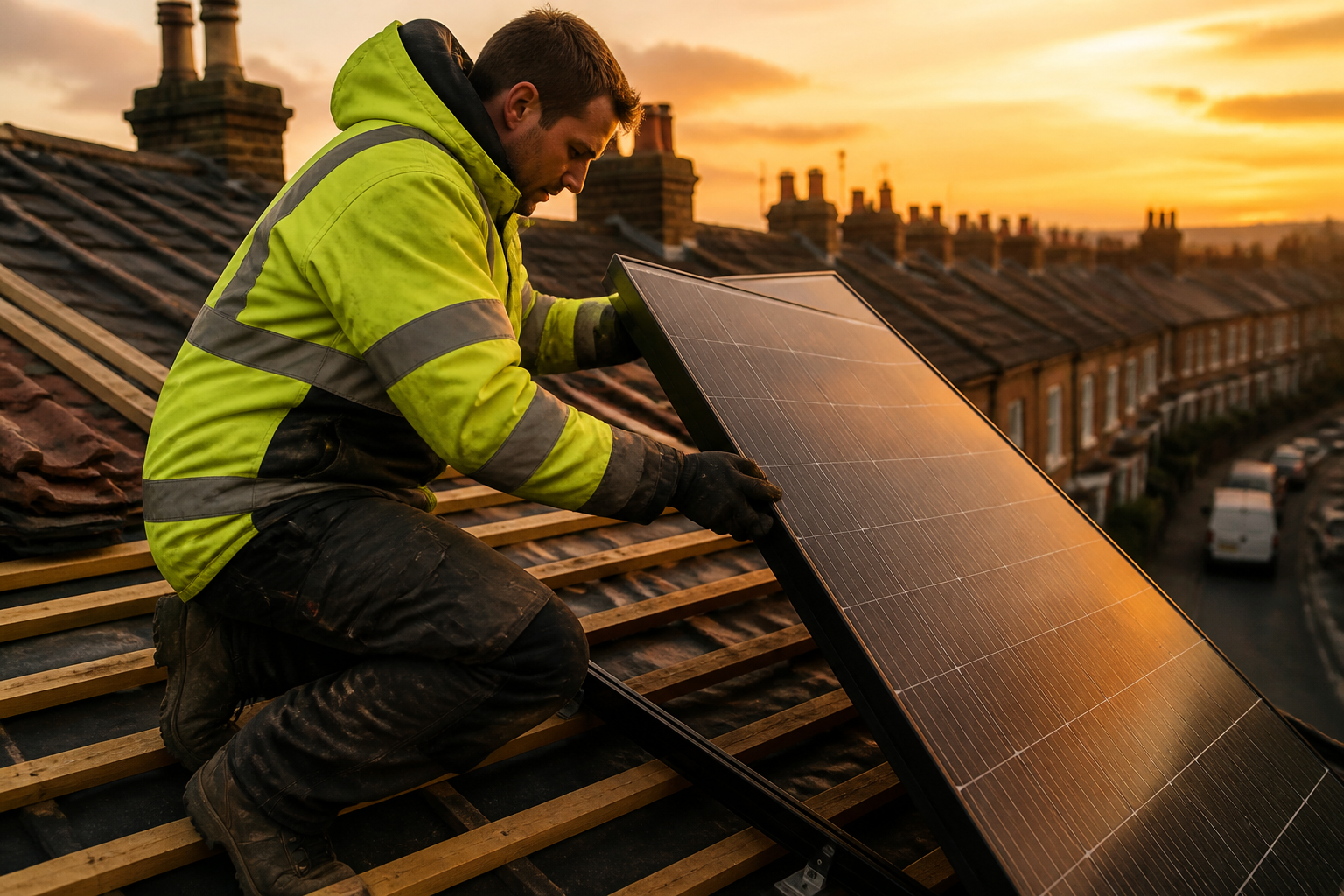
The economic contrast between solar tiles and standard solar PV is substantial. The table below outlines typical UK parameters for a 4 kWp domestic installation as of 2026.
| Metric | On-Roof Solar Panels | Integrated (In-Roof) PV | Solar Roof Tiles |
|---|---|---|---|
| Typical Installed Cost (4 kWp) | £5,500 - £7,500 | £7,000 - £9,000 | £14,000 - £22,000 |
| Cost per Watt Peak (£/Wp) | £1.38 - £1.88 | £1.75 - £2.25 | £3.50 - £5.50 |
| Module Efficiency Range | 20.5% - 23.0% | 19.5% - 21.5% | 15.0% - 18.5% |
| Ventilation Profile | Excellent (70-100mm gap) | Fair (Recessed tray gap) | Poor (Flush batten mount) |
| Installation Time | 1 - 2 Days | 2 - 3 Days | 5 - 10 Days |
| Warranty Coverage | 25-yr performance / 15-yr product | 25-yr performance / 15-yr product | 25-yr performance / 10-15 yr product |
| Primary Suitability | Existing good-condition roofs | New builds & full re-roofs | Heritage & listed properties |
While in-roof integrated PV trays provide a middle ground by sitting flush with standard roof tiles while maintaining dedicated mounting trays, full solar tiles remain a high-cost premium product. For most households, the additional capital outlay for solar tiles cannot be recovered through electricity bill savings during the lifetime of the equipment.
Planning Permission and Conservation Constraints
Despite their high cost and thermal disadvantages, solar tiles serve a vital role in specific building contexts. Under UK Permitted Development Rights, solar panels can be installed on most unlisted residential property roofs without formal planning applications, provided they do not project more than 200mm from the roof plane.
However, Permitted Development rights are often restricted or withdrawn in:
- Grade I, Grade II*, and Grade II listed buildings
- Conservation areas with strict Article 4 directions
- National Parks and Areas of Outstanding Natural Beauty (AONB)
In these sensitive locations, local planning authorities often reject traditional rack-mounted solar panels on visual amenity grounds. Solar tiles or slate-matching BIPV products frequently offer the only pathway to securing planning consent, as they preserve the historic roofline and visual character of slate or clay structures.
What this means for you
If you are evaluating home solar, start by assessing your roof condition, structural capacity, and local planning status:
- For existing roofs in sound condition, standard on-roof solar panels installed on aluminum rails offer the highest efficiency, best thermal cooling, lowest cost per kWp, and shortest simple financial payback.
- If you are undertaking a complete roof replacement or building an extension, flush integrated in-roof mounting frames provide a sleek, streamlined appearance at a modest premium over standard panels without the high cost of solar tiles.
- Consider solar tiles primarily if your property is listed, located in a designated conservation zone, or subject to strict architectural restrictions that prohibit standard PV arrays.
- Ensure any installer is accredited under the Microgeneration Certification Scheme (MCS) and registered with a consumer code such as HIES or RECC to guarantee compliance with BS 7671 electrical safety rules and Building Regulations Part L.
For employees exploring renewable upgrades, the Net Zero Home Scheme provides member pricing on accredited solar PV, heat pump, and battery storage installations through participating UK employers. If your household also operates an electric vehicle, smart charging via home wallboxes installed through The Charge Scheme can be paired with home generation, while salary sacrifice options for electric cars are available via The Electric Car Scheme.
Frequently asked questions
Do solar tiles take longer to install than standard solar panels?
Yes. Installing standard on-roof solar panels typically takes one to two days for an MCS-accredited installation team. Solar tiles require full roof stripping, batten re-alignment, careful laying of weatherproofing underlayment, and manual interconnection of dozens or hundreds of individual tile units, often extending installation times to between five and ten working days.
Can individual damaged solar tiles be replaced without stripping the roof?
Replacing a single damaged solar tile depends heavily on the manufacturer design. Interlocking tile systems usually require removing surrounding non-solar or solar tiles in the same row and column to access the underlying mechanical fixings and electrical connectors. System designs with modular clip-in tiles are easier to service, but technicians must trace DC electrical wiring carefully to maintain string integrity.
Are solar tiles eligible for the UK 0% VAT rate on energy-saving materials?
Yes. Under current UK tax rules running through to 31 March 2027, the supply and installation of energy-saving materials in residential accommodation benefits from a 0% rate of VAT. This zero rating applies to both solar PV panels and solar roof tiles when supplied and installed by an accredited contractor.