Government Announces Reform of UK Heating Oil Market
UK ministers announce plans to regulate the heating oil sector, offering off-grid households tighter price protections heading into winter.
- Written by
- Net Zero Home Scheme editorial team
- Last updated
- Topic
- home energy, policy, regulation
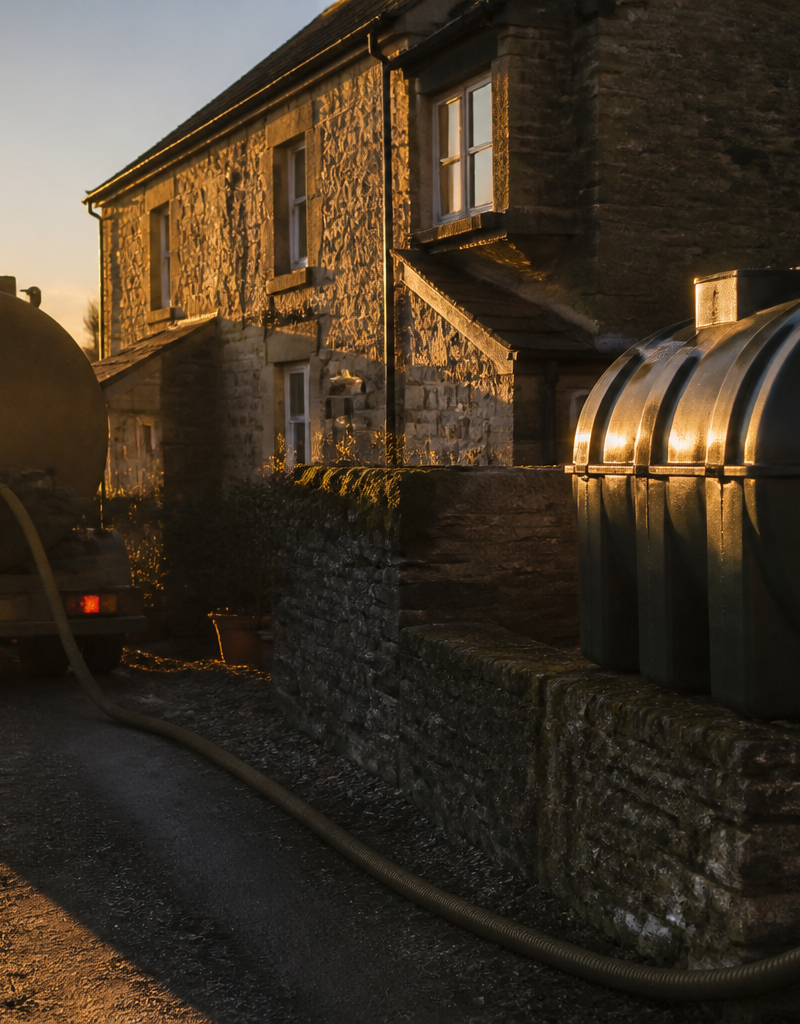
Ministers announced plans to introduce tighter regulations and stronger consumer protections for the domestic heating oil market, according to a statement published on GOV.UK on 13 October 2026. The proposed shake-up aims to curb price volatility and enforce fairer trading practices for off-grid households preparing for the winter heating season, BBC News reported on 14 October 2026.
Unlike mains gas and electricity customers who are protected by Ofgem's standard variable price cap, domestic heating oil users buy fuel in bulk from private suppliers. This market structure leaves off-grid households exposed to sudden spot price spikes, delivery surcharges, and limited local competition, leaving many rural residents vulnerable to severe fuel cost pressure during cold weather.
Overview of the planned heating oil reforms
The policy announcement outlines a series of measures intended to bring heating oil distributors under stricter market oversight. Key proposals focus on improving price transparency at the point of order, tightening rules around delivery fees, and establishing clearer dispute resolution procedures for customers.
Under current arrangements, heating oil distributors operate in an unregulated commodity market. Prices fluctuate daily based on global crude oil indices, regional refining capacity, and localized logistics constraints. When cold weather spikes demand, delivery times lengthen and prices per litre often rise rapidly. The government proposals aim to mandate clearer price displays, restrict arbitrary minimum order sizes, and ensure customers receive clear information before committing to a delivery date.
BBC News reported on 12 October 2026 that consumer advocates have long highlighted the gap between regulated utility tariffs and un-capped off-grid fuels. The new proposals represent the most direct effort yet to introduce formal standards across the liquid fuel supply chain in England, Scotland, and Wales.
What the numbers say
Off-grid heating remains one of the most cost-sensitive areas of UK residential energy. Official data and media reports highlight the specific financial pressure on non-gas households heading into the winter months.
| Metric or standard | Reported detail | Source and date |
|---|---|---|
| Market regulatory reform | Government plans to tighten rules on heating oil suppliers and promote competition | GOV.UK, 13 October 2026 |
| Consumer cost impact | Off-grid households face severe budget pressures between fuel orders and food expenses | BBC News, 14 October 2026 |
| Prior warning on bills | Heating oil customers face elevated costs despite proposed sector shake-up | BBC News, 12 October 2026 |
The data shows that while regulatory changes aim to prevent unfair pricing practices, they do not subsidize the underlying cost of wholesale fuel. For rural households, heating oil remains a major upfront domestic expense that must be settled in full per delivery, unlike monthly direct debit arrangements for mains gas.
What the new heating oil rules change
The government announcement introduces key changes to how liquid heating fuel is bought and sold across Great Britain. If implemented as outlined, the regulatory framework will alter the trading environment for off-grid households in several practical ways:
- Mandatory transparent pricing: Suppliers will be required to show full per-litre prices including delivery and taxes before an order is placed, ending hidden surcharges.
- Stronger dispute mechanisms: Customers will gain access to formal ombudsman routes to challenge incorrect deliveries, contaminated fuel, or unnotified price changes.
- Protections against emergency pricing: Rules will restrict distributor practices that unfairly inflate delivery fees during extreme weather events.
- Enhanced regional competition: Measures designed to lower barriers for smaller local distributors aim to reduce regional monopolies in isolated areas.
These changes provide off-grid households with basic commercial rights similar to those enjoyed by mains utility customers. However, they focus primarily on market conduct rather than fuel pricing levels.
What the proposed reforms do not change
While stronger market oversight is designed to stop predatory practices, householders should understand the limits of the proposed legislation. The planned reforms will not fundamentally alter the underlying physics or economics of heating an off-grid home with liquid oil:
- No price cap on oil per litre: The government is not imposing a legal cap on wholesale or retail heating oil prices, meaning prices will still rise and fall with global market movements.
- No monthly spread payments by default: Unlike mains gas suppliers, oil distributors are not obligated to offer smoothed monthly payment plans, maintaining the need for large lump-sum payments per tank fill.
- No reduction in carbon emissions: Kerosene heating oil remains a high-carbon fossil fuel. Regulatory protections do not alter a property's carbon footprint or improve its Energy Performance Certificate rating.
- No physical efficiency gains: Regulating supplier contracts does not make an aging oil boiler run more efficiently. Uninsulated walls and draughty roofs will continue to demand high volumes of fuel.
For households seeking long-term stability from energy price shocks, structural upgrades such as building insulation and low-carbon heating systems remain the primary defense.
What this means for your home
If your property relies on domestic heating oil, these regulatory announcements mean you should expect clearer contract terms and more transparent pricing when ordering fuel this winter. However, because heating oil prices remain tied to international oil markets, operational efficiency and energy reduction should remain your top priorities.
- Review your fuel ordering strategy: Compare prices across multiple regional distributors before booking a fill, and check whether localized oil buying clubs offer lower rates in your area.
- Audit your property's insulation: Heat loss through lofts and cavity walls directly increases the number of litres your boiler burns each day. Draft-proofing and topping up loft insulation to the recommended 270mm depth yield immediate reductions in oil consumption.
- Evaluate low-carbon heating alternatives: If your oil boiler is over 15 years old, consider transitioning to an air source heat pump. Grants under the Boiler Upgrade Scheme currently offer £7,500 towards qualifying installations in England and Wales, significantly reducing the upfront cost of moving away from oil altogether.
- Plan solar and battery storage upgrades: Pairing a heat pump or electric heating with roof-mounted solar PV and home battery storage allows off-grid properties to generate and store their own clean power, insulating the household from future fossil fuel shocks.
What this means for employers
Volatile off-grid heating costs create acute financial strain for employees living in rural and semi-rural regions. Unlike urban staff who benefit from standard variable energy caps, off-grid workers face sudden lump-sum expenses running into hundreds of pounds to fill their fuel tanks ahead of winter.
HR, reward, and employee benefits leaders are increasingly looking for practical ways to help staff manage home energy costs without imposing financial risks or complex administration on the business. Offering access to home energy upgrades allows organizations to support financial wellbeing and workplace sustainability simultaneously.
Through the Net Zero Home Scheme, employers can provide their workforce with member pricing on accredited solar panel installations, heat pumps, battery storage, and plug-in solar kits across England, Scotland, and Wales. The scheme is completely free for employers to implement, involves no salary sacrifice or payroll deductions, and delivers installer matching through verified standards like MCS and TrustMark. HR teams can also complement these home energy solutions by pointing employees toward electric vehicle options via The Electric Car Scheme.
Frequently asked questions
Will the government cap the price of domestic heating oil?
No. The proposed reforms focus on supply chain transparency, contract fairness, and anti-competitive behavior. The government has not announced a statutory price cap on heating oil per litre, so retail costs will continue to fluctuate alongside international oil market prices.
How can off-grid homes cut their heating costs this winter?
Off-grid households can lower costs by joining local bulk-buying oil syndicates, insulating lofts and cavity walls to reduce heat loss, and maintaining their oil boiler to ensure maximum burner efficiency. Transitioning to a heat pump with government grant support also removes reliance on liquid fuel deliveries entirely.
Are heating oil customers eligible for heat pump grants?
Yes. Off-grid properties relying on heating oil or liquefied petroleum gas are prime candidates for low-carbon heating grants. Under the Boiler Upgrade Scheme in England and Wales, eligible homeowners can receive a £7,500 grant towards replacing an oil boiler with a hydronic heat pump.