Clean Energy Transition Needs £511bn Investment by 2040
A report commissioned by Standard Life and Santander reveals the UK must secure £511bn in clean energy investment by 2040 to meet net zero targets.
- Written by
- Net Zero Home Scheme editorial team
- Last updated
- Topic
- energy efficiency, energy bills, policy
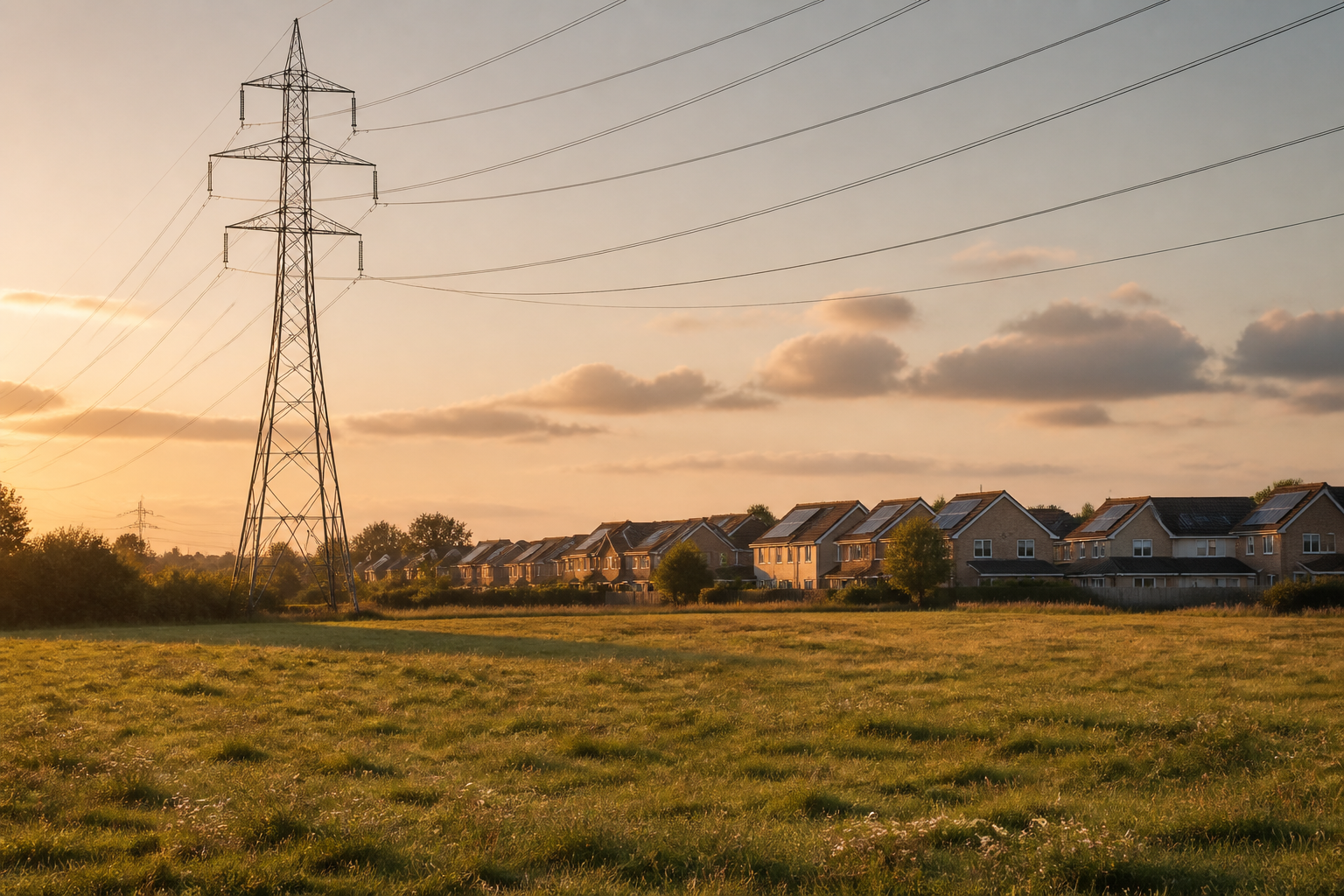
The UK clean energy transition will require at least £511 billion in capital investment between 2026 and 2040 to deliver national climate targets, according to a report commissioned by Standard Life and Santander and published by edie on 16 September 2026. The findings outline the scale of financial deployment necessary to build low-carbon generation, modernize national grid distribution networks, and support domestic energy efficiency across England, Scotland and Wales over the next 14 years.
The analysis highlights that public spending alone cannot cover the capital required, making private institutional investment a critical pillar of the transition. For householders and employers, the magnitude of this funding challenge reflects how national energy policy decisions directly influence long-term domestic energy bills, local grid capacity, and the speed at which low-carbon home technologies can be connected.
Breakdown of the investment requirements
To meet statutory climate commitments, the UK power system requires sustained infrastructure investment across generation, transmission, storage, and demand-side management. The report commissioned by Standard Life and Santander indicates that an average of over £36 billion per year must be deployed into clean energy assets between 2026 and 2040. This includes funding offshore wind projects, solar photovoltaic developments, utility-scale battery storage, and major grid expansion schemes.
A substantial share of the £511 billion target relates to upgrading high-voltage transmission lines and regional distribution networks. As heating and transport transition from fossil fuels to electricity, total demand on the UK grid is projected to increase significantly. Without upfront capital to reinforce local substations and transmission corridors, network congestion risks delaying the connection of new renewable energy generators and domestic heat pumps.
Institutional investors such as pension funds and commercial banks are expected to provide the majority of the capital. However, the report notes that attracting this investment requires clear regulatory frameworks, predictable revenue models, and streamlined planning processes. Long-term policy stability remains essential to lower the cost of capital for major energy infrastructure projects.
What the numbers say
The figures published in the study provide a concrete benchmark for the scale of funding required over the coming decade and a half.
| Investment Metric | Reported Figure | Source and Date |
|---|---|---|
| Total UK clean energy investment needed (2026,2040) | £511 billion | Standard Life & Santander / edie, 16 Sep 2026 |
| Annual average clean energy capital requirement | £36.5 billion per year | Standard Life & Santander / edie, 16 Sep 2026 |
| Investment horizon timeline | 14 years (2026 to 2040) | Standard Life & Santander / edie, 16 Sep 2026 |
As reported by edie on 16 September 2026, the report demonstrates that mobilizing £511 billion requires close alignment between government policy and private financial institutions. The authors emphasize that failure to secure this capital on schedule could extend reliance on imported natural gas, exposing billpayers to volatile international commodity markets.
Where funding uncertainties remain
While the £511 billion target provides a clear top-level headline, the report does not detail how investment costs will be split between public subsidies, private equity, and consumer energy bills. Regulators such as Ofgem face a ongoing balance between approving network capital expenditure and protecting consumers from near-term increases in network charges on domestic utility bills.
Furthermore, the report does not establish precise allocations for household-level decarbonisation versus commercial utility projects. The exact policy mechanisms to unlock private investment in residential retrofits, such as green mortgages or low-interest loan schemes, remain subject to ongoing government consultation and financial sector product design.
What this means for your home
For UK households, the call for £511 billion in clean energy funding highlights the strategic shift toward an electrified domestic energy system. Here is how the transition impacts decisions regarding home upgrades and energy self-reliance:
- Long-term energy bill stability: Expanding domestic clean generation and grid capacity reduces exposure to imported wholesale gas prices. However, network upgrade costs may be reflected in standing charges or volumetric tariffs over time, making home generation more financially attractive.
- Solar PV and battery payback: Installing rooftop solar panels and battery storage allows households to generate and store low-cost electricity directly. Generating your own power offers immediate protection against grid price fluctuations regardless of national infrastructure funding timelines.
- Heat pump adoption: As the grid becomes cleaner, heating your home with an air source heat pump significantly reduces carbon emissions compared to a gas boiler. Ensuring local grid capacity is upgraded helps streamline connection approvals for high-demand electrical appliances.
- Smart tariff optimization: Increased renewable capacity on the grid will drive wider availability of time-of-use tariffs. Combining home storage with smart tariffs allows you to charge batteries during cheap off-peak hours and avoid peak grid charges.
What this means for employers
As national infrastructure debates underline the high future cost of energy, employees continue to face elevated cost-of-living pressures driven by home utility bills. Forward-thinking organisations are responding by offering practical sustainability benefits that help staff reduce home energy running costs.
Employers can support their workforce by facilitating access to accredited home energy installations without adding administrative burden or capital cost to the business. Through the Net Zero Home Scheme, employers can offer staff member pricing on solar panels, heat pumps, battery storage, and plug-in solar, installed by accredited professionals across England, Scotland and Wales at zero cost to the employer.
Providing home energy benefit schemes aligns corporate environmental objectives with tangible financial support for staff, encouraging energy resilience at home while demonstrating commitment to broader net zero goals.
Frequently asked questions
How does national clean energy investment affect domestic electricity prices?
National clean energy investment helps build low-cost renewable generation such as wind and solar, which depresses wholesale power market prices over the long term. However, the short-term cost of building network infrastructure is partly recovered through network charges on consumer utility bills, making self-generation and battery storage effective ways to hedge against bill increases.
Will grid upgrade requirements delay domestic heat pump or solar installations?
Most standard domestic solar PV and heat pump installations fall under G98 or DNO notification processes that allow quick connection. Larger systems or high-density local installations may require prior approval from the Distribution Network Operator (DNO) under G99 rules if local transformer capacity is constrained, which national grid investments aim to resolve.
Does the £511bn investment target include government grants for homeowners?
The £511 billion figure reported by Standard Life and Santander represents total capital investment across national infrastructure, generation assets, and energy networks. Specific consumer grant schemes, such as the Boiler Upgrade Scheme for heat pumps, represent separate public policy allocations designed to lower upfront adoption costs for individual households.