DESNZ Grants Consent for Morgan and Morecambe Wind Cables
DESNZ has granted development consent for the subsea cables and grid infrastructure needed to connect the Morgan and Morecambe offshore wind farms.
- Written by
- Net Zero Home Scheme editorial team
- Last updated
- Topic
- policy, regulation, energy efficiency
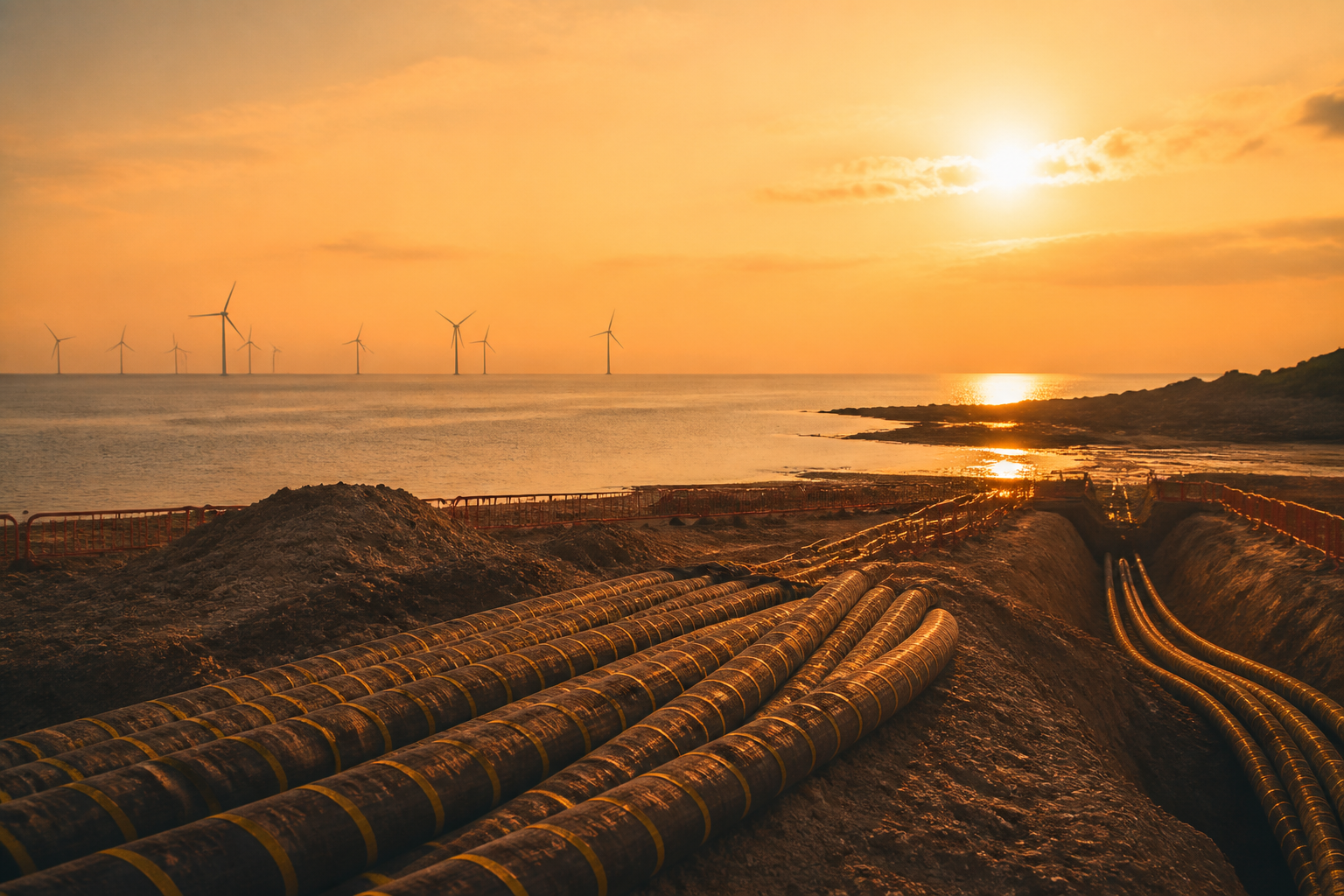
On 14 September 2026, the Department for Energy Security and Net Zero (DESNZ) granted development consent for the Morgan and Morecambe Offshore Wind Farms Transmission Assets. The official decision, published on GOV.UK, clears the regulatory pathway for high-voltage subsea export cables, coastal landfall facilities, and onshore substations required to connect offshore wind generation in the Irish Sea directly to Great Britain's electricity grid.
The approval applies to the transmission infrastructure serving two major commercial projects: the Morgan Offshore Wind Project, developed jointly by EnBW and BP, and the Morecambe Offshore Windfarm, developed by Cobra and Flotation Energy. By granting the Development Consent Order (DCO), the UK government has authorized the building of offshore transformer platforms, marine cable corridors, cable landfall sites in Lancashire, and onshore converter stations that will feed renewable power into the National Electricity Transmission System.
What the numbers say
| Parameter | Details | Source and Date |
|---|---|---|
| Regulatory Decision | Development Consent Order (DCO) Granted | DESNZ / GOV.UK, 14 September 2026 |
| Location | Irish Sea to Lancashire Coast | DESNZ / GOV.UK, 14 September 2026 |
| Infrastructure Scope | Subsea cables, landfall works, onshore substations | DESNZ / GOV.UK, 14 September 2026 |
| Network Destination | National Electricity Transmission System (NETS) | DESNZ / GOV.UK, 14 September 2026 |
| Generation Source | Morgan and Morecambe Offshore Wind Farms | DESNZ / GOV.UK, 14 September 2026 |
While the granting of development consent is a key statutory step, the consent documentation published on 14 September 2026 focuses on planning and environmental authorization for the transmission corridor. It does not set out final capital expenditure totals, target operational dates for power flow, or specific network reinforcement costs. Those details remain dependent on subsequent commercial procurement, detailed engineering design, and National Grid Electricity Transmission connection timelines.
What the consent decision changes and what it leaves uncertain
The approval changes the regulatory status of the North West grid connection assets from a proposed application to a fully consented development scheme. This enables developers to proceed with final seabed surveys, procurement of high-voltage direct current (HVDC) or alternating current (HVAC) cabling, and detailed construction planning for onshore substations. Securing transmission consent is frequently one of the longest lead-time hurdles for major offshore energy infrastructure in Great Britain.
However, the announcement does not alter household retail energy tariffs in the near term. Under the current wholesale electricity market rules in Great Britain, retail power prices are determined by marginal pricing, where the operational cost of the final generator needed to meet demand, usually combined-cycle gas turbine (CCGT) power stations, dictates the wholesale market clearing price. Adding renewable transmission capacity expands overall clean power generation capability, but domestic unit rates will remain linked to global gas markets until power market structure reforms are enacted or fossil fuel generation is fully displaced during peak demand periods.
Furthermore, the consent decision does not immediately modify local distribution network capacity or standing charges. Standing charges reflect the fixed costs of maintaining national and regional transmission networks, alongside supplier service overheads. The capital cost of major grid connections is amortized across network users over decades, meaning individual bill impacts are gradual and distributed across all transmission system consumers.
What this means for your home
For UK householders, the approval of major offshore transmission infrastructure highlights the ongoing transition of the national grid toward clean generation, but it does not deliver immediate bill relief for the coming winter. Households looking to protect against energy market volatility cannot rely on large-scale transmission projects to lower unit rates overnight.
If you want to reduce your reliance on grid electricity rates, action at the individual building level remains the most direct route:
- Domestic solar PV systems generate electricity at the point of use, insulating your home from wholesale price spikes during daylight hours.
- Home battery storage allows you to capture surplus solar power or charge from off-peak grid tariffs overnight, storing low-cost energy for use during expensive evening peak hours.
- Heat pumps replace fossil-fuel heating systems with high-efficiency electric heating, using around 1 kWh of electricity to deliver 3 kWh to 4 kWh of heat when properly designed and installed to MCS standards.
While offshore grid expansion increases the overall supply of green electricity entering the network, domestic retrofits give householders immediate control over how much power they purchase from the grid and at what time of day.
What this means for employers
For HR directors, reward leaders, and sustainability managers, large-scale infrastructure announcements serve as a reminder that macro-level grid decarbonization takes many years to materialise in consumer energy bills. Employees continue to experience high home energy expenses, which directly affects financial wellbeing and household budgets.
Providing practical mechanisms for staff to upgrade their home energy efficiency can form an impactful element of an organization's employee benefit strategy. Employers looking to support staff with rising living costs can introduce the Net Zero Home Scheme, an employee benefit delivered by Net Zero Benefits alongside The Electric Car Scheme that provides member pricing on accredited solar, heat pump, battery storage, and plug-in solar installations with zero cost to the business and no payroll deduction.
By offering structured access to home energy technology, employers help staff build long-term resilience against energy bill fluctuations while supporting corporate scope 3 emissions targets.
Frequently asked questions
When will electricity from these offshore wind farms reach domestic homes?
Following the DESNZ consent decision on 14 September 2026, the developers must complete detailed engineering, procurement, and physical construction of both the offshore generators and the onshore transmission assets. Commercial operation typically follows several years after development consent is granted, subject to construction schedules and National Grid connection windows.
Will this planning approval immediately lower domestic energy bills?
No. Development consent grants legal permission to construct infrastructure; it does not alter current energy tariffs. Retail electricity prices in Great Britain remain tied to wholesale gas prices under the marginal pricing structure. Immediate bill reductions depend on wholesale fuel market movements and domestic efficiency improvements.
Does adding offshore wind capacity make home heat pumps more economical?
Expanding offshore wind capacity increases the proportion of low-carbon electricity on the national grid over time, reducing the carbon footprint of electric heating. However, the operational economy of a heat pump relies primarily on its seasonal coefficient of performance (SCOP) and the ratio between domestic electricity and gas tariffs rather than the specific location of offshore wind cables.