Installing a Home EV Wallbox Charger: A Step-by-Step UK Guide
A practical step-by-step guide to installing a dedicated home EV charger in the UK, covering technical checks, costs, installer questions and DNO rules.
- Written by
- Net Zero Home Scheme editorial team
- Last updated
- Topic
- ev charging, energy efficiency, home energy
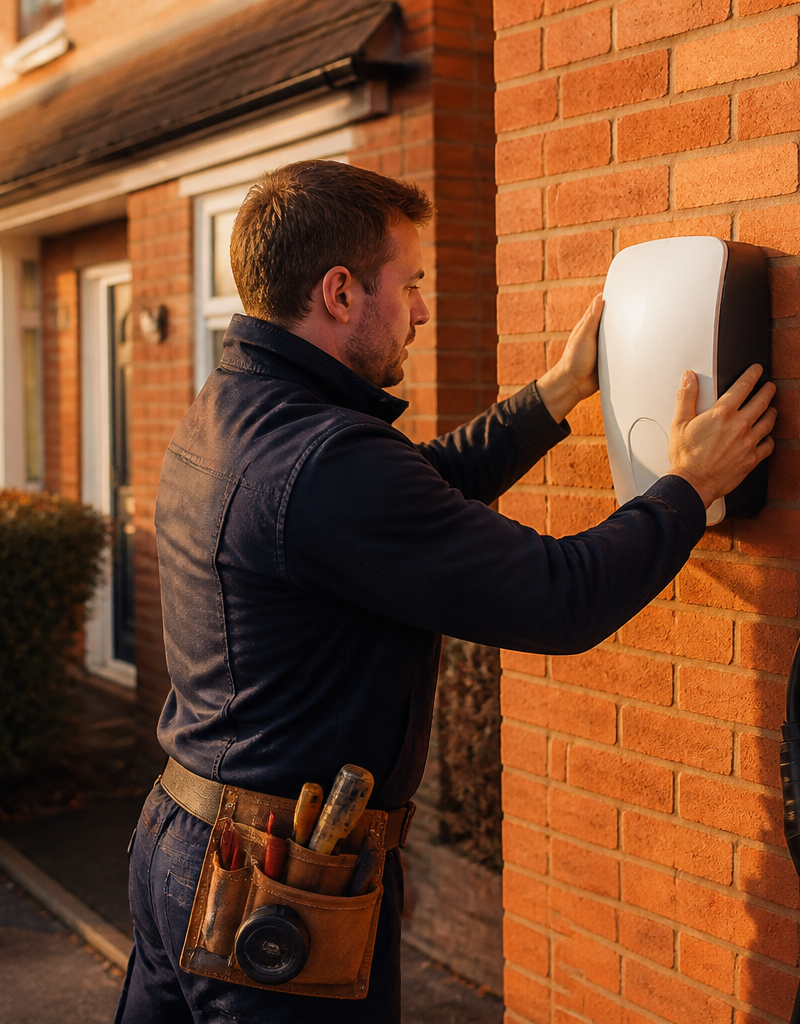
Installing a dedicated home Electric Vehicle (EV) wallbox charger is one of the most effective upgrades for UK drivers moving away from fossil fuels. While standard three-pin socket charging delivers a maximum power output of 2.3 kW, a dedicated single-phase wallbox provides up to 7.4 kW, reducing charging times by roughly two-thirds. However, installing a wallbox requires careful assessment of your home electrical infrastructure, compliance with UK wiring regulations, and notification to your local electricity network operator. This practical guide details every stage of the process, from initial electrical surveys and costing to choosing an accredited installer and managing grid approvals.
What pre-installation checks must you complete?
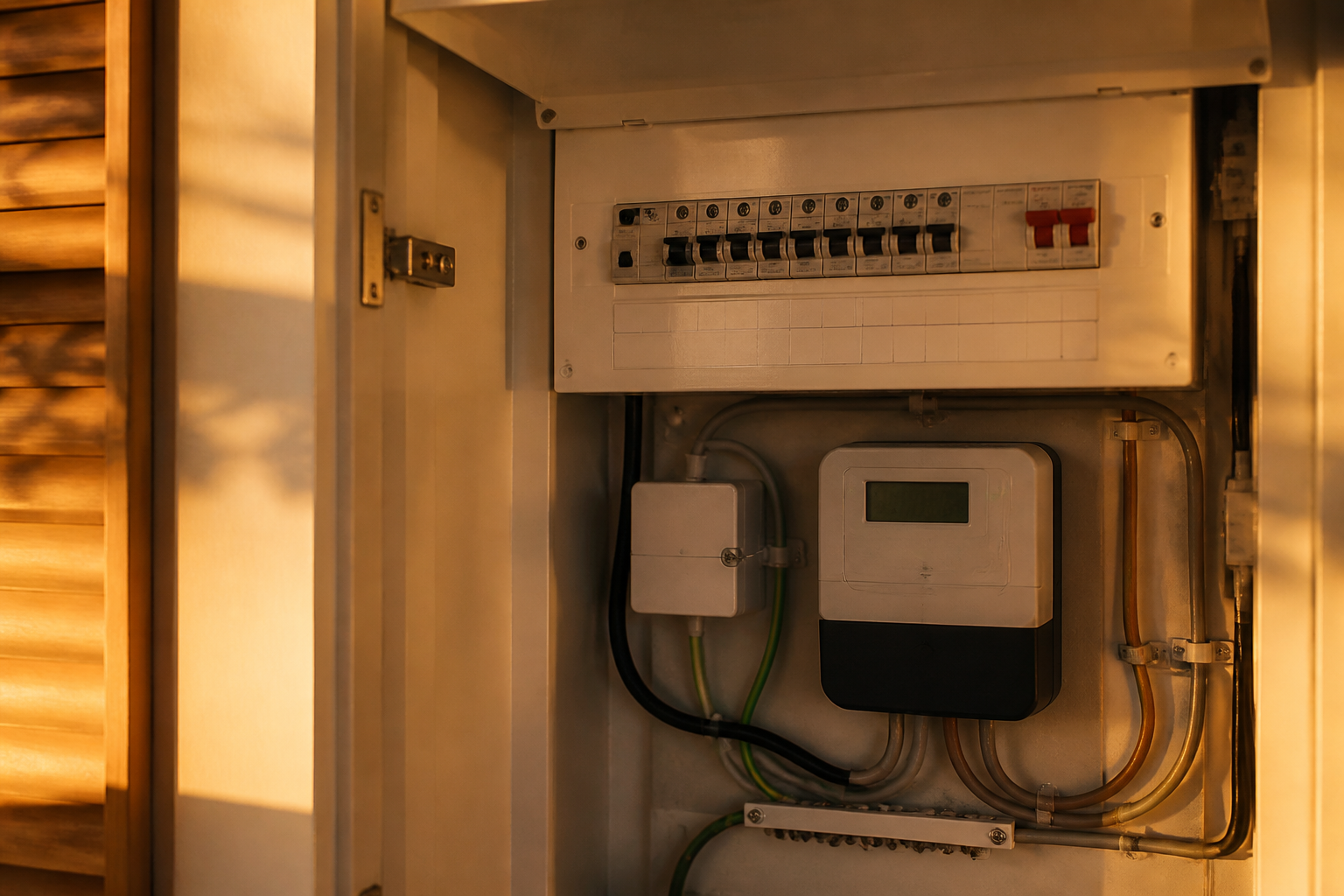
Before purchasing a wallbox or booking an installation date, several physical and electrical factors must be assessed at your property.
First, check your electrical cutout fuse rating. Located near your electricity meter, the main service cutout fuse determines the maximum total electrical current your home can draw. Standard UK residential cutouts are rated at 60A, 80A, or 100A. According to the Institution of Engineering and Technology (IET) Code of Practice for Electric Vehicle Charging Equipment Installation, a dedicated 7.4 kW charger draws 32 amperes (A) of continuous electrical current. If your home has a 60A cutout fuse or a looped supply, where the main service cable is shared with a neighbouring property, your Distribution Network Operator (DNO) may need to upgrade the fuse or unloop the cable before installation can proceed.
Second, verify your earthing system and PEN fault protection. Most UK homes use a TN-C-S (PME) earthing arrangement. Under Section 722 of BS 7671 (the IET Wiring Regulations), installing an outdoor EV charger on a TN-C-S system requires specific open-PEN protection to prevent electric shock if the main protective earth wire breaks. Modern wallboxes often include integrated open-PEN fault detection devices, eliminating the need to drive an earthing rod into the ground outside your property.
Third, assess the cable route between your consumer unit and the desired mounting position. Chargers installed on detached garages or outer driveway walls require longer cable runs. If the distance exceeds 10 metres or requires chasing through interior masonry, installation costs increase. In addition, smart chargers require a stable internet connection via Wi-Fi, Ethernet, or an internal cellular connection to access smart tariffs and scheduled charging.
How much does domestic EV charger installation cost?
The total cost of installing a domestic EV wallbox depends on equipment specification, cable distance, and whether main electrical upgrades are required.
According to estimates published by the Energy Saving Trust, buying a standard 7.4 kW wallbox together with standard installation typically costs between £800 and £1,400. Standard installation generally includes up to 10 metres of surface-mounted cable, a dedicated miniature circuit breaker (MCB) or residual current breaker with overcurrent protection (RCBO), drilling through one exterior wall, and initial testing and commissioning.
| Item or Upgrade Stage | Typical Cost Range | Key Factors Influencing Cost |
|---|---|---|
| Standard 7.4 kW Smart Wallbox Unit | £450 to £900 | Brand features, tethered vs untethered cable, integrated PEN protection |
| Standard Installation (Up to 10m Cable) | £350 to £500 | Simple cable run, accessible consumer unit, solid exterior mounting surface |
| Extended Cable Run (>10m) | £50 to £150 | Additional cabling, trunking, or underground trenching requirements |
| Consumer Unit Upgrade or Sub-board | £150 to £350 | Required if existing consumer unit lacks spare ways or RCD protection |
| DNO Fuse Upgrade (60A to 100A) | Free (usually) | Provided by DNO, but may cause installation delays of 2 to 6 weeks |
Properties with complex layout requirements, such as long driveways requiring ground trenching, can expect total costs towards £1,800. For renters and flat owners, the UK government EV chargepoint grant provides up to £350 towards installation costs, administered through Office for Zero Emission Vehicles (OZEV) approved installers.
What questions should you ask a qualified installer?
When soliciting quotes from electrical contractors, asking specific technical questions ensures that your installation complies with regulations and meets your charging needs.
- Does the quote include integrated open-PEN fault detection, or will an external earth rod be required?
- Is dynamic load management included to automatically adjust charging speed when domestic energy demand peaks?
- Will you submit the ENA EV and Heat Pump Notification form to the Distribution Network Operator on my behalf?
- Does the wallbox support solar matching or export divert features if I install solar PV in the future?
- What warranty coverage is included for both the wallbox unit and the electrical cabling work?
Which accreditations and safety standards matter?
Electrical work involving EV charging equipment must be carried out by a competent person under UK Building Regulations Part P.
Ensure your installer holds registration with a recognised competent person scheme such as NICEIC, NAPIT, or the Electrical Contractors Association (ECA). These registrations verify that the contractor is qualified to inspect, test, and issue an Electrical Installation Certificate (EIC) upon completion.
In addition, look for installers registered with OZEV if you intend to claim available government grants. All installed equipment must comply with BS 7671 18th Edition Amendment 2 and the Electric Vehicles (Smart Charge Points) Regulations 2021, which mandate off-peak default settings, randomized delay functions, and cybersecurity compliance for smart wallboxes sold in England, Scotland, and Wales.
What is the realistic installation timeline?
Installing a home EV charger is typically straightforward, but grid notifications can affect total lead times.
- Initial Desktop Survey (Days 1 to 3): Submit photo surveys of your consumer unit, electricity meter, cutout fuse, and preferred wallbox location to your chosen installer.
- DNO Approval Check (Days 3 to 20): According to guidelines from the Energy Networks Association (ENA), if your property has an 80A or 100A fuse and an unlooped supply, installers can use the Connect and Notify process within 28 days of fitting. However, if a fuse upgrade or unlooping is required, prior DNO approval must be obtained, which can add 2 to 4 weeks.
- Installation Day (Day 21): A qualified electrician installs the wallbox, runs supply cabling, connects dedicated circuit protection, and completes electrical testing. Physical installation usually takes 3 to 5 hours.
- Commissioning and Certification (Same Day): The electrician connects the charger to your Wi-Fi network, verifies smart features, and hands over your Electrical Installation Certificate alongside DNO notification paperwork.
What this means for you
Installing a home EV charger provides convenient, high-speed charging while establishing the infrastructure required to take advantage of low-cost off-peak tariffs. By checking your cutout fuse capacity and selecting an accredited installer who handles DNO notifications properly, you can avoid costly retrofits or grid delay headaches.
If you are exploring broader property efficiency options, the Net Zero Home Scheme offers employees member pricing on accredited home energy technologies, including solar panels, heat pumps, and battery storage.
Frequently asked questions
Can I install an EV charger using a standard consumer unit?
Yes, provided your existing consumer unit has a spare switch way and adequate capacity. If your consumer unit is outdated or lacks sufficient space for a dedicated Type A RCBO, your installer can install a small secondary enclosure (a sub-board) beside your meter tailored exclusively for the charger.
Do I need planning permission for a home EV charger?
In England, Scotland, and Wales, mounting an EV charger on private residential property falls under Permitted Development rights. Planning permission is generally not required, provided the wallbox does not exceed 0.2 cubic metres in volume, is not installed higher than 1.6 metres on a wall facing a highway, and the property is not a listed building.
What is the difference between tethered and untethered chargers?
A tethered wallbox has a permanently attached charging cable, offering everyday convenience as you do not need to retrieve a cable from your vehicle trunk. An untethered charger features a Type 2 socket only, requiring you to plug in your own cable; this option provides a cleaner visual aesthetic and allows cable replacement if damage occurs.
Sources
- Energy Saving Trust - Charging Electric Vehicles at Home, Energy Saving Trust
- IET Code of Practice for Electric Vehicle Charging Equipment Installation, Institution of Engineering and Technology
- Energy Networks Association - EV and Heat Pump Process, Energy Networks Association