TUC Proposes Bank Surcharge to Fund Household Energy Bill Cuts
The TUC has called for a bank tax reversal to raise £9bn over four years for household energy bill relief, BBC News reported on 10 September 2026.
- Written by
- Net Zero Home Scheme editorial team
- Last updated
- Topic
- energy bills, policy, energy efficiency

The Trades Union Congress (TUC) has called on regional and national political leaders, including Mayor of Greater Manchester Andy Burnham, to back a bank surcharge aimed at funding cuts to household energy bills. Reporting by BBC News on 10 September 2026 details how the union organisation estimates that reversing previous reductions to the banking sector tax surcharge could generate £9bn over four years to lower fuel costs for working households.
The intervention highlights the ongoing pressure domestic utility costs exert on workplace productivity, pay demands and employee financial resilience across England, Scotland and Wales. Although wholesale gas prices have fallen from peak levels, domestic tariffs remain high compared to historic averages, keeping household energy management at the top of employee wellbeing agendas as autumn approaches.
Union proposal details and cost of living context
The TUC proposal focuses on the bank surcharge, an additional levy imposed on banking corporation profits alongside main UK corporation tax rates. The surcharge was reduced from 8 percent to 3 percent in April 2023 when the main corporation tax rate rose from 19 percent to 25 percent. According to the union body's figures released on 10 September 2026, reinstating the higher surcharge level would raise significant revenue that could be ring-fenced specifically to subsidise domestic electricity and gas bills or fund targeted regional relief programmes.
Union representatives presented the proposal directly in regional discussions, arguing that targeted taxation on profitable financial sectors offers a fast mechanism to address stubborn household energy poverty. The proposal sits alongside broader trade union campaigning for structural market reform, mandatory efficiency standards in rented housing and accelerated investment in renewable infrastructure.
While political figures have expressed sympathy with the financial strain facing householders, industry representatives and tax analysts caution that altering bank taxation rates carries complex trade-offs regarding international competitiveness and capital allocation. The Treasury has previously stated that the overall corporate tax burden on banks was maintained at a balanced level when main tax rates adjusted, leaving open debate on whether tax policy should be earmarked for utility bill intervention.
What the numbers say
The financial figures outlined in the TUC proposal underscore the scale of intervention trade unions believe is required to stabilise household budgets:
| Proposal metric | TUC detail | Source |
|---|---|---|
| Total revenue forecast | £9bn over four fiscal years | BBC News, 10 September 2026 |
| Targeted policy intervention | Reversing bank surcharge tax reductions | BBC News, 10 September 2026 |
| Primary policy objective | Direct reduction of domestic energy tariffs | BBC News, 10 September 2026 |
| Target geographical scope | Greater Manchester and wider UK region | BBC News, 10 September 2026 |
These projections assume bank sector profits remain stable and that administrative mechanisms could distribute tax revenues directly to billpayers or local energy authorities. However, independent energy analysts emphasize that short-term fiscal transfers, while providing temporary relief, do not alter the physical baseline of energy consumption in uninsulated or gas-dependent UK housing stock.
Structural energy measures versus short-term bill support
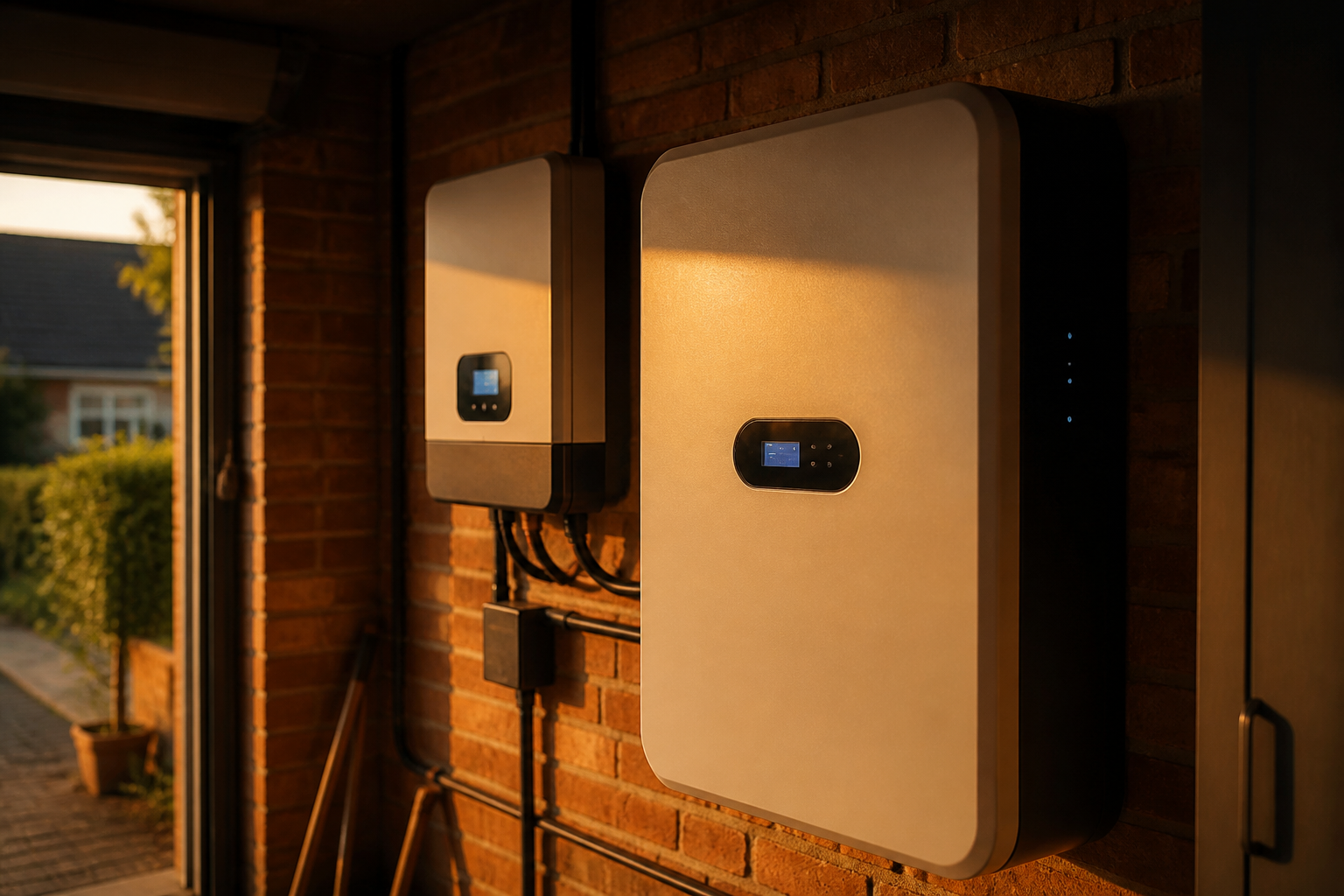
The debate generated by the TUC submission reinforces a key structural reality for UK employers and workers: government bill subsidies offer transient relief, whereas physical home energy upgrades create permanent reductions in utility exposure. A home relying entirely on grid electricity and mains gas remains vulnerable to volatile price caps regardless of temporary tax transfers.
In contrast, installing on-site clean energy technologies changes the fundamental economics of household power:
- Solar PV generation: A standard 4 kWp rooftop solar array produces roughly 3,400 kWh to 3,800 kWh of clean electricity annually in Southern England, and approximately 2,800 kWh to 3,200 kWh in Scotland, reducing daytime reliance on grid power.
- Battery storage integration: Pairing solar with a 5 kWh to 10 kWh lithium iron phosphate (LFP) home battery enables householders to capture excess daytime generation or charge from low-cost off-peak tariffs overnight.
- Electrified space heating: Replacing an aging gas boiler with a modern air source heat pump operating at a Seasonal Coefficient of Performance (SCOP) of 3.2 converts 1 kWh of electricity into 3.2 kWh of heat, delivering significant carbon and energy savings when paired with smart tariffs.
Because state policy proposals take months or years to clear parliamentary processes, home energy experts advise consumers and business leaders to focus on immediate, actionable steps to manage power consumption.
What this means for your home
For UK employees evaluating winter energy costs, political debates over tax surcharges should be treated as external policy signals rather than reliable budget planning tools. Waiting for potential government relief leaves households exposed to quarterly price cap adjustments set by Ofgem.
If you want to lower your household energy bills permanently, consider taking these practical steps:
- Audit baseline consumption: Check your smart meter data or utility portal to identify peak usage hours and evaluate background electrical loads.
- Assess rooftop solar viability: Check whether your roof orientates between east and west, is free from excessive shading, and has sufficient structural capacity for solar PV mounting compliant with MCS 012 standards.
- Explore battery storage tariffs: Look into dynamic or time-of-use tariffs that allow home batteries to charge at lower overnight rates, even during cloudier winter months.
- Review insulation and heat distribution: Ensure loft insulation meets the current standard depth of 270 mm and check whether your existing radiators can operate effectively at lower flow temperatures in preparation for a heat pump upgrade.
What this means for employers
For HR, reward and sustainability leads, the TUC's high-profile focus on household energy bills demonstrates that energy costs remain a major driver of employee stress and wage expectations. Financial wellbeing strategies that focus purely on budgeting advice or emergency loans are increasingly viewed by staff as insufficient when utility bills remain high.
Progressive employers are increasingly expanding their employee benefits packages to include practical, long-term home energy solutions alongside existing transport and pension provisions. Providing staff with accessible routes to generate their own power and insulate their properties directly tackles the root cause of domestic financial strain.
Employers looking to support their staff can introduce the Net Zero Home Scheme, a free employee benefit delivered by Net Zero Benefits alongside The Electric Car Scheme. The scheme gives employees access to member pricing on MCS-accredited installations of solar panels, heat pumps, home battery storage and plug-in solar systems, with no employer costs, no salary sacrifice and no payroll administration required.
By integrating practical home energy benefits into broader reward strategies, organisations help employees build long-term financial resilience against energy market fluctuations while making measurable progress toward corporate Scope 3 carbon reduction goals.
Frequently asked questions
What is the bank surcharge mentioned in the TUC energy proposal?
The bank surcharge is an additional tax levied on the profits of UK banking corporations. The TUC proposes reversing a 2023 reduction in this surcharge rate to raise an estimated £9bn over four years to fund reductions in domestic energy bills, as reported by BBC News on 10 September 2026.
How do home solar panels and batteries protect against energy bill spikes?
Rooftop solar panels generate electricity directly from sunlight, reducing the volume of expensive grid electricity a household needs to buy. Adding a home battery allows you to store excess daytime solar energy or charge from cheaper off-peak grid tariffs overnight, providing greater independence from standard retail energy price caps.
How can employers help staff manage rising home energy bills?
Employers can support staff by offering home energy benefits that provide access to vetted, accredited installers and competitive pricing for solar PV, battery storage and heat pumps. These measures help workers permanently reduce their household running costs without incurring administrative burdens or financial risk for the business.