EU Solar Generation Displaces €30bn in Gas Imports
SolarPower Europe reports solar generation displaced over €30bn in gas imports following global fuel market volatility.
- Written by
- Net Zero Home Scheme editorial team
- Last updated
- Topic
- solar, battery storage, energy bills

On 9 September 2026, trade outlet edie reported that solar energy generation across Europe has displaced more than €30bn in natural gas imports following wholesale market instability linked to conflict in the Middle East. Industry association SolarPower Europe published the analysis, showing that expanded photovoltaic capacity effectively buffered electricity grids against foreign gas supply shortages and steep price spikes.
The findings highlight how rapidly deployed solar generation alters the baseline economics of European power supply. While the analysis focuses on continental metrics, the UK electricity grid operates within the same interconnected European gas and power ecosystem, meaning continental solar output directly influences wholesale gas demand and regional power pricing dynamics.
What the numbers say
According to the data released by SolarPower Europe and published by edie on 9 September 2026, utility-scale and rooftop solar arrays displaced significant volumes of expensive imported natural gas during peak demand windows.
| Metric | Reported Value | Source & Date |
|---|---|---|
| Total gas import costs displaced | Exceeding €30bn | SolarPower Europe / edie, 9 September 2026 |
| Primary driver of savings | Expanded PV generation capacity | SolarPower Europe / edie, 9 September 2026 |
| Trigger event for gas price volatility | Middle East conflict and supply disruption | edie, 9 September 2026 |
The published reporting does not provide a country-by-country breakdown of individual national savings for non-EU markets such as Great Britain. Furthermore, SolarPower Europe did not publish the specific volume of gas in cubic metres or terawatt-hours represented by the €30bn figure, nor did it specify the precise historical baseline period used for comparison beyond the start of recent market disruption. Despite these analytical gaps, the directional trend is clear: higher solar generation reduces the need to run gas-fired power plants during daylight hours, lowering overall demand on European gas import infrastructure.
How gas displacement influences electricity pricing
In both the UK and continental Europe, wholesale electricity markets use a marginal pricing model. Gas-fired power stations frequently act as the marginal generator, setting the clearing price for all electricity traded in a given half-hour settlement period. When solar generation spikes across the grid, zero-marginal-cost renewable electricity displaces high-cost gas plants, driving down wholesale power costs during daytime hours.
For UK households, this system level dynamic has two main operational effects. First, daytime wholesale spot prices tend to fall, creating wide price spreads between midday solar generation peaks and evening peak demand hours, typically 16:00 to 19:00. Second, reduced reliance on imported gas helps stabilize the underlying commodity costs that form the foundation of Ofgem's quarterly domestic energy price cap.
However, grid scale savings do not instantly translate into lower fixed retail tariffs for consumers. Domestic electricity rates reflect network distribution fees, policy levies, supplier margins, and hedging costs alongside wholesale energy prices. Consequently, while €30bn in avoided gas imports prevents sharp upward spikes in energy bills, individual households benefit far more directly when they generate and consume their own solar power locally.
Frequently asked questions
How does European solar output affect UK household energy bills?
The UK electricity market remains linked to continental Europe through gas import infrastructure and subsea interconnectors. When high solar output across Europe lowers total demand for liquid natural gas and pipeline supplies, wholesale gas prices stabilize. Because gas-fired generation sets UK power prices for most settlement periods, lower wholesale gas costs help suppress steep rises in Ofgem energy price cap calculations.
Does high solar generation make home battery storage more valuable?
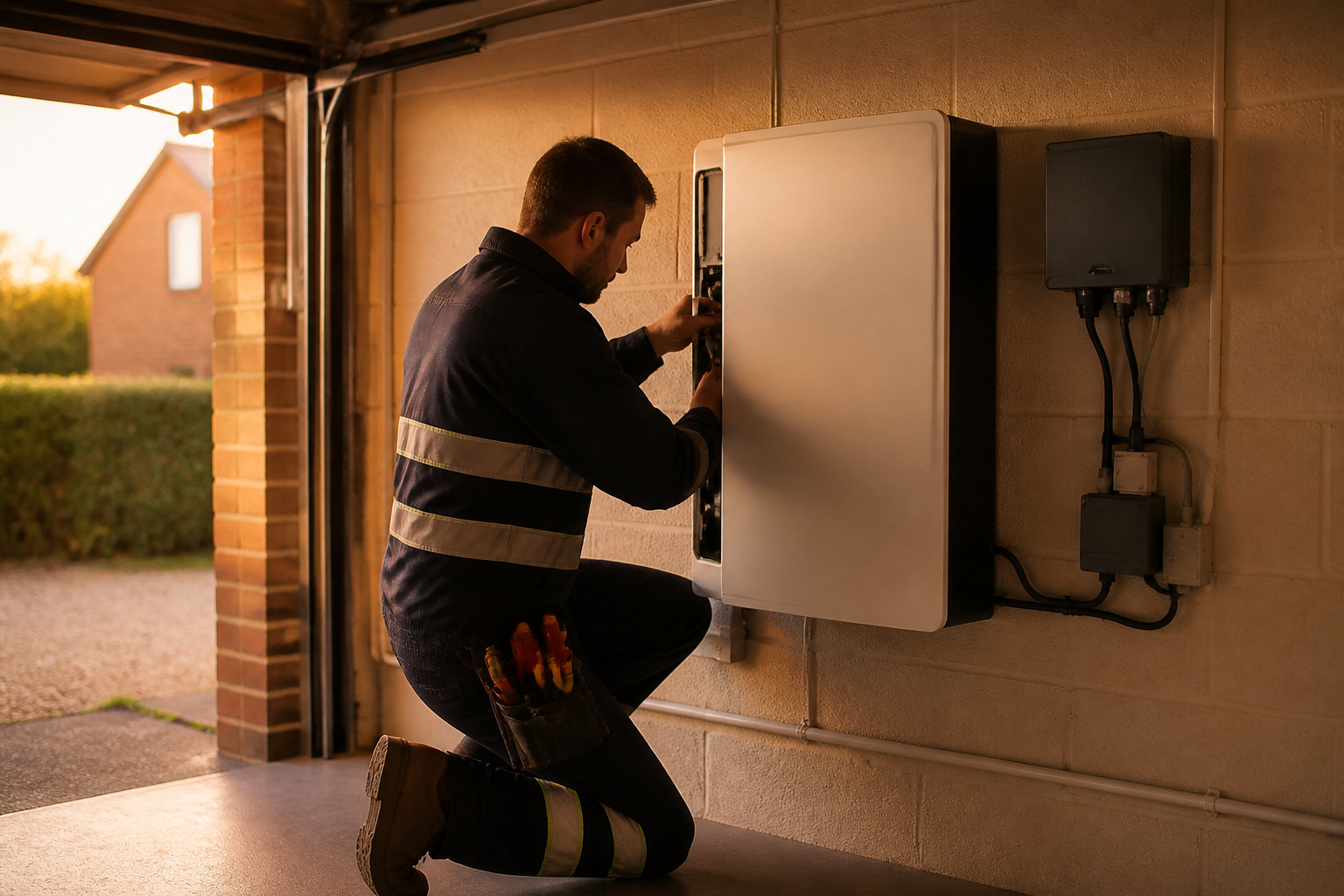
Yes. As daytime solar generation expands across Great Britain and Europe, midday wholesale electricity prices frequently fall while evening peak prices remain elevated. Home battery storage systems allow householders to store excess generation from rooftop panels or charge from low-cost off-peak tariffs, discharging that energy between 16:00 and 19:00 to avoid high grid rates.
Will wholesale gas market volatility push up solar installation lead times?
Spikes in wholesale gas and petrol costs often trigger sudden surges in consumer demand for renewable home retrofits. During past energy cost increases, UK solar installer lead times extended from typical two-to-four-week windows up to eight to twelve weeks. Currently, accredited installers maintain steady stock levels, but prospective buyers should confirm equipment availability and DNO grid connection timescales, such as G98 or G99 applications, before placing orders.
What this means for your home
For a UK employee evaluating home clean energy upgrades in 2026, the ongoing volatility in global gas markets reinforces the financial case for self-generation and storage.
- Evaluate system sizing: A typical 4 kWp rooftop solar PV array in England, Scotland or Wales generates roughly 3,400 kWh to 3,800 kWh of clean electricity annually. Sizing the array to maximize roof space rather than just meeting current baseload ensures long-term protection against fuel price fluctuations.
- Pair PV with battery storage: Adding a 5 kWh to 10 kWh lithium iron phosphate home battery captures self-generated daytime energy that would otherwise be exported at lower Smart Export Guarantee rates. Stored energy can then power high-draw appliances or heat pump runs during evening peak periods.
- Check installer credentials: Ensure your installer holds active Microgeneration Certification Scheme accreditation and registration with a consumer code such as RECC or HIES. Electrical work must comply with BS 7671 standards and be completed by a NICEIC or NAPIT registered electrician.
- Review heat pump integration: Pairing a heat pump with rooftop solar and battery storage creates a compound hedge against gas price volatility. High-efficiency monobloc heat pumps operating at a Seasonal Coefficient of Performance of 3.8 produce nearly 4 kWh of heat for every 1 kWh of electricity consumed.
What this means for employers
Volatile fossil fuel markets directly impact household finances, making energy costs a dominant concern for working families across the UK. When wholesale gas prices fluctuate due to geopolitical events, employee demand for practical, long-term financial wellbeing benefits increases significantly.
Reward and HR leaders looking to support staff without adding operational overhead or salary sacrifice complexities can offer direct access to domestic energy retrofits. The Net Zero Home Scheme provides employees with member pricing on accredited solar PV, home battery storage, heat pumps and plug-in solar installations across England, Scotland and Wales, operating at zero cost to the employer and requiring no payroll deductions.