Pre-Budget Clean Energy Signals Set New Timelines for UK Homes
HM Treasury and climate campaigners set out domestic energy priorities ahead of the Budget, highlighting key timelines for heat pumps, solar PV and battery storage.
- Written by
- Net Zero Home Scheme editorial team
- Last updated
- Topic
- policy, heat pumps, solar

HM Treasury unveiled a pre-Budget package of household financial measures on 26 October 2026, establishing the framework for domestic energy support ahead of the official statement on 29 October 2026, as reported by GOV.UK on 26 October 2026. Simultaneously, climate and energy policy groups issued formal representations to the government on 27 October 2026, urging ministers to protect capital funding for low-carbon heating and accelerate grid connection rules for domestic solar and storage, according to reporting by The Guardian on 27 October 2026.
These combined statements highlight crucial operational deadlines for householders, accredited installers, and corporate reward leaders planning clean energy investments. The following five-stage walk-through sets out how these announcements affect installation choices, financial payback periods, and workplace benefit planning.
1. Understanding the 26 October pre-Budget energy policy signals
The HM Treasury announcement on 26 October 2026 focused on immediate cost of living pressures, setting the stage for structural decisions on green grants and utility bill levies. As confirmed in the GOV.UK report on 26 October 2026, pre-Budget measures aim to create breathing space for working households, while environmental groups highlighted in The Guardian on 27 October 2026 stressed that long-term stability requires maintaining existing grant commitments for domestic heat pumps and rooftop solar installations.
For UK households, these policy signals confirm that current incentive structures remain operational in the immediate term, but regulatory adjustments around grid access and building performance standards are expected to follow the central fiscal announcement.
| Policy Area | Pre-Budget Status | Target Audience | Key Operational Impact |
|---|---|---|---|
| Heat Pump Funding | Existing Boiler Upgrade Scheme framework active | Homeowners in England & Wales | £7,500 capital grant remains available via accredited installers |
| Solar & Battery VAT | 0% VAT rate active until April 2027 | Domestic retrofits across Great Britain | Zero-rate tax applies to hardware and installation labor |
| Smart Grid Rules | Consultation on expedited DNO connections | System designers and MCS installers | Streamlined G98 and G99 notification rules under review |
| Building Standards | Future Homes Standard transition pending | Developers and retrofit coordinators | Tightened fabric efficiency and low-carbon heat mandates |
2. Evaluating how grant and tariff rules shape household payback times
Financial payback periods for domestic clean energy upgrades depend heavily on how policy frameworks interact with retail energy prices. Under current rules, the £7,500 grant delivered through the Boiler Upgrade Scheme reduces the upfront cost of an air-source heat pump, bringing capital outlay close to parity with a high-specification gas boiler replacement in many properties.
When evaluating a combined solar PV and battery storage system, payback calculations hinge on self-consumption rates and export tariffs. A typical 4 kWp rooftop solar array coupled with a 5 kWh battery allows a household to retain between 70% and 80% of generated power on-site, minimizing grid imports during peak tariff hours. Households should review system sizing carefully, as over-sizing arrays without adequate storage capacity can lengthen the capital recovery period if export compensation rates fluctuate.
3. Reviewing installation processes and grid notification rules
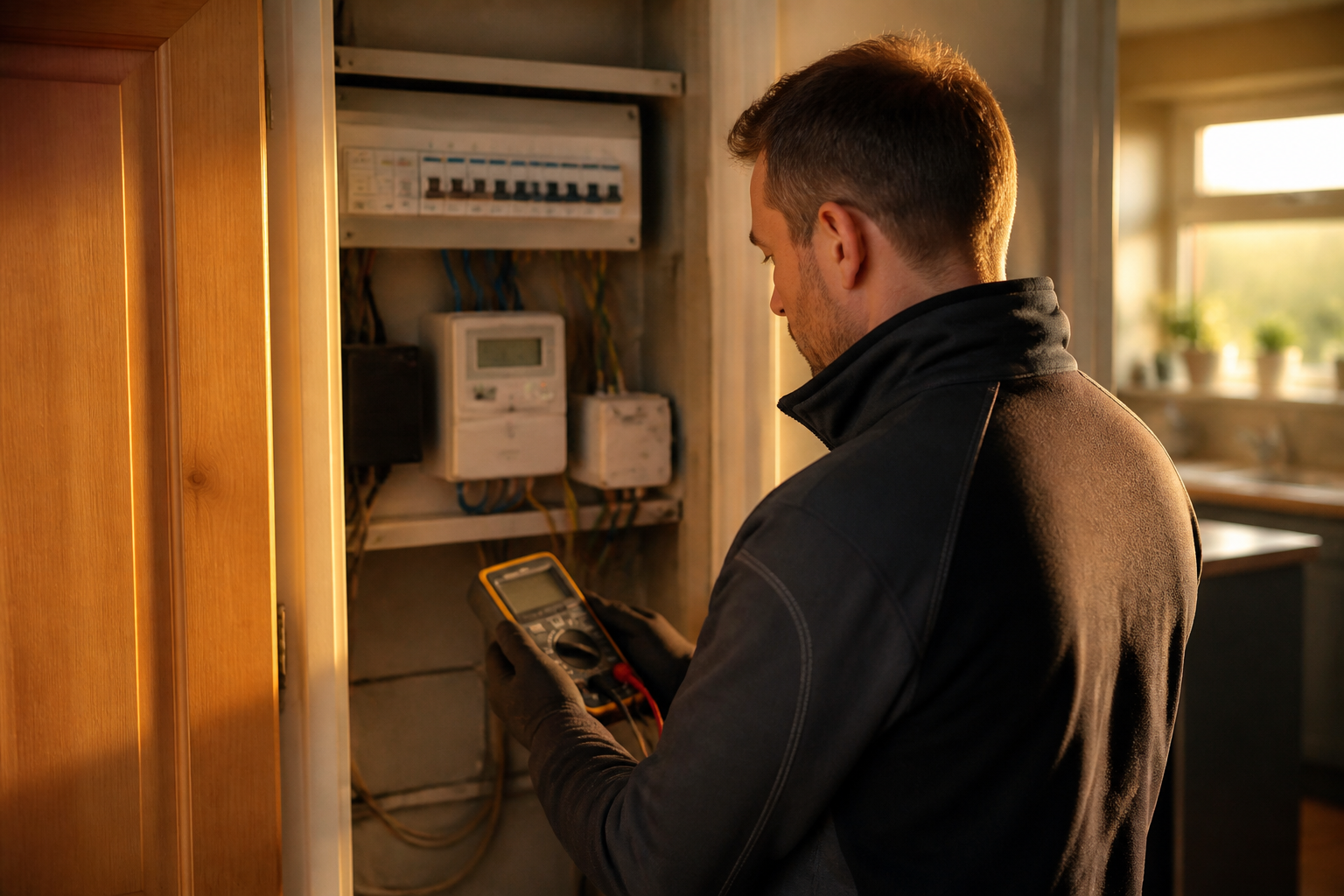
Installing home generation or clean heating equipment requires strict adherence to technical standards and network rules. The process follows a structured sequence from initial assessment through to grid notification:
- Technical Site Survey: An MCS-certified installer conducts a heat loss calculation to BS EN 12831 standards for heat pumps, or a structural and shading analysis for solar PV arrays.
- Distribution Network Operator (DNO) Approval: Systems under 3.68 kW per phase fall under G98 rules, requiring simple notification within 28 days of commissioning. Larger arrays or heavy heat pump loads require prior G99 approval from the regional DNO, which can take between four and eight weeks.
- Hardware Installation and Wiring: Electrical work must comply with BS 7671 (IET Wiring Regulations), executed by qualified electricians holding NICEIC or equivalent accreditation.
- Commissioning and Certification: The installer submits compliance details to MCS and TrustMark, issuing the householder with MCS certificates required for export tariff eligibility and warranty validation.
4. Practical steps UK households should watch for and act on
Households planning energy retrofits over the next six to twelve months should monitor several technical and financial variables before signing contracts:
- Heat Pump Sizing and Radiators: Ensure the installer specifies low-temperature flow rates (35°C to 45°C) to achieve a Seasonal Coefficient of Performance (SCOP) above 3.8. Oversized radiators or underfloor loops may be required to maintain comfortable indoor temperatures during cold snaps.
- Solar with Battery Timing: If considering rooftop PV, evaluate whether adding a home battery or a plug-in solar kit meets your daily consumption profile. Plug-in solar systems offer lower entry costs but must comply with G98 notification rules and dedicated socket safety guidelines.
- Installer Accreditations: Confirm that your chosen contractor holds valid MCS certification and membership in a consumer protection code such as RECC or HIES. This is mandatory for accessing government grant funding and securing formal grid connection certificates.
5. Strategic actions for HR and reward leaders
As public discussion around utility bills and pre-Budget policy intensifies, workforce demand for practical assistance with home energy expenses continues to grow. Employees face persistent financial pressure from routine energy costs, making utility-reducing benefits an increasingly attractive part of total reward strategies.
Employers seeking to support staff without expanding payroll costs or managing complex administration can introduce dedicated benefit frameworks. Through the Net Zero Home Scheme, employers can give staff access to member pricing on MCS-accredited solar PV, battery storage, and heat pump installations without any cost to the business, salary sacrifice, or payroll adjustments. Operated by the team behind The Electric Car Scheme and The Charge Scheme, the platform helps employees reduce domestic energy bills safely through vetted, accredited installation networks.
Frequently asked questions
Will the upcoming Budget change existing heat pump grants immediately?
Existing grant schemes such as the Boiler Upgrade Scheme operate under established statutory frameworks. Any proposed changes announced in a national Budget typically undergo formal consultation before taking effect, meaning existing grant applications submitted through accredited MCS installers remain valid under current rules.
Does adding a home battery shorten the payback period of solar panels?
Adding a battery increases total upfront installation costs but significantly increases self-consumption of generated electricity, allowing households to avoid buying expensive peak-rate grid electricity. Payback periods depend on your daily household consumption pattern, battery round-trip efficiency, and the differential between your import and export electricity rates.
Can plug-in solar panels be installed without grid approval?
All grid-connected generation equipment in Great Britain, including plug-in solar kits, must comply with Distribution Network Operator rules under Engineering Recommendation G98. Installers or householders must notify the local DNO within 28 days of connecting the equipment to ensure grid safety and compliance.