Retrofitting Loft Insulation: UK Guide to 300mm Upgrades
A step-by-step guide to upgrading UK loft insulation to 300mm: physical safety checks, material costs, TrustMark accreditations and 2027 VAT rules.
- Written by
- Net Zero Home Scheme editorial team
- Last updated
- Topic
- insulation, energy efficiency, energy bills
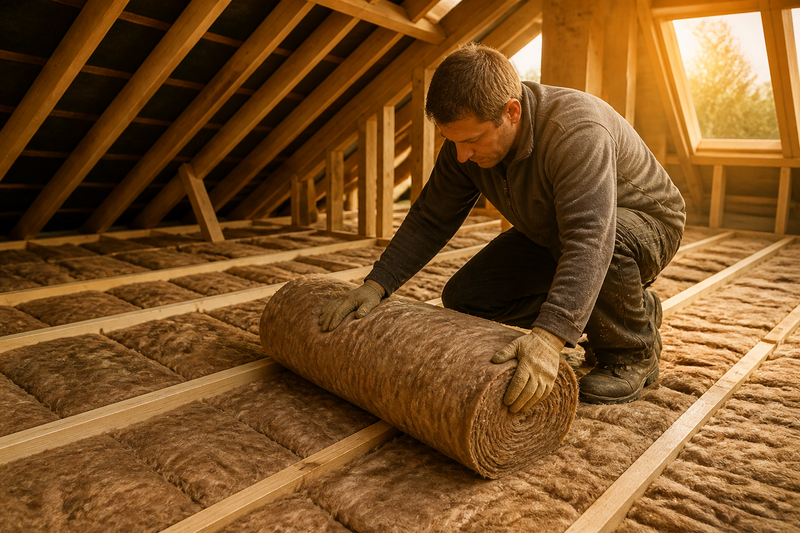
Many UK householders assume that having some loft insulation installed during the 1990s or early 2000s means their roof space is already fully energy efficient. In reality, older installations typically provide only 100mm of cover, which falls well short of modern thermal performance standards and allows up to 25% of a home's heating energy to escape straight through the roof ceiling. To make an older property retain warmth effectively and lower winter gas consumption, topping up that existing thermal layer to the current recommended 300mm depth is one of the most practical home improvements available.
How building codes evolved from 25mm to 300mm mineral wool
Over the past five decades, recommended loft insulation depths in the UK have increased dramatically as building regulations responded to rising fuel costs and climate standards. In the 1970s, standard building practice specified just 25mm of glass mineral wool. By 1990, building codes raised this requirement to 100mm, and by 2002, recommendations reached 200mm.
Today, statutory building guidelines set out in Approved Document L of the Building Regulations target a minimum depth of 270mm to 300mm for cold loft spaces. According to published figures from the Energy Saving Trust, insulating an uninsulated loft in a typical mid-terrace house in England to 270mm of glass mineral wool can save up to £220 per year on energy bills. Even topping up an existing 100mm layer to 300mm typically saves £40 to £50 annually, depending on your primary heating fuel and tariff rate.
A cross-parliamentary report published on 16 November 2026 highlighted that public confidence in wider net zero goals relies heavily on delivering immediate energy bill reductions for households. Straightforward insulation fabric upgrades represent one of the fastest ways to achieve those immediate bill reductions without requiring complex electrical retrofits.
What to check before adding mineral wool to a cold roof
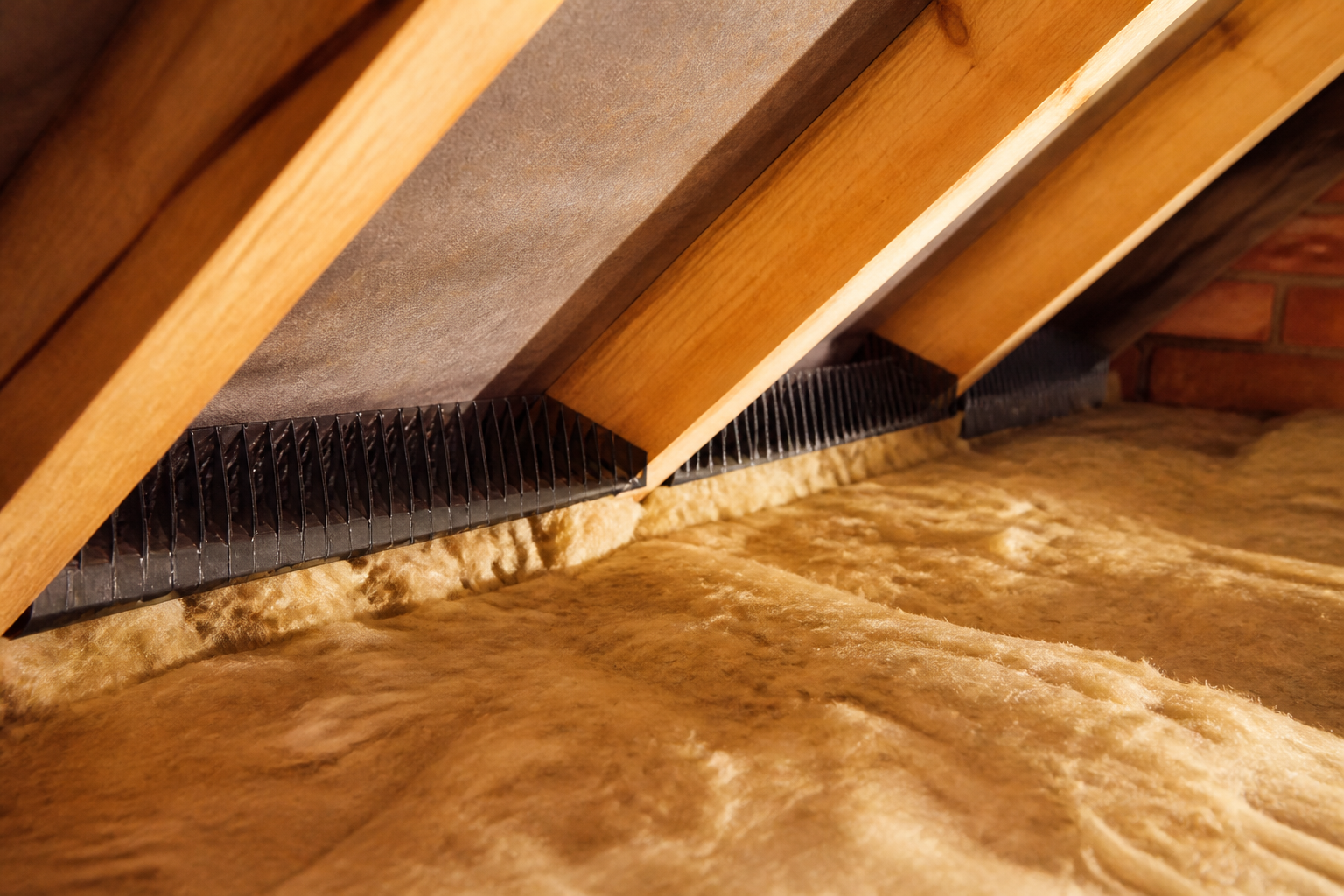
Before placing fresh rolls of insulation over existing ceiling joists, a thorough physical inspection of the loft space is essential. Adding deep insulation changes the thermal balance of your roof cavity, which can create unexpected condensation or safety hazards if specific structural conditions are ignored.
- Eaves ventilation: Soffit and eaves vents must remain entirely clear. Pushing mineral wool tightly into the narrow corners where the roof meets the wall blocks airflow, trapping humid air from living areas below and encouraging timber rot.
- Recessed downlights: Standard halogen or LED downlights penetrating the top-floor ceiling generate heat and create fire risks if covered directly by insulation rolls. Installers must fit BS EN 60598-2-2 compliant downlight covers over every fixture before laying materials.
- Electrical cables: Heavy-duty electrical wiring supplying electric showers or cooker circuits must be lifted clear of the insulation layer. Leaving power cables buried beneath 300mm of thermal blanket reduces their heat dissipation capacity, requiring circuit derating.
- Roof timber condition: Existing leaks, missing roof tiles or active damp must be repaired before adding fresh insulation. Wet mineral wool loses its thermal resistance completely and accelerates structural timber decay.
- Water tanks and pipework: Because 300mm of loft insulation stops warmth from entering the roof space from below, the loft temperature will drop during cold weather. Any cold water tanks and feed pipes located in the loft must be fitted with independent foam insulation jackets to prevent winter freezing.
Key inspection criteria, installer standards and typical costs
When planning a top-up installation, selecting the correct material and verifying installer credentials ensures long-term performance and compliance with UK building standards.
| Material Option | Typical Material Cost | Installed Cost Range | Key Performance & Accreditation | Realistic Timeline |
|---|---|---|---|---|
| Glass Mineral Wool | £6 to £10 per m² | £500 to £900 (100m² loft) | Manufactured to BS EN 13162; PAS 2030 / TrustMark certified installer | 1 day installation |
| Rock Mineral Wool | £8 to £14 per m² | £650 to £1,100 (100m² loft) | Non-combustible A1 fire rating; installed to PAS 2030 standards | 1 day installation |
| Sheep's Wool / Natural Fibre | £18 to £30 per m² | £1,200 to £2,200 (100m² loft) | Breathable natural moisture control; installed by specialist contractor | 1 to 2 days installation |
| PIR Rigid Board | £25 to £45 per m² | £1,800 to £3,500 (100m² loft) | High performance per millimetre; required for rafter level warm roofs | 2 to 3 days installation |
For standard cold roof lofts where the floor is insulated rather than the rafters, glass or rock mineral wool laid in two cross-hatched layers provides the most cost-effective result. The first layer is laid between the joists, typically 100mm deep, and the second layer is laid at right angles across the joists to eliminate thermal bridging.
What changes for funding and tax rules over the coming months
Speaking at COP31 on 17 November 2026, Energy Security and Net Zero Secretary Miatta Fahnbulleh emphasized that voters expect national climate strategies to deliver practical improvements on their doorstep, specifically warmer homes and lower living costs. Delivering on these expectations relies on maintaining clear incentives for domestic energy upgrades.
Householders planning loft insulation should pay close attention to the current tax environment. The temporary 0% VAT rate on energy-saving materials, introduced by HM Treasury in April 2022, applies to professionally installed loft insulation until 31 March 2027. Homeowners who arrange installation before this deadline benefit from zero VAT on both labour and materials. From April 2027 onward, standard VAT rates are scheduled to apply, increasing total installation costs by up to 20%.
Grant funding remains available through the Great British Insulation Scheme and the Warm Homes Local Grant. These schemes target households in council tax bands A to D with an Energy Performance Certificate rating of D or lower. For householders paying out of pocket, selecting an installer registered with TrustMark and the National Insulation Association ensures that work is audited and meets building regulations.
"Topping up loft insulation is often the single most cost-effective step a household can take before upgrading their heating system. When homes hold heat efficiently, lower boiler flow temperatures or heat pumps can maintain comfortable indoor temperatures with significantly lower running costs."
Gaurav Ahluwalia, General Manager, The Net Zero Home Scheme
How lower heat demand shapes long term home upgrades
Reducing a property's overall heat loss through a complete loft insulation upgrade changes how the building performs throughout the heating season. Lowering space heating demand means a home cools down far more slowly when the heating turns off, reducing the peak heat load required to maintain a comfortable indoor environment.
This reduction in peak heat demand is particularly valuable when planning future heating upgrades. Lower heat loss allows householders to consider modern low-temperature systems, such as swapping your boiler for a heat pump, without needing to replace every radiator in the house with an oversized model. Lowering basic demand first ensures that future clean energy technologies run at maximum efficiency.
Employers looking to support staff with home living costs can introduce employee pricing through The Net Zero Home Scheme. The benefit is entirely free for organizations to offer and involves zero payroll administration or salary sacrifice, giving employees access to accredited installers and member pricing when undertaking home energy improvements.
By addressing roof heat loss today, UK homeowners protect their properties against rising winter energy costs, lock in available tax relief, and prepare their living spaces for future low-carbon energy standards.