Heat Pump Refrigerants Explained: R290 vs R32 Physics and Rules
Comparing R290 propane and R32 heat pump refrigerants on flow temperatures, safety clearances, global warming potential, and efficiency.
- Written by
- Net Zero Home Scheme editorial team
- Last updated
- Topic
- heat pumps, energy efficiency, policy
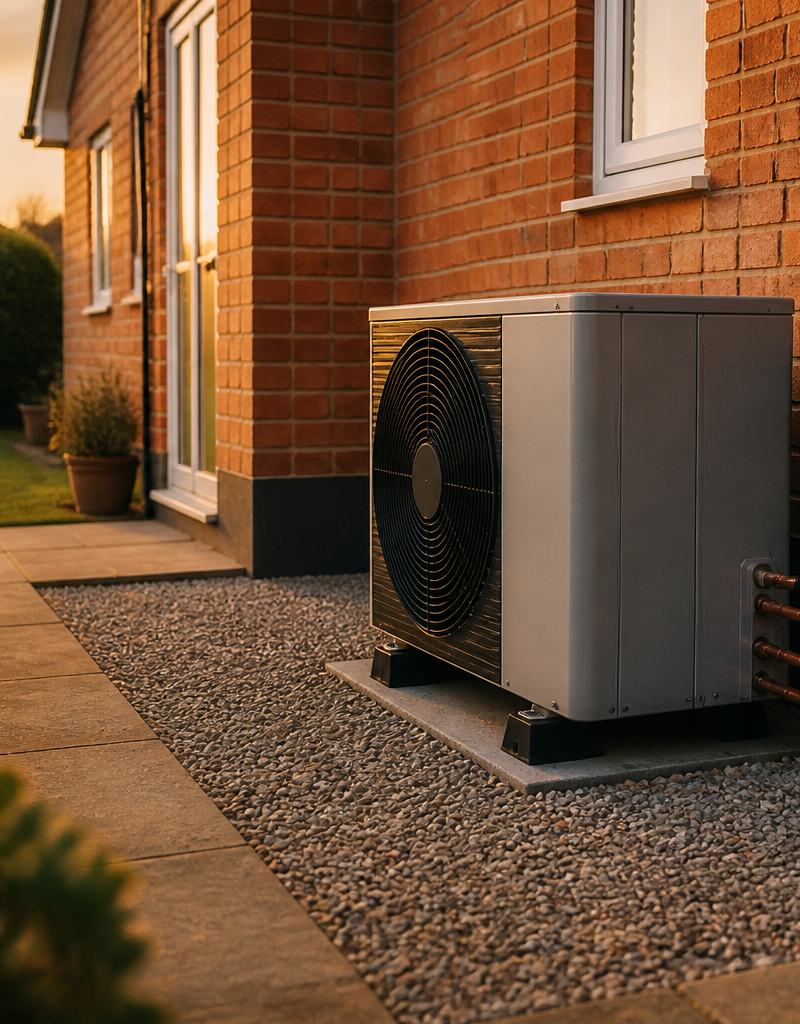
Air source heat pumps do not create heat through combustion. Instead, they extract low-grade thermal energy from ambient outside air and raise its temperature using a vapour-compression refrigeration cycle. The fluid driving this process is the refrigerant. For years, the residential heating sector relied heavily on fluorinated gases (F-gases) such as R410A and R32. Today, manufacturers are increasingly transitioning to R290, which is high-purity propane.
Understanding the choice between R32 and R290 involves examining chemical physics, thermodynamic efficiency, strict safety regulations, and practical installation constraints in UK homes.
How refrigerants transport heat inside a heat pump
To move heat from cold outdoor air into a warm home, a heat pump continuously alters the pressure and boiling point of its refrigerant fluid. Outdoor air passes over an evaporator coil containing cold liquid refrigerant. Because the refrigerant boils at very low temperatures, it absorbs thermal energy from the air and evaporates into a gas.
A compressor then squashes this gaseous refrigerant, sharply raising its pressure and temperature. The hot, pressurized gas passes into an internal heat exchanger (the condenser), where it transfers heat into the central heating water circuit. As it transfers thermal energy, the refrigerant cools, condenses back into a liquid, passes through an expansion valve to drop its pressure, and repeats the cycle.
The thermodynamic properties of the refrigerant dictate how much pressure the compressor must apply, how efficiently thermal energy is transferred, and what maximum hot water flow temperature the system can achieve.
The thermodynamic difference between R32 and R290
While R32 (difluoromethane) has been the industry standard for modern heat pumps, R290 (propane) offers distinct thermodynamic advantages due to its chemical structure.
R290 possesses higher critical temperatures and favorable latent heat evaporation characteristics. In practical terms, this allows an R290 heat pump to deliver flow temperatures up to 70°C or 75°C without overburdening the compressor or requiring auxiliary electric immersion heaters. In contrast, standard R32 systems typically operate most efficiently at flow temperatures between 35°C and 55°C, struggling to produce higher water temperatures without a steep drop in efficiency or excessive mechanical stress.
Data published by the Energy Saving Trust notes that lower flow temperatures produce the highest seasonal coefficient of performance (SCOP). However, in older UK housing stock fitted with standard-sized radiators, the ability of R290 units to achieve higher flow temperatures without a collapse in thermodynamic efficiency allows for straightforward replacements of gas boilers without requiring widespread radiator upgrades.
Environmental impact and F-gas regulations
Refrigerants are rated by Global Warming Potential (GWP), which measures how much heat a greenhouse gas traps in the atmosphere relative to carbon dioxide (CO2) over a 100-year period. CO2 has a baseline GWP of 1.
Older heat pumps used R410A, which has a GWP of 2,088. R32 represents a significant step forward with a GWP of 675. However, R290 is a natural refrigerant with a GWP of just 3.
Under UK environmental regulations administered by the Environment Agency following the European Union F-gas phase-down framework, high-GWP refrigerants are subject to progressive production quotas and phase-outs. The focus on reducing fluorinated fluorocarbons (hydrofluorocarbons or HFCs) means that lower-GWP natural refrigerants like R290 are quickly becoming the standard for residential heating manufacturers.
Safety rules and clearance requirements for R290

The fundamental trade-off between R32 and R290 relates to flammability. Refrigerants are classified under standard BS EN 378 by their toxicity and flammability profile:
- R32 is classified as A2L, meaning low toxicity and mildly flammable.
- R290 is classified as A3, meaning low toxicity but highly flammable.
Because R290 is propane, safety rules governed by the Health and Safety Executive (HSE) and Microgeneration Certification Scheme (MCS) installation standards require specific precautions. Most residential R290 heat pumps are designed as monobloc units. In a monobloc design, the entire refrigerant circuit is sealed inside the outdoor unit, and only water pipes run into the house. This design eliminates the risk of propane gas leaking inside the living space.
Furthermore, BS EN 378 mandates clear safety zones around outdoor R290 units. Standard rules require that the outdoor heat pump unit must be located away from potential ignition sources, air vents, openable windows, doors, and ground-level drainage points where leaking propane (which is denser than air) could pool.
| Technical Feature | R32 Refrigerant | R290 (Propane) Refrigerant |
|---|---|---|
| Safety Classification | A2L (Mildly Flammable) | A3 (Highly Flammable) |
| Global Warming Potential (GWP) | 675 | 3 |
| Maximum Flow Temperature | 55°C to 60°C | 70°C to 75°C |
| Optimal Radiator Compatibility | Large or low-temperature radiators | Standard existing radiator circuits |
| System Architecture | Monobloc or Split systems | Predominantly Monobloc |
| Outdoor Clearance Requirements | Moderate clearance required | Strict safety buffer from drains and windows |
Practical trade-offs for UK homeowners
While R290 units offer lower environmental impact and higher potential flow temperatures, they are not automatically the correct choice for every property.
- Siting limitations in compact spaces: In high-density housing or terraced homes with tiny gardens, meeting the required safety clearance zones for an R290 unit around property lines, drains, and low windows can be difficult. An R32 monobloc or split system may be easier to sit within tight spatial boundaries.
- Weight and casing dimensions: Because R290 units often incorporate enhanced spark-proofing, explosion-proof electrical enclosures, and larger outdoor heat exchangers to optimize performance, the outdoor physical casing can be bulkier and heavier than an equivalent R32 unit.
- Cost and availability: R32 heat pumps have mature supply chains and broad installer familiarity across the UK. R290 models, while expanding rapidly, can carry a slight premium in equipment cost.
Choosing between these technologies depends on space, heat loss calculations, and existing heating infrastructure. Homeowners seeking guidance on technology choices can access accredited installer networks and member pricing through the Net Zero Home Scheme.
What this means for you
When evaluating a heat pump installation for your home, consider these actionable steps:
- Check your outdoor space: Measure the clear distance available around your proposed outdoor unit location. Ensure you have at least 1 metre of unobstructed ground clear of unsealed drains, air vents, or low windows if opting for R290.
- Evaluate existing radiators: If you wish to keep your existing compact radiators, an R290 system capable of higher flow temperatures may save on indoor emitter upgrade costs.
- Verify installer certification: Confirm that your installer holds specific MCS training for A3 flammable refrigerants if you select an R290 unit.
- Review long-term compliance: Opting for an R290 unit future-proofs your home against accelerating legal restrictions on HFC refrigerants.
Frequently asked questions
Is an R290 propane heat pump safe to have outside my house?
Yes. R290 heat pumps are factory-sealed monobloc units tested under rigorous safety standards such as BS EN 378. Because the gas is contained entirely outside the dwelling in sealed pipework, and installed with clear space away from ignition sources or drains, the operational risk is minimal.
Can R290 operate as efficiently as gas boilers at high temperatures?
An R290 heat pump can reach hot water flow temperatures of up to 75°C, matching traditional gas boilers. However, running any heat pump at maximum temperature increases electrical consumption. Lowering flow temperatures through weather compensation controls always improves seasonal efficiency, regardless of the refrigerant used.
Will R32 heat pumps be banned in the UK?
Under current environmental phase-down timelines, high-GWP refrigerants are being restricted gradually. While R32 has a lower GWP than older gases like R410A, regulations continue to favor natural refrigerants. R32 units installed today remain fully legal to operate and service throughout their normal working lifespan.
Sources
- Air Source Heat Pump Guide, Energy Saving Trust
- Standards and Quality Assurance for Renewables, Microgeneration Certification Scheme
- Chemical Safety and Refrigerants, Health and Safety Executive