Plug-In Solar Kits for UK Homes: Regulations, Setup and Costs
A practical UK guide to plug-in solar kits, covering mounting checks, G98 grid rules, BS 7671 wiring safety, costs and realistic energy generation.
- Written by
- Net Zero Home Scheme editorial team
- Last updated
- Topic
- solar, home energy, energy efficiency
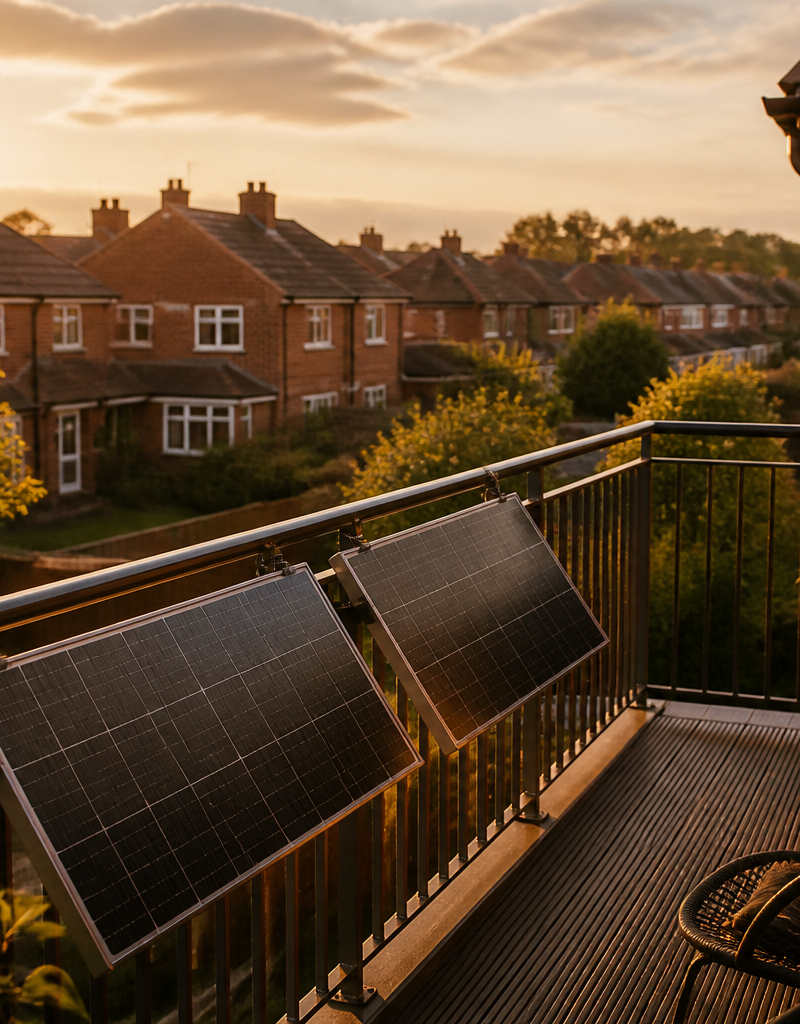
Plug-in solar kits, often described as balcony solar or plug-and-play solar, allow householders to generate clean electricity without installing full roof-mounted arrays. These compact systems typically consist of one or two solar panels connected to a small microinverter that plugs directly into a standard household electrical circuit or a dedicated outdoor socket. While widely adopted across mainland Europe, UK householders must navigate specific wiring regulations, structural considerations and grid notification requirements before setting one up.
Whether you live in a flat with a south-facing balcony or a house with limited roof space, understanding how plug-in solar operates under UK standards will help you select the right kit, remain compliant with safety regulations and avoid common pitfalls.
How does a plug-in solar system work?
A plug-in solar system turns sunlight into direct current (DC) electricity using lightweight or rigid solar panels. The microinverter attached to the back of the panel converts this DC power into 230V alternating current (AC) electricity, synchronized with the frequency of the UK mains supply (50 Hz).
When plugged into a socket on a final ring circuit, the electricity generated flows naturally to the nearest operating electrical appliances in your home, such as fridges, broadband routers or home office equipment. This reduces the amount of power drawn from the National Grid. If your system produces more electricity than your home consumes at any given second, the surplus automatically exports back to the local grid unless paired with a small domestic battery.
Step 1: Site assessment and structural safety
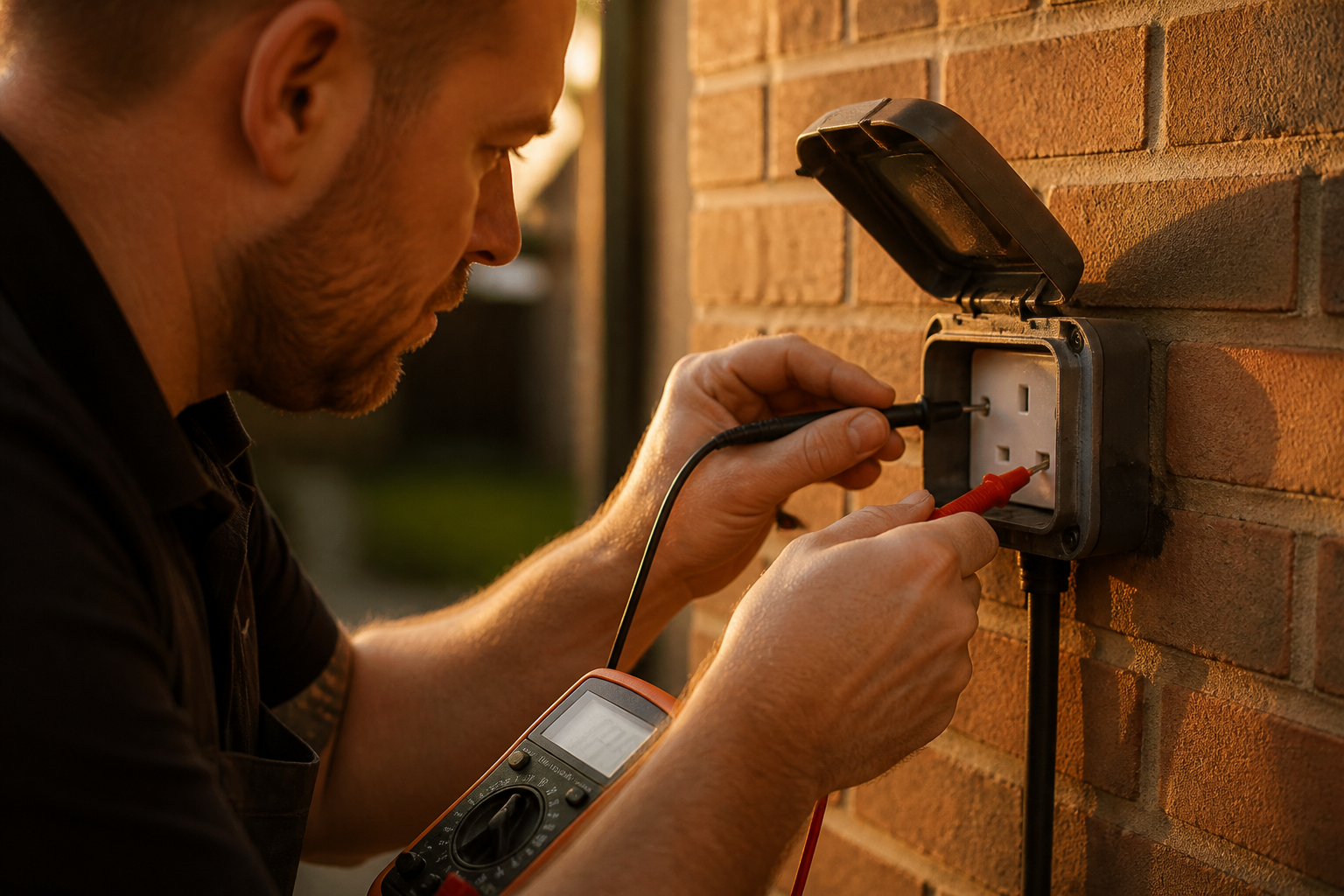
Before purchasing any equipment, evaluate your chosen installation location for sunlight exposure, shading and structural strength.
- Exposure and tilt: Panels generate maximum energy when facing south at an angle between 30 and 40 degrees. East or west orientations produce roughly 15 to 20 percent less energy overall, but yield useful power during morning and evening peaks.
- Wind loading: Balcony railings, flat garage roofs and external walls experience significant wind uplift. Ensure any mounting brackets are rated for your building height and local wind exposure.
- Structural integrity: Rigid glass solar panels weigh between 18kg and 22kg each. Flexible panels are significantly lighter (3kg to 5kg) and present lower load burdens, though they generally offer slightly lower efficiency and shorter lifespans.
When hiring tradespeople for wall or roof mounting, verify their credentials carefully. BBC News reported on 11 October 2026 that data from Citizens Advice revealed one in ten reported consumer scams involved rogue doorstep traders or dishonest home improvement work. Always demand written quotes and evidence of appropriate trade accreditation.
Step 2: UK electrical regulations and grid compliance
While plug-in kits are marketed as simple self-install appliances, operating high-output electrical generation on household circuits is subject to clear safety and grid regulations.
Microinverter standards and anti-islanding
Your microinverter must meet BS EN 62109 safety standards and feature built-in anti-islanding protection (such as DIN VDE 0126-1-1 compliance). This ensures the microinverter shuts down within milliseconds if the mains power fails, preventing dangerous feedback to engineers working on local power lines.
Wiring standards (BS 7671)
Under the IET Wiring Regulations (BS 7671), connecting generation equipment to a final ring main via a standard 13A plug requires careful consideration. Qualified electricians recommend connecting the system to an external switched fused spur or a dedicated radial circuit protected by a 30mA Residual Current Device (RCD). This prevents circuit overload if high-draw appliances operate on the same circuit.
DNO Notification (Engineering Recommendation G98)
Under UK grid rules managed by Energy Networks Association (ENA), systems generating under 16A per phase (roughly 3.68 kW) fall under Engineering Recommendation G98. You or your installer must submit a formal G98 commissioning notification to your local Distribution Network Operator (DNO) within 28 days of putting the system into service. This process is free and informs the grid operator of distributed generation on their network.
Step 3: Equipment costs and financial returns
A typical single-panel (400Wp) plug-in kit costs between £400 and £600, while a two-panel (800Wp) setup with integrated microinverter ranges from £700 to £1,100, depending on the mounting hardware and cable lengths.
In the central UK, an 800Wp setup facing south without shading generates approximately 650 kWh to 750 kWh of electricity per year. If your household consumes 80 percent of this electricity directly, annual energy bill savings typically range between £120 and £160 based on standard electricity unit rates, resulting in a typical payback period of five to seven years.
| System Component | Specifications / Requirement | Key Compliance Standard |
|---|---|---|
| Solar Panels | 400Wp to 800Wp combined capacity | IEC 61215 / IEC 61730 |
| Microinverter | Integrated anti-islanding protection | BS EN 62109 / G98 Type Tested |
| Electrical Connection | Outdoor IP66 socket or fused spur | BS 7671 (IET Wiring Regulations) |
| Grid Connection | DNO Notification within 28 days | ENA Engineering Recommendation G98 |
| Mounting Hardware | Stainless steel / anodised aluminium | Wind load certified for structure |
Step 4: Questions to ask suppliers and installers
If you buy a pre-packaged kit or hire an electrician to handle the connection, ask these key questions:
- Is the microinverter listed on the ENA Type Test Register for G98 compliance?
- Does the kit include an external IP66-rated plug or weatherproof enclosure?
- What warranties cover the hardware (typically 12 to 25 years for panels, 10 to 12 years for microinverters)?
- Does the connection require an upgrade to my outdoor consumer unit or RCD protection?
Realistic setup timeline
- Week 1: Site inspection, measuring railing or wall dimensions, and checking household socket location.
- Week 2: Purchasing G98-compliant equipment and booking a qualified electrician registered with NICEIC, NAPIT or STROMA if adding a dedicated fused spur.
- Week 3: Mechanical installation of brackets and panels, followed by electrical connection and safety testing.
- Week 4: Completing and submitting the G98 notification form to your local DNO.
What this means for you
Plug-in solar offers an accessible entry point for householders who want to generate clean electricity without committing to full roof solar arrays. By choosing G98-compliant equipment, ensuring safe RCD-protected wiring, and notifying your local DNO, you can safely lower your base electricity load.
If your employer offers the Net Zero Home Scheme, delivered by Net Zero Benefits alongside The Electric Car Scheme, you can access discounted member pricing on home energy technologies including plug-in solar, rooftop solar panels, heat pumps and battery storage without salary sacrifice or payroll deductions.
Frequently asked questions
Can renters legally install plug-in solar kits in the UK?
Renters can install plug-in solar kits provided they do not alter the landlord's property permanently. Free-standing garden mounts or non-drilling balcony brackets are suitable, but you must obtain written landlord permission before mounting anything to external walls or changing electrical spur points.
Do plug-in solar kits generate electricity during a power cut?
No. UK grid safety standards require microinverters to shut down automatically when grid voltage drops. This anti-islanding protection prevents electricity from flowing back into external power lines while network technicians perform emergency repairs.
Do I need a smart meter to use a plug-in solar system?
While a smart meter is not mandatory to run the system, having a second-generation (SMETS2) smart meter allows you to track real-time generation and household consumption accurately. Without a smart meter, any exported power will flow to the grid without earning export payments.
Sources
- Roofing scammers con homeowners out of thousands of pounds, BBC News
- Engineering Recommendation G98, Energy Networks Association