NAO Warns Grid Upgrade Delays Threaten Higher Energy Bills
The National Audit Office warns that delays to a £70bn grid upgrade programme could force UK household energy bills higher.
- Written by
- Net Zero Home Scheme editorial team
- Last updated
- Topic
- energy bills, policy, solar
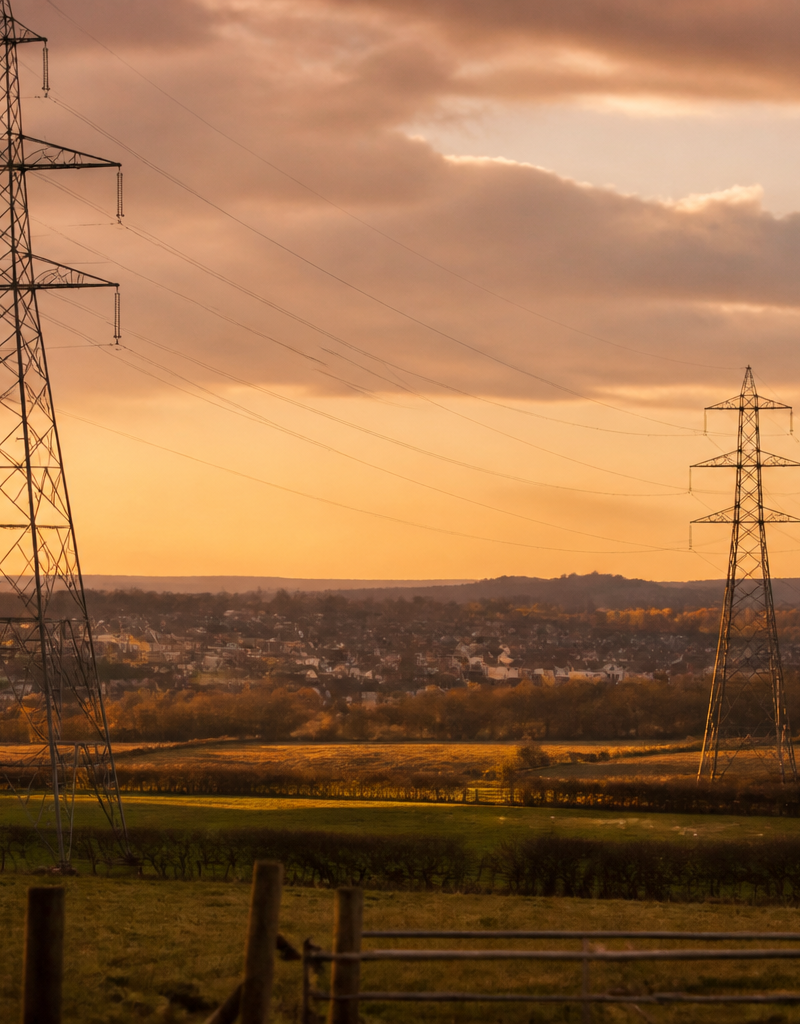
On 11 September 2026, The Guardian reported that the UK National Audit Office (NAO) issued a stark warning regarding the country's electricity transmission network. The watchdog cautioned that delays to a planned £70 billion grid modernisation programme risk pushing household energy bills higher and slowing broader economic growth.
The NAO report highlights that upgrading transmission lines, substations, and regional network connections is essential to connect new renewable energy projects and handle growing demand from heat pumps and electric vehicles. Without rapid infrastructure deployment, constraint payments paid to generators turned off during grid bottlenecks will continue to inflate consumer electricity bills.
What the numbers say

According to The Guardian's reporting on 11 September 2026, the key metrics surrounding the NAO investigation include:
- £70 billion: The total estimated capital expenditure required across Great Britain for electricity transmission network upgrades.
- Grid constraint costs: Hundreds of millions of pounds spent annually compensating wind farm operators when local networks cannot transmit generated power to areas of demand.
- Household bill pressure: Delays in expanding high-voltage transmission lines threaten to raise domestic electricity unit rates, as network charges and system balancing costs are passed through Ofgem's energy price cap.
- Commercial connection backlogs: Renewable generation projects face waiting times of up to 10 to 15 years in some regions to secure grid connection agreements.
Where reporting on exact figures remains incomplete, the NAO noted that final consumer bill impacts depend heavily on construction velocity, interest rates for network operators, and regulatory approval timescales set by Ofgem.
| Grid Challenge Metric | NAO Report Detail (11 September 2026) | Impact on Households |
|---|---|---|
| Total Infrastructure Investment | £70 billion modernisation programme | Recovered through network charges on domestic energy bills |
| Constraint Payment Costs | Paid to idle renewable generators during grid bottlenecks | Adds variable overhead to standing charges and unit rates |
| Connection Waiting Times | Up to 10 to 15 years for new commercial generation projects | Delays cheap renewable supply reaching the wholesale market |
| Demand Growth Vectors | Increased adoption of heat pumps, EV chargers, and domestic batteries | Requires local transformer and sub-station reinforcement |
Why grid infrastructure dictates household unit rates
Electricity bills in Great Britain consist of several distinct components: wholesale energy costs, network charges (often referred to as DUoS and TNUoS), policy levies, and supplier operating costs. Network charges account for approximately 15 to 20 percent of a standard domestic electricity bill, covering the construction, maintenance, and operation of high-voltage transmission lines and regional distribution grids.
When high-voltage transmission links are insufficient to carry power from offshore wind farms in Scotland or the North Sea to population centres in England and Wales, grid operators must instruct those generators to turn off. The operator then pays the generator a constraint payment and pays a fossil fuel power station closer to the demand centre to turn on. These balancing costs hit record levels in recent years and are added directly onto consumer energy bills.
For UK households, this structural bottleneck means wholesale electricity prices may fall while consumer bills remain stubbornly high due to rising grid charges. Accelerating infrastructure work is designed to reduce these operational inefficiencies over time, but the upfront capital investment must also be financed through consumer network charges over decades.
What this means for your home
If grid upgrades face continued delays, domestic electricity prices are unlikely to drop sharply in the short to medium term. For householders assessing their energy bills, reliance on grid electricity alone leaves household budgets vulnerable to fluctuating network charges.
Generate power locally with rooftop solar
Installing rooftop solar PV allows a home to produce clean electricity directly at the point of use, bypassing grid transmission charges for every kilowatt-hour consumed internally. A typical 4 kWp solar array in England or Wales generates roughly 3,400 kWh to 3,800 kWh per year, significantly reducing reliance on grid supply during daylight hours.
Store cheaper energy using domestic batteries
Pairing solar PV with a domestic battery storage system (such as a 5 kWh to 10 kWh unit) enables householders to store excess daytime solar output for evening use. Alternatively, for homes without solar, batteries can be charged overnight during off-peak hours on smart tariffs, reducing daytime grid demand when network charges are highest.
Upgrade heating with heat pump efficiency
While heat pumps run on electricity, their high efficiency offsets higher unit rates compared to direct electric heating. A heat pump with a Seasonal Coefficient of Performance (SCOP) of 3.2 delivers 3.2 kWh of heat for every 1 kWh of electricity consumed. Combined with government incentives like the £7,500 Boiler Upgrade Scheme grant in England and Wales, heat pumps offer long-term operational protection against volatile gas prices.
Check local grid connections for domestic tech
For domestic installations under 3.68 kW per phase (such as small solar arrays or standard battery inverters), installers notify the local Distribution Network Operator (DNO) post-installation under G98 rules. Larger arrays or high-power EV chargers require pre-approval under G99 rules, which can take several weeks if local transformer capacity is constrained.
What this means for employers
Rising energy bills continue to act as a significant driver of employee financial stress across the UK workforce. When infrastructure warnings like the NAO report signal persistent pressure on household utility costs, compensation and benefits leaders face growing demands for practical, non-pay support that targets household operational expenses.
Reward and HR professionals can respond to these ongoing bill pressures by offering voluntary financial wellbeing benefits focused on long-term home energy efficiency. While direct salary increases are quickly absorbed by inflation and taxation, practical benefit schemes empower employees to lower their recurring monthly bills permanently.
Employers seeking to help staff reduce exposure to grid electricity price spikes can provide access to home energy retrofits through the Net Zero Home Scheme. Delivered by Net Zero Benefits alongside The Electric Car Scheme, the UK's largest independent salary sacrifice provider, the scheme gives employees member pricing on solar panels, heat pumps, battery storage, and plug-in solar installed by MCS-accredited engineers across England, Scotland, and Wales, at zero cost to the employer and with no payroll deduction or salary sacrifice required.
Frequently asked questions
Will the grid upgrade increase my electricity bills immediately?
Network charges increase incrementally as grid operators invest capital in transmission lines and substations. However, completing upgrades reduces expensive constraint payments, which helps stabilise overall electricity rates over the long term.
Can home battery storage protect against rising grid charges?
Yes. Home batteries allow householders to store low-cost energy during off-peak windows or capture excess rooftop solar power. By reducing the amount of grid electricity drawn during peak periods, households minimise their exposure to high daytime unit rates.
Do domestic solar and heat pump installations require DNO permission?
Smaller installations under 3.68 kW per phase fall under G98 notification rules, meaning the installer informs the network operator after commissioning. Larger systems or high-capacity chargers require G99 pre-approval, which involves a brief review by the regional distribution network operator.