Why Heat Pumps Defrost in UK Winters and How It Affects Bills
Understanding how air source heat pump defrost cycles work in damp UK winter weather, their impact on electricity bills, and the key engineering choices that maintain high SCOP.
- Written by
- Net Zero Home Scheme editorial team
- Last updated
- Topic
- heat pumps, energy efficiency, home energy
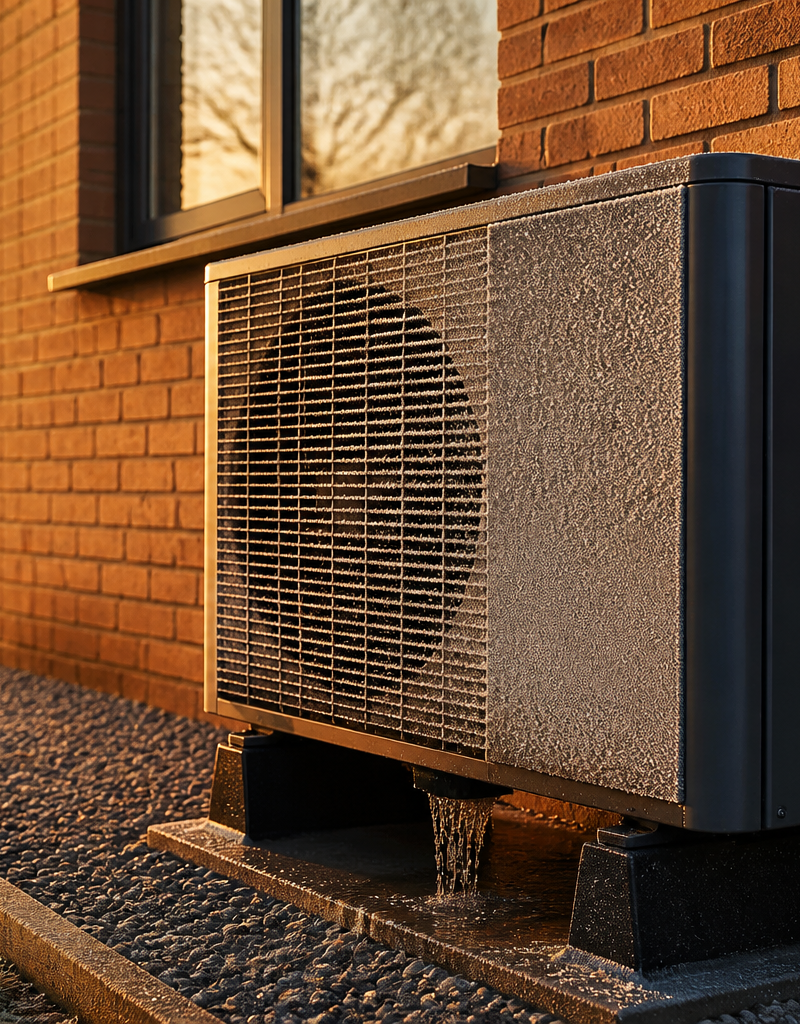
It is a damp, 3°C morning in January, and the air source heat pump outside a UK semi-detached home is working steadily to keep radiators at 40°C. Outside, white frost slowly coats the aluminium fins on the rear of the unit. Suddenly, the fan stops spinning, a quiet hiss echoes inside the cabinet, and within seconds, clean steam billows off the heat exchanger as the system melts away the icy layer.
For many householders transitioning from gas boilers, watching a heat pump freeze over and steam off during cold weather can look like a system fault. In reality, automatic defrosting is a core physical mechanism engineered into every modern air source heat pump operating in humid maritime climates like the UK. Understanding why frost forms, how defrost cycles operate, and how correct hydraulic design minimises energy losses demystifies winter performance and ensures long-term efficiency.
Why does an air source heat pump freeze up during mild British winters?
An air source heat pump freezes up in mild winter weather because its outdoor evaporator coil operates several degrees below the outside air temperature, causing moisture in humid air to condense and freeze onto the cooling fins.
When an air source heat pump extracts thermal energy from outdoor air, refrigerant circulating through the outdoor heat exchanger (the evaporator coil) must run colder than ambient air to enable heat transfer. For example, if the outside air is 4°C, the refrigerant inside the narrow aluminium fins typically operates between -2°C and 0°C.
In the UK, winter temperatures between 1°C and 7°C are frequently paired with relative humidity levels exceeding 85%. As this moisture-laden air is drawn across the sub-zero fins by the unit's fan, water vapour reaches its dew point, condenses onto the metal surfaces, and quickly freezes into ice.
This ice acts as thermal insulation, choking the air channels between the fins and restricting airflow. If left unmanaged, frost accumulation would halt air circulation entirely, forcing the compressor to consume more power while outputting less heat inside the property. Modern units rely on integrated sensors that continuously monitor coil temperature and refrigerant pressure to identify exactly when frost build-up begins to hinder thermal transfer.
How does the heat pump reverse cycle defrost process work?
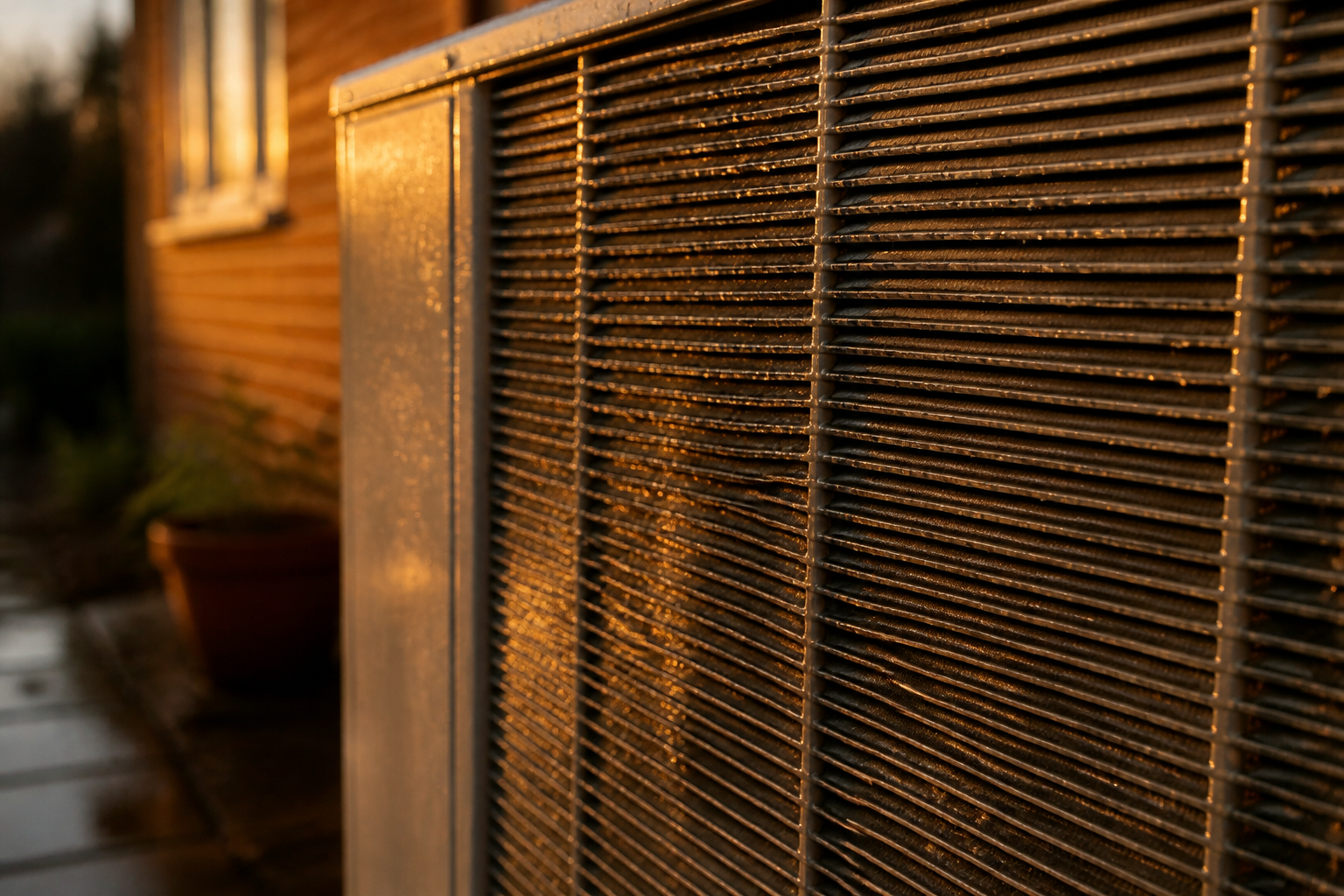
A heat pump performs a reverse cycle defrost by using a four-way valve to temporarily direct hot refrigerant gas into the outdoor heat exchanger, rapidly melting the layer of ice accumulated on the coil.
When control algorithms detect excessive ice accumulation, the unit triggers a defrost sequence. The outdoor fan shuts down immediately to stop freezing ambient air from cooling the fins, while an internal four-way reversing valve alters the direction of refrigerant flow.
In normal space-heating mode, hot discharge gas from the compressor travels to the indoor plate heat exchanger to warm central heating water. During a defrost cycle, this pathway temporarily reverses. High-temperature refrigerant gas routes straight into the outdoor evaporator coil, heating the metal fins from the inside out and melting the frost in 3 to 8 minutes.
To supply the thermal energy required to thaw the outdoor coil, the heat pump absorbs a small amount of heat from the water circulating inside the home's heating distribution system or a buffer vessel. Householders may hear a short change in compressor pitch or notice a temporary 2°C to 4°C drop in radiator flow temperature during the event. Once sensors verify the coil temperature has risen above freezing (typically around 8°C to 10°C), the reversing valve switches back, the fan restarts, and standard space heating resumes.
How much energy does a heat pump use during defrosting?
A single defrost cycle typically consumes between 0.15 kWh and 0.4 kWh of electricity, creating a minor parasitic energy draw that slightly lowers the system's overall seasonal efficiency during damp winter spells.
The overall energy impact of defrosting comes from two sources: the electrical power drawn by the compressor running at higher frequencies during the melt cycle, and the heat temporarily taken from the internal heating circuit. Field monitoring of residential installations across the UK by the Energy Saving Trust indicates that defrosting accounts for approximately 1.5% to 4% of a heat pump's total annual electricity consumption.
During periods of persistent freezing fog or humidity near 90%, defrost cycles can recur every 45 to 90 minutes. The table below illustrates how different UK winter weather conditions affect defrost frequency and operational efficiency.
| Outdoor Conditions | Defrost Frequency | Primary Physics Trigger | Efficiency Impact |
|---|---|---|---|
| 7°C to 12°C, 70% RH | Extremely rare or none | Coil temperature stays above 0°C | No efficiency penalty |
| 2°C to 6°C, 90% RH | High (every 45, 70 mins) | Peak atmospheric moisture near freezing point | 5% to 8% COP reduction during active defrost |
| -3°C to 0°C, 95% RH | Moderate (every 60, 90 mins) | Cold air holds less total moisture volume | 3% to 5% COP reduction during active defrost |
| Below -5°C, Low RH | Low (every 90, 120+ mins) | Very low absolute humidity slows ice buildup | 1% to 3% COP reduction during active defrost |
Although active defrosting causes a momentary drop in instantaneous Coefficient of Performance (COP), standard UK efficiency ratings under MCS standards (BS EN 14825) already factor defrost penalties into the published Seasonal Coefficient of Performance (SCOP). A system with an SCOP of 3.5 fully accounts for damp winter defrost cycles while delivering over three units of heat for every unit of electricity consumed.
What design choices stop frequent defrost cycles from driving up heating bills?
Properly sizing the outdoor unit, maintaining sufficient hydraulic water volume in the heating system, and setting correct weather compensation controls prevent unnecessary defrost cycles and protect your running costs.
When a heat pump is under-sized for a property's heat loss, it is forced to run continuously at maximum output. This depresses the outdoor coil temperature far below ambient levels, accelerating frost accumulation and triggering excessive defrost cycles, a pattern known as short-cycling.
Key design measures that protect system performance in UK conditions include:
- Adequate system water volume: Maintaining a minimum fluid volume in the heating circuit (typically 10 to 12 litres per kilowatt of heat pump output) supplies enough thermal mass to melt outdoor frost without cooling room radiators.
- Volumetric buffer tanks: Installing a dedicated buffer vessel or volumiser guarantees minimum circuit volume, preventing temperature drops inside the house during defrost cycles.
- Weather compensation calibration: Running lower flow temperatures (such as 35°C to 45°C instead of 55°C) reduces compressor workload and narrows the temperature gap across the outdoor coil, reducing ice build-up rates.
- Elevated installation clearance: Mounting outdoor units 100mm to 150mm above ground level on anti-vibration feet allows melted frost water to drain clear without refreezing around the cabinet base.
- Demand-based defrost logic: High-efficiency units use dynamic sensor arrays measuring pressure differential and coil temperature rather than crude timers, ensuring cycles run only when ice is physically present.
When planning home clean energy upgrades, access to vetted engineering ensures system pipework and controls are specified correctly for local weather patterns. Through the Net Zero Home Scheme, employees can access member pricing on heat pump installations delivered by accredited installers certified under MCS and RECC standards. This gives households confidence that their heating system maintains high seasonal efficiency through the coldest and dampest winter months.
Sources
- Heat Pump Guide and Performance Evidence, Energy Saving Trust
- Standards and Certification Directory, Microgeneration Certification Scheme