High-Temperature Air Source Heat Pump UK Retrofit Guide
A practical guide to high-temperature heat pump retrofits in the UK: technical checks, real costs, MCS standards, installer questions and installation timelines.
- Written by
- Net Zero Home Scheme editorial team
- Last updated
- Topic
- heat pumps, energy efficiency, energy bills
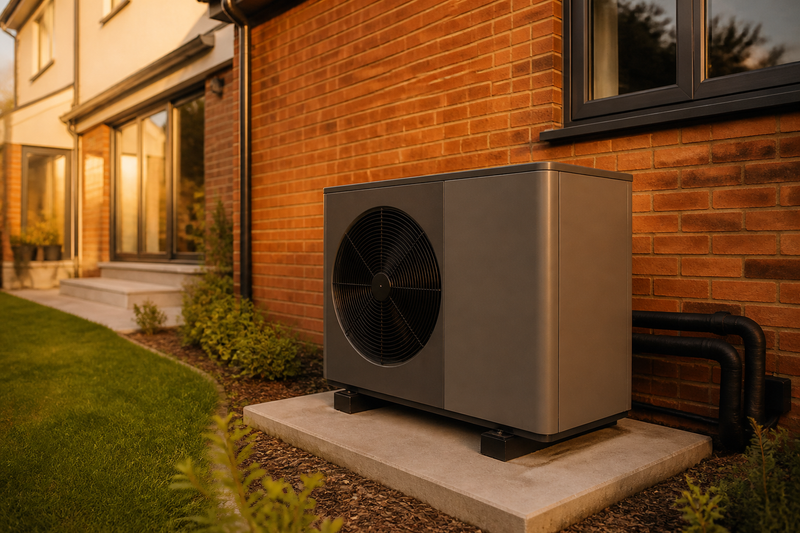
In October 2024, the Department for Energy Security and Net Zero updated rules for the Boiler Upgrade Scheme, keeping the £7,500 upfront grant for air source heat pumps across England and Wales. This fixed grant makes swapping a gas or oil boiler for a heat pump far more affordable, particularly for older homes where traditional low-temperature heat pumps once required widespread radiator replacements.
High-temperature air source heat pumps can deliver water flow temperatures of 65°C to 70°C, matching the output of a standard gas boiler. This allows UK householders to decarbonise their heating without replacing every radiator or tearing up floorboards. However, getting a high-temperature system right requires careful planning, accurate heat loss calculations and verified accreditations.
Essential Site Checks Before Planning a Heat Pump Retrofit
Before booking an installer survey, you can perform several basic checks around your property to assess suitability.
- Outdoor space and clearances: A monobloc heat pump unit sits outside your home. Under English Permitted Development Rights, the outdoor unit must sit at least 1 metre from your property boundary to comply with acoustic guidelines (MCS 020 standard). Ensure you have a clear external wall with good airflow, away from bedroom windows.
- Electrical fuse capacity: Heat pumps run on electricity. Check your main fuse, usually located near your electricity meter. Most modern heat pumps require a single-phase supply with a 100A main fuse. If your fuse is rated at 60A or 80A, your District Network Operator (DNO) must upgrade it before installation.
- Existing radiator sizing: While high-temperature units run at higher flow temperatures than standard heat pumps, running them at lower flow temperatures when weather permits improves seasonal efficiency. Measure your existing radiators to confirm whether targeted upgrades in larger rooms might allow lower operating temperatures.
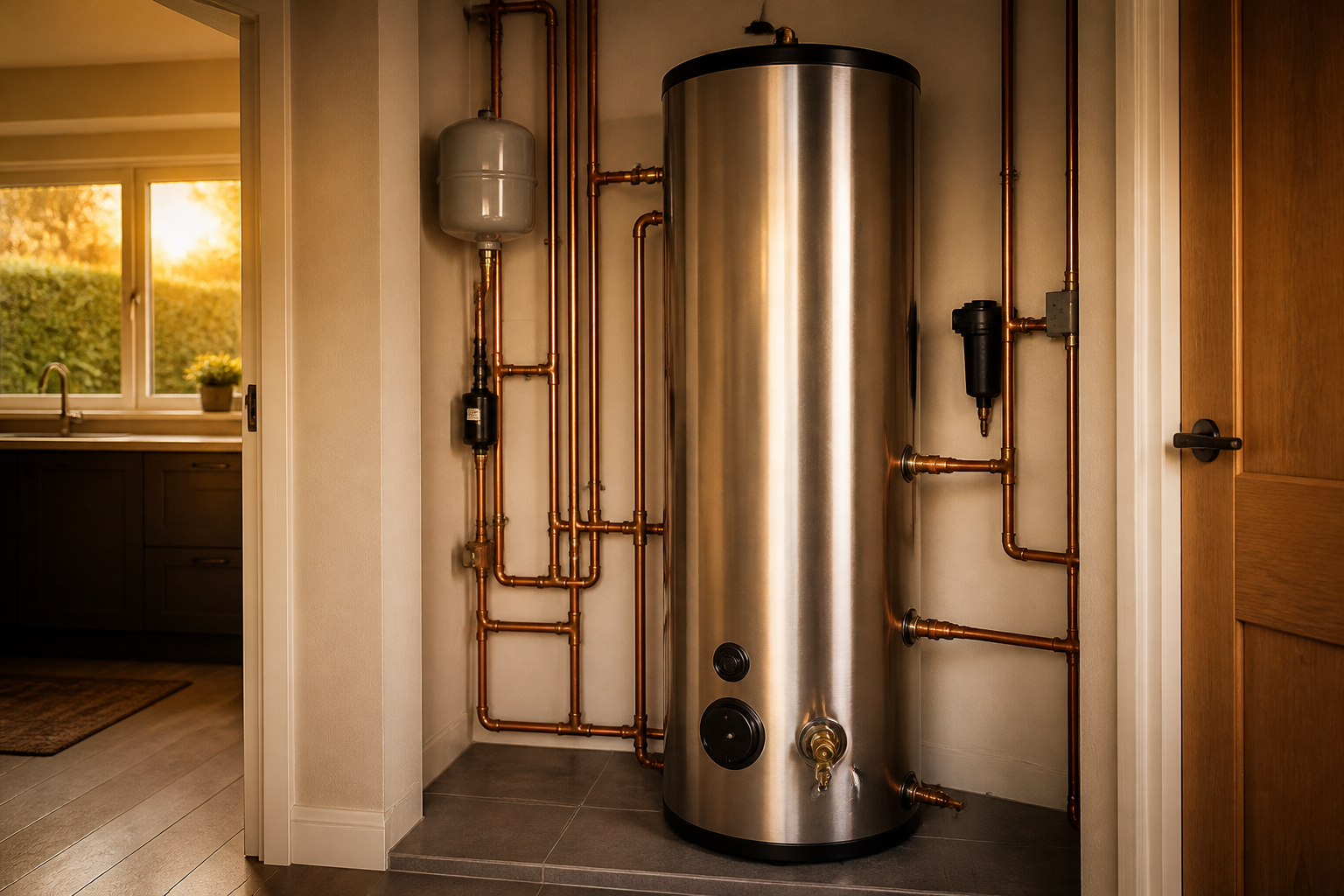
- Hot water storage: Heat pumps heat hot water cylinders gradually rather than providing instantaneous hot water like a combi boiler. You will need space indoors for an insulated unvented hot water cylinder, typically requiring a footprint of 60cm by 60cm in an airing cupboard or utility room.
Monobloc or Split System: Choosing the Right Setup
High-temperature heat pumps generally come in two designs: monobloc and split systems.
A monobloc system houses all refrigerant components inside a single outdoor casing. Water circulates from the outdoor unit directly into your central heating system through insulated pipes. Monobloc installations are popular in the UK because they do not require an installer with specialised F-gas qualification to handle refrigerant on site, simplifying installation and reducing labor costs.
A split system separates the outdoor compressor from an indoor hydrobox unit, connecting them via sealed refrigerant lines. Split systems suit properties where outdoor space is tight or where freeze protection for external water pipes is a concern. Modern high-temperature monoblocs use natural refrigerants like R290 (propane), which can reach 75°C flow temperatures efficiently while maintaining low global warming potential.
Cost Breakdown, BUS Grants and Real Out-of-Pocket Expenses
According to installer data published by the Energy Saving Trust, the gross cost of installing a 7kW to 12kW high-temperature air source heat pump ranges between £10,000 and £14,000, depending on property size and cylinder requirements.
In England and Wales, the Boiler Upgrade Scheme provides a £7,500 non-repayable grant, which your installer deducts directly from your invoice. Under current HMRC rules, heat pump installations also benefit from a 0% VAT rate until 31 March 2027.
| Item / Stage | Typical Cost Range | Notes / Funding Support |
|---|---|---|
| Gross Installation & Equipment | £10,000 - £14,000 | Includes heat pump, cylinder, controls, and pipework |
| Boiler Upgrade Scheme (BUS) Grant | -£7,500 | Discounted upfront on quote (England & Wales) |
| Net Out-of-Pocket Cost | £2,500 - £6,500 | Payable by property owner |
| DNO Main Fuse Upgrade | £0 - £300 | Free through DNO in most standard residential cases |
| Radiator Upgrades (Optional) | £400 - £1,200 | Only if specific rooms require higher thermal output |
In Scotland, home energy support is delivered through Home Energy Scotland, offering grants up to £7,500 alongside interest-free loans for qualifying energy efficiency measures.
Technical Questions to Ask Potential Heat Pump Installers
To ensure your installation performs efficiently, ask prospective installers these concrete operational questions during their survey:
- What is the calculated Seasonal Coefficient of Performance (SCOP) at my required flow temperature? A high-temperature heat pump should achieve an SCOP of at least 3.2 to 3.6, meaning it delivers 3.2 to 3.6 units of heat for every unit of electricity consumed across the year.
- Will you perform a room-by-room heat loss calculation to MCS MIS 3005-D standards? A installer must calculate heat loss for every room at a local design temperature (typically -3°C for most of the UK) rather than relying on general square-footage estimates.
- Will the installation require a DNO G99 application or G98 notification? Units with a maximum current draw below 16A per phase can be notified post-installation under DNO G98 rules. Larger units require prior approval under DNO G99 rules, which adds 4 to 6 weeks to the timeline.
- What weather compensation controls will be installed? Weather compensation adjusts the flow temperature based on outdoor ambient temperature, preserving high seasonal efficiency during milder autumn and spring days.
Essential Accreditations and Consumer Protection Schemes
To qualify for the £7,500 BUS grant and ensure work meets UK building regulations, your installer must hold valid accreditations:
- MCS (Microgeneration Certification Scheme): Mandatory for grant eligibility and grid compliance. MCS verifies that the installer follows design and performance standards.
- Consumer Code Membership: The installer must belong to either the Renewable Energy Consumer Code (RECC) or the Home Insulation and Energy Systems Contractors Scheme (HIES). These bodies provide deposit protection, clear contracts, and independent dispute resolution.
- TrustMark Registration: Required alongside MCS to guarantee quality standards and consumer protection.
- NICEIC or NAPIT Registration: Confirms that electrical wiring and consumer unit connections meet BS 7671 Part 7 safety standards.
Heat Pump Retrofit Installation Schedule: Step by Step
A typical high-temperature heat pump retrofit takes between 4 and 8 weeks from initial contact to commissioning.
- Weeks 1-2 (Survey & Design): The installer conducts a detailed room-by-room heat loss survey, checks electrical capacity, assesses radiator surface areas, and issues a fixed quotation.
- Weeks 3-4 (Grant & DNO Approvals): The installer applies for the BUS grant voucher on your behalf and submits DNO notifications or G99 applications to your network operator.
- Weeks 5-6 (Physical Installation): Work takes 2 to 4 days on site. The team removes the old boiler, flushes existing pipework, installs the outdoor unit, fits the hot water cylinder, and completes electrical wiring.
- Weeks 7-8 (Commissioning & Handover): The system is filled, pressure tested, and balance-commissioned. The installer provides an MCS certificate, hands over operating instructions, and redeems the BUS voucher.
Home Energy Support Options for Employees
As energy bills remain a key focus for households across the UK, staff increasingly look for practical workplace support with home heating upgrades. Through The Net Zero Home Scheme, employers can give their staff access to up to 15% off swapping your boiler for a heat pump installed by accredited contractors across England, Scotland and Wales. The scheme is free for employers to offer, involving no salary sacrifice and zero payroll administration.
Common High-Temperature Heat Pump Questions
Do high-temperature heat pumps consume significantly more electricity?
Operating a heat pump at 65°C requires more electrical energy than operating it at 45°C. However, modern high-temperature units using R290 refrigerant maintain strong efficiency levels. Using weather compensation controls allows the system to lower its flow temperature on milder days, keeping annual electrical consumption close to standard heat pump levels while ensuring your home stays warm during freezing spells.
Can a high-temperature heat pump connect directly to microbore pipework?
High-temperature heat pumps can work with 10mm or 8mm microbore pipework, provided the system flow rate is correctly managed. Your installer must measure hydraulic resistance during the design stage. If water flow velocity is too restricted, the installer may fit a hydraulic separator or buffer tank to protect pump efficiency and prevent operational noise.
Sources
- Boiler Upgrade Scheme Overview, GOV.UK
- Air Source Heat Pumps Guide, Energy Saving Trust
- MCS Installer Standards, Microgeneration Certification Scheme