Wholesale Gas Price Spike Triggers Household Energy Bill Warning
BBC News reports wholesale gas price surges and low storage levels threaten higher UK household energy bills over the coming months.
- Written by
- Net Zero Home Scheme editorial team
- Last updated
- Topic
- energy bills, tariffs, policy
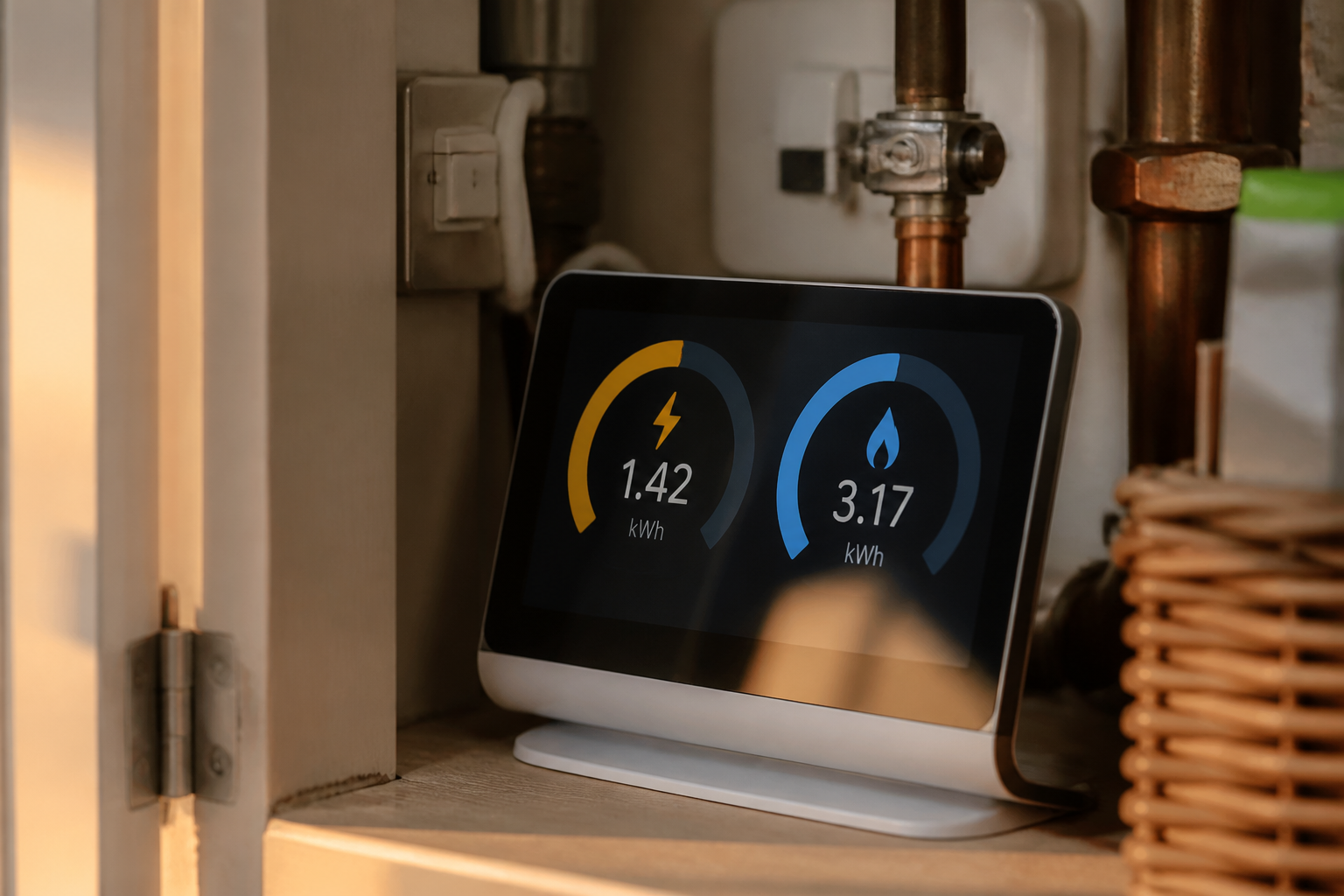
On 3 September 2026, BBC News reported that market analysts are warning UK households of potential increases to domestic energy bills following a fresh spike in wholesale natural gas prices. European natural gas storage levels remain lower than historical averages for early autumn, leaving wholesale energy markets vulnerable to international supply disruptions and heightened global geopolitical risk.
Because Great Britain relies heavily on gas-fired power stations to set marginal market prices for electricity, wholesale gas price volatility feeds directly into both domestic gas tariffs and retail electricity rates. For householders planning home energy upgrades, understanding how wholesale volatility translates into retail price cap adjustments is critical when evaluating the payback period of heat pumps, solar photovoltaic (PV) panels, and home battery storage systems.
What the numbers say
According to BBC News reporting on 3 September 2026, low gas storage inventories across Europe have created upward pressure on wholesale forward contracts for winter delivery. Wholesale natural gas contracts dictate the underlying energy purchase costs that energy suppliers incur months before supplying domestic customers. Under Ofgem's quarterly energy price cap framework, these wholesale costs make up roughly half of a standard domestic energy bill.
When wholesale gas prices surge, the effect is felt across all unhedged domestic tariffs at the next Ofgem quarterly price cap reset. Furthermore, gas-fired generation frequently sets the clearing price on Great Britain's wholesale electricity market, meaning a 10 percent rise in wholesale gas can drive a proportionate increase in wholesale electricity market rates.
The table below illustrates how different home energy technologies perform under standard baseline tariffs versus periods of elevated wholesale gas volatility.
| Technology Option | System Efficiency or Output | Impact of Baseline Gas Tariff | Impact of Wholesale Gas Spike |
|---|---|---|---|
| Gas Condensing Boiler | 85% to 92% seasonal efficiency | Direct exposure at ~6.0p to 7.0p per kWh gas | Direct bill increase at next price cap reset |
| Air Source Heat Pump | SCOP 3.2 to 3.8 efficiency ratio | Uses ~24.5p per kWh grid power | Partial buffer due to non-gas grid generation |
| Solar PV System (4 kWp) | 3,400 kWh annual generation | Offsets ~1,100p in imported electricity | Financial return increases as retail rates rise |
| Home Battery (10 kWh) | 88% round-trip efficiency | Shifts import to off-peak tariff (~7p to 9p per kWh) | Shields household from peak daytime tariff spikes |
How wholesale gas prices affect domestic tariffs

The UK domestic energy market operates under a lagging tariff structure dictated by the Ofgem energy price cap. Ofgem calculates the price cap based on wholesale energy contract prices observed over an extended observation window prior to each quarter. As a result, sudden price spikes observed in late August or early September do not instantly alter standard variable tariffs overnight, but they directly raise the baseline for subsequent price cap periods.
For electricity, the relationship with natural gas remains tight due to Great Britain's marginal pricing system. On the national grid, the last power generator brought online to satisfy demand, usually a combined-cycle gas turbine (CCGT), sets the wholesale price for all generators during that settlement period. Consequently, even when renewable energy from wind and solar supplies a large share of national demand, wholesale power prices track gas market movements.
Households that depend exclusively on mains gas for space heating and domestic hot water face full, direct exposure to these market swings. By contrast, homes that transition space heating to electric heat pumps reduce their primary energy consumption significantly due to heat pump efficiency. A modern heat pump operating at a Seasonal Coefficient of Performance (SCOP) of 3.5 delivers 3.5 kWh of heat for every 1 kWh of electricity consumed, mitigating the impact of high per-unit energy prices.
What this means for your home
If you are a UK householder reviewing your heating and power options this year, wholesale market volatility reinforces the importance of lowering your baseline energy demand. Relying solely on a gas boiler leaves your household budget exposed to global commodity markets that you cannot control.
- Evaluate space heating efficiency: Replacing an ageing gas boiler with an air source heat pump installed by an MCS-accredited contractor can substantially cut your home's total kWh consumption. Heat pump installations eligible for the government's Boiler Upgrade Scheme grant of £7,500 must comply with MCS 031 standards and building regulations.
- Consider solar PV and battery integration: A 4 kWp roof-mounted solar PV array combined with a 10 kWh home battery allows you to generate and store your own power. Under current Smart Export Guarantee (SEG) rules, excess electricity can be exported back to the grid, while battery storage allows you to charge from low-cost off-peak tariffs overnight to avoid high peak daytime rates.
- Improve fabric energy efficiency: Before replacing heating equipment, ensure basic insulation standards are met. Simple measures such as loft insulation topped up to 270 mm, draught proofing around doors and windows, and fitting smart thermostatic radiator valves (TRVs) reduce heat loss and lower the thermal load required from your heating system.
- Review your tariff structure: If you already have a home battery or electric vehicle, switching to a smart time-of-use tariff enables you to charge storage devices during off-peak hours when wholesale prices are lowest, insulating your daily routine from peak market rates.
What this means for employers
For HR directors, reward managers, and employee benefits leaders, rising wholesale energy prices present a direct challenge to workforce financial wellbeing. When household energy bills face upward pressure, employees experience reduced disposable income and increased financial anxiety heading into the winter months.
Providing practical support that helps staff cut household running costs has become a key priority for corporate benefit strategies. Rather than short-term emergency subsidies, employers are increasingly seeking long-term solutions that allow workers to make permanent reductions to their utility bills through accredited home energy upgrades.
Employers can support their workforce through the Net Zero Home Scheme. Delivered by Net Zero Benefits alongside The Electric Car Scheme, the UK's largest independent salary sacrifice provider, the scheme gives employees member pricing on MCS-accredited solar PV, heat pumps, battery storage, and plug-in solar. The scheme is completely free for employers to introduce, involves no salary sacrifice, and requires no payroll deductions.
Frequently asked questions
Why do wholesale gas price spikes raise UK electricity bills too?
Great Britain uses a marginal pricing system for wholesale electricity. Gas-fired power stations are frequently the last generators turned on to meet electricity demand, so the wholesale price of gas determines the market clearing price for all electricity generation during those hours.
How far in advance do wholesale prices affect Ofgem price cap tariffs?
Ofgem calculates quarterly price cap limits using wholesale market prices recorded over an observation period that ends several weeks before the cap takes effect. A spike in wholesale gas prices in September typically influences the price cap set for the following January or April quarter.
Does installing a heat pump or solar panels protect against gas market spikes?
Installing a heat pump reduces total energy consumption due to high SCOP efficiency ratios, while solar PV and battery storage allow you to generate your own electricity and store off-peak power. Together, these technologies significantly reduce your reliance on grid gas and peak-rate grid electricity.