The Physics and Economics of Smart EV Home Charging
An explainer on how 7.4 kW smart EV chargers work, dynamic load balancing physics, off-peak tariff economics, and grid carbon reduction.
- Written by
- Net Zero Home Scheme editorial team
- Last updated
- Topic
- ev charging, tariffs, energy bills
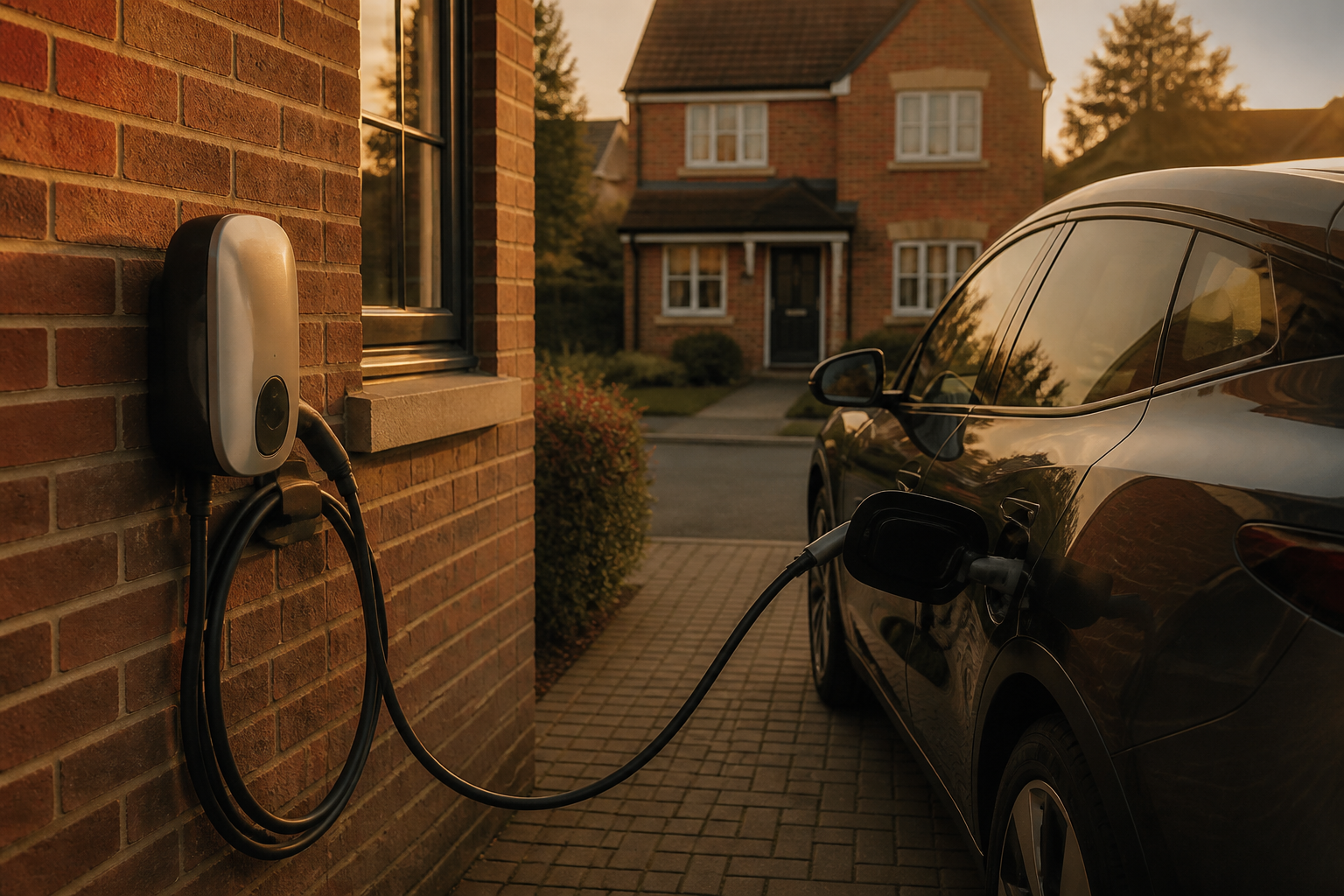
Charging an electric vehicle (EV) at home represents one of the largest single additions to a household's electrical demand since the advent of electric heating. Adding a dedicated 7.4 kW charge point to a standard UK residential property effectively doubles the peak power capacity requirement of the home while active. However, when managed intelligently, home EV charging shifts from being a potential burden on local grid infrastructure to an effective tool for energy cost reduction and carbon mitigation. Understanding the underlying physics of alternating current (AC) power delivery, dynamic load management, and time-of-use energy economics enables UK homeowners to maximize savings while protecting their home's electrical installation.
How Smart EV Home Charging Works: The Physics
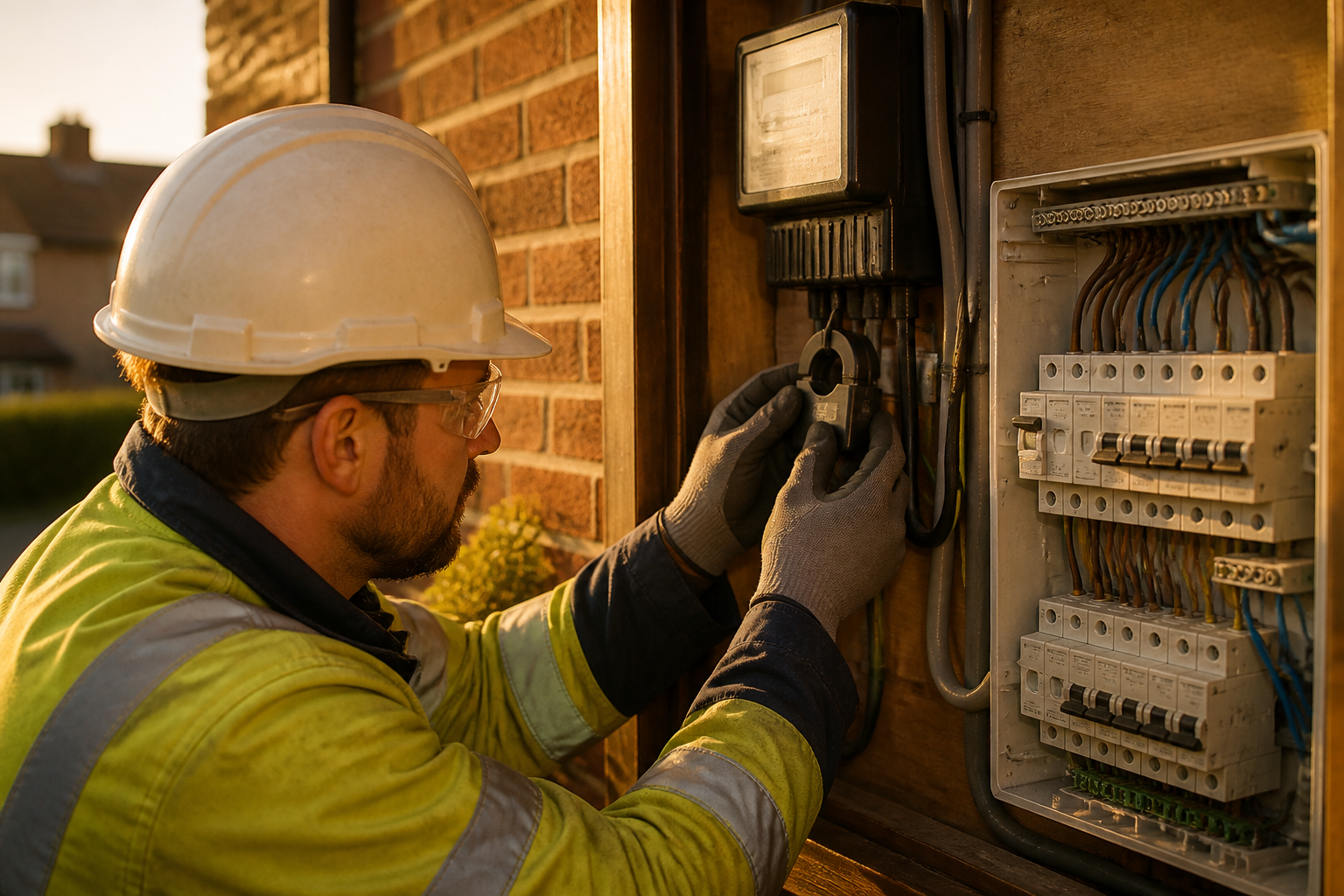
Domestic electricity supplies across England, Scotland, and Wales operate on a single-phase AC network at 230 volts (V) nominal voltage, protected by a main service cut-out fuse typically rated at 60, 80, or 100 amperes (A). Standard dedicated home EV chargers operate at 32A continuous current. Applying Ohm's law and the electrical power equation (Power = Voltage x Current), continuous delivery at 230V and 32A yields 7,360 watts, or 7.36 kilowatts (kW), commonly rounded to 7.4 kW.
At 7.4 kW, a typical 60 kilowatt-hour (kWh) EV battery receives a full charge from 10% to 80% state of charge (42 kWh net energy transfer) in approximately 5.7 hours. By comparison, a standard domestic 3-pin socket delivering 2.3 kW (10A continuous) requires over 18 hours for the same transfer, while running domestic wiring close to its thermal limits for extended periods.
To ensure safety without overloading the main service fuse, modern smart chargers incorporate dynamic load balancing via a Current Transformer (CT) clamp attached to the incoming main live cable at the meter board. The CT clamp measures total real-time household electrical current. If secondary heavy appliances, such as an 8.5 kW electric shower or a 3 kW immersion heater, activate simultaneously while the EV is charging, total household current could exceed the service fuse rating. The smart charger receives a signal from the CT clamp monitoring system and automatically modulates its output current, throttling back from 32A down to 16A (3.7 kW) or pausing power delivery entirely until domestic demand drops.
Communication between the charge point and the vehicle follows international standards IEC 61851-1 and ISO 15118. The charger sends a pulse-width modulation (PWM) signal along the control pilot pin of the Type 2 connector, instructing the vehicle's onboard AC-to-DC converter exactly how much AC current it is permitted to draw at any given millisecond.
The Economics: Dynamic Tariffs and Bill Reductions
The financial benefit of smart charging relies on the spread between peak daytime electricity prices and off-peak overnight rates offered by specialized time-of-use tariffs. Under the Ofgem energy price cap structure, standard flat-rate electricity tariffs in 2026 hover around 24.5p per kWh. A vehicle driven 10,000 miles per year with an average efficiency of 3.5 miles per kWh consumes approximately 2,857 kWh of electricity annually. Charged exclusively on a standard flat rate, annual fuel costs total approximately £700.
Smart time-of-use tariffs offer off-peak windows, usually lasting between four and seven hours overnight (for example, 00:00 to 05:00), where rates drop to between 7p and 9p per kWh. Charging that same 2,857 kWh during an 7.5p per kWh off-peak window reduces annual electricity expenditure for the vehicle to approximately £214. This represents an annual direct running cost saving of around £486 compared to flat-rate domestic electricity, and a saving of over £1,100 when compared to petrol or diesel fueling at average UK pump prices.
Hardware and installation costs for an accredited smart 7.4 kW charger range from £800 to £1,200 depending on cable run length, earthing requirements, and consumer unit capacity. Based on an annual saving of £486, the simple payback period for hardware installation sits between 1.6 and 2.5 years.
Grid-Scale Benefits and Carbon Reduction Evidence
Smart charging also delivers clear carbon savings by shifting demand to periods when renewable generation forms a larger share of the national grid energy mix. Peak UK electrical demand occurs between 16:00 and 19:00, when domestic cooking, heating, and lighting coincide. During these peak hours, the National Grid ESO relies heavily on combined-cycle gas turbine (CCGT) power stations, raising grid carbon intensity to between 200g and 300g of CO2 per kWh.
Overnight, overall grid demand drops by up to 40%, while offshore wind generation frequently remains high. National grid carbon intensity overnight often falls below 50g to 100g of CO2 per kWh. Charging an EV overnight at 70g CO2/kWh generates approximately 200 kg of indirect carbon emissions over 10,000 miles, compared to over 2,100 kg of direct emissions from an equivalent petrol vehicle.
According to research published by edie on 24 August 2026, smart and flexible EV charging capacity represents a potential 12GW of demand-side response across the UK over the next eight years (https://www.edie.net/weakened-zev-mandate-would-cut-1-5bn-from-ev-charging-sales/). This flexible capacity helps grid operators balance intermittent wind and solar supply without resorting to fossil-fuel peaking plants or expensive grid reinforcements.
Genuine Uncertainties, Trade-offs and Counter-Arguments
While the physics and financial models favour smart EV charging, several practical trade-offs and counter-arguments exist.
First, hardware and network reliability introduce operational risk. Under the Electric Vehicles (Smart Charge Points) Regulations 2021, all home chargers sold in Great Britain must have smart functionality, default off-peak scheduling, and randomized delay settings to prevent sudden grid surges. However, these systems rely on continuous Wi-Fi or 4G cellular connections to sync schedules with energy supplier APIs. If home connectivity drops or an API update fails, the charger may default to standard charging or fail to initiate overnight, leaving the vehicle uncharged or charging at peak rates.
Second, time-of-use tariffs carry commercial uncertainties. Energy suppliers adjust off-peak tariff structures based on wholesale market volatility. High daytime standing charges or elevated peak rates on some multi-rate tariffs can offset overnight savings if household daytime baseline energy consumption is high.
Third, accessibility remains an equity challenge. Approximately 30% of UK households do not have dedicated off-street parking, preventing the installation of a home wallbox under current safety standards. Drivers dependent on public charging infrastructure pay standard public rates (often 40p to 85p per kWh) and 20% VAT, compared to 5% VAT on domestic energy, creating a substantial financial disparity.
Equipment Standards and Compliance Checklist
| Standard or Regulation | What It Mandates | Practical Impact for Homeowners |
|---|---|---|
| Electric Vehicles (Smart Charge Points) Regulations 2021 | Default off-peak scheduling, randomized delays, cyber security protocols, and metering | Ensures automatic off-peak charging and prevents localized grid spikes |
| BS 7671 Section 722 | Specific electrical installation safety rules, including PEN fault protection | Protects against electrical shock hazards without needing external earth rods |
| IET Code of Practice (EV Charging) | Rules on dynamic load balancing, cable sizing, and protective devices | Requires CT clamp installation to prevent blowing main supply fuse |
| Building Regulations Part P | Electrical safety certification for domestic installations | Requires qualified electrician sign-off and notification to local building control |
| Building Regulations Part S | Requirement for EV charging infrastructure in new residential builds | Guarantees charge point readiness in newly constructed homes |
Frequently asked questions
Can you charge an EV using a standard 3-pin plug instead of a smart charger?
You can charge an EV using a standard 3-pin domestic socket via a Mode 2 cable, but it delivers power at only 2.3 kW (10A). This results in long charging times (over 18 hours for a typical battery). Continuous 10A draw on standard domestic socket wiring creates thermal stress, increasing fire risks. Standard sockets also lack dynamic load balancing and automated integration with off-peak energy tariffs.
What happens if my home Wi-Fi disconnects during an overnight charge?
If your smart charger loses Wi-Fi connection, most models revert to their internal stored schedule or default to manual plug-and-charge mode. If it reverts to manual mode, it will start charging immediately upon plug-in, which may result in charging at peak tariff rates unless manually paused via the vehicle's onboard timer or charger interface.
How does dynamic load balancing protect my home fuse box?
Dynamic load balancing uses a Current Transformer (CT) clamp fitted around your home's main incoming electricity cable. It measures total household current in real time. If household usage approaches your main service fuse limit (typically 60A, 80A, or 100A) due to appliances like electric showers or ovens, the charger automatically reduces its charging current to prevent the fuse from blowing.
What this means for you
For UK homeowners with off-street parking, installing a dedicated 7.4 kW smart charger provides the most efficient, safe, and cost-effective way to power an electric vehicle. By taking advantage of dynamic load management and off-peak tariffs, you can reduce vehicle running costs significantly while minimizing carbon emissions.
When planning an installation, verify that your electrician is registered with a competent person scheme such as NICEIC or NAPIT, and ensure the charger complies with the Electric Vehicles (Smart Charge Points) Regulations 2021. For employees looking to upgrade their home energy setup, schemes like the Net Zero Home Scheme enable access to accredited installers for home decarbonisation upgrades alongside workplace benefit programmes. Evaluating your home's main electrical supply capacity and checking tariff options with your energy supplier will ensure a smooth transition to smart home charging.