UK Petrol Prices Reach 163p a Litre Amid Oil Price Surge
UK unleaded petrol prices reached 163p a litre on 4 September 2026, driving up transport costs and reshaping household energy economics.
- Written by
- Net Zero Home Scheme editorial team
- Last updated
- Topic
- energy bills, ev charging, tariffs
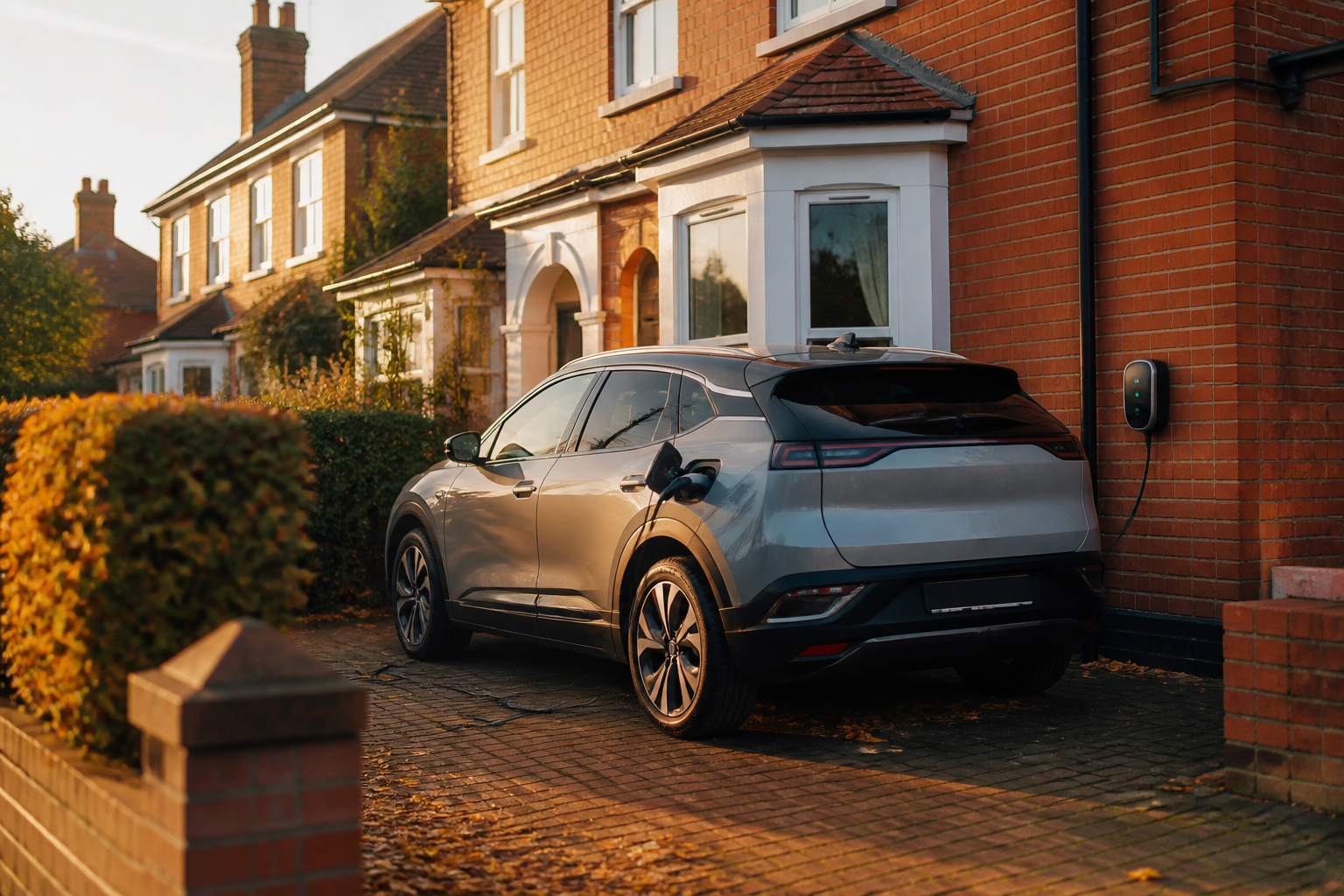
Average UK unleaded petrol prices reached 163p a litre on 4 September 2026, marking their highest level since conflict in the Middle East disrupted global petroleum markets earlier in the year. The price milestone was reported by BBC News on 4 September 2026, drawing on pump price tracking from motoring group the RAC as elevated wholesale crude oil markets continue to feed directly into retail fuel stations across England, Scotland, and Wales.
The rapid increase at the pumps places immediate pressure on commuter budgets across the country, particularly for households in rural and suburban areas where public transport options remain limited. Coming alongside broader volatility in wholesale domestic gas markets, the surge highlights how vulnerable household expenditure remains to external energy market shocks, driving renewed scrutiny of domestic transport and power costs.
What the numbers say
According to data from the RAC published by BBC News on 4 September 2026, unleaded petrol has hit 163p per litre following months of sustained pressure on wholesale oil benchmark prices. For a standard 55-litre family petrol hatchback, filling a tank now costs £89.65, representing a significant increase over baseline costs recorded earlier in the summer.
To understand the financial effect on daily driving, pump prices translate directly into pence-per-mile running costs. A typical petrol vehicle achieving 40 miles per gallon (8.8 miles per litre) consumes fuel at a rate of 18.5p per mile at 163p per litre. By comparison, an electric vehicle consuming 1 kWh per 3.5 miles driven on a standard electricity price cap tariff of 24.5p per kWh, set by Ofgem for Q3 2026, operates at approximately 7.0p per mile. When charged overnight on a dedicated off-peak EV tariff offering rates around 7.0p per kWh, running costs fall to 2.0p per mile.
| Fuel / Power Source | Unit Rate / Price | Efficiency / Consumption | Estimated Cost per 1,000 Miles |
|---|---|---|---|
| Petrol (Unleaded) | 163.0p per litre | 40 mpg (8.8 miles / litre) | £185.23 |
| Standard Grid Electricity | 24.5p per kWh | 3.5 miles per kWh | £70.00 |
| Off-Peak Overnight Tariff | 7.0p per kWh | 3.5 miles per kWh | £20.00 |
| Home Solar PV Self-Consumption | 0.0p per kWh (direct) | 3.5 miles per kWh | £0.00 |
While these figures demonstrate a substantial running cost advantage for electrified transport, the capital expenditure required to transition remains a hurdle. A home EV smart charger installation carried out by an installer accredited under the Microgeneration Certification Scheme (MCS) or approved by the National Inspection Council for Electrical Installation Contracting (NICEIC) typically costs between £800 and £1,200. Where a home also integrates solar PV or battery storage, the economic interaction becomes more complex, as generated solar power can either charge the vehicle directly or be exported under the Smart Export Guarantee (SEG) at rates ranging from 4p to 15p per kWh depending on the energy supplier.
How fuel spikes alter the home energy equation
When retail petrol prices rise sharply, household financial planning shifts from viewing home energy and personal transport as separate budgets toward treating them as an interconnected energy system. Drivers facing £200 or more in monthly petrol costs increasingly look to shift transport power onto their domestic electricity meter.
Integrating an electric vehicle into a UK home involves distinct technical and regulatory rules. Under BS 7671 IET Wiring Regulations, an EV charger installation requires a dedicated circuit, suitable Type A or Type F residual current protection, and adequate earthing protection (such as an open PEN conductor protection device where protective multiple earthing is present). Furthermore, under the Electricity Safety, Quality and Continuity Regulations 2002, the installer must notify the local Distribution Network Operator (DNO) via a G28 notification form, or apply for prior DNO approval if the total maximum demand of the property exceeds the service fuse capacity, usually 60A, 80A, or 100A.
Where a household stacks technologies, adding a 4 kWp roof-mounted solar array and a 5 kWh to 10 kWh home battery alongside an EV charger, the primary operational goal is avoiding expensive daytime grid electricity. During winter months, solar generation drops significantly in the UK, meaning home batteries are primarily used to store cheap overnight grid power for daytime household loads, leaving EV charging to take place directly during off-peak windows. In summer months, excess solar generation can be diverted into the vehicle battery using a solar-aware charger, replacing imported grid electricity entirely.
What this means for your home
For UK householders managing rising commute costs, pump price surges alter the payback calculations for home energy upgrades and vehicle choices.
- Audit daily mileage and charging options: Drivers traveling 30 miles per day spend roughly £166 per month on petrol at 163p per litre. Switching those miles to home off-peak charging reduces the monthly fuel bill to under £18, creating a monthly saving of around £148 that can offset the capital cost of home hardware upgrades.
- Check main fuse capacity and electrical setup: Before purchasing a home charger or battery, request a site survey from an NICEIC or TrustMark registered electrician to verify that your service head fuse (e.g. 60A vs 100A) can accommodate a 7.4 kW (32A) single-phase EV charger alongside existing electric showers or cookers.
- Compare smart tariffs carefully: To unlock maximum running cost savings, households require a smart meter capable of sending half-hourly meter reads to support time-of-use tariffs. Ensure your smart meter is SMETS2 compliant to maintain automated tariff switching functionality.
- Evaluate technology stacking: If installing solar panels, consider pairing them with a home battery system certified to PAS 63100 safety standards. This allows you to store daytime solar energy for household use while reserving low-cost night tariffs for vehicle charging.
What this means for employers
Rising petrol prices directly erode employee take-home pay, particularly for staff commuting daily to workplaces, depots, or regional client sites. As transport costs increase, HR, reward, and benefit leaders face growing demand for practical financial wellbeing support that reduces essential household overheads without inflating payroll expenditure.
Providing solutions that lower monthly living costs has become a central focus for employee retention and engagement strategies. Employers looking to help staff mitigate rising fuel costs can introduce workplace charging infrastructure or support employees in upgrading their domestic energy setups. Through the Net Zero Home Scheme, delivered by Net Zero Benefits alongside The Electric Car Scheme, employers can provide staff with member pricing on accredited installations of solar panels, heat pumps, battery storage, and plug-in solar at zero cost to the business, with no salary sacrifice or payroll administration required.
Frequently asked questions
How does 163p per litre petrol compare to home EV charging costs?
At 163p per litre, a petrol car averaging 40 mpg costs approximately 18.5p per mile in fuel. An electric vehicle charged at home on a standard price cap electricity rate of 24.5p per kWh costs around 7.0p per mile, while charging on an off-peak overnight tariff at 7.0p per kWh costs approximately 2.0p per mile.
Do I need to upgrade my home electrical supply to install an EV charger alongside solar or a battery?
Not usually, but your electrician must perform a maximum demand calculation. Most UK homes have an 80A or 100A main service fuse, which is sufficient for a 7.4 kW EV charger alongside solar PV and a battery. If your home has a 60A fuse, your installer may request a free main fuse upgrade from your DNO or fit a charger with active load management to prevent tripping.
Can home battery storage charge an EV during peak daytime hours?
While a home battery can supply power to an EV charger, most domestic batteries have a capacity between 5 kWh and 13 kWh and a continuous discharge limit of 3 kW to 5 kW. Because an EV battery is far larger (typically 40 kWh to 80 kWh) and a standard home charger draws 7.4 kW, a domestic home battery will deplete rapidly. It is generally more cost-effective to charge the EV directly from the grid during off-peak hours or directly from excess solar PV generation.