UK Rejects Moratorium on New AI Data Centres
The UK government has rejected calls for a moratorium on energy-intensive AI data centres, highlighting ongoing network capacity demands across the national electricity grid.
- Written by
- Net Zero Home Scheme editorial team
- Last updated
- Topic
- energy bills, policy, home energy
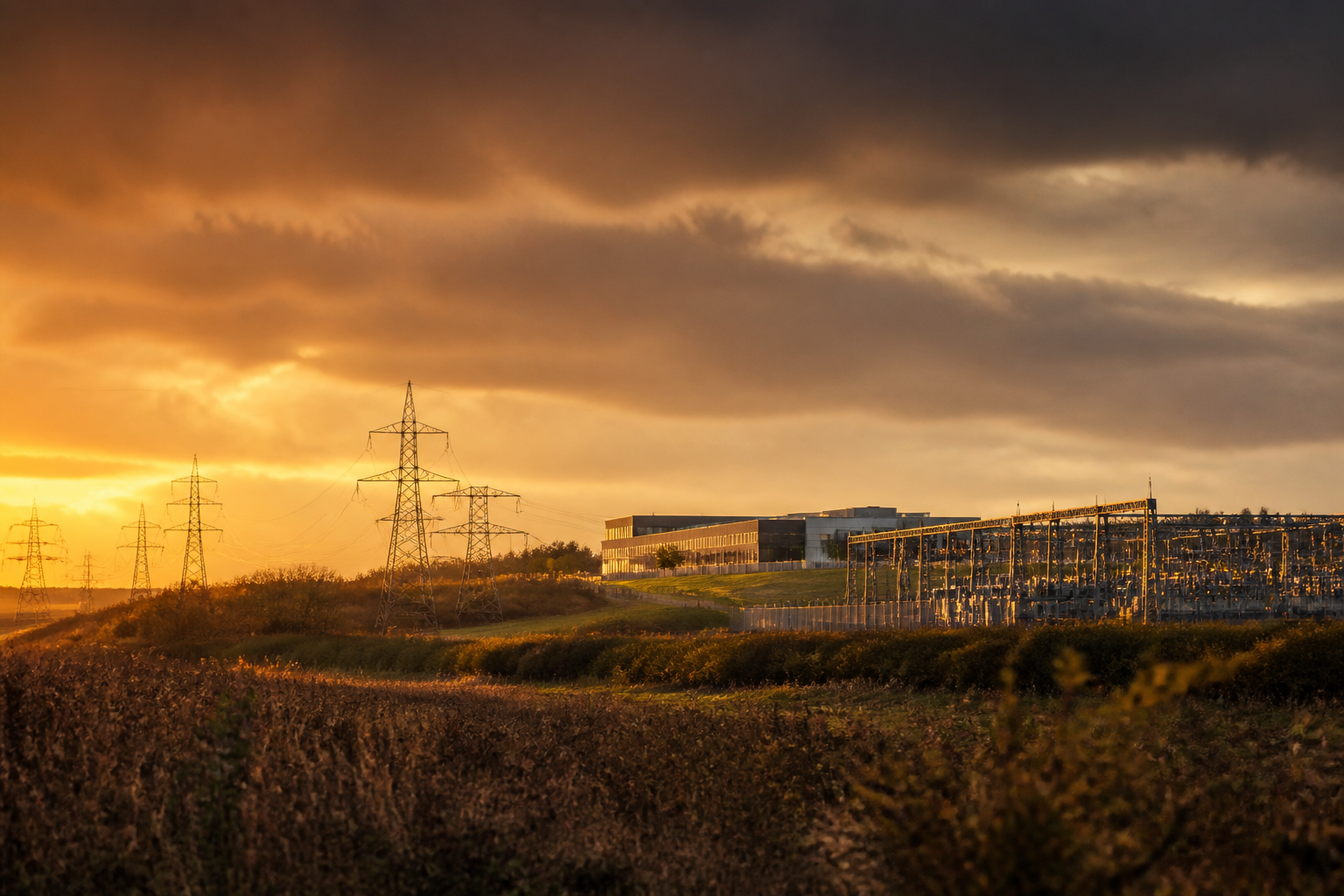
On 28 August 2026, the UK government officially rejected calls from Green Party leader Zack Polanski to impose a moratorium on the construction of major artificial intelligence data centres. Reporting published by The Guardian on 28 August 2026 confirmed that ministers dismissed proposals to pause these projects, stating that stopping energy-intensive digital infrastructure would create significant economic damage.
The policy stance keeps the expansion of commercial data facilities on track, but it also highlights a growing tension across the electricity network. Data centres require continuous, high-volume electricity supplies to operate computing hardware and cooling systems, placing substantial new demand on transmission networks at a time when households are also adopting electrified heating and transport.
Understanding how commercial energy growth interacts with the domestic market is increasingly relevant for householders. While individual data centre developments do not alter domestic energy rates overnight, large scale power demand directly influences grid investment priorities, regional network capacity, and long-term electricity pricing structures.
What the numbers say
As reported by The Guardian on 28 August 2026, the proposed moratorium aimed to halt developments that consume large volumes of power and water. Data centre facilities require significant continuous electrical capacity to run processing servers and infrastructure, with major campuses drawing tens or even hundreds of megawatts of electricity around the clock.
To put these commercial energy requirements into context alongside domestic consumption, Ofgem benchmark data sets typical UK household electricity use at approximately 2,700 kWh per year for a standard domestic customer, or around 4,200 kWh for a family home with higher consumption. A single 50 megawatt data centre operating continuously consumes roughly 438 million kWh per year, equivalent to the annual electricity usage of over 160,000 standard homes.
Where official estimates on total future network impact remain incomplete or contested, energy analysts point to varying scenarios published by National Energy System Operator (NESO). Predictions for total UK data centre electricity demand by 2030 range from modest incremental growth to multi-fold increases, depending on how many hyperscale facilities receive planning permission and grid connection agreements.
| Category | Peak Power Profile | Annual Electricity Draw | Primary Grid Connection Level |
|---|---|---|---|
| Domestic Home (Standard) | 1 kW to 3 kW peak | ~2,700 kWh | Low-voltage distribution network |
| Domestic Home (Heat Pump & Solar) | 3 kW to 7 kW peak | ~5,000 to 8,000 kWh | Low-voltage distribution network |
| Commercial Data Centre (Medium) | 10 MW to 30 MW continuous | 87m to 260m kWh | High-voltage transmission network |
| Hyperscale AI Data Centre | 50 MW to 100+ MW continuous | 438m to 876m+ kWh | Direct grid sub-station connection |
Infrastructure pressures and network costs
When continuous electricity demand increases at a national scale, electricity network operators must upgrade sub-stations, reinforce transmission lines, and manage local capacity constraints. Under Ofgem regulations, the costs of maintaining and expanding the physical grid are recovered through network charges, known as Distribution Use of System (DUoS) and Transmission Network Use of System (TNMoS) charges, which form a portion of every domestic electricity bill.
Regional variations in grid capacity can also create localized bottlenecks. In areas experiencing rapid data centre growth or heavy renewable generation, distribution network operators (DNOs) must manage tighter headroom on regional sub-stations. For domestic property owners, local grid capacity determines how quickly energy network operators approve higher-capacity export arrangements for residential solar PV and battery storage systems.
While commercial developers pay connection charges to link major facilities to the grid, overall systemic demand ensures that electricity network upgrades remain an ongoing priority across England, Scotland, and Wales.
What this means for your home
The government decision not to restrict data centre construction does not cause any immediate change to household energy bills or existing tariff structures. The Ofgem energy price cap and standard dynamic tariffs continue to operate as normal, governed by wholesale gas and electricity markets alongside regulated network costs.
However, sustained growth in commercial electricity demand underscores several practical considerations for households planning clean energy upgrades:
- Electricity self-consumption: Producing power at home using roof-mounted solar PV reduces reliance on grid electricity, helping to buffer households against broader network supply pressures and long-term price fluctuations.
- Battery storage flexibility: Installing a home battery allows properties to store electricity during off-peak hours when grid demand is low and rates are cheaper, or to store excess daytime solar power for use during peak evening hours.
- Grid permissions for solar and batteries: Standard home solar installations up to 3.68 kW on a single-phase supply fall under G98 notification rules, allowing simple post-installation registration with the local distribution network operator. Larger domestic arrays or battery setups exceeding this threshold require prior approval under G99 rules, where local sub-station capacity determines approval timelines.
- Heat pumps and EV charging: Standard domestic heat pump installations, typically ranging from 4 kW to 12 kW thermal output, draw around 1 kW to 3 kW of electrical power under normal operation. Microgeneration Certification Scheme (MCS) accredited installers assess property electrical loads to ensure home consumer units and local supply fuses can handle combined heating and vehicle charging loads smoothly.
What this means for employers
Rising national electricity demand and ongoing energy price volatility continue to place financial pressure on working households. As commercial power consumption grows alongside household electrification, staff are increasingly seeking practical ways to lower home running costs and protect against future price changes.
For HR, reward, and sustainability managers, offering practical home energy support has become an effective employee benefit. Employers looking to assist staff with household bills can provide access through the Net Zero Home Scheme, a free employer benefit delivered by Net Zero Benefits alongside The Electric Car Scheme that enables employees to access member pricing on accredited solar panels, heat pumps, battery storage, and plug-in solar with no salary sacrifice or payroll deduction required.
Providing clear pathways for home energy efficiency helps employees reduce baseline electricity costs while aligning corporate sustainability targets with practical household benefits.
Frequently asked questions
Will expanding AI data centres cause power cuts or household blackouts?
No. National Energy System Operator (NESO) maintains strict reserve margins and network balance controls across Great Britain. Data centre operators are required to secure formal connection agreements and, in many cases, maintain backup generation or automated demand-response capabilities to shed load during system stress.
Does increased grid demand affect permission to install home solar panels?
For standard residential systems up to 3.68 kW per phase, the G98 process allows installers to connect the solar PV system first and notify the network operator afterwards. Larger domestic systems require prior approval under G99 rules, which may take several weeks if the local sub-station faces heavy regional demand.
How can households insulate themselves against long-term electricity costs?
Householders can manage electricity exposure by combining energy efficiency measures with home generation and storage. Installing solar PV panels paired with a home battery enables properties to generate their own clean electricity during the day and take advantage of flexible, time-of-use tariffs during off-peak hours.