SSE Airtricity Raises NI Household Gas Tariffs by 19 Percent
SSE Airtricity has announced a 19 percent gas price rise in Northern Ireland, adding almost £172 to average annual bills amid wholesale market pressure.
- Written by
- Net Zero Home Scheme editorial team
- Last updated
- Topic
- energy bills, tariffs, energy efficiency
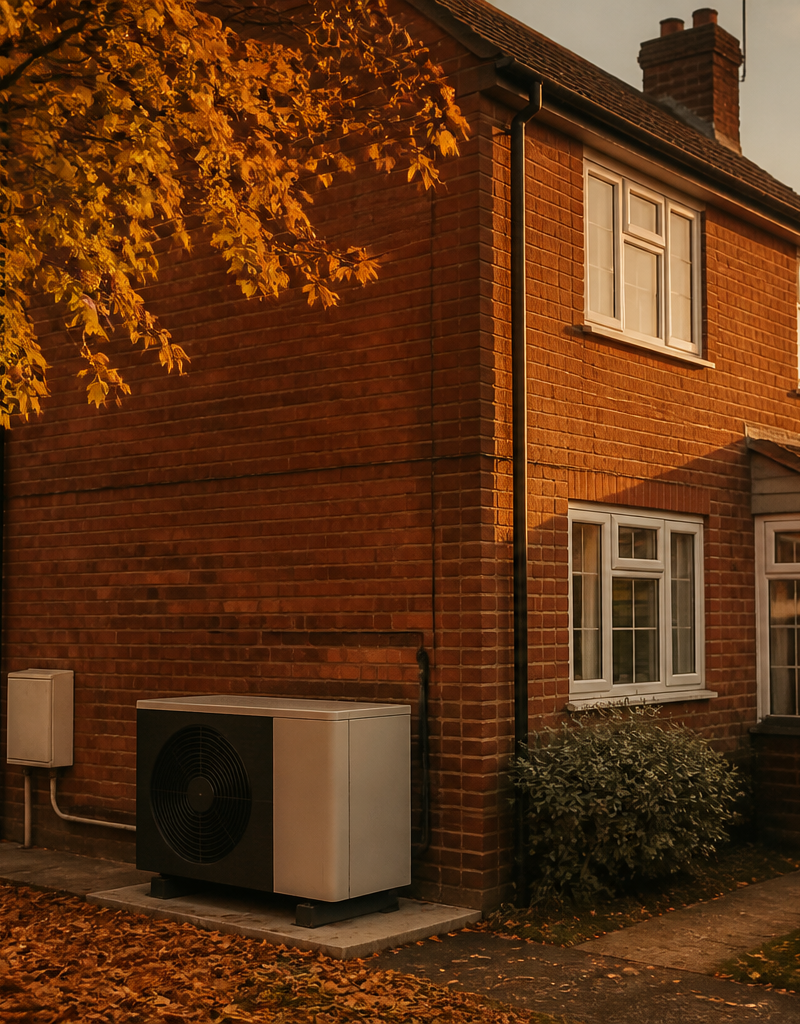
Northern Ireland energy supplier SSE Airtricity will increase domestic gas prices by 19 percent, adding almost £172 to the average household annual bill in the greater Belfast and West gas network areas.
The price adjustment was reported by BBC News on 28 August 2026, highlighting renewed cost of living pressures on UK households as wholesale commodity markets fluctuate ahead of the autumn heating season. For households relying on mains gas for central heating and hot water, the sudden rise underlines how vulnerable unmitigated fossil fuel heating remains to external market shocks.
While retail energy regulation in Northern Ireland operates under a separate framework managed by the Utility Regulator compared to Ofgem's price cap in Great Britain, the underlying driver remains the wholesale price of natural gas. When international gas supply lines or regional storage levels experience volatility, suppliers adjust their retail tariffs to cover procurement costs. For working households, sudden tariff spikes directly erode disposable income, compounding wider inflationary pressures across mortgage interest rates, rent, and daily essentials.
How regional gas tariff shocks impact household budgets
Energy costs represent one of the most inflexible domestic expenditures. Unlike discretionary spending on dining or leisure, heating and hot water cannot be easily curtailed during winter without risking health and comfort. A 19 percent increase in gas prices means that a typical household consuming around 12,000 kWh of natural gas annually will see their annual gas spend rise significantly overnight.
This regional price hike reflects a broader national pattern. Across England, Scotland and Wales, Ofgem's price cap adjustments also respond to global gas market movements. Because gas-fired power stations frequently set the marginal price of wholesale electricity in the UK, increases in natural gas prices often bleed into electricity tariffs as well. As a result, households face dual pressures across both gas and power bills unless they take steps to improve thermal efficiency or generate their own power on site.
What the numbers say
According to reporting by BBC News on 28 August 2026, the specific metrics surrounding the tariff increase include:
- A 19 percent increase in domestic gas prices across SSE Airtricity's regulated network area.
- An estimated £171.80 annual increase in the heating bill for a typical household consuming standard domestic gas volumes.
- Immediate impact on homes located within the Greater Belfast and West gas network districts.
The public reporting does not provide a full breakdown of the exact split between wholesale gas procurement costs, network transmission charges, and regulatory balancing fees. Furthermore, figures represent an average domestic consumer; actual bill increases will vary depending on house size, existing insulation levels, boiler efficiency, and daily occupancy patterns.
Evaluating home energy upgrades against volatile gas tariffs
When natural gas tariffs rise, the financial return on domestic clean energy technologies changes. Higher gas prices make heat pumps, solar PV, battery storage and thermal insulation more cost-effective relative to ongoing grid dependence.
The table below outlines how common home energy measures reduce exposure to grid gas and electricity prices, alongside their standard installation parameters in the UK.
| Technology | Primary Bill Impact | Standard UK Specification | Key Operational Dependency |
|---|---|---|---|
| Loft and Cavity Wall Insulation | Reduces gas consumption by 15% to 25% | 270mm mineral wool loft insulation, CWI bead fill | Quality of installation, building airtightness |
| Air Source Heat Pump | Eliminates direct gas consumption | MCS-certified monobloc unit, SCOP 3.2 to 4.0 | Low flow temperature (35°C to 45°C), system design |
| Rooftop Solar PV | Offsets daytime grid electricity | 4 kWp to 6 kWp array, Tier 1 monocrystalline panels | Roof orientation, shading, self-consumption rate |
| Home Battery Storage | Stores off-peak electricity | 5 kWh to 10 kWh LFP battery, G98/G99 DNO approval | Smart tariff availability, round-trip efficiency |
Thermal efficiency and heat pump payback dynamics
Upgrading insulation is usually the fastest way to reduce gas consumption. Adding loft insulation to a standard depth of 270mm or filling uninsulated cavity walls directly cuts the space heating demand of a property. Lower heat demand means gas boilers consume fewer cubic metres of fuel each hour, softening the blow of a 19 percent tariff rise.
For homeowners considering replacing an aging gas boiler with an air source heat pump, rising gas prices alter the spark gap, which is the ratio between electricity prices and gas prices. An air source heat pump operating at a Seasonal Coefficient of Performance (SCOP) of 3.5 generates 3.5 kWh of heat for every 1 kWh of electricity consumed. When gas prices rise relative to electricity, running a well-designed heat pump becomes cheaper than running a modern condensing gas boiler, particularly when paired with the Boiler Upgrade Scheme grant in England and Wales or equivalent Scottish Government home energy schemes.
Solar PV and battery storage protection
Generating clean power on your roof does not directly replace a gas boiler unless you use an immersion diverter for hot water or run an electric heating system. However, solar PV and battery storage protect your total household energy spend. By generating daytime electricity and storing off-peak power, you reduce overall utility outgoings, helping offset unavoidable gas tariff increases during winter.
What this means for your home
If your household relies on mains gas or heating oil, sudden tariff increases serve as a practical prompt to review your domestic energy setup:
- Check your heating controls and lower boiler flow temperatures. If you have a condensing gas boiler, reducing the flow temperature to 60°C or lower allows the boiler to operate in condensing mode, improving efficiency by 6% to 10%.
- Audit your thermal performance. Draught-proofing doors and windows, insulating hot water cylinders, and topping up loft insulation to 270mm are low-cost measures that deliver immediate fuel savings.
- Review renewable heating feasibility. Check whether your home is eligible for government capital grants such as the £7,500 Boiler Upgrade Scheme grant for heat pumps. A property with basic insulation and appropriately sized radiators can transition away from mains gas entirely.
- Evaluate solar PV and battery storage options. If your roof faces east, south or west without heavy shading, a solar PV system combined with a home battery can supply a significant portion of your annual electricity needs, insulating your household against broader grid volatility.
What this means for employers
Rising energy tariffs create direct financial stress for employees, reducing real take-home pay and impacting workplace wellbeing, productivity and retention. As regional bill hikes make household budgeting more unpredictable, HR and reward leaders are increasingly evaluating practical benefits that address living costs at source rather than relying solely on one-off salary adjustments.
Traditional financial wellbeing packages often focus on financial education or short-term loans, but they do not reduce a household's underlying fixed costs. Offering structured support for home energy efficiency provides a permanent, measurable reduction in monthly utility bills for staff.
To help staff insulate their household budgets against volatile fossil fuel tariffs, reward teams can introduce practical support like the Net Zero Home Scheme. Delivered by Net Zero Benefits alongside The Electric Car Scheme, the UK's largest independent salary sacrifice provider, the scheme gives employees access to member pricing on MCS-accredited solar PV, heat pumps, battery storage and plug-in solar systems. The benefit is completely free for employers to implement, involving no salary sacrifice, no payroll deduction and no financial risk.
By providing clear pathways to home energy upgrades, employers can enhance their reward proposition, support corporate ESG targets by reducing Scope 3 employee homeworking emissions, and deliver tangible financial relief to their workforce.
Frequently asked questions
Why did SSE Airtricity raise gas prices by 19 percent in Northern Ireland?
As reported by BBC News on 28 August 2026, the 19 percent increase reflects rising wholesale gas procurement costs and network charges. Retail gas tariffs in Northern Ireland are subject to periodic review by the Utility Regulator to ensure suppliers cover their operational supply costs while maintaining supply security.
How does a gas tariff increase affect heat pump running costs?
A gas tariff increase makes heat pumps more financially competitive against gas boilers. Because heat pumps run on electricity and achieve high operational efficiencies (typically 300% to 400%), higher gas prices narrow or reverse the running cost gap, making clean electric heating more attractive compared to fossil fuel boilers.
Can home energy improvements be installed without upfront capital?
Yes, depending on location and eligibility. Grants such as the £7,500 Boiler Upgrade Scheme in England and Wales reduce the upfront cost of heat pumps. Furthermore, many employees can access member pricing and pre-vetted accredited installers through employer-sponsored benefits, lowering the total cost of installing solar, batteries or heat pumps.