Cloudiest UK Regions See £400 Annual Solar Savings
Analysis shows rooftop solar panels cut annual energy bills by at least £400 even in the cloudiest parts of Great Britain.
- Written by
- Net Zero Home Scheme editorial team
- Last updated
- Topic
- solar, energy bills, policy
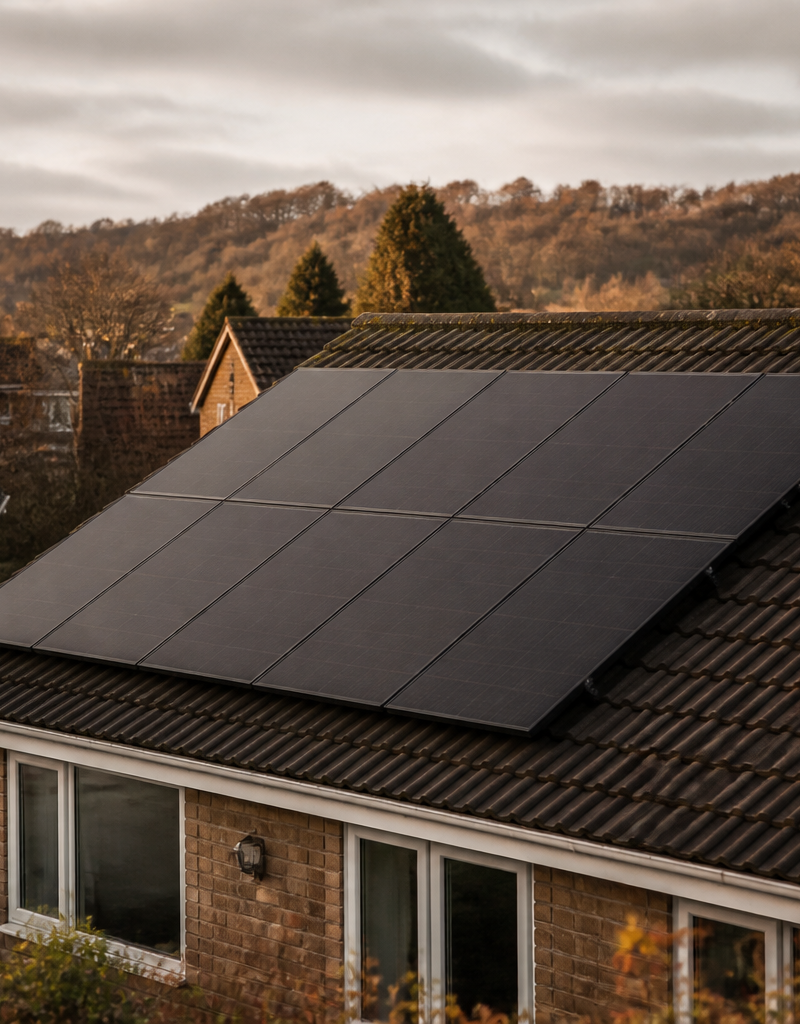
Households in the cloudiest regions of Great Britain can cut at least £400 a year from their electricity bills by installing rooftop solar panels, according to analysis reported by The Guardian on 1 September 2026. Rising wholesale power prices and a steady drop in overall installation costs have shifted the financial equation for domestic solar, making systems viable even in areas with lower annual sunshine hours.
The report highlights that generation does not depend entirely on direct sunlight. Modern photovoltaic cells convert diffuse daylight into usable electricity, allowing homes in northern England, Wales, and Scotland to generate significant power throughout the year. As mains electricity tariffs remain elevated compared to historical averages, the monetary value of each kilowatt-hour produced and used in the home has grown, shortening the overall payback period for householders.
How low-irradiance regions generate power
Solar photovoltaic panels generate direct current electricity from sunlight through the photovoltaic effect. While direct sunlight yields maximum output, diffuse solar radiation, sunlight scattered by clouds and atmospheric particles, still activates silicon cells. In regions such as the North West of England, Western Wales, and parts of Scotland, annual solar irradiance averages around 800 to 900 kWh per kilowatt-peak (kWp) of installed capacity, compared to 1,000 to 1,100 kWh/kWp in southern coastal England.
Despite this yield gap, the financial returns in cloudy areas have improved because saved grid power is worth substantially more today than in previous years. Standard variable energy tariffs, regulated by Ofgem, mean that every kilowatt-hour of self-generated electricity consumed on site offsets grid purchases at current electricity unit rates.
What the numbers say
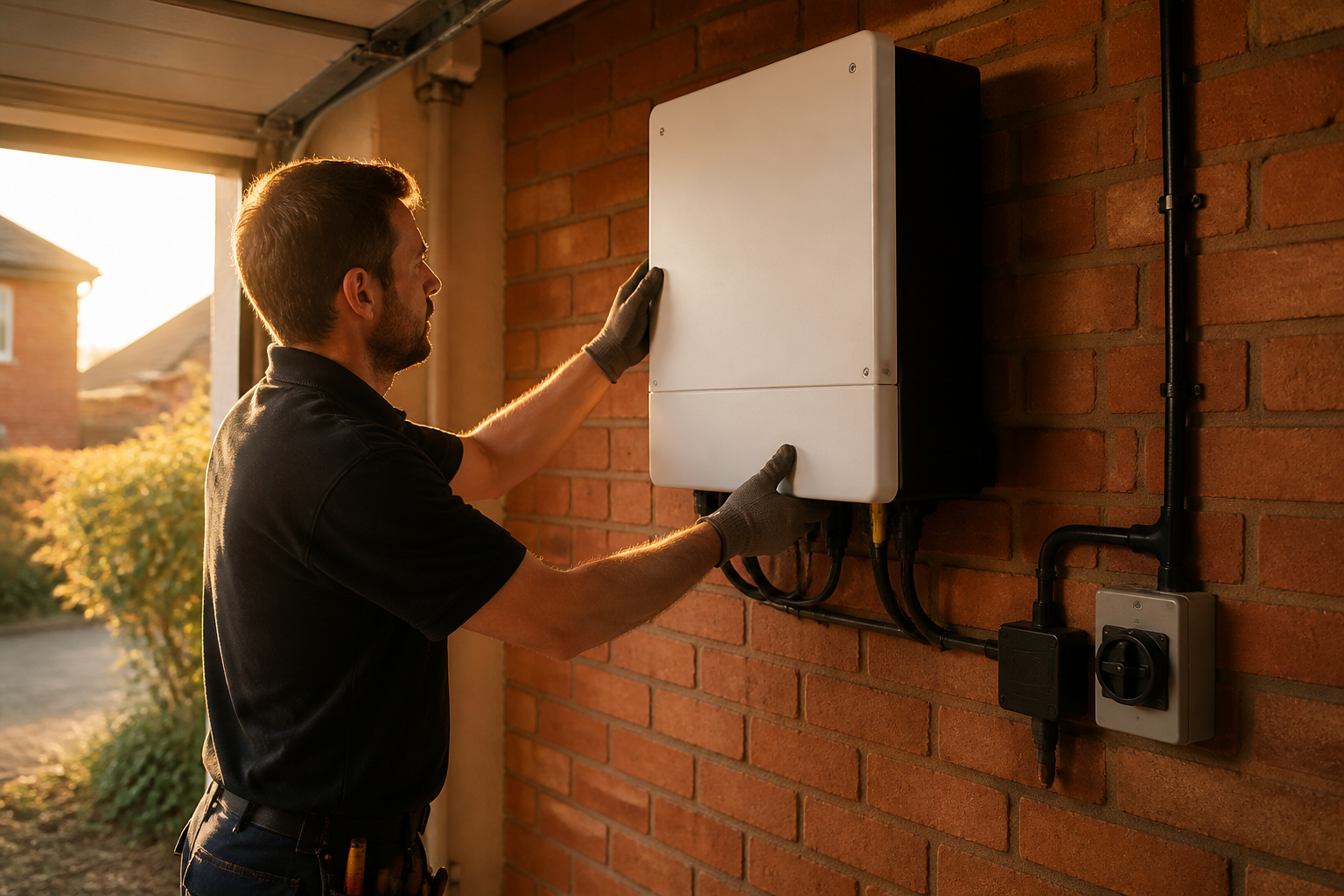
The data published by The Guardian on 1 September 2026 demonstrates that lower solar irradiance no longer prevents strong household savings. The figures show that even in regions receiving lower total sunshine, typical domestic installations generate substantial financial returns.
| Region Type | Typical Solar Irradiance (kWh/kWp/year) | Estimated Annual Generation (3.5 kWp System) | Estimated Bill Savings at 45% Self-Consumption | Estimated Bill Savings at 70% Self-Consumption (with Battery) |
|---|---|---|---|---|
| Northern & Western GB (Cloudier) | 800 - 900 kWh | 2,800 - 3,150 kWh | £400 - £480 | £600 - £720 |
| Central GB (Moderate) | 900 - 1,000 kWh | 3,150 - 3,500 kWh | £450 - £540 | £680 - £800 |
| Southern GB (Sunnier) | 1,000 - 1,100 kWh | 3,500 - 3,850 kWh | £500 - £600 | £750 - £880 |
Figures reported by The Guardian on 1 September 2026 confirm that baseline savings exceeding £400 per year are achievable in overcast regions without requiring complex battery storage setups, provided systems are sized accurately for household demand.
System sizing and hardware efficiency
To reach or exceed £400 in annual savings, a standard residential setup requires an array of approximately 3.5 to 4.0 kWp. On a modern residential roof, this translates to roughly 8 to 10 solar panels rated at 400 to 430 watts each. Installers must evaluate several factors:
- Roof orientation and tilt: A south-facing roof tilted at 30 to 40 degrees optimizes total yield, but east-west configurations deliver a flatter generation curve across the morning and afternoon.
- Inverter efficiency: String inverters convert direct current (DC) from panels into alternating current (AC) for household circuit boards, operating at typical conversion efficiencies of 97 to 98 percent.
- Shading management: Local shading from trees, chimneys, or adjacent roofs can be mitigated using microinverters or DC optimisers to prevent individual shaded panels from reducing the performance of the entire string.
- Grid connection rules: Under Engineering Recommendation G98 guidelines set by the Energy Networks Association, systems under 3.68 kW single-phase export capacity can be connected via a simple notification process to the local Distribution Network Operator (DNO).
Frequently asked questions
Do solar panels still work effectively when it is cloudy?
Yes. Solar photovoltaic panels convert diffuse light into electricity. Cloud cover reduces total light intensity, resulting in lower power output compared to clear sunny days, but panels continue producing power throughout daylight hours regardless of cloud density.
What size solar system is needed to achieve £400 annual savings?
Analysis indicates a standard 3.5 kWp array, comprising around 8 to 9 modern panels, generates enough power in cloudier UK regions to deliver over £400 in annual bill reductions, assuming standard self-consumption patterns.
How long does it take for rooftop solar panels to pay for themselves in the UK?
Payback periods vary based on installation costs, system size, roof orientation, and electricity usage patterns. Typical payback timelines range between 7 and 11 years, with faster returns achieved when households maximize direct self-consumption or pair panels with home battery storage.
What this means for your home
If you live in northern England, Wales, or Scotland, lower regional sunshine hours should not disqualify solar PV from your home improvement plans. The practical steps to evaluate potential savings include:
- Check your roof space and shading: Ensure you have at least 15 to 20 square metres of unshaded roof facing east, south, or west.
- Choose certified installers: Verify that your installer holds Microgeneration Certification Scheme (MCS) accreditation and registration with TrustMark, RECC, or HIES to guarantee safety standards and access to export tariffs.
- Match system size to consumption: Review your annual electricity usage in kilowatt-hours (kWh) on your energy bill. A typical home consuming 3,000 to 4,000 kWh annually will benefit most from a 3.5 kWp to 4 kWp solar array.
- Register for Smart Export Guarantee (SEG): Ensure your system includes an MCS certificate and a smart meter so you can sell unused solar generation back to your electricity supplier.
What this means for employers
With household energy costs remaining a primary financial concern for UK workers, practical benefits that lower monthly living expenses carry high perceived value. For reward, HR, and sustainability leaders, these findings show that domestic solar is a viable option for employees across all regions of Great Britain, not just those in the south.
Providing support for home energy improvements aligns corporate net-zero commitments with employee wellbeing goals. Through the Net Zero Home Scheme, employers can offer staff access to member pricing on accredited solar, battery, heat pump, and plug-in solar installations delivered by certified installers across England, Scotland, and Wales, with zero cost to the organisation and no payroll or salary sacrifice administration.